The air at the historic Autodromo Nazionale Monza, often revered as the ‘Temple of Speed’, was thick not just with the scent of high-octane fuel but also with palpable apprehension. As Formula 1 drivers prepared for the crucial qualifying session, a recurring theme dominated their discussions and echoed their deepest fears: “mess” and, more starkly, “nightmare.” These terms weren’t mere hyperbole; they encapsulated genuine concerns over the inherent dangers and chaotic potential of a qualifying session where every single driver would be desperately seeking the aerodynamic advantage of a slipstream. This unique challenge, amplified by Monza’s long straights and specific low-downforce demands, threatened to transform the pursuit of pole position into a perilous dance on the razor’s edge.
Advert | Become a Supporter & go ad-free
The core of the issue lay in the fundamental physics of racing at Monza. The circuit’s extensive straights mean that a slipstream, or “tow,” from a car ahead can shave crucial tenths of a second off a lap time. While beneficial for individual performance, the collective pursuit of this advantage by all twenty F1 drivers creates an incredibly volatile situation. Drivers are compelled to jostle for position, slowing down on out-laps to create gaps and then speeding up to catch a tow. This unpredictable ebb and flow of speed, combined with cars moving off the racing line to avoid being passed or to create space, leads to a highly congested track, raising serious concerns about the inevitability of a collision. The margins in Formula 1 are always narrow, but at Monza, during qualifying, they shrink to an almost imperceptible degree.
“The margins are very narrow,” reiterated Sergio Perez, reflecting the collective unease within the paddock. “It’s going to be a close competition tomorrow, but the real challenge lies in managing the traffic. It’s going to be tricky with everyone looking for a tow, and this inevitably leads to a very messy qualifying. We simply have to be fully focused and try not to get caught out because the consequences of a misjudgment or a simple misunderstanding out there can end up being very costly, not just in terms of a qualifying position but potentially with significant damage to the car.” Perez’s words highlighted the high-stakes environment, where a small error in judgment could have monumental repercussions for a team’s entire weekend.
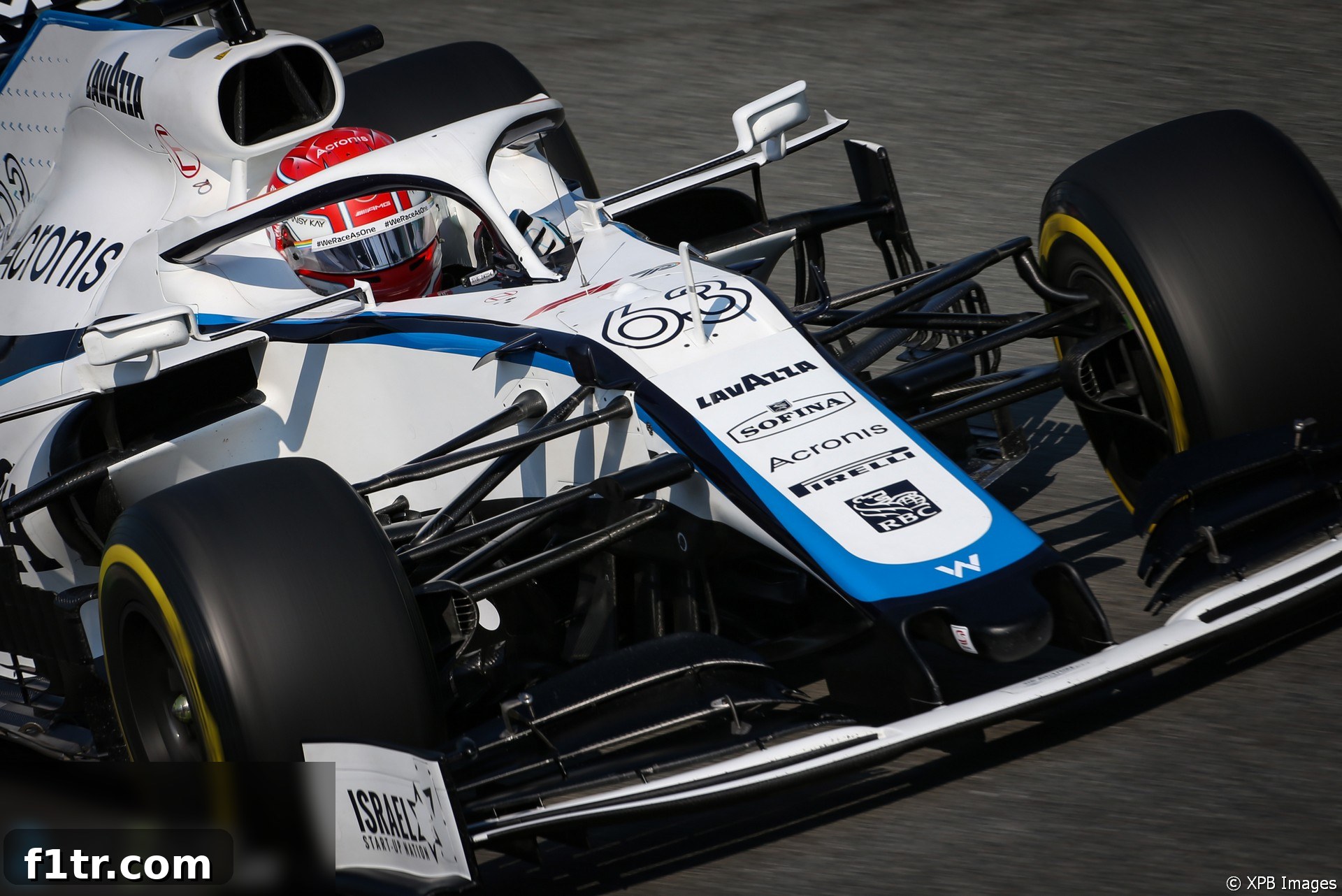
Other drivers, particularly those in midfield teams where every tenth counts, expressed even more dire warnings. Lewis Hamilton acknowledged the difficulty, but it was George Russell who offered the most stark and chilling premonition of the potential chaos. The then-Williams driver painted a vivid picture of what he anticipated on track, articulating serious worries that went beyond mere inconvenience, touching upon the very safety of the competitors.
“It’s going to be a nightmare,” declared Russell, his concern evident. “I honestly don’t know what the FIA can do to mitigate this, but the situation is getting a bit ridiculous and, frankly, pretty dangerous. Imagine the scene: you’ve got cars behind trying to overtake, jostling for position to get a tow, while the cars ahead are slowing down significantly to create a gap for their own tow. You’re constantly trying to look in your mirrors, anticipating where they are, while also focusing on your own line. Simultaneously, other cars are suddenly braking hard to avoid contact or adjust their timing.”
“There is definitely going to be a crash,” Russell asserted with a grim certainty, his words resonating with the collective fear in the paddock. “It’s not a question of if, but when. But like I said, I don’t know what they can realistically do to prevent it. I’m sure we’ll discuss it tonight in the drivers’ briefing, as we do every year here. Ultimately, I think you just need a bit of common sense from everyone, but when everyone is fighting for every millisecond, common sense often takes a backseat to competitive instinct.” The complexity of the situation underscored the unique challenge Monza presents, where the pursuit of performance can inadvertently compromise safety.
On the face of it, one might assume that if all drivers are seeking a tow, and they all head out to qualify at roughly the same time, the problem of congestion should be somewhat manageable, as everyone would be moving at a similar pace. However, the reality is far more intricate. The core difficulty lies in the fact that different teams have vastly different requirements for how they prepare their Pirelli tyres. Each compound needs to be brought into its optimal operating window through specific heating and cooling cycles, dictating how quickly or slowly a driver needs to go on an out-lap before commencing their flying lap. This crucial variable, often overlooked by casual observers, directly conflicts with the synchronized movement required to safely and effectively chase a slipstream.
Adding another layer of complexity, from Saturday onwards, drivers faced a new regulatory hurdle. The FIA, cognizant of the growing danger and potential for ‘traffic jams’ during qualifying, had imposed a maximum time limit between the two Safety Car lines. In his preceding note to drivers, Formula 1 Race Director Michael Masi indicated that this measure would serve as a “guide” to judge whether a driver had gone too slowly on an out-lap. This phrasing implied that other factors, such as impeding another driver or creating a dangerous situation, could also be taken into account, granting stewards a degree of discretion. While designed to prevent excessive slowing, the rule also introduced another element for drivers and teams to juggle, adding to the mental load in an already high-pressure environment.
Amidst the widespread apprehension, an intriguing question lingered: would all drivers and teams genuinely feel the necessity to seek out a slipstream? History offered a compelling counter-narrative. At Spa-Francorchamps, another high-speed circuit where a slipstream is undoubtedly beneficial on a qualifying lap, Lewis Hamilton had famously felt confident enough in his Mercedes W11’s raw pace to forgo a tow entirely. Despite this unconventional approach, he still managed to secure a dominant pole position. The burning question for the Italian Grand Prix weekend was whether Mercedes would feel that same level of supreme confidence at Monza.
On the face of it, all signs pointed to Mercedes possibly adopting a similar strategy. Hamilton had demonstrated blistering speed in practice sessions, consistently clocking times almost nine-tenths of a second quicker than anyone else in a rival car. Even with the recent ban on ‘quali modes’ – specialized engine settings that allowed teams to extract maximum power for a single qualifying lap – Mercedes’ fundamental package appeared to be in a class of its own. This significant performance advantage might empower Hamilton, and indeed Valtteri Bottas, to feel similarly confident about their chances on Saturday, potentially allowing them to run clean, uncompromised laps without having to engage in the perilous slipstream lottery that worried their competitors so much. Their ability to manage their own qualifying pace, free from the external pressures of finding a tow, could prove to be a decisive strategic advantage, keeping them out of the ‘mess’ entirely.
While Mercedes seemingly operated in a league of their own, the competition behind them was fiercely contested and perhaps slightly slower than their initial Friday practice times might have suggested. Daniel Ricciardo, driving for Renault, demonstrated significant pace, evidenced by a 1’20.905 lap that was unfortunately deleted for violating track limits. This incident, while costing him a better official time, clearly indicated that Ricciardo was a serious contender for the coveted ‘best of the rest’ title, leading the charge behind the dominant Mercedes W11s. His performance underscored Renault’s potential to be at the sharp end of the midfield battle, provided they could keep their laps clean.
Similarly, the impressive pace of Pierre Gasly in the AlphaTauri was a notable talking point. Gasly’s strong showing surely indicated that there was more to come from the similarly-powered Red Bulls, suggesting that both teams running Honda engines had found a strong setup for Monza. This performance hinted at a tighter battle at the front of the midfield pack, with McLaren, Racing Point, and Ferrari all in the mix. The chaotic nature of qualifying, with its slipstream shenanigans, could very well shuffle this order further, creating unexpected heroes and villains as drivers navigated the high-speed gauntlet. However, for any of these teams to offer a serious and consistent challenge to the outright pace of the Mercedes machines? That, for now, seemed like little more than wishful thinking, despite the potential for a qualifying upset.
Quotes: Dieter Rencken
Advert | Become a RaceFans supporter andgo ad-free
Combined practice times
The following table provides a concise overview of the combined practice times from Friday, offering an initial glimpse into the pecking order and individual performances ahead of the crucial qualifying session. These figures, however, do not fully capture the strategic complexities and the high-tension drama that unfolded as teams prepared for the unique challenges of Monza qualifying.
| Pos | Driver | Car | FP1 | FP2 | Total laps |
|---|---|---|---|---|---|
| 1 | Lewis Hamilton | Mercedes | 1’20.948 | 1’20.192 | 59 |
| 2 | Valtteri Bottas | Mercedes | 1’20.703 | 1’20.454 | 57 |
| 3 | Lando Norris | McLaren-Renault | 1’21.747 | 1’21.089 | 48 |
| 4 | Pierre Gasly | AlphaTauri-Honda | 1’21.667 | 1’21.121 | 52 |
| 5 | Max Verstappen | Red Bull-Honda | 1’21.641 | 1’21.228 | 52 |
| 6 | Carlos Sainz Jnr | McLaren-Renault | 1’21.821 | 1’21.313 | 57 |
| 7 | Daniil Kvyat | AlphaTauri-Honda | 1’21.555 | 1’21.376 | 66 |
| 8 | Lance Stroll | Racing Point-Mercedes | 1’22.131 | 1’21.389 | 53 |
| 9 | Alexander Albon | Red Bull-Honda | 1’21.500 | 1’21.883 | 66 |
| 10 | Charles Leclerc | Ferrari | 1’21.904 | 1’21.503 | 57 |
| 11 | Sergio Perez | Racing Point-Mercedes | 1’21.747 | 1’21.594 | 56 |
| 12 | Esteban Ocon | Renault | 1’21.984 | 1’21.697 | 60 |
| 13 | Sebastian Vettel | Ferrari | 1’22.988 | 1’21.733 | 52 |
| 14 | Antonio Giovinazzi | Alfa Romeo-Ferrari | 1’22.552 | 1’21.786 | 56 |
| 15 | Daniel Ricciardo | Renault | 1’21.789 | 1’22.080 | 51 |
| 16 | Kevin Magnussen | Haas-Ferrari | 1’22.422 | 1’22.088 | 51 |
| 17 | Kimi Raikkonen | Alfa Romeo-Ferrari | 1’22.619 | 1’22.147 | 61 |
| 18 | Romain Grosjean | Haas-Ferrari | 1’22.409 | 1’22.254 | 54 |
| 19 | Nicholas Latifi | Williams-Mercedes | 1’23.120 | 1’22.825 | 54 |
| 20 | Roy Nissany | Williams-Mercedes | 1’22.826 | 25 | |
| 21 | George Russell | Williams-Mercedes | 1’22.927 | 34 |
Advert | Become a RaceFans supporter andgo ad-free
Teams’ progress vs 2019
Go ad-free for just £1 per month>> Find out more and sign up
2020 Italian Grand Prix
For more in-depth coverage and analysis of the dramatic 2020 Italian Grand Prix, explore the articles below. From the surprising outcomes of the race to the strategic decisions that shaped the weekend, delve into the full story of this memorable event at Monza.
- Grosjean “obviously jealous” but pleased for Gasly after win
- 2020 Italian Grand Prix Star Performers
- Gasly: I’m ready for Red Bull return
- Ban on ‘quali mode’ reduced overtaking at Monza – Hamilton
- Gasly beats Sainz in closest F1 finish for 10 years
Browse all 2020 Italian Grand Prix articles