Renault Disqualified from Japanese Grand Prix: Unpacking the Brake Bias System Controversy
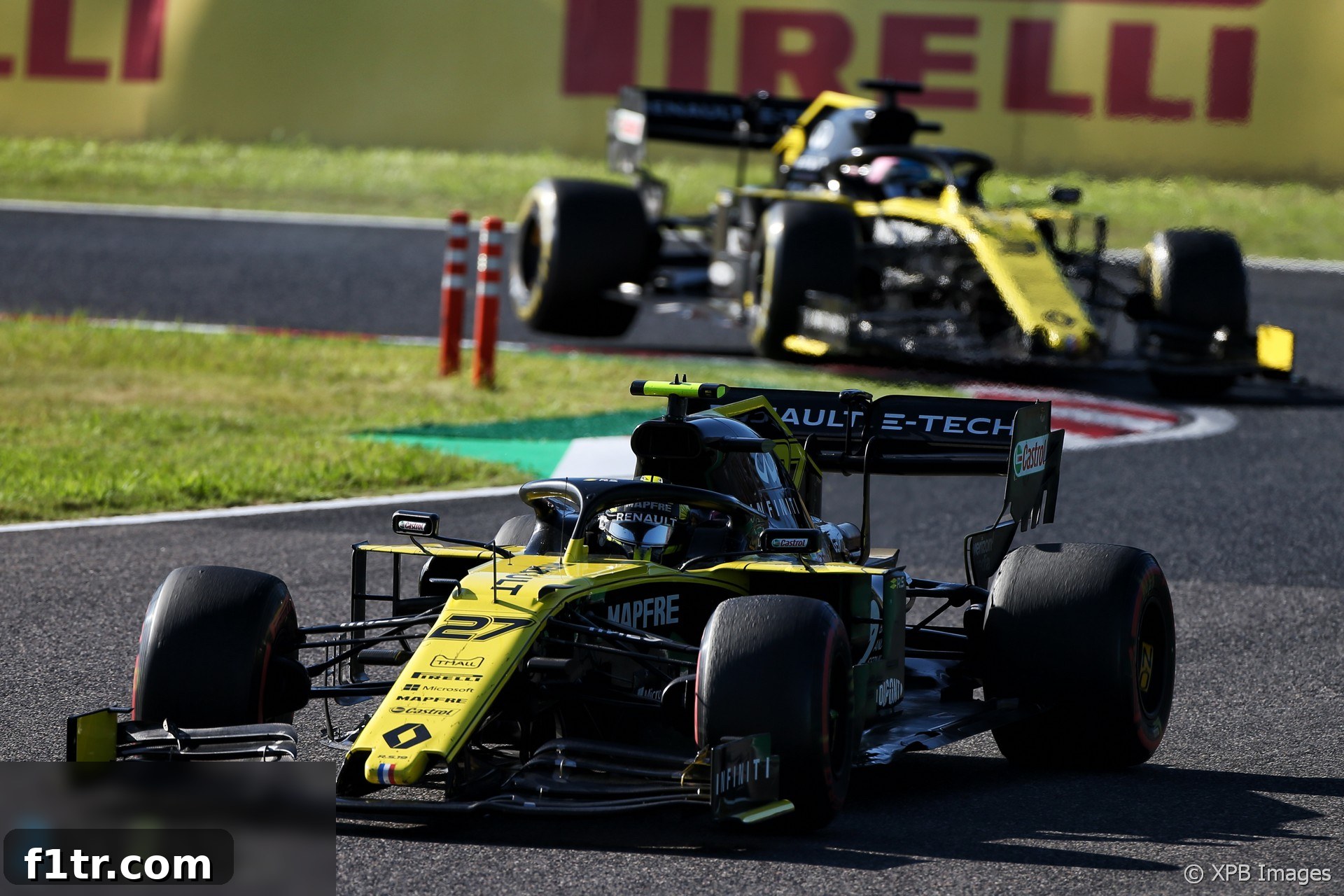
In a significant development that sent ripples through the Formula 1 paddock, both Renault cars were officially disqualified from the 2019 Japanese Grand Prix. The decision followed an extensive investigation by the FIA (Fédération Internationale de l’Automobile) into the team’s braking system, deemed to be in contravention of the sport’s strict technical regulations regarding driver aids.
Advert | Become a Supporter & go ad-free
The Initial Protest: Racing Point’s Allegations
The controversy began with a protest lodged by rival team Racing Point. They formally accused Renault of operating a “pre-set lap distance-dependent brake bias adjustment system” on their RS19 chassis. This allegation suggested that Renault might be employing a sophisticated system that automatically adjusted the car’s brake balance at specific points around the track, potentially offering an unfair advantage by reducing the driver’s workload and optimizing braking performance without manual intervention.
Racing Point’s suspicions were reportedly fueled by footage from the car, which led them to believe Renault was potentially bending or breaking the rules. Their initial protest was followed by a second, more detailed submission to the FIA on October 16th, intensifying the scrutiny on the French constructor.
The FIA’s Comprehensive Investigation
Upon receiving Racing Point’s protest, the FIA initiated a thorough investigation. The matter was discussed in a telephone hearing that brought together key representatives from both teams and the sport’s governing body. Renault was represented by Alan Permane, Nick Chester, and John McColgan, while Racing Point’s interests were upheld by Andy Stevenson, Oliver Rumsey, and Charlie Blackwell. The FIA’s panel included Gilles Simon, Nikolas Tombazis, and Olivier Hulot, all crucial figures in the technical and regulatory oversight of Formula 1.
Renault, in their written defense submitted on October 21st, countered Racing Point’s claims, suggesting that the protest was based on “allegations from a former Renault employee who was not aware of all the pertinent details of Renault’s brake control system.” This defense aimed to discredit the source of Racing Point’s information and provide context to their own system’s operation.
To ascertain the truth, the FIA technical department undertook a comprehensive examination. Their experts delved into Renault’s intricate software systems, meticulously checking the cars’ brake controllers, steering wheel interfaces, and dashboard displays. This detailed technical audit was crucial in determining whether the alleged system was present and if it indeed offered an illegal advantage. The findings of this technical department were then compiled into a detailed report and submitted to the stewards for their final deliberation.
Examining the Technicalities: Brake Bias and Driver Aids
In Formula 1, brake bias refers to the distribution of braking force between the front and rear wheels of a car. Drivers constantly adjust this setting during a lap to optimize braking performance for different corners, fuel loads, and tire wear. A driver’s ability to precisely manage brake bias is a critical skill, directly impacting lap times and tire degradation. Any system that automates or significantly simplifies this process for the driver falls under intense scrutiny, as it can be perceived as an “aid to driving” – something explicitly forbidden by the regulations.
The core of Racing Point’s accusation revolved around a “pre-set lap distance-dependent” system, implying an automated adjustment at pre-defined points on the track. However, after reviewing all the evidence and the FIA’s technical report, the stewards concluded that while Renault’s braking system was “not pre-set, lap distance-dependent as alleged” by Racing Point, it nonetheless “constitutes a driving aid and is, therefore, not in compliance with Article 27.1 of the FIA Formula 1 Sporting Regulations.”
Article 27.1 is a cornerstone of F1 regulations, stating: “The driver must drive the car alone and unaided.” This fundamental principle ensures that driver skill remains paramount, and technological solutions do not diminish the human element of racing. The stewards clarified their interpretation of the regulation in this specific instance: “The brake balance adjustment system in question acts as a driver aid, by saving the driver from having to make a number of adjustments during a lap.”
They further elaborated on the distinction: “The stewards note that there is a clear distinction between this system and one which provides actual feedback control, which would be a substitute for driver skills or reflexes. Nevertheless, it is still an aid and, therefore, contravenes [the regulations].” This statement highlights that even if the system wasn’t fully autonomous or directly controlling the car’s dynamic feedback, its ability to reduce the mental and physical demands on the driver through automatic adjustments was enough to classify it as an illegal aid.
Advert | Become a RaceFans supporter andgo ad-free
The Stewards’ Verdict: A Clear Breach of Regulations
Based on their findings and interpretation of Article 27.1, the stewards delivered their unequivocal decision: both Daniel Ricciardo and Nico Hulkenberg were disqualified from the Japanese Grand Prix results. Ricciardo had originally finished the race in a strong sixth position, earning valuable points, while Hulkenberg had secured a tenth-place finish, also contributing to Renault’s constructor tally.
Impact on Race Results and Championship Standings
The double disqualification had immediate and significant repercussions for the 2019 Formula 1 season. Renault lost all the points accumulated by its drivers in Japan, a considerable blow to their position in the Constructors’ Championship standings. For Daniel Ricciardo, the loss of his sixth-place finish meant forfeiting eight championship points, while Nico Hulkenberg lost a single point from his tenth-place result. This adjustment naturally promoted other drivers and teams up the final classification, impacting their respective points tallies and overall championship battles.
- Updated championship points and Japanese Grand Prix result following Renault’s disqualification
For a sport where every point is fiercely contested, such a penalty can significantly alter strategic decisions and the competitive landscape for the remainder of the season. The revised results saw several drivers gain positions, potentially affecting bonus payments and overall prestige.
Renault’s Path Forward: The Appeal Process
Following the stewards’ decision, Renault was presented with the option to appeal. Recognising the unique circumstances and timing of the protest hearing, the stewards exercised their power under FIA Judicial and Disciplinary Regulations Article 10.1.1 to extend the normal appeal period. This extension allowed Renault more time to consider their options and prepare a potential legal challenge, if they chose to pursue one. The new deadline for an appeal was set to expire at 10:00 am Central Daylight Time, the local time in Mexico City, on October 24, 2019, to accommodate those impacted who would be present for the upcoming Mexican Grand Prix.
An appeal in Formula 1 typically involves taking the case to the FIA’s International Court of Appeal, where an independent panel reviews the evidence and the stewards’ decision. Such a process is complex, time-consuming, and carries its own risks, but it offers teams a final opportunity to overturn a potentially damaging ruling.
Advert | Become a RaceFans supporter andgo ad-free
Broader Implications for Formula 1
The disqualification of Renault from the Japanese Grand Prix serves as a stark reminder of the FIA’s unwavering commitment to upholding the integrity of Formula 1’s technical and sporting regulations. This incident highlights several key aspects of the sport’s regulatory environment.
The Constant Battle: Innovation vs. Regulation
Formula 1 is a crucible of technological innovation, with teams constantly pushing the boundaries of engineering to gain a competitive edge. However, this relentless pursuit of performance often brings teams perilously close to, or sometimes over, the line of what is permitted by the rulebook. The case of Renault’s braking system is not an isolated incident; F1 history is replete with controversies surrounding flexible wings, fuel flow meters, and various aerodynamic devices. Each time, the FIA steps in to clarify rules and enforce penalties, reinforcing the delicate balance between fostering innovation and ensuring fair competition.
The complexity of modern F1 cars means that even subtle features, seemingly minor adjustments, or advanced software algorithms can significantly impact performance. This makes the job of technical policing incredibly challenging, requiring sophisticated tools and expert knowledge from the FIA’s technical department.
Ensuring Sporting Integrity
The role of rival teams, such as Racing Point in this instance, is also crucial in the policing of technical regulations. Teams often employ their own intelligence-gathering operations and scrutinize competitors’ cars for potential infringements. While sometimes seen as part of the cutthroat nature of F1, these protests are essential mechanisms that aid the FIA in maintaining a level playing field and ensuring that no team gains an undue advantage through illegal means. The “driver must drive the car alone and unaided” principle is fundamental to the DNA of Formula 1, distinguishing it from categories where more automation is allowed. Any deviation from this principle, however minor, is met with strict enforcement to protect the essence of driver skill and daring.
Conclusion: Upholding the Spirit of F1 Racing
The 2019 Japanese Grand Prix will now be remembered not just for the on-track action but also for the significant regulatory decision that followed. Renault’s disqualification for an illegal brake bias system underscores the rigorous scrutiny under which Formula 1 teams operate and the FIA’s firm stance against any technology that blurs the line of what constitutes a “driver aid.” As the sport continues to evolve, the delicate balance between technological advancement and the preservation of pure driving skill will always remain at the heart of its regulations, ensuring that the ultimate victor is determined by human talent and engineering within the defined boundaries.
2019 F1 season
- Crying in the Melbourne car park at 2019 grand prix was my career low – Ocon
- McLaren Racing reports reduced £71 million loss in 2019
- Kvyat: Hockenheim podium last year was “my biggest achievement” so far
- How the FIA’s new encrypted fuel flow meter targets Ferrari’s suspected ‘aliasing’ trick
- “He smashed my office door”: 23 must-see moments from ‘Drive to Survive’ season two
Browse all 2019 F1 season articles