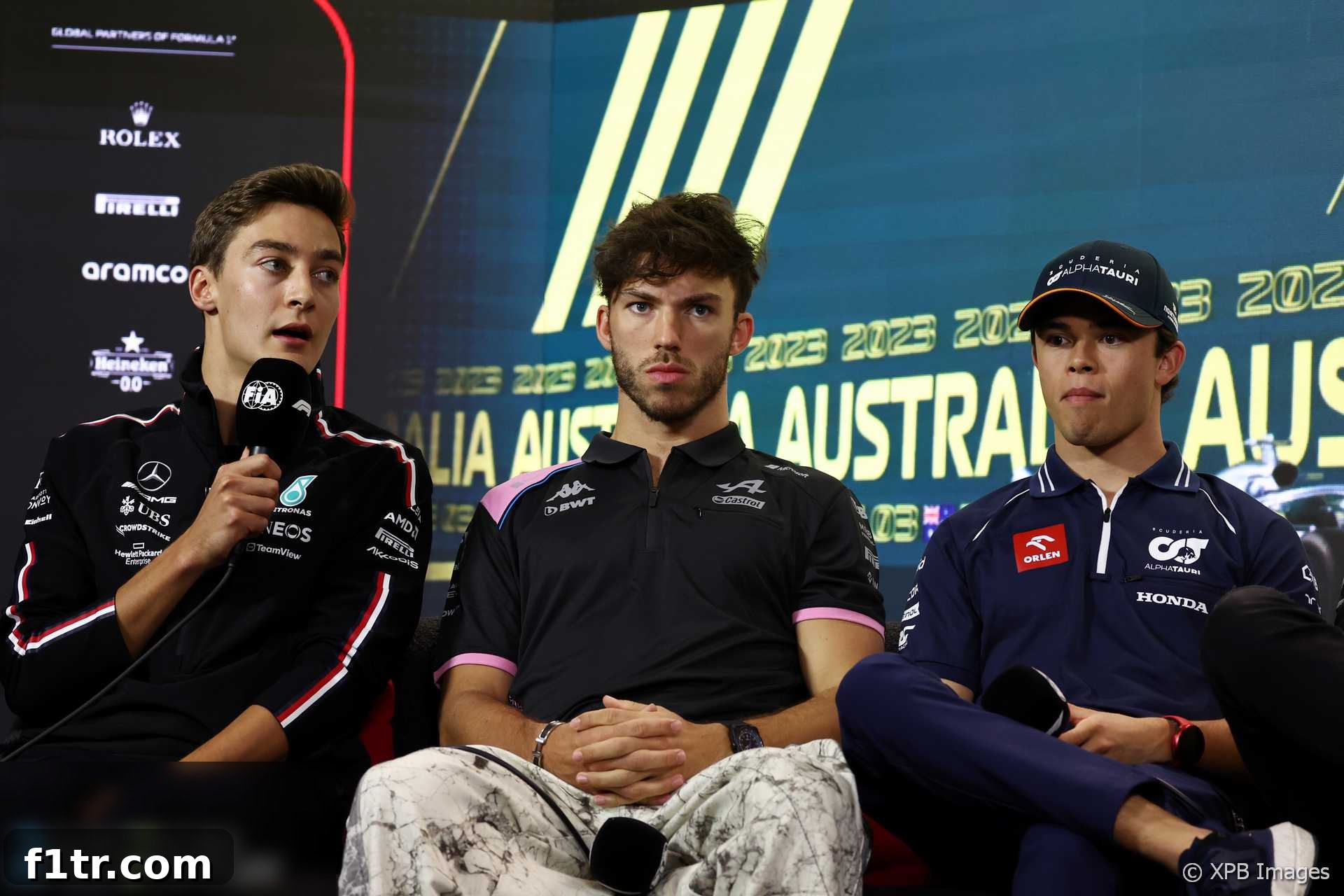
Formula 1 drivers are increasingly voicing their opinions on the optimal amount of practice time during Grand Prix weekends, following recent comments from the series’ CEO, Stefano Domenicali, who suggested a significant reduction in free practice sessions.
Advert | Become a Supporter & go ad-free
Currently, for most of the non-sprint race weekends, teams and drivers are allocated three one-hour practice sessions. However, Domenicali has repeatedly expressed his belief that Formula 1 would benefit from having only a single non-competitive session per weekend, potentially making the action more immediate and less predictable for fans. This vision aims to condense the competitive element of the weekend, placing greater emphasis on qualifying and the main race, while offering a fresh challenge to teams and drivers who would have less time to fine-tune their cars.
Drivers Weigh In: The Case for Reduced Practice
The F1 paddock has been buzzing with discussion, with several prominent drivers sharing their perspectives. Among them, George Russell, a director of the Grand Prix Drivers Association (GPDA), echoed Domenicali’s sentiment regarding a potential reduction. Russell agreed that F1 could indeed cut practice to a single session, primarily to allow teams “to dial in the car, to test things for the future.” This highlights a crucial balance: while fewer sessions might increase the spectacle, there’s a practical need for some track time.
While Domenicali has expressed interest in offering more rewards for sessions during race weekends, moving away from purely non-competitive status, Russell maintains that a single, dedicated practice session is still vital. He emphasized that this session provides teams with an invaluable opportunity to develop their cars and experiment with new components or setups, especially given the stringent in-season testing limitations.
Balancing Development with Excitement
“We obviously have no testing at all outside of official sessions,” Russell pointed out, underscoring the scarcity of development opportunities. “I think one session is good enough for all of us to do the various things we need to try to help develop.” He stressed that F1, as the pinnacle of motorsport, shouldn’t stifle innovation. “You don’t want to be just left with the car that you created at the start of a year with no opportunity to trial new things. That is sort of the beauty sometimes; you’ve got this 60-minute session, you can try new things, develop, improve further.” This developmental aspect is crucial for pushing the boundaries of engineering and performance, which is a core tenet of Formula 1. Without it, the sport risks becoming stagnant, offering less room for teams to overcome challenges and refine their machinery throughout the season.
Russell further elaborated on the dilemma: “Whereas if you’re going straight into a session that is points-worthy or there is a reward, you’re less likely to trial new things.” This sentiment highlights a potential pitfall of making all sessions competitive – teams would inevitably prioritize immediate performance and points over crucial long-term development work, which often requires taking calculated risks with experimental parts.
Lessons from Junior Categories: A Disparity in Practice Time
A significant part of Russell’s argument centers on the comparison between Formula 1’s practice allocation and that of its feeder series, Formula 2 and Formula 3. He highlighted a perceived imbalance: “I don’t think it’s right that Formula 1 has three times the amount of practice that you have in F3 and F2 categories. They should be the ones getting more practice also because they’re doing fewer races; they don’t get to test that often.” This disparity is notable, as young drivers in F2 and F3 are still honing their skills and adapting to powerful machinery, often with less prior experience than their F1 counterparts. More practice for them could aid driver development and reduce the learning curve.
The current F2 format typically sees drivers participate in a single, 45-minute practice session before heading straight into qualifying. This compressed schedule forces drivers to get up to speed very quickly and make critical setup decisions with limited data, a challenge that many drivers like former F2 racer Logan Sargeant appreciate for its intensity. The argument suggests that if junior series can operate effectively with minimal practice, F1 drivers, with their extensive experience and sophisticated simulation tools, should also be capable of adapting to a more streamlined schedule.
Echoes Across the Paddock: More Drivers Call for Change
Russell is not alone in his view. Pierre Gasly echoed the sentiment, stating, “I agree with George. Definitely three [sessions are] not needed.” While acknowledging the benefits of extensive practice for fine-tuning – “As a driving point of view, it’s always nice; you can work on fine details on the car and really try to nail that car balance for the weekend” – Gasly concluded that “generally speaking, I think one, two maximum is more than enough for us.” This suggests that while drivers enjoy the luxury of more track time, they recognize its potential redundancy for race preparation.
Nico Hulkenberg, having raced across various categories including F2, also expressed a preference for less practice time. “It comes down to bit your personal opinion and preference,” he noted, but added, “Thinking back to what George said to junior series, I quite enjoyed it at the time, having only 30 minutes like in F2 and then getting thrown into quali.” This experience from his earlier career highlights that drivers can adapt quickly and that a more intense weekend format might even be more engaging for competitors.
Rookie Logan Sargeant, who transitioned to F1 from F2 this year, offers a unique perspective. He found the three hour-long practice sessions in F1 “definitely a lot, especially coming from F2 where you just have to take risks a lot sooner than I currently have to.” While admitting that as a rookie, he didn’t mind having two or three sessions for adaptation, he firmly believes that “going forward, I don’t think three is necessary.” Sargeant’s comments underscore the initial learning curve for new entrants, but also the eventual understanding that such extensive practice becomes less critical with experience.
The Entertainment Factor and Sprint Races
Beyond car development and driver adaptation, the debate over practice duration also ties into the overall entertainment value of a Grand Prix weekend. Russell, initially a skeptic of sprint races, has become a proponent. “No practice would be too little. I wasn’t in favour of the sprint races initially, but having done [six] in the two years, I really enjoy the sprint races. Having action on a Friday I think is vital for all of us and also for the entertainment factor.”
Sprint race weekends, which condense the main qualifying session to Friday and introduce a shorter race on Saturday, effectively reduce traditional practice time. This format has proven successful in injecting more competitive action earlier in the weekend, generating excitement and keeping fans engaged from day one. The positive reception of the sprint format by many drivers, including Russell, suggests that a trimmed-down practice schedule, particularly one that replaces some free practice with meaningful competitive sessions, could be a popular path forward for Formula 1. It creates an environment where every session potentially holds greater significance, forcing teams and drivers to be on top of their game much sooner.
Implications for Strategy and Unpredictability
Reducing practice time would inevitably have significant implications for race strategy and overall unpredictability. With less data gathered from extensive running, teams would rely more heavily on simulations and their initial setup choices. This could lead to more varied car performance and unexpected results, as teams might struggle more to find the optimal balance throughout the weekend. Such a scenario could level the playing field, at least temporarily, and make the races more thrilling for spectators who appreciate a less predictable outcome.
Conversely, less practice could also increase the risk of errors or sub-optimal performance, particularly for teams struggling with car setup or dealing with unexpected track conditions. It places greater pressure on engineers to make the right calls from the outset and on drivers to adapt quickly. However, many argue that this heightened challenge is precisely what makes Formula 1 the pinnacle of motorsport – demanding excellence under extreme pressure.
Looking Ahead: The Future of F1 Weekend Formats
The ongoing discussion initiated by Stefano Domenicali and amplified by drivers like George Russell, Pierre Gasly, Nico Hulkenberg, and Logan Sargeant points towards an evolving philosophy for Formula 1 weekend formats. The sport is continuously seeking ways to enhance its appeal, balancing the technical demands of car development with the need for captivating entertainment. The consensus among drivers seems to be that while zero practice is undesirable, the current allocation of three hour-long sessions may be excessive.
A single, focused practice session, perhaps extended slightly beyond an hour to allow for both setup and limited development testing, combined with a dynamic Friday schedule that includes competitive elements like qualifying or a sprint shootout, could represent a viable compromise. Such a format would respect the need for technical preparation while significantly boosting the on-track action from the very start of the Grand Prix weekend, aligning with Domenicali’s vision and the drivers’ calls for a more efficient and exciting schedule. As Formula 1 continues to attract new audiences and evolve its global presence, adapting the weekend format to maximize engagement and maintain competitive integrity will remain a key priority.
2023 Australian Grand Prix
- Australian GP to forbid fans from entering track at end of this year’s race
- I only missed one chance to score points this year – Albon
- Formula 1’s stewards should listen to drivers less, not more
- Mercedes unsure whether gains seen in Melbourne were ‘track-specific’
- Why Ferrari saw a ‘real step forward in pure performance’ in point-less Australian GP
Browse all 2023 Australian Grand Prix articles