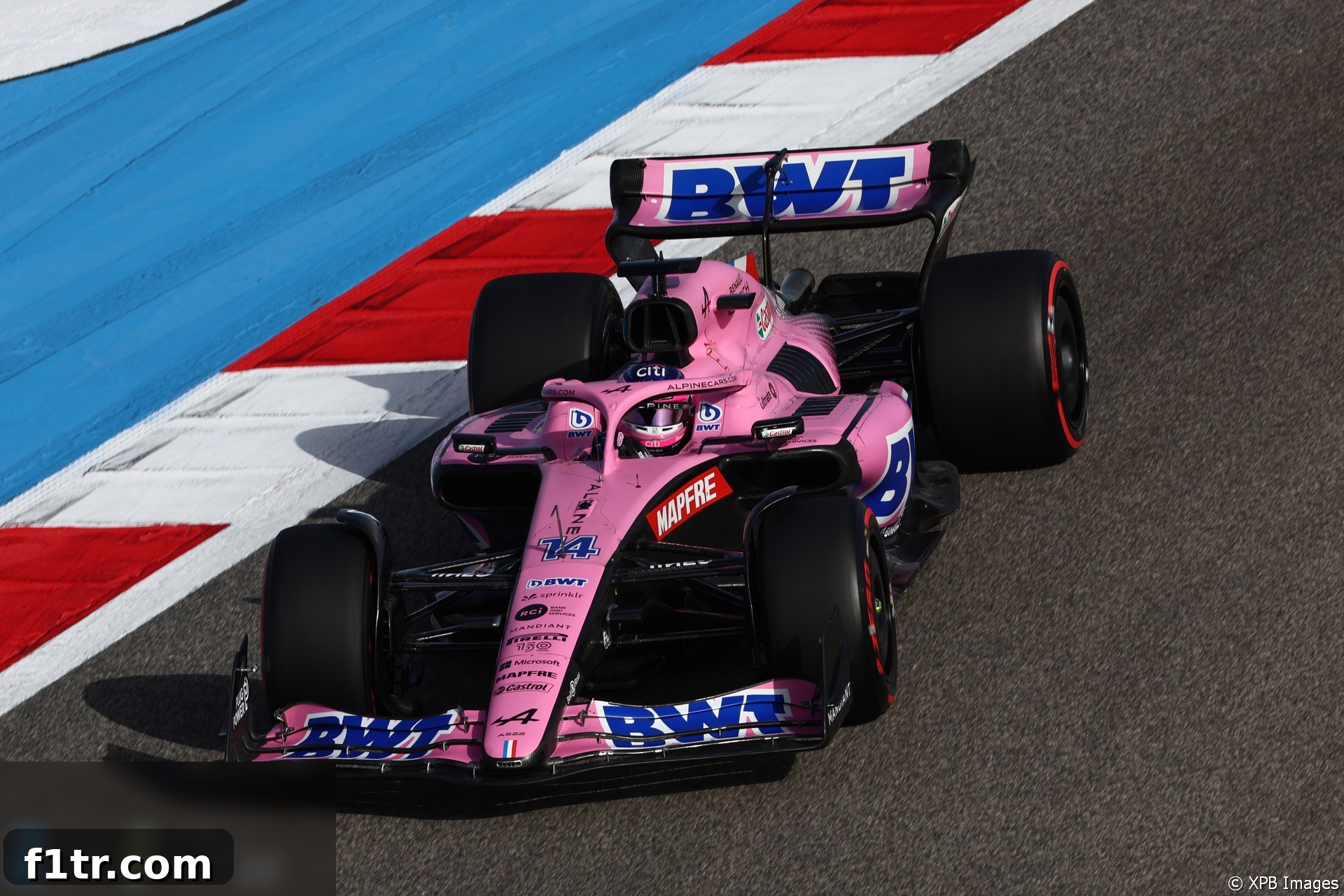
Fernando Alonso: Alpine’s Relief and Urgent Development Plan After Bahrain F1 Qualifying
The dawn of a new era in Formula 1 brought with it a wave of anticipation and uncertainty, particularly regarding how the radical new technical regulations for the 2022 season would shake up the competitive order. As teams converged on the Bahrain International Circuit for the opening round, every qualifying session became a crucial litmus test. For Fernando Alonso and the Alpine F1 Team, securing a coveted spot within the top 10 on the grid proved to be a significant moment of relief, affirming the positive strides made during the demanding winter development phase.
Two-time world champion Alonso, a figure synonymous with the relentless pursuit of performance, expressed a tangible sense of satisfaction following the qualifying session. “To be fighting for the top 10 with both cars, I think has been a relief a little bit for Alpine that the job done during the winter has been positive,” Alonso remarked. This sentiment underscores the immense pressure on all teams to accurately interpret the new regulations and translate their technical understanding into a competitive package. For Alpine, a midfield contender with aspirations to challenge the sport’s elite, validating their winter efforts with a strong qualifying performance was an essential psychological boost and a foundational step for the season ahead.
However, despite the initial satisfaction, the seasoned Spaniard quickly shifted his focus to the formidable challenges that lie ahead. The stark reality of the 1.6-second gap to pole-sitter Charles Leclerc of Ferrari served as a potent reminder of the work that still needs to be done. While P8 for Alonso was a commendable individual effort, placing him three positions ahead of his teammate Esteban Ocon, the overall deficit to the absolute pace-setters highlighted the significant chasm Alpine needs to bridge.
Alonso’s message to his team was clear and emphatic: the development race has only just begun, and Alpine must accelerate their efforts without delay. “Now it’s up to us to develop the car as quick as possible. It’s going to be a huge development for everybody, and we need to be fast off-track as well on that,” he urged. This isn’t merely a platitude; it’s a strategic imperative in Formula 1, especially in a season marked by such transformative rule changes. Early season development gains can often dictate a team’s trajectory for the entire year, making the speed and effectiveness of technical updates paramount.
The veteran driver further elaborated on this pressing need, stating, “We need to push the button now in the factories and try to make the new parts [come] to the circuit as soon as possible.” This call to action emphasizes the high-stakes environment within F1 engineering departments. Teams are not just refining existing designs; they are fundamentally re-evaluating and optimizing every aspect of their new-generation cars. From aerodynamic surfaces to suspension geometries and floor designs, every component is subject to intense scrutiny and potential overhaul. Alonso’s comments suggest that Alpine already has promising concepts in the pipeline, but the execution and rapid deployment of these innovations will be critical.
The 2022 regulations, which reintroduced ground effect aerodynamics to significantly increase downforce, presented a steep learning curve for all teams. As Alonso pointed out, “There are good ideas already in the factory, but I think it’s the same for everybody with the new cars, we will see in the first couple of months big changes on the cars. We need to make them work and hopefully close that gap with pole position that is still too much, over one second.” This acknowledgment highlights a universal truth in F1: initial designs are rarely perfect, and the true competitive advantage often comes from understanding, optimizing, and evolving the car throughout the season. The teams that can bring effective upgrades to the track most consistently and rapidly will undoubtedly emerge as the strongest contenders.
One of the most talked-about phenomena of the early 2022 season was ‘porpoising’ – the violent aerodynamic bouncing experienced by many cars, particularly at high speeds. This unexpected side effect of the new ground effect regulations caused significant headaches for several teams, impacting driver comfort, performance, and even car reliability. Alonso, however, noted with satisfaction that Alpine appeared to be less afflicted by this issue compared to some of their rivals. “No bouncing for us so far this weekend,” he confirmed, adding, “So fingers crossed it’s still a mystery for many people. So hopefully tomorrow stays like that.”
Alpine’s relative immunity to severe porpoising is a significant positive. It suggests a more stable aerodynamic platform and a potentially better understanding of the ground effect principles from their engineering team. While other teams grappled with finding solutions to control their bouncing cars, Alpine could potentially focus their development resources more efficiently on pure performance gains. However, Alonso’s cautious tone — referring to it as “still a mystery” — indicates that the dynamics of these new cars are complex, and maintaining this advantage will require continuous vigilance and understanding. The ability to manage porpoising effectively not only translates into better on-track performance but also preserves driver energy and confidence over a race distance.
Fernando Alonso’s invaluable experience will be pivotal in guiding Alpine through this intense development phase. As one of the most experienced drivers on the grid, his feedback is incredibly precise and insightful, acting as a direct link between the car’s behavior on track and the engineers back at the factory. His ability to articulate subtle nuances in handling and aerodynamic performance provides Alpine with a critical advantage as they seek to unlock more speed from their A522 chassis. His calm yet demanding approach ensures that the team remains focused on both immediate improvements and long-term strategic evolution.
The 2022 Bahrain Grand Prix served as a compelling curtain-raiser for a season poised to be defined by rapid innovation and fierce competition. For Alpine, qualifying P8 with Alonso provided a solid foundation, a testament to their winter efforts. Yet, the gap to the front underscores the monumental task ahead. The coming months will witness an unprecedented development race, where every upgrade, every data point, and every strategic decision will contribute to shaping the competitive landscape. Alonso’s blend of relief and urgency perfectly encapsulates Alpine’s position: pleased with a solid start, but acutely aware of the relentless pursuit required to climb further up the Formula 1 hierarchy and consistently challenge for podiums and victories in this exciting new era.
Related Articles: 2022 Bahrain Grand Prix
- How “class act” Hulkenberg’s reserve outings showed his readiness for an F1 return
- Alfa Romeo working on fix for Bottas and Zhou’s “very poor” starts
- China is first country to score points on its debut since the championship began
- “I don’t hold back”: Verstappen’s full radio transcript from his luckless Bahrain GP
- Mercedes’ straight-line speed deficit due to drag levels, not power unit – Wolff
Browse all 2022 Bahrain Grand Prix articles