Advert | Become a Supporter & go ad-free
Red Bull’s F1 Budget Cap Penalty: A Deep Dive into Its 2023 Impact
The reverberations of Red Bull Racing’s penalty for breaching Formula 1’s budget cap during the 2021 season continue to echo across the paddock. As the 2023 season unfolds, a key question remains: how significantly will these sanctions truly affect the reigning constructors’ champions? While the financial penalty was substantial, the real strategic challenge for Red Bull comes in the form of reduced aerodynamic testing, a critical disadvantage in a sport defined by relentless development.
Understanding the Budget Cap and Red Bull’s Breach
Formula 1 introduced its revolutionary budget cap in 2021, aiming to foster greater financial sustainability and promote a more level playing field among teams. This cap was designed to curb excessive spending, allowing smaller teams a fairer chance to compete with the sport’s giants. However, the inaugural year of these regulations saw Red Bull Racing exceed the spending limit, leading to a comprehensive penalty package announced in October of the following year.
The sanctions imposed on Red Bull included a significant $7 million fine and a crucial reduction in their aerodynamic testing allocation for the 2023 season. It’s important to clarify that the monetary fine does not count against their current year’s budget cap, meaning it doesn’t directly limit their spending on car development for 2023. Instead, the core of the sporting penalty impacts their ability to refine and enhance their vehicle through wind tunnel hours and Computational Fluid Dynamics (CFD) simulations.
Due to their dominant performance in 2022, securing the Constructors’ Championship, Red Bull was already set to have the lowest Aerodynamic Testing Restriction (ATR) allowance among all teams for 2023. This allocation, initially 70% of the reference total, was further slashed by the penalty to a mere 63%. To put this into context, their closest competitors, Ferrari, will operate with a 75% allowance, while Mercedes benefits from an 80% allocation. This considerable disparity translates to fewer opportunities for Red Bull to test new components, validate designs, and understand complex aerodynamic interactions, potentially slowing their development pace compared to rivals.
Rival Teams’ Perspectives: Underestimating Red Bull’s Resilience?
Toto Wolff on Red Bull’s Inherited Advantage
Mercedes Team Principal Toto Wolff, a figure familiar with the pressures of championship success and the subsequent ATR restrictions, offered a seasoned perspective. Wolff conceded Red Bull’s superior performance in the prior season: “They’ve done a very good job last year in getting and putting a car out there that is half a second or more quicker than everybody else.” This substantial performance buffer from 2022, he suggests, grants Red Bull a formidable starting point for 2023, potentially insulating them from the immediate, dramatic effects of the penalty.
While acknowledging that “the lack of wind tunnel time is certainly not great for them” and constitutes “an advantage for us this season,” Wolff remained pragmatic. He emphasized Red Bull’s operational prowess, stating, “But if you have an efficient machine, you can certainly compensate for that, or large parts of it. So, long term, [it’s] good for us.” This speaks to the widely held belief that Red Bull’s engineering team is exceptionally adept at maximizing their resources, making intelligent decisions about which areas to prioritize for development and extracting maximum value from every allocated hour in the wind tunnel.
Having navigated similar ATR challenges during Mercedes’ own championship-winning years, Wolff understands the intricacies involved. He believes that while the penalty “is going to certainly bite them a bit,” Red Bull’s demonstrated efficiency as an organization will prevent the impact from being “big.” This suggests that any discernible effect might be subtle, influencing the gradient of their car’s development curve rather than causing a sharp drop in performance.
Dan Fallows: An Insider’s View on “Strength in Depth”
Further insights come from Dan Fallows, Aston Martin’s Technical Director and a former key designer at Red Bull. His intimate knowledge of Red Bull’s internal workings lends significant weight to his assessment. Fallows articulated that Red Bull possesses “a great deal of strength in depth,” which he believes will allow them to “minimise the impacts of that penalty.”
“Strength in depth” in Formula 1 signifies more than just individual talent; it encompasses the collective expertise of the entire team, robust operational processes, a deep understanding of their car’s philosophy, and seamless inter-departmental collaboration. A team with such foundational strength can make more informed decisions under pressure, prioritize effectively, and glean maximum useful data from fewer aerodynamic tests. This institutional knowledge and resilient framework could indeed act as a crucial shock absorber against the restrictive nature of the ATR reduction.
Otmar Szafnauer: The Midfield Hope
For teams like Alpine, striving to close the performance gap to the established front-runners, the budget cap and ATR system are viewed as vital tools for achieving greater parity. Alpine Team Principal Otmar Szafnauer, whose team is heavily relying on the ATR to aid their ascent, admits the exact impact of Red Bull’s penalty is difficult to predict. Nevertheless, he unequivocally states it “definitely won’t help them.”
Szafnauer underscored the paramount importance of aerodynamic development in modern F1, asserting that restricting this “biggest areas of development, will definitely hamper them.” His perspective highlights the competitive desire for any advantage to be fully exploited. When directly asked if the penalty should have been more severe, Szafnauer’s candid response – “I’m not at Red Bull [so] I’m always going to say it should have been bigger” – perfectly encapsulates the fiercely competitive spirit inherent in Formula 1, where rivals naturally hope for the most significant possible disadvantage for their competitors.
Red Bull’s Own Assessment: A “Significant Handicap”
On the other side of the fence, Red Bull Racing’s Team Principal Christian Horner has consistently framed the penalty as a substantial challenge. He publicly stated that the reduced ATR limit represents “a significant handicap that we carry for the majority of the year.” This contrasting view from within Red Bull itself indicates that despite external assessments downplaying the impact, the team is keenly aware of the strategic adjustments required.
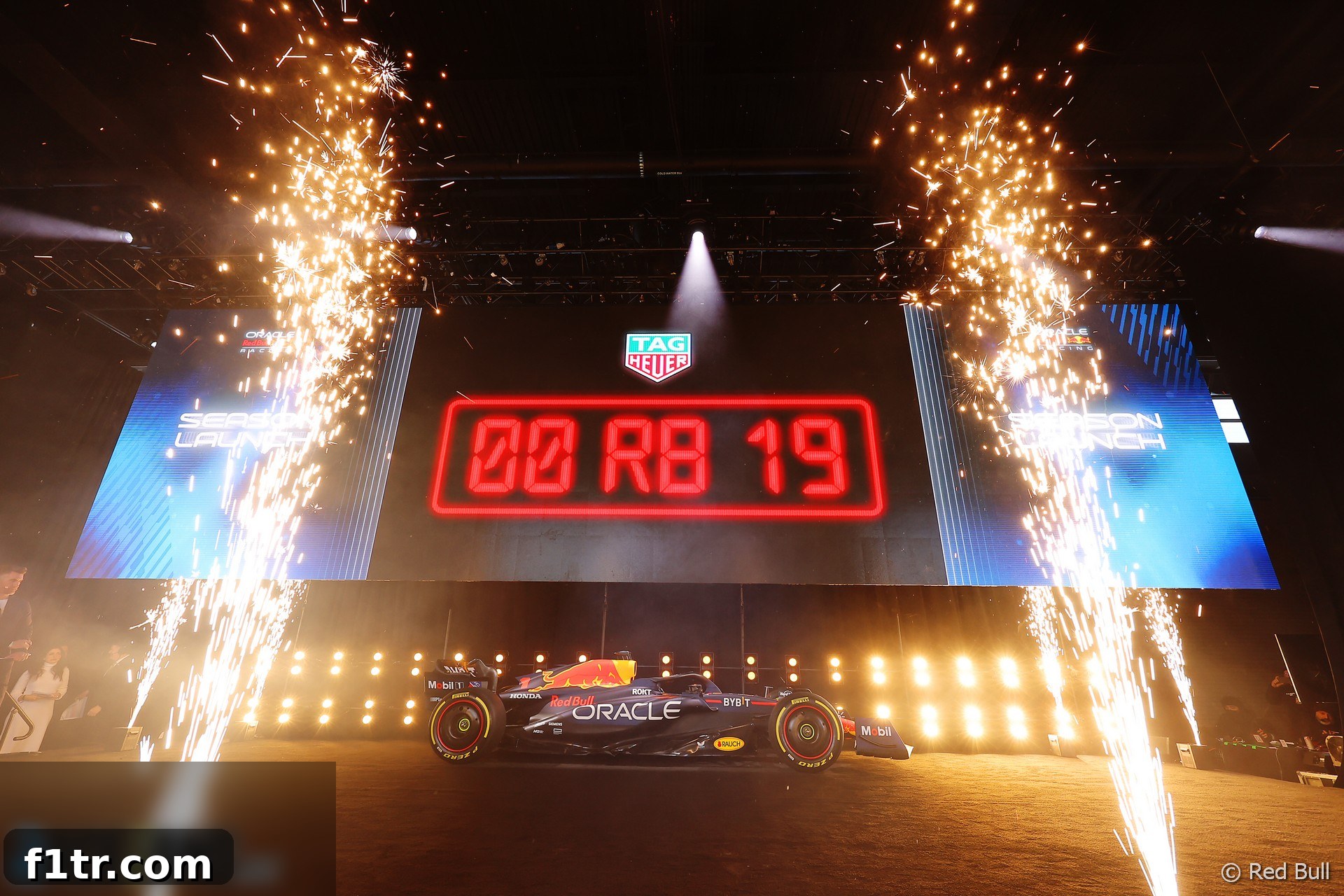
The lower testing allowance forces Red Bull to be exceptionally judicious with their development resources. This could translate to fewer in-season upgrades, a more conservative approach to radical design changes, or a greater reliance on their initial car concept. While their RB19 chassis has already undergone private shakedown runs at Silverstone, its public “launch” in New York featured a show car, a common practice that also underscores the secrecy surrounding a team’s genuine technical developments as they prepare for a season under unique constraints.
[Dynamic chart of F1 Aerodynamic Testing Restriction (ATR) allocations for 2022-2023 would appear here]
*Due to their penalty for exceeding the budget cap in 2021, Red Bull’s allocation this year is reduced from 70% to 63%.
Analyzing the Broader Implications and Strategic Responses for 2023
The budget cap penalty has introduced a fascinating strategic layer to the 2023 Formula 1 season. While many rival team principals suggest a minimal impact on Red Bull’s overall competitiveness due to their inherent strength and efficiency, the reduction in aerodynamic testing remains a tangible disadvantage. In a sport where performance gains are meticulously measured in fractions of a second, every wind tunnel session and CFD run is invaluable.
Red Bull will undoubtedly need to employ highly optimized development strategies. This could involve an intensified focus on core performance areas, a more disciplined approach to testing different concepts, and potentially a greater reliance on advanced simulation tools to compensate for fewer physical tests. Their commanding performance in 2022 provides a crucial buffer, allowing them to start the season with a strong baseline and perhaps a less urgent need for immediate, drastic upgrades compared to a team chasing performance.
Conversely, teams like Mercedes and Ferrari, benefiting from higher ATR allowances, have a clear opportunity to capitalize. They can afford to explore a broader spectrum of aerodynamic solutions, run more iterative tests, and potentially introduce a greater number of significant upgrade packages throughout the season. The true measure of the penalty’s effect on Red Bull’s championship aspirations will likely become most apparent as the development race intensifies during the middle and latter stages of the calendar. Should Red Bull maintain their performance lead despite these constraints, it will serve as a powerful testament to their engineering prowess and organizational resilience.
Moreover, this situation highlights the ongoing scrutiny of F1’s financial regulations. The way the FIA handled this inaugural major breach sets a precedent, and the effectiveness of the penalty as a deterrent will be closely observed by all teams. Striking the delicate balance between enforcing fair play and ensuring penalties do not disproportionately cripple a team’s ability to compete remains a continuous challenge for the sport’s governing body and will shape future adherence to the rules.
Support Independent F1 Journalism: Join the RaceFans Supporters Community
At RaceFans, our mission is to deliver Formula 1 news and in-depth analysis directly from the source, bringing you closer to the heart of the action. This commitment to original, independent journalism is made possible through the generous backing of our dedicated readers, the RaceFans Supporters.
By contributing a modest sum of just £1 per month or £12 annually (or the equivalent in your local currency), you play an essential role in sustaining the crucial work behind our comprehensive coverage. Your contributions directly fund critical aspects of our operation: travel to races worldwide, meticulous writing and editing, innovative content creation, secure website hosting, essential industry contacts, and continuous platform development.
For over a decade, we have proudly maintained our independence, supported entirely by the F1 community we serve. If you value our unbiased reporting and extensive coverage, we warmly invite you to become a RaceFans Supporter today. As a token of our appreciation, all Supporters gain the exclusive benefit of browsing our entire site completely ad-free, ensuring an uninterrupted reading experience.
- Become a RaceFans Supporter Today
- Learn More: RaceFans Supporter FAQ
Advert | Support RaceFans and enjoy anad-free experience
Related Coverage: The 2023 F1 Season and Beyond
For more in-depth analysis, breaking news, and the latest developments from the thrilling world of Formula 1, delve into our comprehensive coverage of the 2023 season and related topics below.
- FIA president cleared of alleged interference in two 2023 races
- First week viewing figures for new Drive to Survive season fall again
- Max who? Drive to Survive season six prefers its favourite faces
- RaceFans’ complete 2023 season review
- The F1 drivers who pulled off the 10 biggest charges through the field in 2023
Browse all 2023 F1 season articles