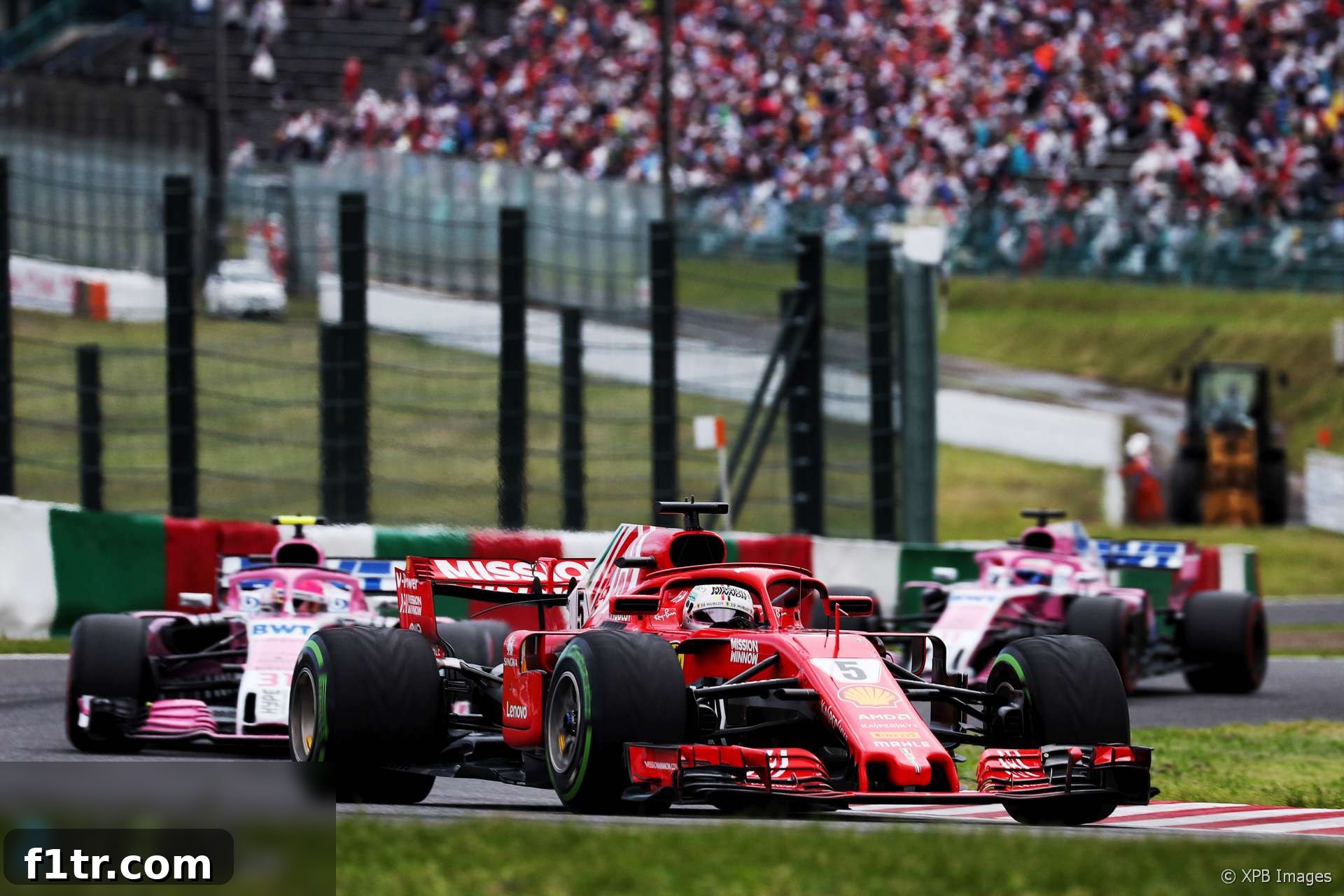
Sebastian Vettel’s Suzuka Tyre Gamble: A Ferrari Strategy Backfire in 2018
The High Stakes of F1 Qualifying and the Perils of Weather Prediction
The world of Formula 1 is a thrilling blend of raw speed, engineering marvels, and strategic masterstrokes. Yet, sometimes, even the most meticulous planning can unravel in an instant, especially when pitted against the capricious forces of nature. Such was the narrative at the 2018 Japanese Grand Prix, a pivotal point in a fiercely contested championship battle. Sebastian Vettel, then driving for Scuderia Ferrari, found himself at the heart of a qualifying session that would be remembered not for blistering pace, but for a strategic misstep concerning tyre choice, heavily influenced by an ultimately flawed weather forecast.
The Suzuka Circuit, revered by drivers for its challenging layout and passionate fans, was the stage for this drama. As the Q3 session commenced, the skies over the iconic track were pregnant with the promise of rain, creating a palpable tension in the pit lane. Ferrari, with their championship aspirations hanging in the balance, made a decisive call that they believed would give them an edge. However, this high-stakes gamble spectacularly backfired, leaving Vettel languishing far down the grid and sparking intense debate within the F1 paddock. This incident underscored the razor-thin margin between genius and folly in Formula 1 strategy, particularly when dealing with the notoriously unpredictable Suzuka weather.
The Suzuka Qualifying Drama: A Forecast Gone Wrong
The Unfolding Scene: Threatening Skies at Suzuka
The qualifying session for the 2018 Japanese Grand Prix began under increasingly ominous clouds. While Q1 and Q2 had seen relatively dry conditions, the air grew heavy with anticipation of rain as the final, crucial Q3 segment approached. Teams meticulously monitored radar images and track temperatures, aware that a sudden downpour could entirely reshuffle the grid. For Sebastian Vettel and Ferrari, who were locked in a tense championship fight against Lewis Hamilton and Mercedes, securing a front-row start was paramount. Every point, every grid position, held immense significance in a season that had already delivered its fair share of twists and turns.
Ferrari’s Bold Call: A Bet on the Rain
As the clock ticked down and the cars prepared to leave the pit lane for their first Q3 runs, Ferrari made a controversial strategic decision. Rather than equipping Sebastian Vettel with slick tyres, which were the conventional choice for the prevailing track conditions at that precise moment, the team opted for intermediate tyres. These grooved tyres are designed to displace water on a damp track, offering superior grip compared to slicks when there’s standing water, but are significantly slower on a dry or merely moist surface.
Vettel later clarified the rationale behind this audacious call. “I think we expected that there was more rain coming,” he explained, revealing that a specific weather report had indicated an imminent and significant increase in rainfall during the session. This report painted a picture of a track rapidly transitioning from damp to fully wet, making intermediates the seemingly logical and proactive choice to gain an advantage over competitors who might stick with slicks for too long. The team believed they were anticipating the conditions perfectly, aiming to be the ‘clever ones’ who had foreseen the inevitable.
The Gamble Fails: A Track Not Wet Enough
However, the anticipated heavy rain did not materialize immediately. As Vettel ventured out on track, the conditions remained frustratingly marginal. While there was certainly moisture in the air and on some parts of the circuit, it wasn’t wet enough to justify the intermediate tyres. The track was largely still suitable for slicks, which offer far greater grip and speed in those conditions. Consequently, Vettel struggled to generate adequate temperature and grip with his intermediates, losing precious tenths of a second on every corner. His lap times were simply not competitive compared to rivals on slicks, who were able to extract maximum performance from the drying asphalt.
“Obviously it didn’t [rain heavy], so then it was the wrong decision,” Vettel admitted candidly after the session. The moment the tyres touched the tarmac, it became painfully clear that the forecast, or at least its timing, had betrayed them. The ‘miracle’ of being the only clever ones quickly transformed into the harsh reality of being the only ones “looking stupid,” as Vettel put it.
Vettel’s Post-Qualifying Reflection: Defending the Team’s Decision
Collective Responsibility in High-Pressure Situations
Despite the obvious setback and the personal disappointment of a poor qualifying performance, Sebastian Vettel was resolute in his defense of the team’s decision. He refused to lay blame on any individual, emphasizing the collective nature of strategy calls in Formula 1. “When the conditions are like this you either get it right or you get it wrong so I’m not blaming anybody,” he stated, underlining the inherent risk in such unpredictable situations. He also dismissed questions about who precisely made the call, simply asserting, “It doesn’t matter… It was our call.” This stance showcased his leadership and commitment to team unity, even in the face of adversity, reinforcing the principle that in Formula 1, success and failure are shared.
Vettel further elaborated on the logic, explaining that while the heavy rain eventually arrived later in Q3, it was simply too late to salvage their position. “If it started to rain five, six, seven minutes earlier then we did a miracle,” he reflected. This perfectly encapsulates the tight margins in F1: a difference of mere minutes in a weather front’s arrival can swing fortunes dramatically from potential triumph to undeniable disappointment. The decision, though flawed in hindsight, was made with the best available information at the time, highlighting the incredible pressure under which F1 strategists operate, constantly balancing risk and reward.
The Unpredictable Nature of F1 Weather Challenges
The Suzuka incident serves as a stark reminder of how challenging weather forecasting can be in Formula 1. Unlike broader regional forecasts, F1 teams require incredibly precise, localized, and real-time predictions for specific sections of a racetrack. Microclimates, terrain, and even the heat generated by cars themselves can influence rain patterns. Teams invest heavily in sophisticated meteorological equipment and expert meteorologists, yet perfect accuracy remains an elusive goal. A slight delay in a rain front, or a change in its intensity, can have monumental consequences for tyre strategy. The choice between slick, intermediate, and wet tyres is perhaps the most critical variable in damp or mixed conditions, and getting it wrong can cost drivers vital grid positions or even an entire race victory, as Vettel’s experience at Suzuka vividly demonstrated.
The Broader Implications for Ferrari and the Championship
Impact on the Championship Battle with Lewis Hamilton
The 2018 Formula 1 season was a gripping contest between Sebastian Vettel and Lewis Hamilton. Heading into the Japanese Grand Prix, the championship pendulum had begun to swing decisively in Hamilton’s favour, partly due to a series of strong performances from Mercedes and, regrettably, a few strategic errors and driver mistakes from Ferrari and Vettel. Qualifying ninth (later promoted to eighth after Esteban Ocon’s penalty) at Suzuka was a significant blow to Vettel’s rapidly diminishing title hopes. Starting mid-pack on a circuit where overtaking is challenging, especially against faster cars, meant he faced an uphill battle to recover crucial points. This setback placed even greater pressure on him for the race, knowing that Hamilton was likely to start from the front and extend his championship lead, making the task of clawing back points incredibly difficult.
Ferrari’s Season of Missed Opportunities
The Suzuka qualifying incident, while isolated, was symptomatic of a broader narrative for Ferrari in 2018. The Scuderia had started the season with immense promise, possessing a car that was arguably the fastest on the grid at certain points. Vettel had led the championship for a significant portion of the early and middle stages. However, a combination of operational mistakes in races (like Germany and Italy), strategic miscalculations (as seen in Suzuka), and occasional driver errors prevented them from consistently converting their car’s potential into victories. These cumulative missteps ultimately eroded their championship advantage, allowing Mercedes and Hamilton to seize control. The tyre choice at Suzuka became another painful entry in a growing list of ‘what-ifs’ for the Italian team that season, leaving fans and the team alike to wonder what could have been.
Suzuka Circuit: An Unforgiving Stage for F1 Drama
The Unforgiving Nature of the Suzuka International Racing Course
Suzuka is not just any racetrack; it’s a legendary venue renowned for its unique figure-of-eight layout, high-speed corners, and demanding technical sections. Drivers universally adore it for the sheer challenge it presents, where precision and commitment are rewarded. However, this same complexity also makes it particularly unforgiving, especially when conditions are variable. The circuit’s fast, flowing nature means that tyre performance is paramount, and even a slight misjudgment in grip levels can lead to significant time loss or worse. The infamous “S” curves and the challenging Spoon Curve and 130R corners demand absolute confidence from the tyres, making the choice between slicks and intermediates an even more critical decision when rain threatens and track conditions are constantly evolving.
Suzuka’s Notorious Weather Variability
Beyond its iconic layout, Suzuka is also notorious for its highly unpredictable weather. Situated near the coast, the circuit is often subjected to sudden and dramatic shifts in atmospheric conditions, ranging from bright sunshine to torrential downpours within minutes. This makes race weekends at Suzuka a true test of a team’s meteorological capabilities and strategic agility. History is replete with examples of races and qualifying sessions at Suzuka being heavily influenced by rain, demanding quick thinking and daring decisions from strategists and drivers alike. The 2018 qualifying session was just another chapter in Suzuka’s long history of weather-induced drama, proving once again that anticipating Mother Nature’s next move is often the hardest challenge in Formula 1 and frequently defines the outcome of a Grand Prix weekend.
Starting from Eighth: An Uphill Battle for the Race
Following Esteban Ocon’s penalty, Sebastian Vettel was promoted to start the Japanese Grand Prix from eighth position. While an improvement from ninth, it still placed him deep within the midfield, significantly hindering his prospects for a strong result. On a circuit like Suzuka, where overtaking can be tricky, gaining positions requires exceptional pace, daring overtakes, and a flawless strategy. The qualifying misjudgment meant Vettel would have to fight his way through traffic, losing valuable time to his championship rival Lewis Hamilton, who was set to start from pole position. The team’s focus shifted entirely to damage limitation and a robust recovery drive in Sunday’s race, hoping to salvage as many points as possible from a challenging starting position.
Lessons Learned: The Fine Line in F1 Strategy
Sebastian Vettel’s intermediate tyre gamble at the 2018 Japanese Grand Prix serves as a compelling case study in the high-stakes world of Formula 1 strategy. It vividly illustrates the intricate dance between sophisticated data, human intuition, and the sheer unpredictability of external factors like weather. While the decision ultimately backfired, leading to a compromised qualifying position, Vettel’s steadfast defense of his team’s collective choice highlighted the immense pressure and the shared responsibility inherent in top-tier motorsport, where individual blame is often overshadowed by the larger team effort.
The incident became a poignant moment in Ferrari’s challenging 2018 season, adding another layer to the narrative of missed opportunities that ultimately cost them the championship. It also reaffirmed Suzuka’s reputation as a circuit where unpredictable weather often plays a decisive role, demanding adaptability and courage from every team and driver. In Formula 1, the difference between a strategic masterstroke and a costly error can often be measured in mere seconds, or in this case, the delayed arrival of a rain shower, reminding everyone that even with the best technology and talent, the sport remains an inherently human and unpredictable endeavor.
2018 F1 Season Insights
- F1 feared “death knell” for Drive to Survive after Ferrari and Mercedes snub
- McLaren staff told us we were “totally crazy” to take Honda engines in 2018 – Tost
- ‘It doesn’t matter if we start last’: How Red Bull’s junior team aided Honda’s leap forward
- Honda’s jet division helped F1 engineers solve power unit problem
- McLaren Racing losses rise after Honda split
Browse all 2018 F1 season articles