Monza Mayhem: FIA Explores Team Responsibility in Vettel and Stroll Incidents at 2019 Italian GP
The exhilarating spectacle of the 2019 Formula 1 Italian Grand Prix at Monza, often dubbed the “Temple of Speed,” was unfortunately marred by two high-profile incidents involving Sebastian Vettel and Lance Stroll. Both drivers, after spinning, rejoined the track in a manner deemed unsafe, leading to collisions and subsequent penalties. In the aftermath, FIA Race Director Michael Masi offered a critical assessment, underscoring that while driver caution is paramount, teams also bear a significant responsibility in guiding their competitors through such perilous situations, particularly at challenging sections like the Ascari chicane.
The Perilous Ascari Chicane: A Crucible for Errors
The Ascari chicane at Monza is renowned for its high-speed entry and complex combination of turns, making it a demanding section even in optimal conditions. When a driver spins out here, the situation becomes inherently dangerous due to the narrow run-off areas and the rapid approach of other cars. Rejoining the track at such a point requires extreme precision, situational awareness, and often, external guidance. It was at this critical juncture that both Vettel and Stroll found themselves in hot water, triggering a wider discussion on how such incidents can be better managed and prevented in the future of Formula 1 racing.
Sebastian Vettel’s Costly Error and Collision
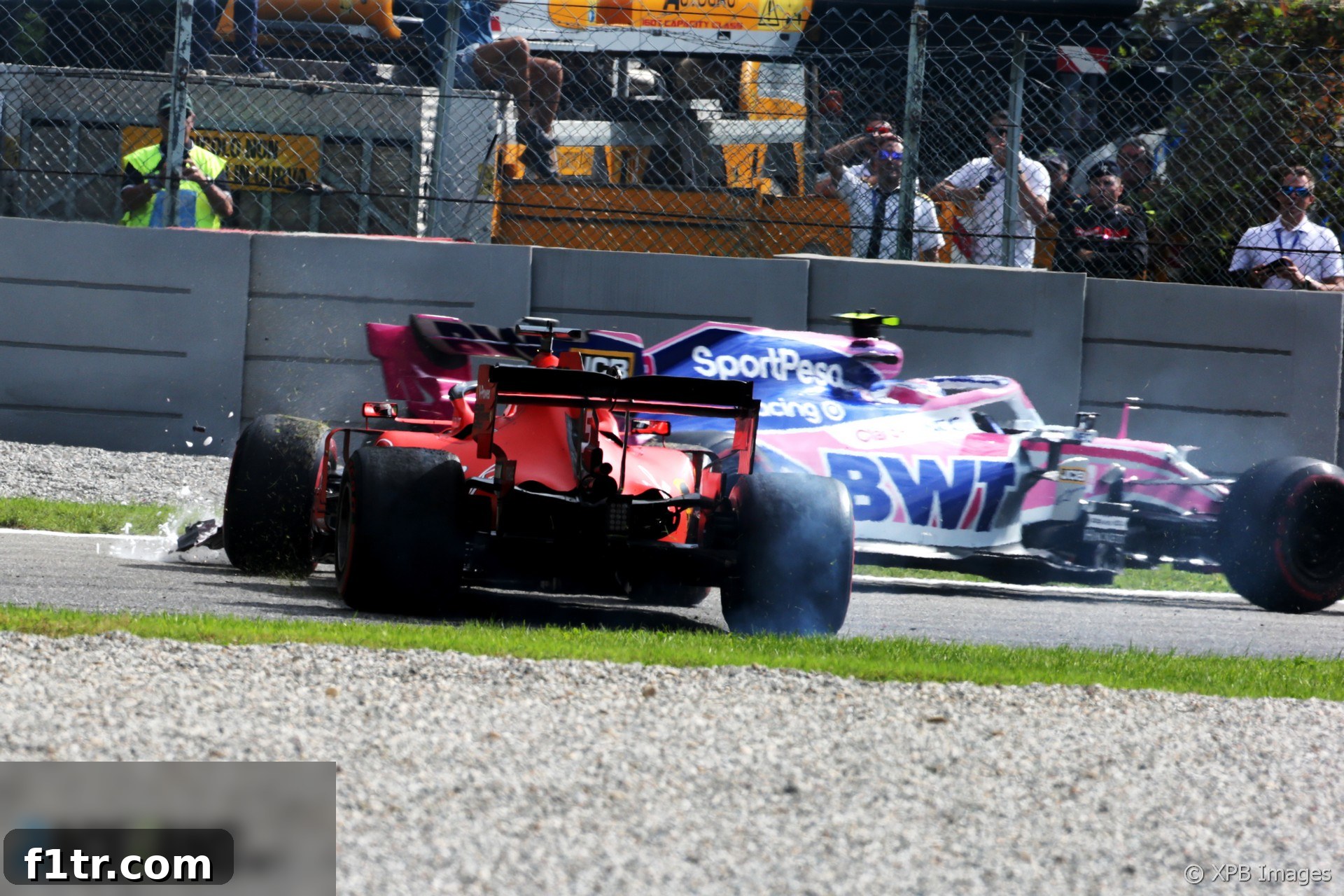
Sebastian Vettel’s incident was arguably the most talked-about moment of the race. Driving for Ferrari, Vettel spun his SF90 at Ascari, leaving him facing the wrong way. As he attempted to rejoin the track, he pulled back onto the racing line just as Ferrari teammate Charles Leclerc was passing. The two cars made contact, an alarming situation given they were stablemates. The incident was not only dangerous but also costly for Vettel, who received a 10-second stop-and-go penalty and was handed three penalty points on his Super Licence, pushing him perilously close to a race ban. This aggressive rejoin ignited a fierce debate about driver accountability and the need for greater situational awareness, especially after a high-speed spin.
Lance Stroll’s Controversial Rejoin Affects Pierre Gasly
Mere moments after Vettel’s mishap, a strikingly similar incident unfolded involving Lance Stroll. The then Racing Point driver also spun at the Ascari chicane. As Stroll attempted to rejoin the circuit, he inadvertently forced Pierre Gasly (driving for Toro Rosso at the time) off the track. This dangerous maneuver also earned Stroll a drive-through penalty and two penalty points on his Super Licence. The close succession of these two incidents at the same corner amplified concerns about drivers’ ability to safely re-enter the racing line, raising questions about visibility from the cockpit and the role of team communication in mitigating such risks.
Michael Masi’s Verdict: A Call for Shared Responsibility
In the aftermath of these incidents, FIA Race Director Michael Masi weighed in, providing a crucial perspective that extended beyond mere driver error. Masi emphasized that while drivers must exercise “caution” when rejoining the track, teams also have “a bit to play” in helping them avoid collisions. He highlighted the extensive technological resources available to every Formula 1 team, stating, “They have all the GPS [Global Positioning System], all the positioning. It was obviously broadcast live, [they’re] getting all the same pictures that we all got. So there’s all of those tools at the team’s disposal.” This statement underscored a critical point: teams possess real-time data and visual information that could be leveraged to instruct drivers on safe rejoining opportunities, guiding them through what can be a chaotic and disorienting experience after a spin. The onus, Masi asserted, is therefore a shared one, between the driver’s judgment and the team’s proactive assistance.
The Drivers’ Defense: A Question of Visibility from the Cockpit
Both Sebastian Vettel and Lance Stroll offered explanations for their actions, primarily citing limited visibility from within the cockpit of their Formula 1 cars. Vettel stated, “Coming back I knew there would be a gap but I struggled a little bit to get out. I think I was stuck on the grass, so I lost a bit of momentum there and that took a little bit longer. So certainly not ideal but I couldn’t see anything looking to the left. Obviously it is compromised because we have the high cockpit but I don’t think it’s an option to drop that.” Similarly, Stroll echoed these sentiments, explaining he had “no visibility on my right side” when he came onto the track in front of Gasly. He concluded, “There’s nothing at the moment you can do with these cars. It’s just a bit of a guessing game when we’re in that position.” Their comments highlight a long-standing challenge in modern F1 car design: the high cockpit sides and restrictive halo device, while paramount for driver safety, can severely limit peripheral vision, turning track rejoining into a high-stakes guessing game.
Beyond Driver Error: The Evolving Role of Team Communication in Safety
The incidents at Monza brought into sharp focus the evolving dynamic between driver and team, particularly concerning safety. In an era where telemetry provides an astonishing array of data points in real-time, the potential for teams to act as a crucial ‘second pair of eyes’ is immense. This isn’t just about passive monitoring; it’s about active, proactive communication. Teams can provide immediate, precise instructions to a disoriented driver regarding clear track segments, approaching traffic, and optimal rejoining angles. This includes designated strategists or race engineers specifically tasked with monitoring a car’s recovery after an incident. By leveraging GPS data, live feeds, and predictive algorithms, teams can transform a dangerous guessing game into a guided maneuver, significantly enhancing safety for their own driver and for competitors on track. This proactive role extends beyond simply reacting to incidents, involving pre-race briefings on the safest rejoining procedures for every corner, especially notorious ones like Ascari.
Penalties and Precedent: Shaping Future Conduct on Track
The penalties incurred by both Sebastian Vettel and Lance Stroll served as a stark reminder of the FIA’s commitment to maintaining safety standards and fair play. The severity of Vettel’s penalty, in particular, sent a clear message across the paddock about the dangers of careless track rejoining. Such rulings establish a precedent, influencing how drivers are expected to behave in similar situations in the future. These incidents, and the FIA’s response to them, contribute to the ongoing refinement of race control guidelines and driver expectations, ultimately aiming to foster a safer racing environment where dangerous maneuvers after a spin are minimized, and drivers are held accountable for their actions and those of their team in preventing further incidents.
Conclusion: Balancing Speed, Safety, and Responsibility
The 2019 Italian Grand Prix incidents involving Sebastian Vettel and Lance Stroll at Ascari served as a poignant illustration of the multifaceted challenges inherent in Formula 1 racing. They underscored the razor-thin margin between thrilling competition and dangerous misjudgment. While the drivers’ calls for improved visibility highlight an ongoing design challenge, Michael Masi’s emphasis on team responsibility points towards a critical area for immediate improvement: leveraging technology and communication to enhance safety. The balance between allowing drivers to race wheel-to-wheel at breakneck speeds and ensuring their safety, alongside that of their competitors, is a perpetual quest. These incidents reiterate that in the high-stakes world of Formula 1, safety is a shared responsibility, requiring unwavering caution from drivers, vigilant support from their teams, and continuous oversight from the governing body to minimize risks and ensure the sport remains both exhilarating and secure.
2019 F1 season
- Crying in the Melbourne car park at 2019 grand prix was my career low – Ocon
- McLaren Racing reports reduced £71 million loss in 2019
- Kvyat: Hockenheim podium last year was “my biggest achievement” so far
- How the FIA’s new encrypted fuel flow meter targets Ferrari’s suspected ‘aliasing’ trick
- “He smashed my office door”: 23 must-see moments from ‘Drive to Survive’ season two
Browse all 2019 F1 season articles