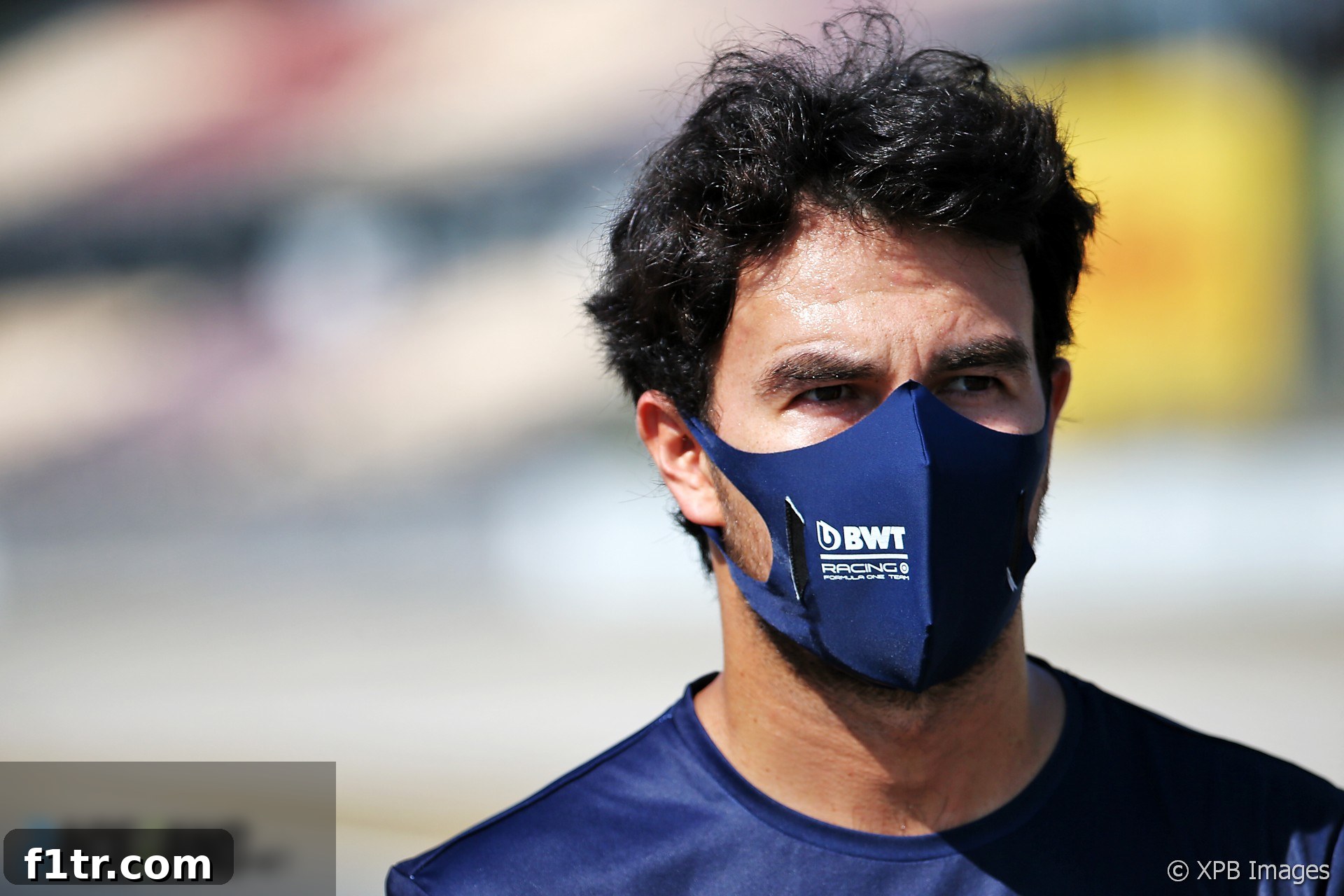
Sergio Perez’s unexpected battle with Covid-19 during the 2020 Formula 1 season sent ripples through the paddock, highlighting the sport’s ongoing challenges amidst a global pandemic. His team, Racing Point, swiftly launched an investigation into the source of the infection, which ultimately revealed surprising insights into the stringent precautions taken by drivers and the unforeseen vulnerabilities that remained.
Sergio Perez’s COVID-19 Ordeal: Unraveling the Source and Impact on F1
The Grand Prix world was left stunned when news broke that Sergio Perez had tested positive for Covid-19, forcing him to miss the highly anticipated British and 70th Anniversary Grands Prix at Silverstone. This unprecedented event marked the first time an F1 driver was sidelined due to the virus, raising immediate concerns about the integrity of the sport’s carefully constructed biosecure bubble. Perez, a pivotal driver for Racing Point, had returned to his home country of Mexico, a nation with a significant number of Covid-19 cases, during the two-week break following the Hungarian Grand Prix and prior to the doubleheader at Silverstone. This journey naturally led to initial speculation about the origin of his infection.
Tracing the Infection: An Unexpected Revelation
Racing Point’s CEO and Team Principal, Otmar Szafnauer, was quick to address the situation, promising a thorough investigation into how the Mexican driver contracted the virus. Speaking to Sky Sports, Szafnauer provided clarity, dispelling the initial assumptions regarding Perez’s trip to Mexico. The team’s meticulous information gathering led them to a different, quite remarkable conclusion regarding the source of the infection, highlighting the complex nature of virus transmission even with extreme caution.
“We think he got it from one of the private chefs that he hired,” Szafnauer revealed, underscoring the universal susceptibility to the virus. “That, quite frankly, could happen to any one of us.” He further detailed the extensive measures Perez had undertaken to minimize his risk, painting a picture of a highly disciplined individual committed to adhering to health and safety guidelines. “He took every precaution, he flew privately, he stayed with his parents, he didn’t go out to eat. And then when he got to Europe he hired a private chef so he wouldn’t go to restaurants and we think he got it from the chef.” This explanation served as a stark reminder that even the most rigorous personal protocols could not entirely eliminate risk, particularly when external services were involved, albeit unintentionally.
The revelation shifted the narrative from a perceived lapse in judgment to an unfortunate incident that could genuinely befall anyone, regardless of their status or the resources at their disposal. Perez’s case became a crucial learning experience for the entire F1 community, emphasizing the need for vigilance across all touchpoints, not just during travel or public interactions. It reinforced the idea that the virus could infiltrate even the most secure environments through seemingly innocuous channels, prompting teams to review and tighten their internal protocols even further.
Perez’s Personal Battle: Isolation, Symptoms, and Mental Fortitude
For Sergio Perez himself, the period following his positive test was a challenging blend of physical discomfort and mental isolation. As the first Formula 1 driver to test positive for Covid-19, he carried the weight of being a pioneer in an unwelcome category. He fortunately experienced relatively mild symptoms, which he described as “extremely lucky.”
“I was extremely lucky not to have any big symptoms other than a little bit of headache,” he shared. “One or two days I felt very tired, but at the same time you feel like that while you spend so much of your time on your own.” The mental toll of isolation, even more than the physical symptoms, seemed to be a significant challenge. Perez spent his mandatory isolation period in an apartment in Milton Keynes, a situation he likened to a “lockdown for 10 days.”
Despite being confined, Perez remained committed to his physical conditioning, understanding the demanding nature of F1 racing. “I couldn’t leave the room so I was basically on lockdown for 10 days,” he explained. “I was training in the apartment that I was and I was trying to keep fit.” There was a brief glimmer of hope that he might be able to race in the second Silverstone event, the 70th Anniversary Grand Prix, if he returned a negative test. “Unfortunately, that didn’t happen,” he lamented, having to watch from the sidelines as his team raced on without him. This period of forced inactivity was undoubtedly frustrating for a competitor as driven as Perez, who thrives on being behind the wheel.
His experience underscored the broader impact of the pandemic on athletes, who rely on peak physical and mental condition. The disruption to training regimes, the uncertainty of returning to competition, and the psychological burden of isolation were all part of Perez’s journey, which he navigated with admirable resilience. His eventual return was a testament to his determination and the effectiveness of the F1 medical protocols in ensuring a safe comeback.
The Racing Point Response and the F1 Paddock on Alert
Perez’s absence created an immediate logistical challenge for Racing Point. With a seat suddenly vacant, the team had to scramble for a replacement. The natural choice fell to Nico Hulkenberg, a seasoned F1 veteran who had previously driven for the team (under its Force India guise). Hulkenberg’s sudden call-up provided one of the more dramatic storylines of the season, highlighting the depth of talent available even outside the immediate F1 grid. His temporary return to the cockpit, while exciting for fans, also served as a stark reminder of the unpredictable nature of the 2020 season, where circumstances could change in an instant due to the virus.
The incident placed the entire Formula 1 paddock on high alert. While F1 had implemented robust testing and “bubble” protocols, Perez’s case demonstrated that no system was entirely foolproof. Teams intensified their internal measures, reviewing everything from catering practices to driver interactions and travel arrangements. The incident sparked discussions about the potential for wider outbreaks and the consequences for the championship. Thankfully, thanks to widespread vigilance and adherence to strict guidelines, Perez’s case remained an isolated one among the drivers at the time, preventing a larger disruption to the racing calendar.
F1’s Resilient Protocols and Lessons Learned
Formula 1’s ability to conduct a significant portion of its 2020 season amidst a global pandemic was a remarkable feat of logistics and public health management. Perez’s positive test, while unsettling, inadvertently served as a critical stress test for these protocols. The immediate identification, isolation, and contact tracing processes worked effectively, preventing further spread within the paddock. This rapid response mechanism was crucial in maintaining the integrity of the F1 bubble.
The sport’s continuous testing regime, where all personnel underwent regular Covid-19 tests, proved its worth by catching cases early. Lessons learned from Perez’s situation undoubtedly led to refinements in how teams and the FIA managed the interface between the F1 bubble and external services, such as private chefs or support staff, reinforcing the need for every individual involved in the F1 ecosystem to be part of the same stringent health framework. It reinforced the importance of collective responsibility in safeguarding the health of the entire community and ensuring the continuation of the championship.
The Triumphant Return: Back Behind the Wheel
After his mandatory isolation and subsequent negative test results, Sergio Perez was finally cleared to return to the paddock and, more importantly, to his Racing Point cockpit. His return was met with relief from his team, fellow drivers, and fans alike. “Now, finally, I’m free to race again,” he declared, his words conveying both relief and renewed determination. His comeback was a significant moment for the sport, symbolizing resilience and the ongoing effort to navigate the complexities of racing during a pandemic.
Perez quickly reintegrated into the team, eager to make up for lost time and contribute to Racing Point’s strong performance in the Constructors’ Championship. His experience, though challenging, added another layer to the narratives of the unique 2020 season, showcasing the human element of Formula 1 drivers beyond their on-track prowess. It highlighted their vulnerability and their unwavering commitment to their sport, even in the face of unprecedented global health crises.
2020 F1 season
- Grosjean to make F1 test return tomorrow for first time since Bahrain horror crash
- Pictures: Wrecked chassis from Grosjean’s Bahrain fireball crash to go on display
- Bottas vs Rosberg: Hamilton’s Mercedes team mates compared after 78 races each
- F1 revenues fell by $877 million in Covid-struck 2020 season
- Hamilton and Mercedes finally announce new deal for 2021 season
Browse all 2020 F1 season articles