F1 Rookies Navigate the Algarve Unknown: Diverse Preparations, Calendar Resilience, and Key Controversies
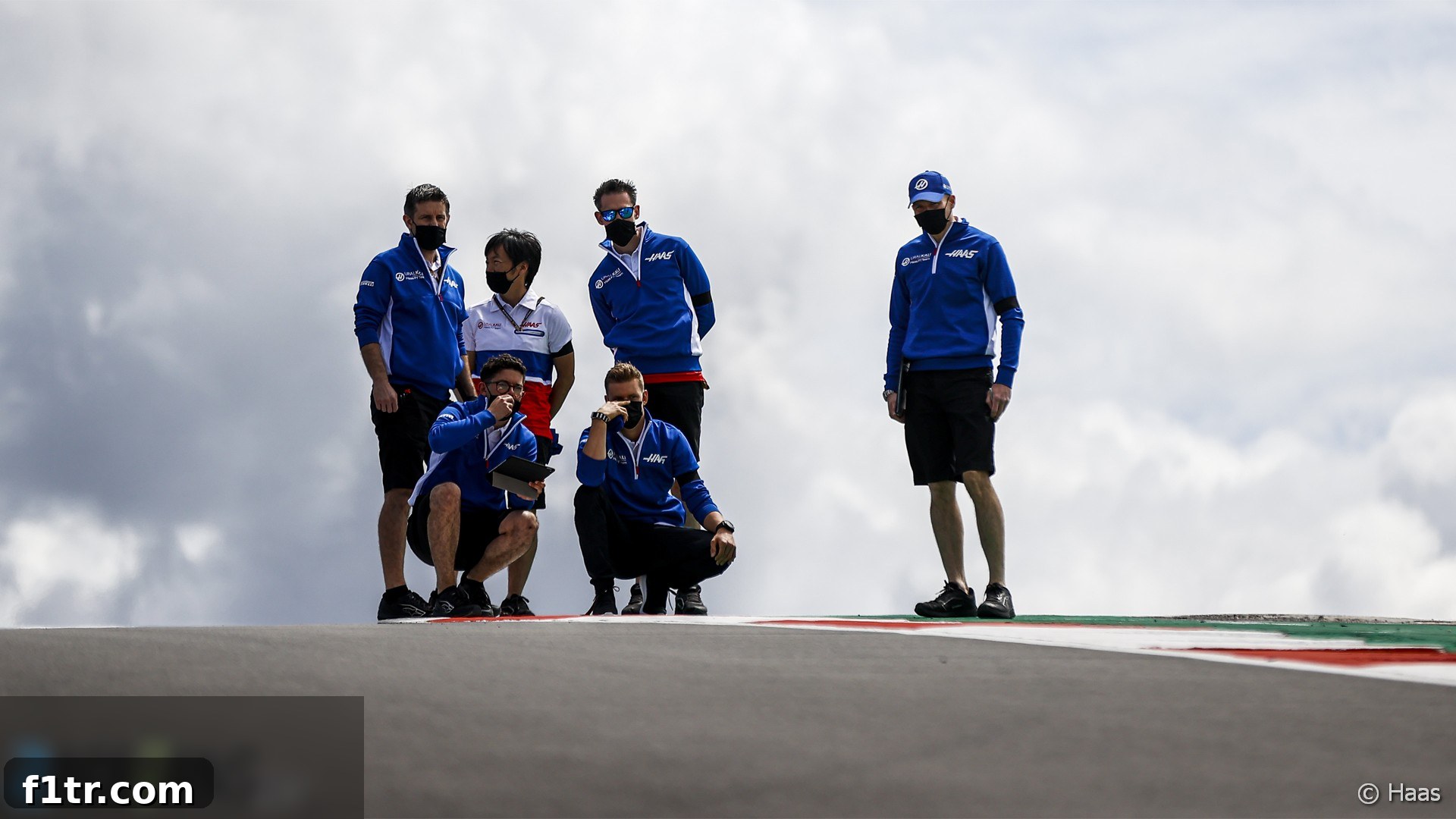
As the Formula 1 circus descended upon Portimão for the Portuguese Grand Prix, a unique challenge awaited the sport’s newest talents: Nikita Mazepin, Mick Schumacher, and Yuki Tsunoda. For these three rookies, the undulating, blind-cornered Algarve International Circuit presented an unfamiliar battleground, demanding distinct approaches to preparation. This weekend, fans watched intently as these drivers, each with their own story and strategy, tackled a track that, despite its relatively recent reintroduction to the F1 calendar, quickly earned a reputation for testing even the most seasoned competitors. Their varying methods for mastering the unknown offer a fascinating glimpse into the meticulous world of Formula 1 driver readiness.
Rookies Tackle the Algarve Challenge: Preparation and Mindset
Advert | Become a Supporter & go ad-free
The Algarve International Circuit, with its dramatic elevation changes and a series of challenging blind corners, posed a significant hurdle for all three of Formula 1’s 2021 rookies, none of whom had previously competed there. Their preparation strategies for the Portuguese Grand Prix showcased a blend of cutting-edge simulation, real-world experience, and innovative problem-solving.
Yuki Tsunoda’s Simplicity and Surprise
AlphaTauri’s Yuki Tsunoda, the only rookie to have secured points in the opening races, opted for a straightforward, routine approach. He engaged in “a couple of sim sessions,” a standard practice for drivers before tackling unfamiliar circuits. While simulators offer an invaluable tool for learning track layouts and car setups, they often fall short in conveying the visceral experience of a real circuit. Tsunoda’s limited frame of reference became evident during his pre-race track walk, where the circuit’s pronounced undulations caught him by surprise.
“Lots of up-down, I didn’t expect that huge difference,” he candidly admitted, highlighting the stark contrast between simulated and physical reality. Despite this initial astonishment, his enthusiasm remained high: “I’m really looking forward to it.” This blend of diligent preparation and an open mind is characteristic of Tsunoda’s early F1 career, where rapid adaptation has been key to his promising start.
Mick Schumacher’s Prior Experience and F1 Test Opportunity
Haas driver Mick Schumacher arrived in Portugal with a distinct advantage, having prior experience at the Algarve circuit. During the break following the Emilia-Romagna Grand Prix, Schumacher also had the invaluable opportunity to test a Ferrari F1 car at Fiorano. While not a direct preparation for Portimão, this test provided crucial seat time in F1 machinery, honing his feel for the advanced aerodynamics and power delivery.
Regarding Portimão itself, Schumacher revealed: “I have been here in a GP2 car, 2018.” He acknowledged that the circuit had undergone resurfacing since his last visit, potentially altering its characteristics. “It was obviously before it was resurfaced, so I haven’t driven the new, I probably would call it the new bumps here. But it’s a very fun track. It still has the same characteristic of those undulating parts and a lot of blind corners. Definitely looking forward to driving it tomorrow.” His familiarity with the fundamental layout and challenging features, despite the surface changes, offered a significant mental edge, allowing him to focus on fine-tuning rather than initial learning.
Nikita Mazepin’s Unconventional Off-Roading and Regulatory Hurdles
Schumacher’s Haas teammate, Nikita Mazepin, faced a different set of circumstances. Unlike Schumacher’s F1 test, Mazepin’s post-Imola break involved off-roading in Russia. This unconventional preparation stemmed from stringent F1 regulations that severely limit testing opportunities for current-generation cars, permitting only vehicles that are at least two years old. This, coupled with ongoing COVID-19 travel restrictions, significantly curtailed his options for direct track preparation.
Mazepin articulated the challenges: “With current regulations of not being able to test unless it’s a two-year-old F1 car, there’s really not much options of what I could have been doing. And then there’s also Covid-19 restrictions that only allowed me to go home and see my family and spend a bit of time outdoors and drive something off-road. That was the only thing I could have done.” His comments highlight the disparity in preparation resources and opportunities, particularly for drivers in newer teams or those without direct ties to top-tier development programs. While off-roading offers physical and mental benefits, it bears little resemblance to the demands of an F1 car at peak performance, underscoring the unique challenges Mazepin faced in adapting to an unknown F1 circuit.
F1 Calendar Resilience: North American Races Confirmed Amidst Global Challenges
Formula 1 has consistently demonstrated remarkable adaptability in navigating the complexities of a global pandemic, and this resilience was underscored by recent announcements regarding the 2021 calendar. Following the unfortunate cancellation of the Canadian Grand Prix, the sport swiftly moved to confirm a replacement event at Istanbul Park in Turkey. More critically, F1 also provided crucial reassurance to fans and stakeholders regarding the two remaining races scheduled for North America: the Mexican City Grand Prix and the United States Grand Prix.
With these pivotal North American rounds still several months away, F1 proactively confirmed their status. In an official statement, the organization declared: “Regarding the announcement about the cancellation of the 2021 Canadian Grand Prix we want to reassure that the Formula 1 Mexico City Grand Prix 2021 presented by Heineken is confirmed to take place next October.” This early confirmation aimed to mitigate uncertainty for event organizers, travel planners, and particularly the dedicated fanbase in the region, reaffirming F1’s commitment to its strategic presence in the Americas despite the ongoing logistical hurdles presented by COVID-19. The ability to pivot quickly, as seen with the Turkish GP, while also securing long-term fixtures, is testament to F1’s determination to deliver a full and exciting championship season.
Advert | Become a RaceFans supporter andgo ad-free
Social Media Spotlight: Athletes Take a Stand
Notable posts from Twitter, Instagram and more, reflecting key discussions and moments in motorsport:
|@LewisHamilton says he may join a three-day boycott of social media by football, rugby and cricket teams, which is due to start tomorrow, in protest against the platforms’ failure to tackle racism.#F1 #PortugueseGP pic.twitter.com/rA4V36Bg7d
— RaceFans (@racefansdotnet) April 29, 2021
The potential involvement of Lewis Hamilton in a cross-sport social media boycott underscores a growing concern among athletes regarding the pervasive issue of online racism and abuse. This collective action by various sports teams aims to pressure social media platforms into taking more decisive steps to combat hate speech and create safer online environments for athletes and fans alike. Hamilton’s outspoken advocacy for social justice aligns with this movement, highlighting the broader societal issues that intersect with the world of elite sport.
Ser piloto no es fácil, pero aprender a levantarse es una obligación #F4NACAM #XAmorALosMotores📸 pic.twitter.com/1J5txxIMBo
— Fórmula 4 (@FIAF4Nacam) April 29, 2021
In the junior categories, the sentiment of perseverance remains strong. A post from Formula 4 NACAM emphasizes the resilience required in motorsport: “Being a driver is not easy, but learning to get up is an obligation.” This message resonates throughout all levels of racing, from grassroots to F1, where overcoming setbacks is a fundamental part of a driver’s journey.
https://twitter.com/ZacYoungRacing/status/1387822116930785282?s=20
https://www.instagram.com/p/CONXpBBljT/
- Find more official F1 accounts to follow in the F1 Twitter Directory
Deeper Dive into Motorsport Headlines: Global Series and Development
Beyond Formula 1, the world of motorsport continues to evolve, with significant developments across various series and driver development initiatives. Here are some interesting links that highlight the breadth of the racing landscape:
Vancouver EPrix gets green light with city council approval (Inside Electric)
“The EPrix, tentatively scheduled for July 2022, will anchor a three-day festival-style event billed as Canadian EFest. This will include a two-day sustainability and climate change conference and an E-Prix round held on a single day which, according to the motion, ‘would generate significant economic benefit to the city and support recovery of the gutted tourism sector’.” The approval of the Vancouver E-Prix signals further expansion for Formula E and a commitment to sustainable motorsport in North America, with a broader vision of economic and environmental impact.
Fittipaldi comes full circle with series return at Texas (IndyCar)
“To race single-seaters on an oval is very different, especially with the new Aeroscreen. The car has a bit of a different balance from what I was used to (in 2018). Following cars is always difficult, as well, getting used to the experience not only at Texas but also Indianapolis because you can run fast laps on your own in practice and you could be quick in qualifying, but you go out in the race and it’s going to be hard to get that experience of following in traffic, timing passes and all that kind of stuff.” Pietro Fittipaldi’s return to IndyCar on ovals highlights the unique challenges of American open-wheel racing, particularly the adaptation required for the Aeroscreen and the intricacies of slipstreaming in traffic.
KCMG launches driver development project (KCMG)
“The KCMG Driver Development Project will provide top level support for its members, supplying a dedicated driver and performance coach from the team’s impressive staff roster for mentorship. Off-track support will also be provided as driver fitness will be handled by an exclusive physiotherapist to ensure participants are performing at their maximum potential.” The launch of KCMG’s driver development project underscores the increasing importance of comprehensive support systems for aspiring racers, covering not just on-track performance but also crucial physical and mental conditioning.
Dunne and van’t Hoff claim poles for Spanish F4 opener at Spa (Formula Scout)
“Driving as a solitary entry for Pinnacle Motorsport – which itself is making its European racing debut after many years competing in Asia – Dunne first showed his hand when he went fastest by more than one second with around six minutes remaining in the first of the two 15-minute sessions.” The Spanish F4 opener at Spa saw strong performances from Dunne and van’t Hoff, signaling emerging talents in the junior single-seater ranks and the international reach of motorsport teams.
F1’s dull qualifying needs a shake-up – but sprint races risk ruining integrity (The Telegraph)
“For a sport that lives or dies by innovation, Formula 1 can be spectacularly ham-fisted when it comes to conceiving fresh ways to sell the show.” The debate around F1 sprint races continues, with critics arguing that while the sport needs innovation, radical changes to traditional formats could compromise the integrity and prestige of Grand Prix racing itself.
We always endeavour to credit original sources. If you have a tip for a link relating to single-seater motorsport to feature in the next RaceFans round-up please send it in via the contact form.
Advert | Become a RaceFans supporter andgo ad-free
The Russell-Bottas Controversy: Power Dynamics and Public Perception
The highly publicized collision between Mercedes’ Valtteri Bottas and Williams’ George Russell at the Emilia-Romagna Grand Prix continued to dominate discussions, particularly during the Thursday press conference at Algarve. Russell, initially quick to blame Bottas, had already softened his stance in post-race remarks and a subsequent social media apology. However, his latest comments, aligning himself more closely with Mercedes’ perspective and describing Bottas and Hamilton as “teammates” even to him, sparked considerable debate among fans and pundits. This strategic pivot, aimed perhaps at ingratiating himself with a potential future employer, did not go unnoticed, particularly by RaceFans commenter Ajpennypacker.
It’s not so much the apology, but imagine a former great team with a lot of history and pride, having it’s star driver speak in in the most obsequious manner imaginable about a rival team. I’ve never even seen anything like this with Toro Rosso and RBR. No George Russell. Bottas and Hamilton are rivals, and while it’s not likely you will meet on track again, you are a damn Williams driver right now.
I feel disdain for the charade of big teams and powerful people having soiled the grid with their influence. We’ve seen Toro Rosso plenty of times move over for Red Bull. We’ve seen Force India get out of the way for Hamilton. We’ve seen Alfa Romeo do the same for Ferrari. Now this.
Ajpennypacker
Ajpennypacker’s critique cuts to the heart of perceived power dynamics within Formula 1. They argue that Russell’s eagerness to adopt Mercedes’ narrative, even at the expense of his own team’s position, exemplifies a broader issue of influence exerted by top teams over their smaller affiliates or drivers aspiring to join their ranks. The comparison to junior teams like Toro Rosso (now AlphaTauri) yielding to Red Bull, or other customer teams showing deference, highlights a concern that the purity of competition can be undermined by political considerations and career aspirations. This incident, therefore, became more than just a racing mishap; it evolved into a broader commentary on the integrity of the sport and the pressures faced by young drivers striving to climb the F1 ladder.
Happy Birthday!
Wishing a very happy birthday to Ccolanto, Mike Weilding, Oliver, and Jake Kilshaw!
If you want a birthday shout-out, let us know when yours is via the contact form or by adding it to the list here.
On This Day in F1
- Five years ago today, championship leader Nico Rosberg secured pole position for the Russian Grand Prix after his teammate, Lewis Hamilton, encountered engine problems during Q2. This moment was pivotal in their intense championship battle that year.
April on RaceFans: Top Reads and Insights
Catch up on a selection of RaceFans’ most engaging and thought-provoking articles from this month:
- My F1 Cars: Webber’s route from ‘pain in the ass’ Minardi to all-conquering Red Bull
- ‘Hamilton didn’t break the rules by reversing’ shouldn’t be a story
- Moto GP 21 – The official Moto GP game reviewed
- Why Wolff was wrong to tell Russell he should have backed down against Bottas
- Moto GP shows how AlphaTauri could challenge top teams in future – Gasly
- Massive disappointments happen, I can deal with them: Exclusive interview with George Russell
- Why F1 fought so hard for a race in Miami – and it may come at the expense of Spain’s
- Hamilton lucky to come off second best after latest duel with Verstappen
- Grosjean faces the toughest task of IndyCar’s all-star rookies
- Time for a revolution at the top of world motorsport? The race to replace Todt has started
- Revealed: Radical changes on the drawing board for F1’s next rules revolution in 2025
- How Honda achieved a win-win with its smaller and more powerful new F1 engine
- How some teams voted in vain against rule change which cost low-rake cars “1s per lap”
- New format but familiar problems in Formula 2’s first triple-header weekend
- “Things may have happened below our radar”: Why the FIA needed new powers to keep F1 teams honest
Stay Connected: Subscribe to Our Newsletter
Never miss a beat in the world of motorsport. Get the best of our comprehensive coverage after every F1 race delivered directly to your inbox – sign up for the free RaceFans email Newsletter today: