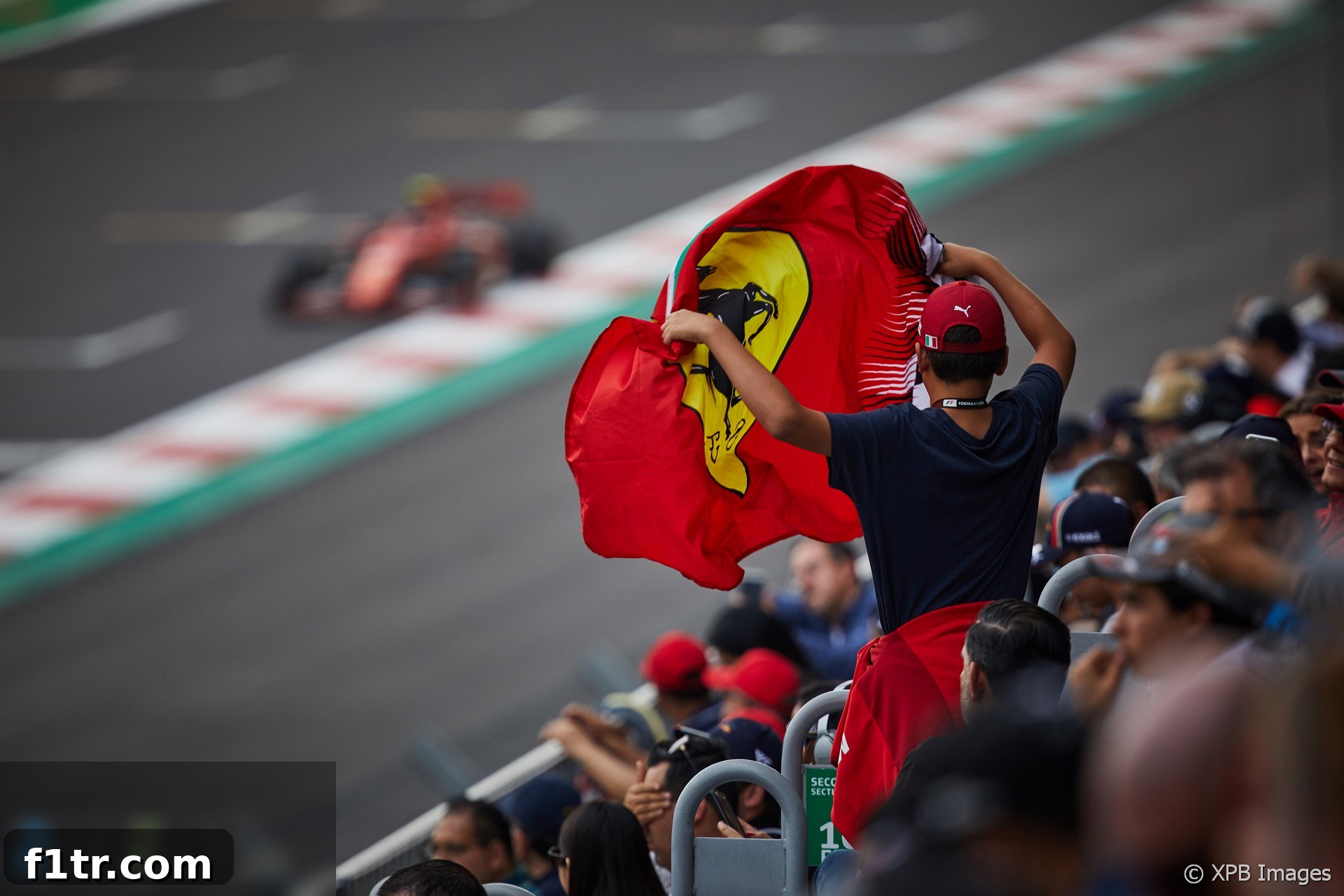
The highly anticipated 2019 Mexican Grand Prix promises to be a captivating spectacle, with its outcome potentially decided long before the chequered flag falls. Specifically, the pre-race discussions within the Ferrari motorhome are set to shape the Scuderia’s approach, a factor that could ripple through the entire race strategy and impact the final standings. Following an intense qualifying session, Ferrari finds itself in a commanding position, yet one fraught with strategic complexities and the echoes of past team order controversies.
Ferrari’s Front-Row Lockout: A Double-Edged Sword
Max Verstappen’s unfortunate grid penalty, incurred for failing to slow under yellow flags, has inadvertently gifted Ferrari a front-row lockout for Sunday’s race. This prime starting position for both Charles Leclerc and Sebastian Vettel presents a golden opportunity for the Italian team to convert their raw pace into a much-needed victory. However, the 900-meter sprint from the starting grid to Turn One at the Autódromo Hermanos Rodríguez is notoriously long, offering ample slipstreaming opportunities and demanding precise execution from the drivers.
Leclerc, who inherited pole position after Verstappen’s penalty, articulated the immense importance of securing the lead early in the race. “The one who would be first in after Turn Three will have a huge advantage,” he stated. This advantage extends beyond the typical benefit of ‘free air’ – unobstructed running that allows a car to perform at its aerodynamic optimum without the turbulent wake of a rival. At the high-altitude Mexican circuit, the thin air significantly impacts engine cooling and brake performance. A car running in another’s slipstream or trailing closely faces increased temperatures, forcing drivers to “lift and coast” or manage their pace more aggressively, potentially compromising their entire strategy. This makes a clean getaway and maintaining track position in the opening laps absolutely paramount for any driver aiming for victory.
Echoes of Sochi: Ferrari’s Strategic Dilemma
The Ferrari team’s tactical approach to the start of the Mexican Grand Prix inevitably brings to mind the controversial events of the 2019 Russian Grand Prix in Sochi. At that race, which also featured a long run to the first braking zone and a Ferrari front-row start (though P1 and P3), a pre-race agreement was made between Leclerc and Vettel. While the precise details remained somewhat veiled, post-race statements and radio communications suggested that pole-sitter Leclerc was expected to provide Vettel with a slipstream, allowing him to pass Mercedes’ Lewis Hamilton. If Vettel then took the lead from Leclerc due to this assistance, he was to return the position, provided both drivers had made comparable starts.
As the team’s radio communications clearly indicated, after Vettel indeed passed Leclerc at the start, both drivers were informed that their “start performance was the same,” implying Vettel should cede the lead. However, Vettel resisted, leading to an internal dispute that ultimately cost Ferrari valuable time and strategy flexibility. This contentious episode highlighted the inherent tension between team objectives and individual driver ambitions, a dynamic Ferrari must now navigate again in Mexico, albeit with a crucial difference: their drivers start side-by-side on the front row, eliminating an intervening car and intensifying the direct rivalry.
With Leclerc and Vettel occupying the first two grid slots, the primary concern for Ferrari will be avoiding a repeat of their lacklustre starts seen in Suzuka just two weeks prior. A strong, coordinated launch is essential, not only to secure their positions but also to capitalize on the sheer power of their SF90 chassis. The potent Ferrari engine, particularly effective on Mexico’s long straights despite the altitude, could allow them to form a formidable “rolling roadblock” – a tactic where the leading cars strategically manage their pace to keep rivals, especially the quicker Red Bulls and Mercedes, bottled up behind them. This simple yet effective strategy minimizes unnecessary complexity and the risks of internal squabbling, a lesson surely learned from the Sochi saga.
Despite the potential for strategic disagreements, Leclerc has previously confirmed that the drivers are prepared to adhere to whatever race plan the Ferrari engineers devise. The team is under considerable pressure to convert this prime starting position into a victory, especially after failing to do so in the previous two races from pole. The 2019 Mexican Grand Prix represents a significant opportunity for Ferrari to reaffirm its championship aspirations and demonstrate effective race management.
Verstappen’s Undeniable Threat and Hamilton’s Championship Pursuit
While Max Verstappen’s grid penalty for his yellow flag infringement removed him from pole, he remains a significant threat. Red Bull Racing has a strong track record at the Autódromo Hermanos Rodríguez, demonstrating exceptional chassis balance and tire management, which are crucial at this unique circuit. Last year’s performance underscored their capability, and Verstappen is renowned for his aggressive yet astute race strategy. If he can swiftly navigate past Lewis Hamilton in the opening laps, his Honda-powered Red Bull, typically kind to its tires, could prove incredibly difficult for Ferrari to contain, even from the front row. This potential challenge from Verstappen adds another layer of intrigue, especially given Mercedes’ recent struggles to outmanoeuvre their rivals strategically, as evidenced by their performance in Singapore and their inability to get Hamilton past Vettel in previous encounters.
For Lewis Hamilton, the 2019 Mexican Grand Prix offers a potential opportunity to clinch his sixth Formula 1 World Championship. However, if Verstappen and both Ferraris occupy the top three places, Hamilton will likely have to wait at least another week to secure the title. The championship scenario is also intertwined with Valtteri Bottas’s performance. Mercedes has indicated a “90%” confidence that Bottas will avoid a grid penalty following repair work to his damaged car, a crucial factor that will influence Mercedes’ overall team strategy. Should Bottas avoid a penalty and score well, it could significantly aid Hamilton’s title aspirations, even if he doesn’t win the race outright. The stakes are incredibly high for both Mercedes drivers, adding a championship-defining element to an already thrilling race.
Strategic Disadvantages for Midfield Runners: The Q2 Tyre Rule
The unique Q2 tyre rule in Formula 1 often dictates varied strategies for the race start. At the Mexican Grand Prix, the four slowest drivers in Q3 – specifically the McLaren and Toro Rosso duos – face a considerable strategic disadvantage. They are mandated to start the race on the older soft compound tyres they used to set their fastest Q2 times. As demonstrated in last year’s event, these drivers are often the only ones on the softest rubber at the start, a compound notoriously prone to high degradation at the high-altitude, high-energy demands of the Autódromo Hermanos Rodríguez.
This situation often necessitates extensive “pace management” from these drivers, prioritizing tire longevity over outright speed. Charles Leclerc’s impressive drive to seventh place for Sauber in 2018 serves as a prime example, a race where he received near-constant reminders to conserve his tires. Drivers starting on softs will aim for an early pit stop, hoping to switch to a more durable compound and manage the race from there. However, this strategy is not without risk, as it can expose them to traffic and compromise track position. The midfield battle will therefore be a fascinating tactical chess match, with tire strategy playing a pivotal role in determining who climbs through the field and who struggles to maintain position.
Potential Weather Impact
While often associated with dry, hot conditions, the weather could yet introduce another unpredictable element to the 2019 Mexican Grand Prix. The race is scheduled to start at 1:10 PM local time, and current forecasts indicate a rising chance of rain from 3:00 PM onwards, with a strong possibility of thunderstorms developing after 4:00 PM. If this adverse weather arrives earlier than anticipated, a wet end to the race could dramatically alter the strategic landscape, introduce safety car periods, and offer opportunities for unexpected outcomes. Rain would neutralize some of the inherent advantages of certain cars and engines, relying instead on driver skill in challenging conditions and swift, decisive strategy calls from the pit wall.
Become a RaceFans supporter and enjoy an ad-free experience, plus exclusive content!
Official Qualifying Times in Full
| Driver | Car | Q1 | Q2 (vs Q1) | Q3 (vs Q2) | |
| 1 | Charles Leclerc | Ferrari | 1’16.364 | 1’16.219 (-0.145) | 1’15.024 (-1.195) |
| 2 | Sebastian Vettel | Ferrari | 1’16.696 | 1’15.914 (-0.782) | 1’15.170 (-0.744) |
| 3 | Lewis Hamilton | Mercedes | 1’16.424 | 1’15.721 (-0.703) | 1’15.262 (-0.459) |
| 4 | Max Verstappen | Red Bull | 1’15.949 | 1’16.136 (+0.187) | 1’14.758 (-1.378) |
| 5 | Alexander Albon | Red Bull | 1’16.175 | 1’16.574 (+0.399) | 1’15.336 (-1.238) |
| 6 | Valtteri Bottas | Mercedes | 1’17.062 | 1’15.852 (-1.210) | 1’15.338 (-0.514) |
| 7 | Carlos Sainz Jnr | McLaren | 1’17.044 | 1’16.267 (-0.777) | 1’16.014 (-0.253) |
| 8 | Lando Norris | McLaren | 1’17.092 | 1’16.447 (-0.645) | 1’16.322 (-0.125) |
| 9 | Daniil Kvyat | Toro Rosso | 1’17.041 | 1’16.657 (-0.384) | 1’16.469 (-0.188) |
| 10 | Pierre Gasly | Toro Rosso | 1’17.065 | 1’16.679 (-0.386) | 1’16.586 (-0.093) |
| 11 | Sergio Perez | Racing Point | 1’17.465 | 1’16.687 (-0.778) | |
| 12 | Nico Hulkenberg | Renault | 1’17.608 | 1’16.885 (-0.723) | |
| 13 | Daniel Ricciardo | Renault | 1’17.270 | 1’16.933 (-0.337) | |
| 14 | Kimi Raikkonen | Alfa Romeo | 1’17.225 | 1’16.967 (-0.258) | |
| 15 | Antonio Giovinazzi | Alfa Romeo | 1’17.794 | 1’17.269 (-0.525) | |
| 16 | Lance Stroll | Racing Point | 1’18.065 | ||
| 17 | Kevin Magnussen | Haas | 1’18.436 | ||
| 18 | Romain Grosjean | Haas | 1’18.599 | ||
| 19 | George Russell | Williams | 1’18.823 | ||
| 20 | Robert Kubica | Williams | 1’20.179 |
Sector Times
| Driver | Sector 1 | Sector 2 | Sector 3 |
|---|---|---|---|
| Charles Leclerc | 26.625 (2) | 28.787 (4) | 19.523 (4) |
| Sebastian Vettel | 26.528 (1) | 28.789 (5) | 19.675 (6) |
| Lewis Hamilton | 26.965 (6) | 28.611 (2) | 19.486 (3) |
| Max Verstappen | 26.732 (3) | 28.586 (1) | 19.440 (1) |
| Alexander Albon | 26.960 (5) | 28.820 (6) | 19.537 (5) |
| Valtteri Bottas | 26.923 (4) | 28.664 (3) | 19.478 (2) |
| Carlos Sainz Jnr | 27.086 (7) | 29.056 (7) | 19.872 (7) |
| Lando Norris | 27.173 (9) | 29.212 (8) | 19.889 (8) |
| Daniil Kvyat | 27.284 (16) | 29.233 (9) | 19.900 (10) |
| Pierre Gasly | 27.120 (8) | 29.486 (10) | 19.940 (11) |
| Sergio Perez | 27.264 (14) | 29.529 (11) | 19.894 (9) |
| Nico Hulkenberg | 27.249 (11) | 29.593 (12) | 19.959 (12) |
| Daniel Ricciardo | 27.235 (10) | 29.658 (13) | 19.966 (13) |
| Kimi Raikkonen | 27.255 (12) | 29.723 (14) | 19.989 (14) |
| Antonio Giovinazzi | 27.274 (15) | 29.791 (15) | 20.093 (15) |
| Lance Stroll | 27.263 (13) | 30.150 (16) | 20.343 (16) |
| Kevin Magnussen | 27.404 (17) | 30.508 (19) | 20.524 (18) |
| Romain Grosjean | 27.580 (18) | 30.491 (18) | 20.478 (17) |
| George Russell | 27.690 (19) | 30.438 (17) | 20.621 (19) |
| Robert Kubica | 27.811 (20) | 31.501 (20) | 20.743 (20) |
Speed Trap
| Pos | Driver | Car | Engine | Speed (kph/mph) | Gap |
|---|---|---|---|---|---|
| 1 | Sebastian Vettel | Ferrari | Ferrari | 357.9 (222.4) | |
| 2 | Charles Leclerc | Ferrari | Ferrari | 357.0 (221.8) | -0.9 |
| 3 | Kevin Magnussen | Haas | Ferrari | 353.0 (219.3) | -4.9 |
| 4 | Lance Stroll | Racing Point | Mercedes | 352.2 (218.8) | -5.7 |
| 5 | Sergio Perez | Racing Point | Mercedes | 352.1 (218.8) | -5.8 |
| 6 | Kimi Raikkonen | Alfa Romeo | Ferrari | 352.1 (218.8) | -5.8 |
| 7 | Robert Kubica | Williams | Mercedes | 351.9 (218.7) | -6.0 |
| 8 | Romain Grosjean | Haas | Ferrari | 351.7 (218.5) | -6.2 |
| 9 | George Russell | Williams | Mercedes | 351.6 (218.5) | -6.3 |
| 10 | Daniel Ricciardo | Renault | Renault | 351.6 (218.5) | -6.3 |
| 11 | Lewis Hamilton | Mercedes | Mercedes | 350.7 (217.9) | -7.2 |
| 12 | Antonio Giovinazzi | Alfa Romeo | Ferrari | 349.5 (217.2) | -8.4 |
| 13 | Max Verstappen | Red Bull | Honda | 347.8 (216.1) | -10.1 |
| 14 | Valtteri Bottas | Mercedes | Mercedes | 347.7 (216.1) | -10.2 |
| 15 | Daniil Kvyat | Toro Rosso | Honda | 347.3 (215.8) | -10.6 |
| 16 | Carlos Sainz Jnr | McLaren | Renault | 346.9 (215.6) | -11.0 |
| 17 | Pierre Gasly | Toro Rosso | Honda | 346.7 (215.4) | -11.2 |
| 18 | Nico Hulkenberg | Renault | Renault | 346.2 (215.1) | -11.7 |
| 19 | Alexander Albon | Red Bull | Honda | 345.6 (214.7) | -12.3 |
| 20 | Lando Norris | McLaren | Renault | 344.4 (214.0) | -13.5 |
Drivers’ Remaining Tyre Allocation
| Driver | Team | Hard | Medium | Soft | |||
|---|---|---|---|---|---|---|---|
| New | Used | New | Used | New | Used | ||
| Lewis Hamilton | Mercedes | 1 | 0 | 0 | 2 | 1 | 2 |
| Valtteri Bottas | Mercedes | 1 | 0 | 0 | 2 | 1 | 2 |
| Sebastian Vettel | Ferrari | 1 | 0 | 1 | 1 | 0 | 3 |
| Charles Leclerc | Ferrari | 1 | 0 | 1 | 1 | 0 | 3 |
| Max Verstappen | Red Bull | 1 | 0 | 1 | 1 | 0 | 3 |
| Alexander Albon | Red Bull | 1 | 0 | 1 | 1 | 0 | 3 |
| Daniel Ricciardo | Renault | 1 | 0 | 1 | 0 | 1 | 4 |
| Nico Hulkenberg | Renault | 1 | 0 | 1 | 0 | 1 | 4 |
| Kevin Magnussen | Haas | 1 | 0 | 2 | 0 | 1 | 3 |
| Romain Grosjean | Haas | 1 | 0 | 2 | 0 | 1 | 3 |
| Carlos Sainz Jnr | McLaren | 1 | 0 | 1 | 1 | 0 | 3 |
| Lando Norris | McLaren | 1 | 0 | 1 | 0 | 0 | 4 |
| Sergio Perez | Racing Point | 1 | 0 | 1 | 0 | 1 | 4 |
| Lance Stroll | Racing Point | 1 | 0 | 1 | 0 | 3 | 2 |
| Kimi Raikkonen | Alfa Romeo | 1 | 0 | 2 | 0 | 1 | 3 |
| Antonio Giovinazzi | Alfa Romeo | 1 | 0 | 2 | 0 | 1 | 3 |
| Daniil Kvyat | Toro Rosso | 1 | 0 | 1 | 1 | 0 | 3 |
| Pierre Gasly | Toro Rosso | 1 | 0 | 1 | 1 | 0 | 3 |
| George Russell | Williams | 1 | 0 | 1 | 1 | 1 | 3 |
| Robert Kubica | Williams | 1 | 0 | 2 | 0 | 1 | 3 |
Your Thoughts on the Mexican Grand Prix?
As the engines roar to life at the Autódromo Hermanos Rodríguez, several key questions linger. Can Ferrari effectively manage its drivers and secure their first Mexican Grand Prix win since 1990, finally converting pole position into victory? Will Max Verstappen, starting further back, carve his way through the field and once again assert Red Bull’s dominance at this challenging circuit?
And, most significantly, will Lewis Hamilton make history today by clinching his sixth Formula 1 World Championship? Share your predictions, analyses, and opinions on the crucial strategic battles and potential outcomes of the 2019 Mexican Grand Prix in the comments section below.
Related Articles: 2019 Mexican Grand Prix
- Why Leclerc’s penalty decision took four hours longer than Kvyat’s
- Ferrari must start converting pole positions into wins – Binotto
- 2019 Mexican Grand Prix Star Performers
- Mercedes: Lost ‘wouvre panel’ cost Hamilton seven seconds
- Horner defends Verstappen’s driving after Hamilton’s “torpedo” criticism
Browse all 2019 Mexican Grand Prix articles