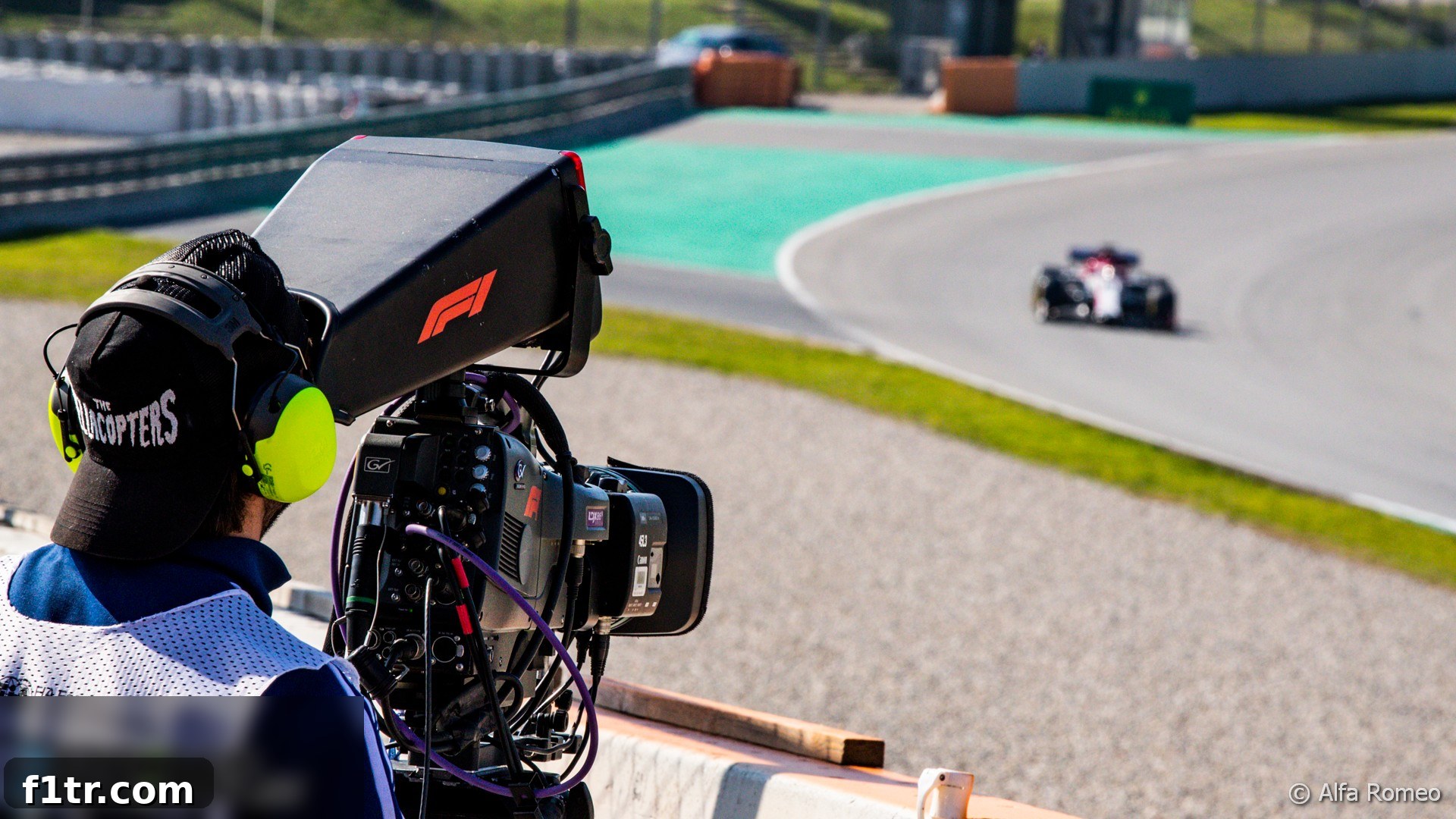
In the immediate aftermath of last year’s Italian Grand Prix at Monza, a prominent figure within Formula 1 radiated confidence, smiling broadly when asked about navigating the unprecedented challenges of Covid-19 restrictions. “Excellent,” he declared, “Today’s race marks the second of three crucial milestones for us, and we’ve successfully achieved it.” He elaborated, explaining that the critical junctures for the season were the first, eighth, and sixteenth races. F1’s remarkable return to racing amidst a global pandemic was an obvious first triumph, but the significance of the other two points needed further clarification.
Formula 1’s Resilient 2020 Season: A Triumph Against Adversity
The F1 executive detailed the strategic importance of these benchmarks. “According to FIA regulations,” he explained, “a minimum of eight races is required for a season to be officially recognized as a legitimate world championship. We reached that target today, unequivocally validating the championship’s integrity.” This achievement was vital, ensuring that the 2020 season would hold its place in history as a true world championship despite the extraordinary circumstances. The third milestone, the sixteenth race, was equally, if not more, critical from a commercial perspective. “Most of our television broadcasting contracts,” he continued, “stipulate a minimum of sixteen rounds. Once we achieve that, we are secure on all commercial fronts, fulfilling our contractual obligations without dispute.”
History now shows that Formula 1’s commercial rights holder, Liberty Media, against all expectations, successfully staged an impressive seventeen rounds in 2020. This meant that the vital contractual clauses were comfortably met by the second Bahrain race, with the season finale in Abu Dhabi still to follow. In a year defined by global disruption, Formula 1 not only delivered but significantly over-delivered, exceeding its minimum commitments and safeguarding its future.
The Financial Fallout: A Deep Dive into F1’s Covid-Era Revenues
Despite the remarkable achievement of staging seventeen races, this figure was still a considerable reduction from the twenty-two events originally scheduled for the season. More significantly, the widespread ban on spectators at most venues forced Formula 1 to renegotiate its race hosting contracts. It was simply untenable for F1 to expect promoters to pay full fees when their primary source of income—ticket sales—was non-existent or severely limited. These revised terms varied widely, ranging from Liberty Media covering the actual operational costs of events to promoters benefiting from reduced fees, or even waived fees entirely. Some agreements shifted to cost-sharing and profit-sharing models, reflecting the unique financial challenges each host circuit faced. Indeed, each race secured a bespoke deal tailored to its specific circumstances.
Consequently, Liberty Media’s 2020 revenues suffered a substantial impact, despite successfully delivering nearly 80% of the originally planned races. Formula 1’s financial results, published recently, unveiled a stark decline: revenues plummeted from $2.02 billion generated from 21 races in 2019 to $1.14 billion from 17 races in 2020. This translates to a significant drop in average income per race, from approximately $96.2 million in 2019 to just $67.3 million last year. The economic ripple effect of the pandemic was undeniable and far-reaching.
Formula 1’s traditional business model relies heavily on four primary revenue streams: television broadcasting rights, race hosting fees, trackside advertising (often referred to as ‘bridge and board’ signage), and high-end hospitality. Typically, the first two—TV broadcasting and race hosting—each contribute around 35% of the total revenue, with trackside hoardings accounting for another 20%, and hospitality and other minor deals making up the remaining balance. However, the extraordinary circumstances of 2020 drastically altered this mix. Television and advertising emerged as the undisputed main contributors, while hosting fees were significantly reduced or waived, and hospitality income was virtually non-existent due to spectator restrictions.
In 2019, television fees and race hosting each generated approximately $770 million, advertising brought in $440 million, and hospitality along with ‘other’ sources contributed around $220 million. Assuming similar, albeit truncated, TV and advertising streams during the 2020 season, their combined income would amount to approximately $1.21 billion. This figure marginally exceeds the reported total revenue of $1.14 billion for 2020, suggesting that hosting income actually incurred a modest loss. This deficit was a direct result of waiving or significantly reducing fees for selected events and, in some cases, Liberty Media covering the operational costs of others, effectively subsidizing races to ensure the season’s completion.
The Indispensable Power of Television: F1’s Broadcast Cornerstone
In the age of Covid-19, broadcast fees unequivocally became Liberty Media’s most vital revenue stream. Without these crucial payments, Formula 1 would have faced the catastrophic prospect of recording nil income. While alternative revenue could be sought for races themselves and advertising could still generate some income, these sources pale in comparison to the sheer financial weight of television rights. Hospitality, as the executive candidly put it, was “small beer” during the pandemic. Advertisers, moreover, primarily book trackside hoardings to be seen not by live spectators, but by the massive television audiences watching worldwide. This fundamental truth underscores Liberty Media’s primary challenge moving forward: how to maximize TV income in an increasingly fragmented and disrupted media landscape, battling the rise of streaming services, pervasive social media channels, and the illicit “ripping” of paid feeds.
Expiring Contracts and the Looming Bidding Wars
The urgency of this challenge is amplified by a looming calendar of expiring broadcast contracts. While one television contract, that of Dutch broadcaster Ziggo (controlled by a Liberty-associated company), expires this year, a more significant wave of no fewer than six contracts is set to conclude at the end of the 2022 F1 season. This includes deals in several major and highly lucrative markets, such as Latin America (excluding Brazil), France, and key regions across Asia. Following closely, 2023 will see the expiry of the Saudi-held MENA contract. Then, perhaps most critically, F1’s extraordinarily lucrative Sky deals in the UK, Germany, and Italy are all due to expire in 2024. These represent the crown jewels of F1’s traditional broadcast revenue.
The original Sky UK contract was one of the very last deals orchestrated by Bernie Ecclestone, and it remains widely regarded as the single most lucrative agreement ever secured by the legendary deal-maker. Its negotiation was arguably made easier by a buoyant UK market, where numerous broadcasters fiercely competed for the rights to F1’s British television coverage. While there is no immediate suggestion that Liberty Media will be unable to match or even surpass this deal, the landscape has evolved considerably, and the task will undoubtedly be challenging. Liberty CEO and President Greg Maffei openly acknowledged this during a recent call to investors, highlighting the intense competition and shifting dynamics.
During the investor call, Maffei elaborated on the complexities of future negotiations. “Probably the most important component,” he explained, “is the degree of competition among potential bidders and distributors for your product.” He candidly admitted, “The best deal we currently have is likely our UK deal, largely because there were several bidders profoundly interested in acquiring our content.” Maffei also observed a general trend: “We’ve seen declines in some of the other higher-cost European alternatives.” However, he stressed F1’s underlying value, noting, “If you evaluate it on any basis – cost per eyeball, cost per hour, and so forth – F1 consistently emerges as a relative value.” Maffei firmly believes that as the costs associated with ‘scripted TV’—series and movies—continue their upward trajectory, live sports rights are becoming increasingly attractive. “With the escalating cost of alternatives like scripted content,” he stated, “as that becomes more expensive, it, in some ways, establishes a floor on the potential value of live sports. Historically, live sports might have appeared expensive, but perhaps less so when scripted content continues to rise.”
The Colossal Value of the Sky UK Deal
When Greg Maffei referred to the Sky UK contract as “probably the best deal we have,” he could have confidently omitted the qualifying word “probably.” There is, in fact, absolutely no doubt that this deal was, and continues to be, F1’s most lucrative broadcasting agreement, making it an unequivocally crucial contributor to F1’s overall revenue streams. The sheer magnitude of its importance was explicitly revealed in February 2020 by Scott Young, then head of Sky F1 UK, during a comprehensive presentation attended by RaceFans. Young’s presentation detailed that Sky’s hosting fees for the period 2019-2024—a six-year contractual span—amount to an eye-watering £1.18 billion ($1.53 billion). This averages out to approximately $255 million per year, representing a staggering one-third of Formula 1’s entire annual television income.
When you consider that the combined contributions from Sky Germany and Sky Italy add nearly another $100 million annually—deals that also expire in 2024—the potential financial exposure for Liberty Media becomes strikingly clear. Should Sky collectively decide to drop Formula 1, Liberty stands to lose approximately a third of its total TV income. This translates to an alarming one-sixth of F1’s global income concentrated within a single broadcast partner, highlighting an immense dependency and a significant strategic vulnerability. This makes the upcoming renewal negotiations particularly high-stakes.
That said, Sky F1 UK is evidently executing its strategy successfully, as an analysis by Motorsport Broadcasting eloquently demonstrates. On average, an audience of at least 1.22 million viewers tuned into each of the seventeen races on Sky (excluding supplementary content) last year. This marked a robust increase of 19.1% over the 2019 average of 1.02 million viewers. Crucially, Sky managed to avoid the typical slump in audience figures often seen in the second year of exclusivity for sports broadcasting, a rare and commendable achievement in the industry, underscoring the enduring appeal of F1 and Sky’s effective coverage.
To contextualize Sky’s substantial fees, consider the broader audience figures. During a recent Q4 call, new F1 President and CEO Stefano Domenicali reported an average of 88 million viewers per Grand Prix globally in 2020. This means Sky UK’s audience share, while significant for a single territory, accounts for roughly 1.4% of F1’s global viewership. In return, however, Sky covers an astonishing 25% of F1’s total television income, underscoring the disproportionate value derived from this single market. While F1’s global TV rating experienced a modest average drop of 4.5% during 2020, Sky UK notably managed to grow its audiences by 2.6%, representing an impressive 7% swing against the global trend. Other regions also saw significant growth: China and Russia experienced surges of 43% and 71% respectively, while Max Verstappen’s on-track successes directly contributed to a 28% rise in Dutch viewership.
The calendar disruption caused by the pandemic, which saw most races concentrated in Europe, inevitably impacted viewers in various time zones, and a reduced number of races overall naturally affected the sport’s global footprint. Despite these challenges, there remains no doubt that, on a global scale, Formula 1’s entertainment value remains robustly healthy. As Domenicali recently stated, “We observed only a marginal reduction in TV audiences, attributable to multiple factors, primarily a shortened and geographically limited calendar compared to 2019. However, this was a phenomenon every major sport experienced in 2020.” So far, so good for F1’s resilience. Yet, the pivotal question moving forward is not merely whether Sky will extend its F1 deals across all three territories (UK, Germany, Italy), but critically, at what price will those renewals be secured?
Beyond Traditional Broadcasting: The Rise of Digital Platforms
Liberty Media’s long-term strategy extends beyond conventional broadcast deals. Greg Maffei firmly believes that F1’s various off-track initiatives—such as the wildly successful Netflix series ‘Drive to Survive’ (whose third season was highly anticipated), interactive fan festivals, and competitive e-sports leagues—are instrumental in building and sustaining fan interest. He confidently predicts that these efforts will ultimately ignite a bidding war over future Formula 1 television rights, driven by the potential entry of “some of the new digital players.”
“They have ‘sniffed’ our product,” Maffei remarked, referring to tech giants and emerging streaming platforms such as Netflix, Amazon, Disney, and Apple. “We’ll see if we can get them excited. I do believe ultimately they will become bidders, and that will be to our significant benefit.” This optimism, however, brings into sharp focus the large, ‘Technicolor elephant’ in the room: Formula 1’s own direct-to-consumer streaming offering, known in the entertainment industry as Over The Top (OTT).
F1 TV: An Ambitious but Flawed Streaming Offering
F1 TV was launched with considerable fanfare in 2018, just a year after Liberty Media acquired F1’s commercial rights. Since its inception, it has undergone continuous adjustments and tweaks in an effort to resolve a host of persistent technical and quality issues. Yet, despite these efforts, problems with the feed have unfortunately lingered. Even as of the last race, the viewing experience often lacked the polish and seamlessness expected from a premium sports offering.
One of the most frequent criticisms revolves around its reliance on ‘outside’ voices. For instance, Australian or English-speaking Canadian viewers watching Sky UK-sourced commentary often express a desire to hear more about their local heroes, such as Daniel Ricciardo or Lance Stroll, rather than the predominant focus on drivers like Lewis Hamilton or George Russell. Breakaways during the broadcast are another common source of frustration. All too frequently, the voice provider cuts to grid, paddock, or interview cameras, inadvertently treating F1 TV audiences to commentaries about visuals that are only visible to the host broadcaster’s viewers. Furthermore, substantial pre-race build-up content—apart from generic studio segments, which are exclusively broadcast in English—is conspicuously absent, leaving fans desiring a more comprehensive and immersive experience.
(Incidentally, this language-centric issue also extends to the official F1 website, which appears to actively compete with independent English-language outlets while often neglecting other language groups. One might question if fans from non-English speaking regions are not considered worthy of news in their native languages, or if English-language sites are simply perceived as easier targets for Liberty Media’s content strategy.)
F1’s Head of Digital, Frank Arthofer, departed from Formula 1 earlier this year, reportedly due to the conclusion of his contract. However, even prior to his exit, Liberty Media appeared to be admitting a semi-defeat regarding F1 TV’s standalone success. This was evident in their strategy shift towards offering F1 TV as a bundled package through existing broadcasters or, more significantly, by exploring direct streaming partnerships on major social media platforms.
Embracing the Digital Future: Partnerships and Revenue Sharing
In mid-November of the previous year, Stefano Domenicali’s predecessor, Chase Carey, enthusiastically highlighted a new collaboration with an internet video giant for the Eifel Grand Prix. “At this race,” Carey announced, “for the first time in our history, we partnered with YouTube to stream the entire weekend for fans across selected European markets. We eagerly anticipate continuing our unique partnership with YouTube as yet another innovative way to engage our dedicated fan base.” In response to a subsequent question from an investor, Carey further elaborated on this strategic direction: “These digital players are poised to become an increasingly significant part of our future. As we witness an increasingly mature broadcast world and a maturing pay-TV landscape, alongside trillion-dollar digital companies delving deeper and deeper into content creation and distribution, these entities become an incredibly important component of our future. Therefore, we are actively looking to continue expanding these pivotal relationships.”
Formula 1 now stands at a profound crossroads. Does it continue its established, traditional route of contracting with broadcasters, a path that has proven incredibly lucrative thus far? Or does it consciously choose to potentially forgo nearly a billion dollars per year in guaranteed income to fully embrace what is unequivocally the future of media consumption, albeit a future that may not yet be entirely mature or financially stable? What exactly does this future entail? Ultimately, it points towards engaging in dynamic revenue-sharing deals with a diverse array of digital platforms, such as YouTube. This involves making F1’s premium product readily available through these platforms, rather than exclusively adhering to the traditional confines of cable or satellite broadcasters.
This forward-looking avenue unlocks a multitude of global options for Formula 1. It could involve sophisticated, ad-free pay-per-view offerings, potentially featuring a variety of customizable feeds to cater to different fan preferences. Alternatively, it could manifest as a basic, free-to-view single channel experience, funded purely by a share of advertising revenue generated on these platforms. While the ongoing language issue would likely persist until dedicated, localized commentary teams are fully established, this approach would at least provide fans with accessible, free options while simultaneously generating much-needed income for F1 through broad reach and advertising impressions.
The “Electrification Dilemma”: F1’s Strategic Crossroads
The truly tricky decision, however, lies in precisely timing this cross-over. Formula 1’s future broadcast strategy arguably presents the biggest and toughest challenge the sport faces in the short-to-medium term. Its magnitude even surpasses the pressing issue of sustainability. Getting this equation wrong could have dire consequences, potentially jeopardizing the entire sport’s financial viability and global standing. There is a compelling parallel to be drawn from another major industry: the intricate conundrum currently confronting automakers in the face of widespread electrification.
For car manufacturers, the dilemma is stark: switch to electric vehicles too early, and you risk sacrificing significant income derived from existing, profitable internal combustion engine products. Adopt a hybrid solution, and you find yourself in an uncomfortable compromise, caught betwixt and between two distinct technologies, potentially satisfying neither market segment completely. Yet, delay the transition for too long, and your brand risks falling irrecoverably behind the market, ultimately facing the grim prospect of extinction. This ‘electrification dilemma’ mirrors F1’s own strategic predicament. Embrace the digital streaming future too aggressively, and current lucrative broadcast deals, which provide immense financial stability, could be undermined or forfeited. Cling too tightly to traditional models, and F1 risks becoming irrelevant to younger, digitally native audiences, losing market share and future revenue streams. All the while, traditional broadcasters like Sky are shrewdly playing their own waiting games, hoping to secure even more favorable deals from Liberty Media, which will inevitably impact F1’s future revenues and strategic options.
Conclusion: A High-Stakes Decision for Formula 1’s Future
Formula 1 stands at an inflection point, with its broadcasting strategy representing a monumental decision that will shape its financial health and global appeal for decades to come. The delicate balance between preserving the lucrative, established revenue streams from traditional broadcasters and fully embracing the inevitable shift towards digital platforms and streaming is fraught with risk and immense potential. Liberty Media’s leadership must navigate this complex landscape with foresight and agility, ensuring that the sport remains both financially stable and widely accessible to a new generation of fans. The stakes are extraordinarily high; a misstep could endanger Formula 1’s unparalleled success, while a shrewd, well-timed transition could propel it to even greater heights in the evolving world of sports entertainment.
Join the RaceFans Supporters Drive!
If you’ve enjoyed RaceFans’ motor sport coverage during 2020, please take a moment to find out more about our Supporter Drive.
We’re aiming to welcome 3,000 new Supporters to help fund RaceFans so we can continue to produce quality, original, independent motorsport coverage. Here’s what we’re asking for and why – and how you can sign up:
- Join the RaceFans Supporters Drive!
RacingLines
- The year of sprints, ‘the show’ – and rising stock: A political review of the 2021 F1 season
- The problems of perception the FIA must address after the Abu Dhabi row
- Why the budget cap could be F1’s next battleground between Mercedes and Red Bull
- Todt defied expectations as president – now he plans to “disappear” from FIA
- Sir Frank Williams: A personal appreciation of a true racer
Browse all RacingLines columns