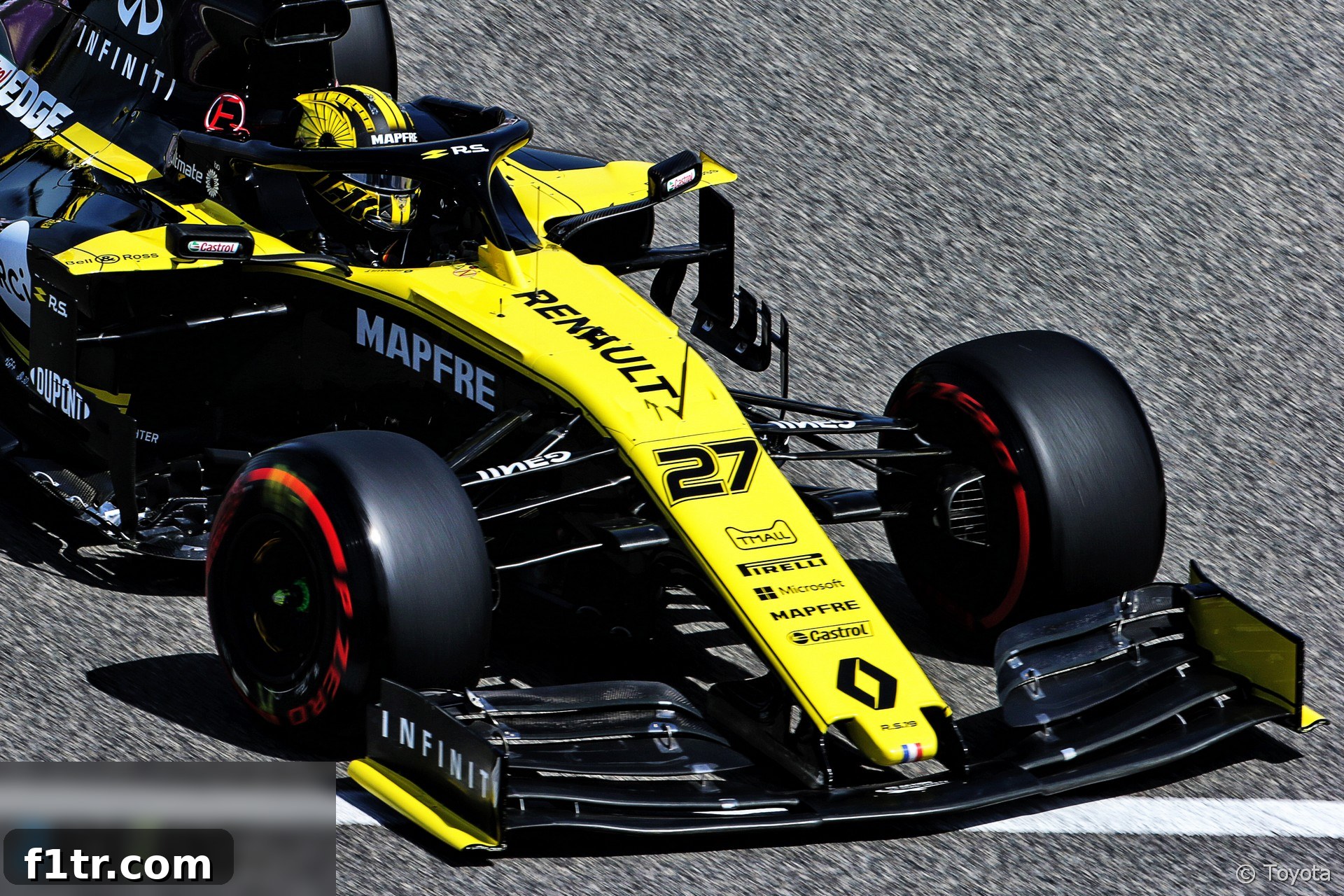
Hulkenberg and Giovinazzi Avoid Penalties Following Bahrain GP Practice Collision
A sigh of relief for both Nico Hulkenberg and Antonio Giovinazzi as the Formula 1 stewards have opted against imposing any penalties after their on-track collision during the opening practice session of the 2019 Bahrain Grand Prix. The incident, which saw the Renault and Alfa Romeo drivers make contact in Turn 7, was thoroughly investigated, yet ultimately deemed a misunderstanding between the two competitors.
The highly anticipated first 90-minute session of the weekend, crucial for setting up cars and acclimatizing drivers to the challenging Sakhir circuit, was nearing its conclusion when the unexpected contact occurred. Both drivers were able to return their damaged vehicles to the pit lane, preventing a more significant disruption to the session, but prompting immediate scrutiny from race officials.
The Incident Unfolds: A Close Call in Turn 7
The collision transpired at Turn 7, a critical section of the Bahrain International Circuit that demands precision and careful judgment from drivers. Giovinazzi’s Alfa Romeo briefly lifted off the ground after the impact with Hulkenberg’s Renault, a dramatic moment that could have easily escalated into a more serious shunt. Fortunately, both cars sustained only minor damage, allowing them to limp back to their respective garages for checks and repairs.
This type of incident, particularly during a free practice session, highlights the delicate balance between pushing limits and maintaining awareness. While drivers are experimenting with car setups and exploring track limits, the high speeds and close proximity of other competitors always carry an inherent risk. The stewards’ subsequent investigation aimed to ascertain whether either driver had acted negligently or in a manner that warranted disciplinary action, a common procedure following any on-track contact in Formula 1.
Stewards’ Ruling: A “Misunderstanding” Rather Than Malice
Following the session, both Nico Hulkenberg and Antonio Giovinazzi were summoned to the stewards’ office. The investigative panel, comprising experienced officials Garry Connelly, Jose Abed, Emanuele Pirro, and Mazen Al Hilli, meticulously reviewed video evidence from multiple angles and heard testimonies from both drivers involved. This rigorous process is standard procedure to ensure fair and consistent application of the sporting regulations.
The stewards’ findings painted a picture of miscommunication and differing expectations rather than a deliberate act of aggression or carelessness. It was revealed that moments before the collision, Hulkenberg had courteously allowed Giovinazzi’s teammate, the veteran Kimi Raikkonen, to overtake him. This context proved crucial in understanding Hulkenberg’s mindset.
“Neither car was on a push lap, car 27 [Hulkenberg] had just let car seven [Raikkonen] pass, and believed car 99 [Giovinazzi] was going slow. Car 99 then sped up and passed car 27 on the inside when the driver of car 27 was not expecting it to do so, remaining on the racing line.
“The stewards believe that this was a misunderstanding by the driver of car 27 and a presumption by the driver of car 99,” they concluded.
This detailed explanation clarifies that Hulkenberg, having just yielded to Raikkonen, did not anticipate a similar move from Giovinazzi, especially given his initial perception of Giovinazzi’s speed. Conversely, Giovinazzi evidently seized an opportunity, speeding up to make a pass, which Hulkenberg was simply not expecting while maintaining his line. Such scenarios are a frequent occurrence in the fast-paced, high-stakes environment of Formula 1, where split-second decisions and interpretations can lead to contact.
The Nuances of Track Etiquette in Practice Sessions
The stewards’ decision to attribute the incident to a “misunderstanding” underscores the specific dynamics of a free practice session. Unlike a race, where drivers are aggressively fighting for position, practice often involves varied running styles – some drivers on hot laps, others on cool-down laps, and many conducting test runs with different fuel loads and tire compounds. This creates a complex environment where drivers must constantly assess the intentions and speeds of those around them.
Hulkenberg’s assumption that Giovinazzi was also “going slow” after allowing Raikkonen past is a relatable scenario in practice. Drivers often travel in small trains, and if one car yields, it’s not uncommon for the following cars to also be on a similar program. However, Giovinazzi’s sudden acceleration and attempt to pass demonstrate a differing strategy or immediate opportunity. This incident serves as a salient reminder of the critical importance of clear communication and hyper-awareness, even in supposedly less competitive sessions.
Broader Implications of No Penalty
The decision to issue no penalty is significant. In Formula 1, even minor incidents can lead to grid penalties, reprimands, or points on a driver’s license, which can have long-term consequences for championship standings and team morale. By ruling it a misunderstanding, the stewards have acknowledged the complexity of on-track situations and opted for a less punitive approach, allowing both drivers to move forward without immediate disciplinary repercussions for the upcoming qualifying and race sessions.
This ruling also sets a precedent, albeit a nuanced one, for how similar incidents during practice might be judged. It emphasizes the subjective nature of driver intent and the challenge of establishing clear fault when expectations diverge. For teams, it means they can focus on analyzing data and preparing their cars for the rest of the weekend without the added burden of a penalty clouding their strategies.
Other Track Incidents: Kimi Raikkonen’s Complaints
The Hulkenberg-Giovinazzi collision wasn’t the only moment of contention during FP1. Veteran driver Kimi Raikkonen, known for his straightforward commentary, also voiced his frustrations over being held up twice during the session. His run-ins involved Carlos Sainz Jnr and Alexander Albon. While these incidents undoubtedly hindered Raikkonen’s flow and potentially impacted his team’s data collection, they did not prompt an official investigation from the stewards.
The distinction between an incident warranting an investigation (like the collision between Hulkenberg and Giovinazzi) and one that doesn’t (like Raikkonen being held up) often comes down to the severity of the contact, the potential for danger, and the clear breach of sporting regulations. While impeding another driver can result in penalties, a minor obstruction that doesn’t lead to contact or significant danger is often noted but not formally investigated unless repeated or particularly egregious. This reflects the stewards’ role in prioritizing safety and fair play without over-officiating every minor interaction on track.
The Unseen Work of the F1 Stewards
The four stewards for the Bahrain Grand Prix – Garry Connelly, Jose Abed, Emanuele Pirro, and Mazen Al Hilli – play a crucial role in ensuring the integrity and safety of the sport. Their decisions, made under immense pressure and scrutiny, often shape the narrative of a Grand Prix weekend. Garry Connelly is a long-standing and highly respected figure in motorsport stewarding, known for his experience. Jose Abed brings an international perspective as a Vice-President of the FIA. Emanuele Pirro, a former F1 driver himself, offers invaluable insights from a competitor’s viewpoint, understanding the split-second decisions made in the cockpit. Mazen Al Hilli provides local expertise and a fresh perspective.
Together, this panel navigates the complexities of the FIA’s sporting regulations, driver conduct, and the specific circumstances of each incident. Their consistent application of rules is vital for maintaining driver confidence and ensuring a level playing field across all teams and competitors in Formula 1.
Looking Ahead: Focus on the Bahrain Grand Prix
With the practice incidents now behind them and no penalties impacting their starting positions, both Nico Hulkenberg and Antonio Giovinazzi, along with their respective teams, can fully shift their focus to the crucial qualifying session and the race itself. The Bahrain Grand Prix is an exciting early-season fixture, often delivering thrilling night racing under the floodlights. The fast corners and long straights demand a robust car setup and precise driving.
The lessons learned from FP1, including the nuances of track interaction, will be internalized by all drivers as they push for optimal performance. The pursuit of every tenth of a second in Formula 1 means that even a “misunderstanding” during practice can be a valuable, albeit costly, learning experience for future races.
Don’t Miss Anything New from RaceFans
Stay at the heart of Formula 1 action with RaceFans. Follow us on social media for instant updates, exclusive content, and in-depth analysis:
- Join RaceFans on Facebook
- Follow RaceFans on Twitter
- Get daily email updates directly from RaceFans
Dive Deeper into the 2019 F1 Season
The 2019 Formula 1 season delivered countless memorable moments, from dramatic race wins to intense driver rivalries and significant technical developments. Relive key events and understand the broader context of the season with our comprehensive coverage:
- Crying in the Melbourne car park at 2019 grand prix was my career low – Ocon
- McLaren Racing reports reduced £71 million loss in 2019
- Kvyat: Hockenheim podium last year was “my biggest achievement” so far
- How the FIA’s new encrypted fuel flow meter targets Ferrari’s suspected ‘aliasing’ trick
- “He smashed my office door”: 23 must-see moments from ‘Drive to Survive’ season two
Browse all 2019 F1 season articles for more insights and analyses.