Verstappen’s Japanese Grand Prix Victory: Navigating Pit Stop Drama and Strategic Brilliance
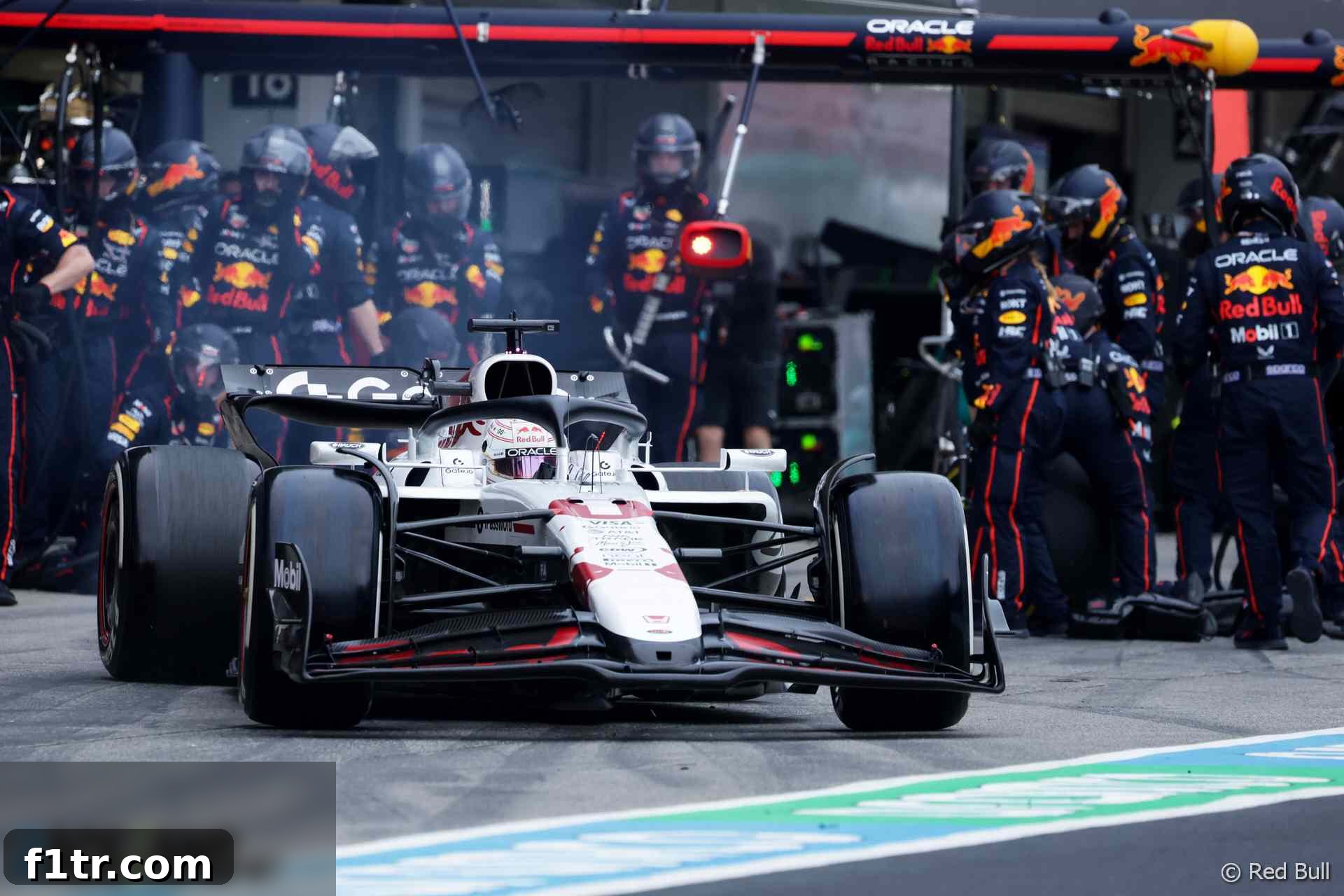
Red Bull Racing’s reigning champion, Max Verstappen, clinched a dominant victory at the Japanese Grand Prix, yet his path to the top step of the podium was not without its challenges. Team Principal Christian Horner revealed that a crucial pit stop delay, which significantly tightened the gap to his closest competitor, was primarily due to the absence of two key team members. This incident underscored the immense pressure and precision required in Formula 1, where fractions of a second can dictate the outcome of a race.
The Unexpected Pit Stop Hurdle: Missing Mechanics and Reserve Crew Performance
The core of Verstappen’s pit stop issue stemmed from an unforeseen personnel change. The twin mechanics, Matt and Jon Caller, who are integral members of Red Bull’s elite pit crew and serve as the car’s number one mechanics, were notably absent from the Suzuka paddock. Horner disclosed that both had to return home for urgent personal reasons, specifically concerning their father’s health. This meant the team had to rely on reserve members of their highly trained pit crew for Verstappen’s crucial stops during the race.
In the high-stakes environment of Formula 1, pit stops are a choreographed ballet of speed and accuracy. A typical stop, involving changing four tyres, is often completed in under 2.5 seconds, with the fastest stops dipping below the two-second mark. Any deviation from this razor-sharp efficiency can have immediate repercussions on track position. The reliance on reserve personnel, while demonstrating the depth of talent within Red Bull Racing, inevitably introduced a slight variability. As Horner explained, the team experienced a “slightly slower stop than would have been ideal,” a subtle but critical difference that brought McLaren’s Lando Norris perilously close.
Norris’s Opportunistic Challenge and the Pit Exit Battle
The strategic chess match between Red Bull and McLaren intensified during the first round of pit stops. Verstappen was leading the race comfortably when Red Bull decided to bring him in for fresh tyres. McLaren, observing Oscar Piastri’s earlier pit stop, anticipated Red Bull’s move and mirrored the strategy by pitting Lando Norris on the very next lap, aiming to undercut or challenge Verstappen for track position. This synchronized pitting strategy amplified the importance of every millisecond in the pit lane.
Norris, eager to capitalize on any advantage, had a marginally quicker pit stop than Verstappen. This fractional gain positioned him perfectly to challenge the Red Bull driver at the pit exit. As both cars rejoined the track, the McLaren driver pulled alongside Verstappen, creating a tense side-by-side battle. However, Norris ultimately ran onto the grass as they navigated the exit, losing momentum and falling back behind the Red Bull. This aggressive maneuver from Norris, while ultimately unsuccessful, showcased the fierce competition and the drivers’ willingness to push the limits.
Following the incident, Norris claimed that Verstappen had forced him off the track, suggesting an infringement of racing rules. Race control, however, reviewed the footage and the circumstances, ultimately deciding that no action was warranted. Christian Horner staunchly defended Verstappen’s driving, stating, “I think that stewards made the right decision on that.” This decision validated Verstappen’s defensive driving, highlighting that while close, his actions were deemed within the boundaries of fair racing, maintaining the integrity of his lead.
Front Wing Woes and On-Track Adaptations: A Test of Driver and Team Synergy
The pit stop drama wasn’t the only technical hurdle Verstappen faced. During his first pit stop, the team encountered an additional issue: they were unable to execute a planned adjustment to the front wing flap angle. This seemingly minor oversight had a tangible impact on the car’s balance during Verstappen’s subsequent stint. A front wing adjustment is crucial for fine-tuning the aerodynamic balance of the car, influencing how it behaves through corners. A change in flap angle directly affects the amount of downforce generated at the front, impacting handling characteristics such as understeer or oversteer.
For Verstappen, the failure to implement the desired adjustment meant his car developed “a bit more understeer than he would have probably liked.” Understeer, where the front wheels lose grip before the rear wheels, causes the car to resist turning into corners, requiring the driver to apply more steering input and often sacrificing mid-corner speed. In a high-speed circuit like Suzuka, this can be particularly detrimental to lap times and tyre wear. Yet, Verstappen’s class shone through. He didn’t let the compromised balance derail his performance. Instead, he worked closely with his engineering team, utilizing in-car tools to adjust differential settings and other parameters to mitigate the understeer and regain a semblance of desired balance.
Horner lauded this collaborative effort, emphasizing it as “a phenomenal team performance to extract every ounce of performance from the car this weekend.” This incident perfectly illustrated the symbiotic relationship between a top-tier driver and their engineering team, showcasing how real-time communication and adjustments can overcome mechanical imperfections and maintain competitiveness.
Horner’s Verdict: A Masterclass in Pressure Management
Despite the challenges, Max Verstappen delivered an error-free drive, maintaining his composure and pace under sustained pressure from Lando Norris. Christian Horner was effusive in his praise for Verstappen’s masterful performance. He highlighted the inherently difficult nature of overtaking at Suzuka, a track renowned for its fast, flowing corners and minimal clear overtaking zones. Horner remarked, “There was so little overtaking in that race that it was going to take something Herculean or a big mistake [for] the McLarens to make a pass.”
Verstappen’s strategy was clear: drive with absolute precision and maintain a crucial buffer. “It was all about being inch-perfect. Max knew that,” Horner explained. The Dutch driver strategically deployed his speed where it mattered most, particularly through the final chicane and Turn 11, preventing Norris from getting close enough to activate the Drag Reduction System (DRS). By keeping Norris just outside the DRS activation window, Verstappen negated McLaren’s primary overtaking tool on the straights, effectively neutralizing their threat and securing his lead.
This Japanese Grand Prix victory was more than just another win for Max Verstappen; it was a testament to his unparalleled skill, mental fortitude, and the underlying strength of the Red Bull Racing team. Despite unexpected setbacks in the pit lane and with car balance, the team adapted, and their star driver delivered a flawless performance, demonstrating why they remain at the pinnacle of Formula 1.
Related Articles: 2025 Japanese Grand Prix
- McLaren has to accept upsetting either of its drivers sometimes – Stella
- Verstappen ‘can test our car, I look forward to seeing his disappointment’ – Norris
- Verstappen insists McLaren domination claim was ‘no joke’ after Piastri’s doubt
- Extra mandatory pit stop won’t create more passing at tracks like Suzuka – Sainz
- Mercedes took note of Verstappen’s out-lap tactics after stunning Suzuka pole position
Browse all 2025 Japanese Grand Prix articles