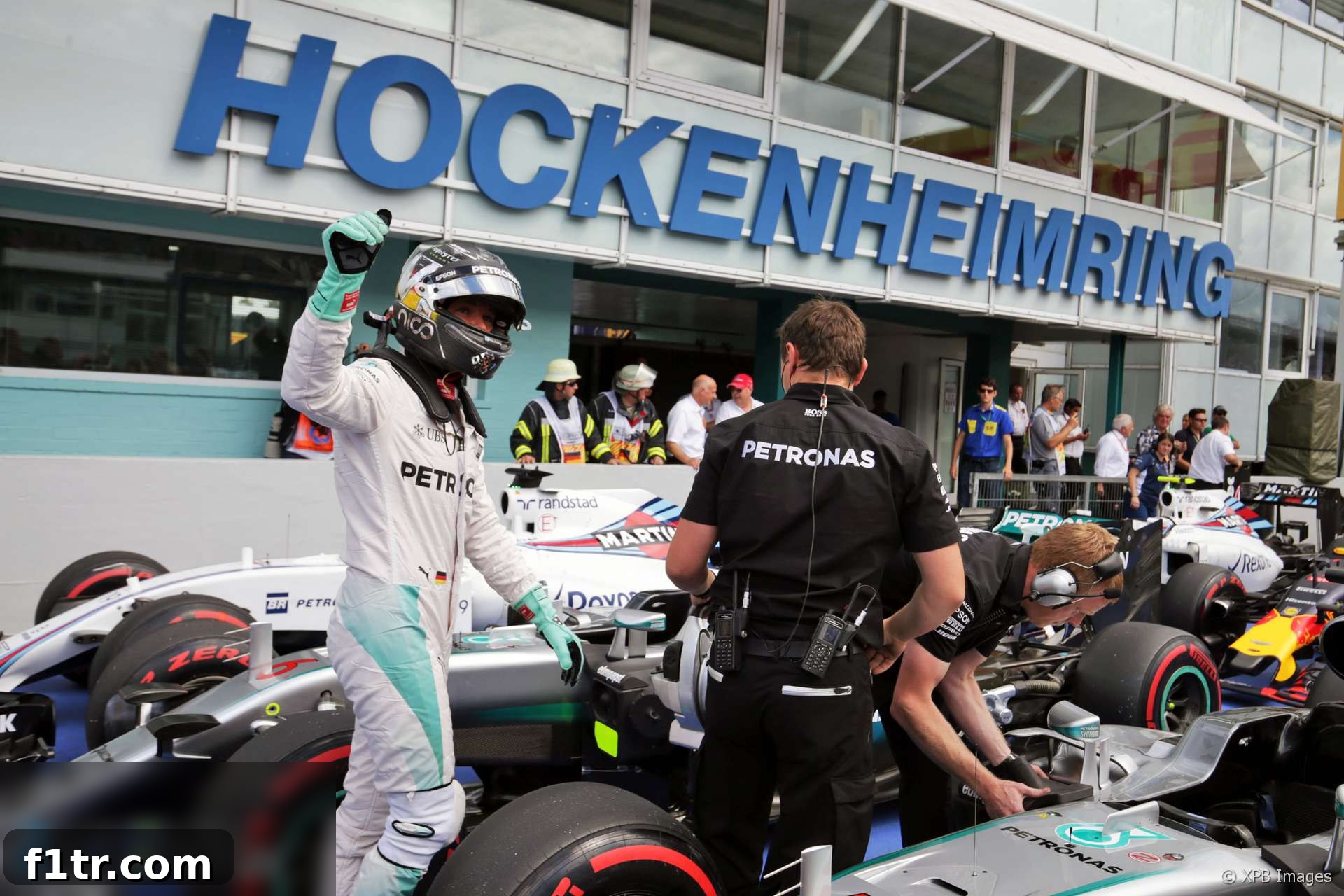
The German Grand Prix, a storied event in the Formula 1 calendar, faced an unfortunate hiatus for the 2019 season. Neither of Germany’s two premier circuits, the Hockenheimring nor the Nürburgring, secured a spot on the 2019 F1 calendar, marking a significant absence for a nation deeply embedded in motorsport history.
This decision, widely reported and confirmed by sources like the German newspaper Bild, signals a complex challenge in balancing Formula 1’s global expansion ambitions with the financial realities faced by traditional European venues. The news left German fans and motorsport enthusiasts worldwide questioning the future of classic races in an evolving F1 landscape.
A Storied Past on Pause: The German Grand Prix’s Absence from the 2019 F1 Season
For decades, Germany has been a cornerstone of Formula 1, hosting thrilling races that have etched themselves into the sport’s rich tapestry. The Hockenheimring, with its iconic stadium section, and the legendary Nürburgring, famed for its challenging layout, have both provided the backdrop for countless dramatic moments and celebrated victories. From 2007 until 2013, these two circuits admirably shared the responsibility of hosting the German Grand Prix on an alternating basis, ensuring the nation’s consistent presence in the pinnacle of motorsport.
However, this stable arrangement began to unravel due to the Nürburgring’s well-documented financial difficulties, which forced it to withdraw from the alternating deal. Following this, the Hockenheimring valiantly continued to host the race in even-numbered years, upholding Germany’s F1 tradition. Yet, its most recent agreement was set to expire after the 2018 race, casting a shadow of uncertainty over its future involvement. The subsequent failure to secure a slot for 2019 highlights the growing pressures on circuits to meet the escalating demands of Formula 1’s commercial rights holder.
Advert | Become a Supporter & go ad-free
The Search for a ‘Sustainable Model’: Hockenheimring’s Perspective
The challenge for circuits like Hockenheimring extends beyond simply being chosen; it revolves around striking a financially viable deal that benefits all parties. Jorn Teske, the marketing director for Hockenheim, articulated this struggle to Bild, stating, “Obviously we are currently working on proposals for a return in 2020. During our negotiations to date we have been unable to agree a sustainable model, which means we are particularly excited about our race this year.”
Teske’s comments underscore the critical issue at hand: the economic sustainability of hosting a Formula 1 Grand Prix. A “sustainable model” implies an agreement where the hosting fees charged by Formula 1’s commercial rights holder, Liberty Media, can be reasonably covered by ticket sales, sponsorship, and potential government subsidies, without pushing the circuit into financial distress. The costs associated with hosting an F1 race are considerable, encompassing not just the hefty sanctioning fee but also significant investments in track infrastructure, logistics, security, and promotional activities. When these costs outweigh the potential revenue streams, even iconic venues find themselves in an untenable position.
The emphasis on being “particularly excited about our race this year” (referring to the 2018 German Grand Prix) took on a poignant tone, as it effectively became a farewell, at least temporarily, for German motorsport enthusiasts. It highlighted the bittersweet reality that without a new, viable agreement, even a historically significant race could fade from the calendar, leaving a noticeable void for fans and the local economy.
Nürburgring’s Enduring Hopes and Ongoing Discussions with Liberty Media
While the Hockenheimring had been the primary host in recent years, the Nürburgring, despite its past financial woes, also remained a potential contender for the German Grand Prix. Formula 1’s current commercial rights holder, Liberty Media, has shown a proactive approach to engaging with circuits, and the Nürburgring was no exception. Track CEO Mirco Markfort revealed the extent of these ongoing conversations, telling Bild, “Since early 2017 we have had proactive negotiations with Liberty Media and in March 2018 when we discussed further opportunities for co-operation.”
Markfort’s statement indicates a genuine desire from both sides to explore possibilities. The Nürburgring, with its global recognition and a passionate fan base, represents a valuable asset for Formula 1. However, like the Hockenheimring, the core challenge lies in agreeing upon a financial framework that aligns with the circuit’s capabilities and Liberty Media’s commercial objectives. Markfort concluded, “Our proposals are on the table, now it’s up to Liberty Media to decide.” This sentiment reflects the broader dynamic in Formula 1 negotiations: while circuits present their best offers, the ultimate decision rests with the sport’s management, who must weigh various factors including revenue generation, strategic market presence, and the overall balance of the calendar.
Liberty Media’s Strategic Vision: Global Expansion vs. European Heritage
The exclusion of the German Grand Prix from the 2019 calendar is not an isolated incident but rather a symptom of Liberty Media’s evolving strategy for Formula 1. Since acquiring the sport, Liberty Media has made it clear that while respecting F1’s rich European heritage, their primary focus is on expanding the sport’s global footprint, particularly in lucrative new markets. This approach contrasts significantly with the previous era under Bernie Ecclestone, where deals were often more concentrated on established circuits, sometimes at the expense of local financial viability.
One of the prime examples of Liberty Media’s expansionist vision is the planned Miami Grand Prix. Reports indicated that Liberty Media harbored strong aspirations to stage this new event in October of the following year, potentially filling the void left by the German Grand Prix. The prospect of a street race in a vibrant American city like Miami aligns perfectly with Liberty’s goal of tapping into the vast North American sports market and attracting a new demographic of fans. This strategic shift inevitably creates tension between retaining traditional, often financially strained, European venues and pursuing new, potentially more profitable, and glamorous destinations.
While the allure of new markets is undeniable for F1’s growth, the absence of historic races like the German Grand Prix raises questions about the balance between innovation and tradition. For many purists, the soul of Formula 1 lies in its European roots, with circuits that have witnessed decades of racing drama. Losing such an event, even temporarily, can feel like a detachment from the sport’s core identity.
The Impact and Future Prospects for German Formula 1
The absence of the German Grand Prix from the 2019 calendar had several immediate and long-term implications. For German fans, it meant no home race to attend, a significant blow in a country that has produced multiple world champions and boasts a deep passion for motorsport. Economically, the host regions around Hockenheim and the Nürburgring missed out on the substantial revenue generated by tens of thousands of visitors, including ticket sales, accommodation, hospitality, and local tourism. This ripple effect extends to local businesses that rely on the annual influx of F1 spectators.
Looking ahead, the question remains: Will the German Grand Prix make a return in 2020 or beyond? Both the Hockenheimring and Nürburgring have expressed willingness to host, provided a “sustainable model” can be found. This suggests that the door is not entirely closed, but it hinges on Liberty Media’s flexibility regarding hosting fees and the circuits’ ability to secure necessary funding. The significance of Germany as a market for key automotive manufacturers, many of whom are deeply invested in Formula 1, cannot be overstated. Mercedes-AMG Petronas F1 Team, for instance, is a dominant force in the sport, making Germany’s absence somewhat paradoxical.
The dialogue between circuits and Liberty Media continues to evolve. While the immediate outlook for 2019 was bleak for Germany, the possibility of a return in future seasons remains a topic of ongoing discussion and hope. The resolution will likely require creative financial solutions, potentially involving greater collaboration with local governments or new commercial partnerships, to ensure that one of Formula 1’s most iconic races can once again grace its rightful place on the global stage. Until then, the memory of the German Grand Prix, including the 2018 edition which took place on July 22nd, serves as a reminder of its cherished legacy.
Advert | Become a RaceFans supporter andgo ad-free
2019 F1 season
- Crying in the Melbourne car park at 2019 grand prix was my career low – Ocon
- McLaren Racing reports reduced £71 million loss in 2019
- Kvyat: Hockenheim podium last year was “my biggest achievement” so far
- How the FIA’s new encrypted fuel flow meter targets Ferrari’s suspected ‘aliasing’ trick
- “He smashed my office door”: 23 must-see moments from ‘Drive to Survive’ season two
Browse all 2019 F1 season articles