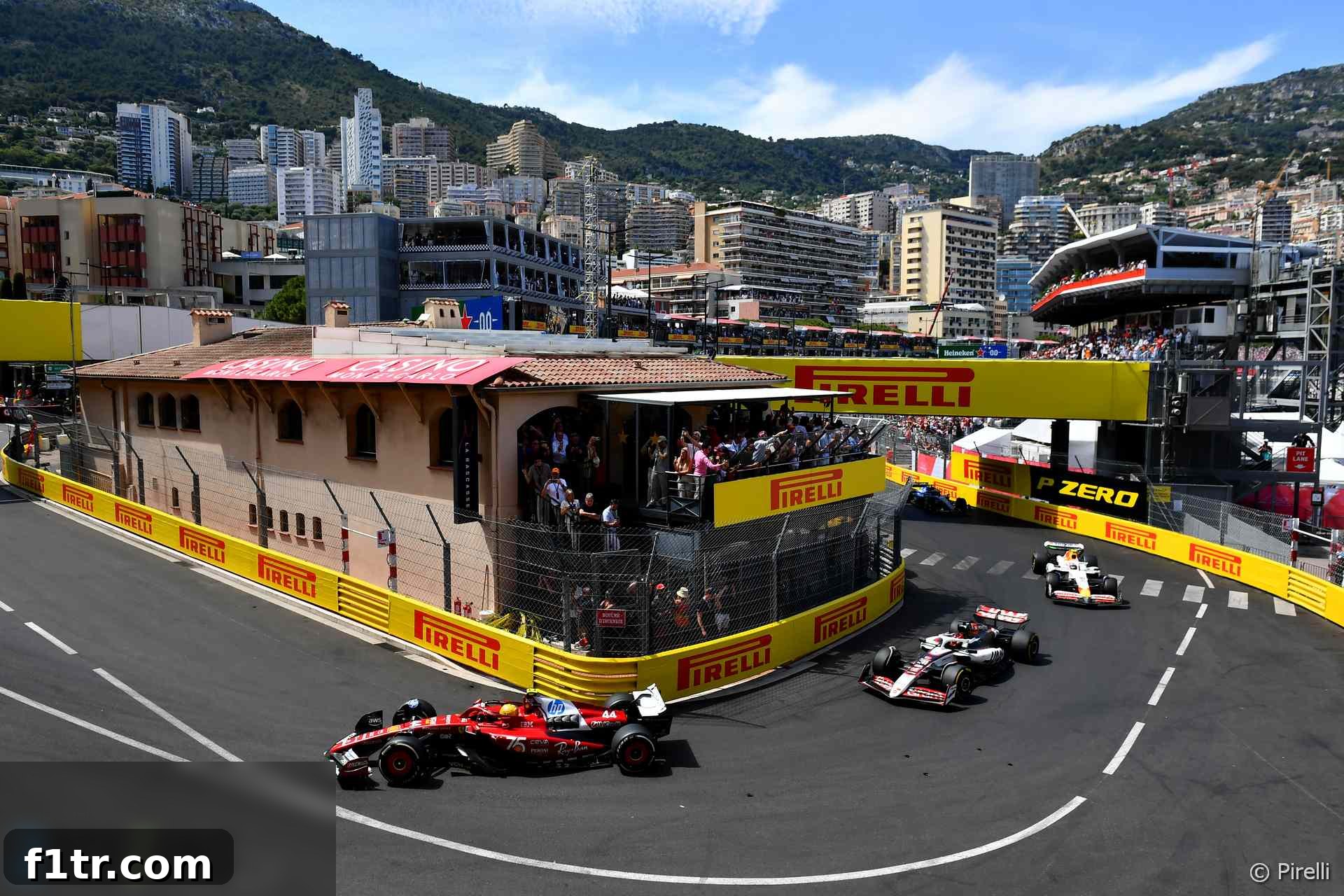
The upcoming 2026 Formula 1 season marks a significant shift in the approach to one of the sport’s most iconic, yet often criticized, events: the Monaco Grand Prix. A controversial rule change, which saw last year’s race descend into what many drivers and fans deemed a “farce,” has officially been expunged from the new regulations. This pivotal decision signals a U-turn by the sport’s governing bodies, acknowledging the widespread dissatisfaction with attempts to artificially engineer excitement at the legendary Monte Carlo street circuit. The move is expected to be welcomed by teams and drivers alike, who had previously voiced strong objections to the mandatory multi-compound tyre strategy.
For decades, the Monaco Grand Prix has held a unique, almost sacred, place in the Formula 1 calendar. Its narrow, winding streets, steeped in history and glamour, present an unparalleled challenge for drivers and engineers. However, the circuit’s inherent lack of overtaking opportunities has frequently led to processions, especially in the era of wider and more aerodynamically complex cars. In an effort to address this enduring problem and inject more strategic variation and on-track action, F1 regulators introduced a new mandate for the 2025 race: drivers were required to use three different tyre compounds during the 78-lap event. This seemingly well-intentioned rule, however, inadvertently created a different kind of spectacle, one that was far from the thrilling racing the sport aimed to achieve.
The Disastrous Experiment of 2025
The consequences of the mandatory three-tyre rule were stark and immediate during last year’s Monaco Grand Prix. Drivers, who typically navigate the tight circuit with immense precision and focus on tyre preservation, were instead faced with a tactical dilemma that distorted the natural flow of racing. The requirement for two pit stops, forcing the use of three different tyre sets, led several teams to employ unorthodox and often frustrating strategies. The most prominent tactic involved using one car to deliberately slow the pace of its pursuers, creating a gap for its teammate to make a pit stop without losing track position. This calculated slowdown effectively stifled any genuine racing, turning much of the grand prix into a strategic chess match played at a deliberately reduced pace, much to the chagrin of spectators.
The feedback from inside the paddock was overwhelmingly negative. Drivers openly slated the race as “very ugly,” expressing their frustration with a system that seemed to penalize aggressive driving and reward conservative, controlled processions. Race winner Lando Norris was among the prominent voices criticizing the “failed attempt to ‘manufacture’ racing,” highlighting how the rule had fundamentally backfired. Despite the widespread condemnation, F1 CEO Stefano Domenicali initially defended the change, asserting that they had made the “right attempt” to improve the spectacle. However, the numbers told a different story: within the top ten, aside from Fernando Alonso’s retirement due to a technical fault, the only significant change in position came when Lewis Hamilton moved up the order through his strategically timed pit stop. This statistic alone underscored the rule’s failure to generate the desired on-track excitement.
Understanding Monaco’s Overtaking Conundrum
The introduction of the controversial tyre rule was a direct response to a long-standing issue that plagues the Monaco Grand Prix: the near-impossibility of overtaking. Unlike most modern circuits designed with multiple DRS zones and wider run-off areas to facilitate wheel-to-wheel action, Monaco’s historic layout leaves little room for maneuver. The circuit’s narrowness, combined with its high-speed corners and limited straights, means that even a slight mistake can lead to a costly collision with the unforgiving barriers. This inherent characteristic of the track means that qualifying position often dictates the final race result, diminishing the impact of race pace and strategic prowess.
The problem was further exacerbated by changes in Formula 1 car design. From 2017 onwards, F1 cars saw a significant increase in width, expanding from 1.8 meters to a full 2 meters. While this change was intended to make cars look more aggressive and improve grip, it inadvertently made racing on already tight circuits like Monaco even more challenging. The wider cars occupied almost the entire width of the track in many sections, leaving virtually no space for a trailing car to attempt an overtake. While car widths have been partially reversed for this season, now measuring a maximum of 1.9 meters, the fundamental issue of Monaco’s layout persists. The mandatory tyre change rule was, therefore, an artificial workaround, an attempt to force position changes and strategic variation where natural on-track battles were increasingly rare.
The 2026 U-Turn: A Return to Sporting Integrity
The latest update to the 2026 F1 regulations brings welcome news for those who prioritize organic racing over manufactured spectacle. All passages stating that drivers must use three different tyre sets during the Monaco race have been definitively struck out. This significant policy reversal demonstrates a clear recognition by the FIA and Formula 1 management that the previous attempt to enhance the race’s excitement had detrimental effects on its sporting integrity and overall appeal. The U-turn underscores a willingness to listen to feedback from drivers, teams, and fans, acknowledging that sometimes, even well-intentioned rule changes can miss the mark.
The decision to abandon this specific tyre rule for Monaco aligns with a broader philosophy within Formula 1 to create regulations that foster genuine competition rather than relying on artificial means to generate excitement. While the sport has experimented with various formats and rules over the years – from DRS to qualifying changes – the ultimate goal remains to produce thrilling, unpredictable racing where driver skill and team strategy are paramount. The experience of the 2025 Monaco Grand Prix served as a stark lesson that forcing strategic complexity doesn’t necessarily translate into better racing, especially when it encourages tactics that undermine the spectacle itself.
Monaco’s Enduring Appeal and Future Challenges
Despite its long-standing overtaking challenges, the Monaco Grand Prix remains an indispensable jewel in the Formula 1 crown. Its unparalleled history, iconic status, and association with glamour and prestige ensure its continued presence on the calendar. Other unique rules relating to the Monaco Grand Prix remain in place, including its shorter grand prix distance of 260 kilometers instead of the usual 305 kilometers. This adjustment acknowledges the physical and mental demands of navigating the circuit’s relentless corners for nearly two hours, preventing excessive fatigue and maintaining the intensity of the race.
Looking ahead, the removal of the mandatory three-tyre rule, combined with the comprehensive new car regulations slated for 2026, offers a glimmer of hope for improved racing at Monaco. The 2026 regulations aim to produce lighter, more agile cars with simplified aerodynamics, specifically designed to enhance wheel-to-wheel racing. While these changes will undoubtedly impact racing across the entire calendar, their effect on a unique track like Monaco will be particularly scrutinized. The hope is that lighter, narrower cars will make the circuit slightly more conducive to overtaking, or at the very least, allow for more natural strategic variations without the need for artificial interventions. The true test, of course, will come when these new machines hit the streets of Monte Carlo.
Broader Implications for F1 Rulemaking
The rescission of the Monaco tyre rule offers valuable insights into the dynamic and often challenging process of Formula 1 rulemaking. It highlights the constant balancing act between preserving the sport’s traditions, ensuring driver safety, and enhancing the spectacle for a global audience. While innovation and evolution are crucial, this incident serves as a reminder that not all experiments yield the desired results. It underscores the importance of rigorous evaluation, driver and team feedback, and a willingness to course-correct when a rule demonstrably harms the quality of racing.
Formula 1 is a sport perpetually in motion, with its regulations constantly evolving to meet new technical challenges, improve safety standards, and deliver an ever-more captivating product. The decision regarding the Monaco tyre rule demonstrates a maturity in the regulatory process, where past mistakes can be acknowledged and rectified for the benefit of the sport. As F1 looks towards its future, particularly with the ambitious 2026 technical regulations, this episode will serve as a valuable precedent, emphasizing the need for rules that genuinely foster competition and excitement, rather than imposing artificial constraints that detract from the essence of racing.
In conclusion, the removal of the contentious mandatory tyre rule for the Monaco Grand Prix in 2026 is a commendable move towards restoring the integrity and natural strategic flow of one of F1’s most iconic races. While Monaco will always present its unique challenges, this decision paves the way for a grand prix that is decided by genuine pace, strategic brilliance, and daring driving, rather than by an arbitrary rule designed to force an outcome. Fans and participants alike can now look forward to the 2026 Monaco Grand Prix with renewed anticipation, hoping to witness a spectacle worthy of its legendary status, free from the strategic manipulation that marred previous attempts to ‘manufacture’ racing.