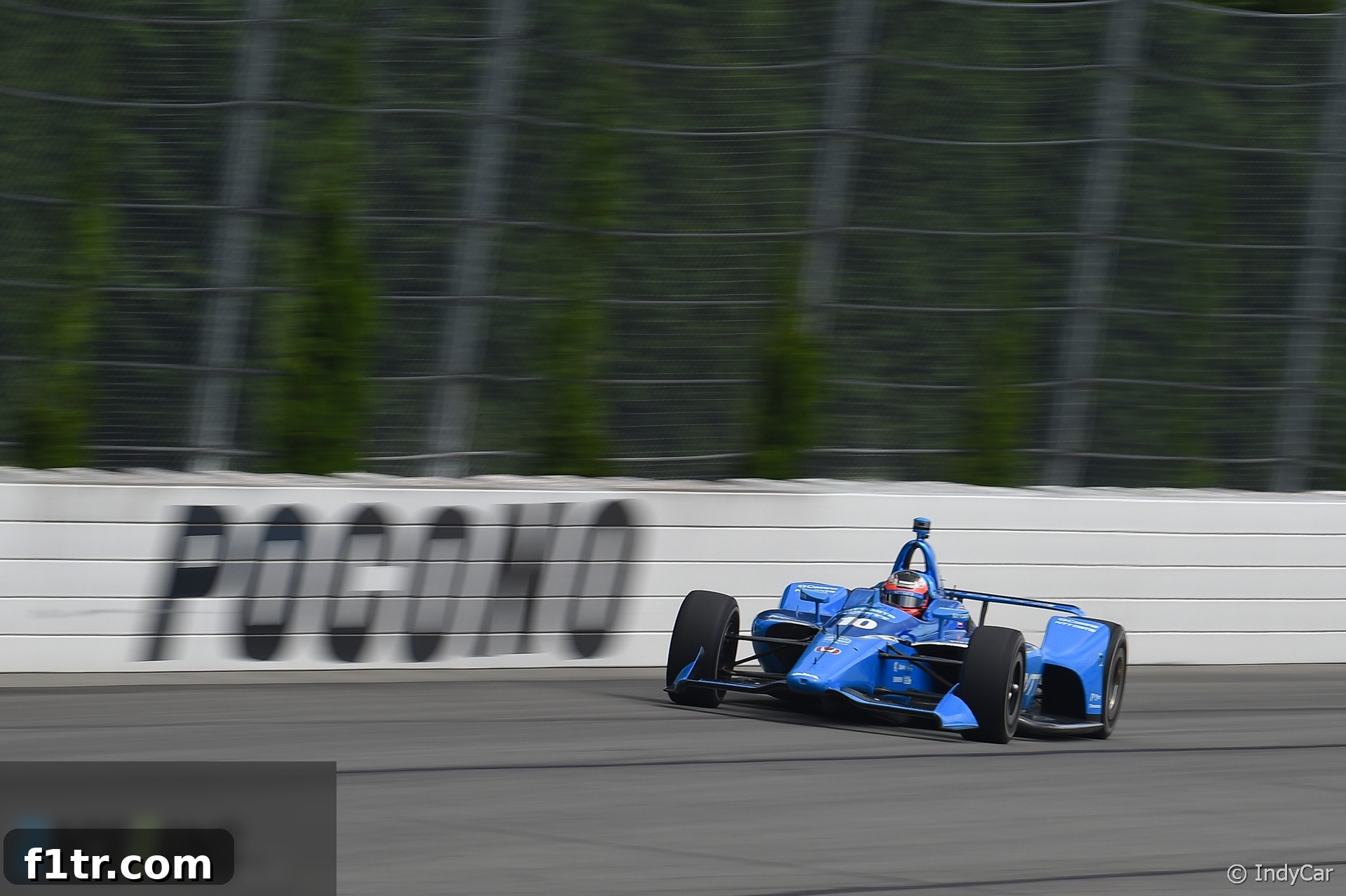
Pocono 500: Multi-Car Pile-Up on Lap One Triggers Renewed Safety Concerns
The exhilarating start of the Pocono 500 quickly turned into a scene of alarming chaos, as a dramatic multi-car incident on the very first lap brought the high-stakes NTT IndyCar Series race to an abrupt halt. Involving five prominent drivers, the significant crash immediately raised red flags and reopened a long-standing debate about the inherent risks and specific challenges posed by the Pocono Raceway’s unique three-turn superspeedway configuration. This incident not only disrupted the 500-mile race but also cast a shadow over the event, prompting an urgent re-evaluation of safety protocols and track suitability within the racing community.
The Catastrophic First-Lap Incident Unfolds
The high-speed collision began just moments after the green flag waved, with a sequence of events that rapidly escalated into a full-scale pile-up. Japanese driver Takuma Sato, renowned for his aggressive driving style, initiated contact with Alexander Rossi as the two navigated side-by-side, mere feet from Rossi’s Andretti Autosport teammate, Ryan Hunter-Reay. The initial bump sent Sato’s car into a spin, a perilous situation on any oval, but especially at the speeds reached at Pocono. As Sato’s car rotated violently, it made unavoidable contact with Felix Rosenqvist’s vehicle. The impact was severe, catapulting Rosenqvist’s Ganassi entry with tremendous force directly into the unforgiving outer barrier. James Hinchcliffe, another seasoned competitor, was also caught in the rapidly unfolding chain reaction, his car adding to the collection of crumpled carbon fiber and scattered debris.
The immediacy and scale of the accident were stark reminders of the razor-thin margins in top-tier open-wheel racing. With cars traveling at over 200 mph, a minor misjudgment or unfortunate contact can quickly lead to devastating consequences, as evidenced by the widespread damage across multiple vehicles. The sight of five high-performance racing machines entangled on the track, particularly so early in the race, sent a wave of concern through the paddock and among spectators.
Immediate Aftermath and Driver Conditions
Following the horrific crash, all five drivers involved — Takuma Sato, Alexander Rossi, Ryan Hunter-Reay, Felix Rosenqvist, and James Hinchcliffe — were promptly transported to the circuit’s medical centre for initial assessment. This standard procedure ensures that all competitors receive immediate medical attention, even if injuries are not immediately apparent. Of the five, Felix Rosenqvist’s condition was of particular concern, necessitating his transfer to a local trauma centre for a more thorough evaluation. An official statement released by IndyCar later confirmed that Rosenqvist’s injuries, while serious enough to require specialized care, were thankfully “non-life-threatening,” providing a measure of relief to the racing world. The other four drivers involved in the incident were subsequently released from the medical centre, cleared of any severe injuries, a testament to the robust safety measures built into modern IndyCars, despite the violence of the impact.
The race was immediately put under a red flag, halting all competition. This critical decision allowed safety crews ample time and space to meticulously clear the extensive debris scattered across the track from the multiple crashed cars. Removing every piece of carbon fiber, metal, and tire rubber is paramount to ensuring the safety of the remaining 17 cars and drivers, preventing further punctures or incidents as they prepared to resume the grueling 500-mile race distance. The delay underscored the gravity of the situation and the series’ unwavering commitment to driver and track safety.
Pocono Raceway: A Troubled History of High-Impact Incidents
This latest multi-car crash at Pocono is far from an isolated incident; it tragically extends a concerning pattern of major accidents at the “Tricky Triangle.” The track, renowned for its challenging and unique layout with three distinct turns, each modeled after a different oval (Indianapolis, Trenton, and Milwaukee), has unfortunately become synonymous with some of IndyCar’s most severe and impactful crashes in recent memory. Its distinct characteristics, while offering a unique racing spectacle, also contribute to unpredictable aerodynamics and high closing speeds that can make close-quarter racing particularly perilous.
Four years prior to this incident, the motorsport community was rocked by the tragic death of Justin Wilson. During a race at Pocono, Wilson’s helmet was struck by a piece of debris from another car’s crash, leading to fatal injuries. This devastating loss spurred significant introspection within IndyCar and the broader racing world regarding cockpit protection and debris management, eventually contributing to the development and implementation of advanced safety systems like the Aeroscreen.
Even more recently, just the year before this five-car pile-up, Canadian driver Robert Wickens suffered life-altering injuries at Pocono. Wickens’ car was launched into the catch fencing on the very first lap of that race, resulting in a spinal cord injury that caused paralysis. His courageous and ongoing recovery has been a powerful narrative, but the incident also served as a stark reminder of the catastrophic potential of racing at the venue. These incidents collectively paint a grim picture of Pocono Raceway’s safety record, prompting repeated calls for stringent reviews and, in some cases, outright removal from the IndyCar schedule.
The Call for Change: Robert Wickens’ Powerful Plea
The immediate aftermath of the five-car crash saw an outpouring of concern, but perhaps none was more poignant or impactful than the statement from Robert Wickens. Writing on social media, Wickens, whose own racing career was tragically cut short at this very track, did not mince words. His emotional and direct message resonated deeply within the racing community and among fans, amplifying the simmering discontent regarding Pocono’s continued presence on the IndyCar calendar.
Here’s how drivers saw the Lap 1 incident at @PoconoRaceway. #ABCSupply500 // #INDYCAR pic.twitter.com/Kv4C25557p
— NTT INDYCAR SERIES (@IndyCar) August 18, 2019
“How many times do we have to go through the same situation before we can all accept that an IndyCar should not race at Pocono,” wrote Wickens. His plea continued, “It’s just a toxic relationship and maybe it’s time to consider a divorce. I’m very relieved (to my knowledge) that everyone is okay from that scary crash.” Wickens’ words encapsulate a growing sentiment among many drivers, team owners, and safety advocates: that the risks associated with Pocono Raceway, particularly for open-wheel cars, may outweigh the benefits of continuing to race there. His use of the “toxic relationship” metaphor powerfully conveys the emotional and physical toll these incidents take on those within the sport, highlighting the difficult balance between tradition, spectacle, and the paramount importance of driver well-being. The inherent dangers of racing are accepted, but when a particular venue consistently generates such severe incidents, the question of suitability becomes unavoidable.
The Broader Debate: Motorsport Safety and Track Design
The Pocono 500 crash, much like previous incidents at the track, serves as a stark reminder of the constant, often perilous, interplay between speed, engineering, and human courage in motorsport. While modern IndyCars are incredibly robust, incorporating advanced features like carbon fiber monocoques, SAFER (Steel and Foam Energy Reduction) barriers, and the HANS (Head and Neck Support) device, the speeds achieved on superspeedways like Pocono push these safety margins to their absolute limits. The unique design of Pocono, with its varying banking angles and long straightaways leading into tight, distinct turns, can create challenging aerodynamic conditions and high-speed closing rates, increasing the likelihood and severity of multi-car incidents.
The conversation sparked by Wickens and others extends beyond just Pocono; it touches upon the ongoing evolution of motorsport safety globally. Every major incident, regardless of series or track, contributes to a deeper understanding of accident dynamics and drives innovation in safety technology, track design, and operational protocols. From the introduction of mandatory head restraints to the development of sophisticated energy-absorbing barriers and advanced cockpit protection systems like the Aeroscreen, the sport continuously strives to mitigate risks without sacrificing the thrilling essence of competition. However, the recurring nature of severe crashes at specific venues forces the motorsport community to confront whether certain tracks, despite their historical significance or unique challenges, can still be safely integrated into contemporary racing schedules, especially for categories like IndyCar where cars race in close proximity at extreme velocities.
The psychological impact on drivers, who routinely face the consequences of such high-speed endeavors, is also a critical, though often less discussed, aspect. Witnessing or being involved in a catastrophic crash leaves an indelible mark, influencing driving styles, risk assessment, and overall mental fortitude. For teams, a major crash represents not just a physical setback but also a significant financial burden, with extensive repairs often required to rebuild a car. These factors contribute to the complex decision-making process for race organizers when scheduling events at tracks with contentious safety records.
Looking Ahead: The Future of IndyCar and Track Selection
The Pocono 500 first-lap crash solidified the growing consensus that a serious re-evaluation of Pocono Raceway’s place on the IndyCar calendar was imperative. While the track offered a distinctive challenge and held historical significance, the frequency and severity of incidents ultimately overshadowed its appeal. The safety of its competitors is, and must always remain, the paramount concern for any racing series. This incident, combined with the powerful advocacy from drivers like Robert Wickens, undeniably played a significant role in IndyCar’s subsequent decisions regarding track selection and safety enhancements.
Ultimately, the racing community’s collective hope is for a future where the spectacle of high-speed motorsport can be enjoyed with the greatest possible assurances of driver safety. The Pocono 500 crash of 2019, though unfortunate, served as a potent catalyst for ongoing discussions and potential changes, aiming to ensure that the thrill of IndyCar racing remains untarnished by preventable tragedies.
Related IndyCar Insights
- IndyCar driver McLaughlin cleared of injury after crashing through barrier at Barber
- Schumacher says his IndyCar feels like ‘an F2 car, just with better tyres’
- IndyCar “way faster than Formula 1” in some corners, says Grosjean
- FIA to award more F1 superlicence points to IndyCar drivers from 2026
- Schumacher to race full-time in IndyCar with RLL in 2026
Browse all IndyCar articles