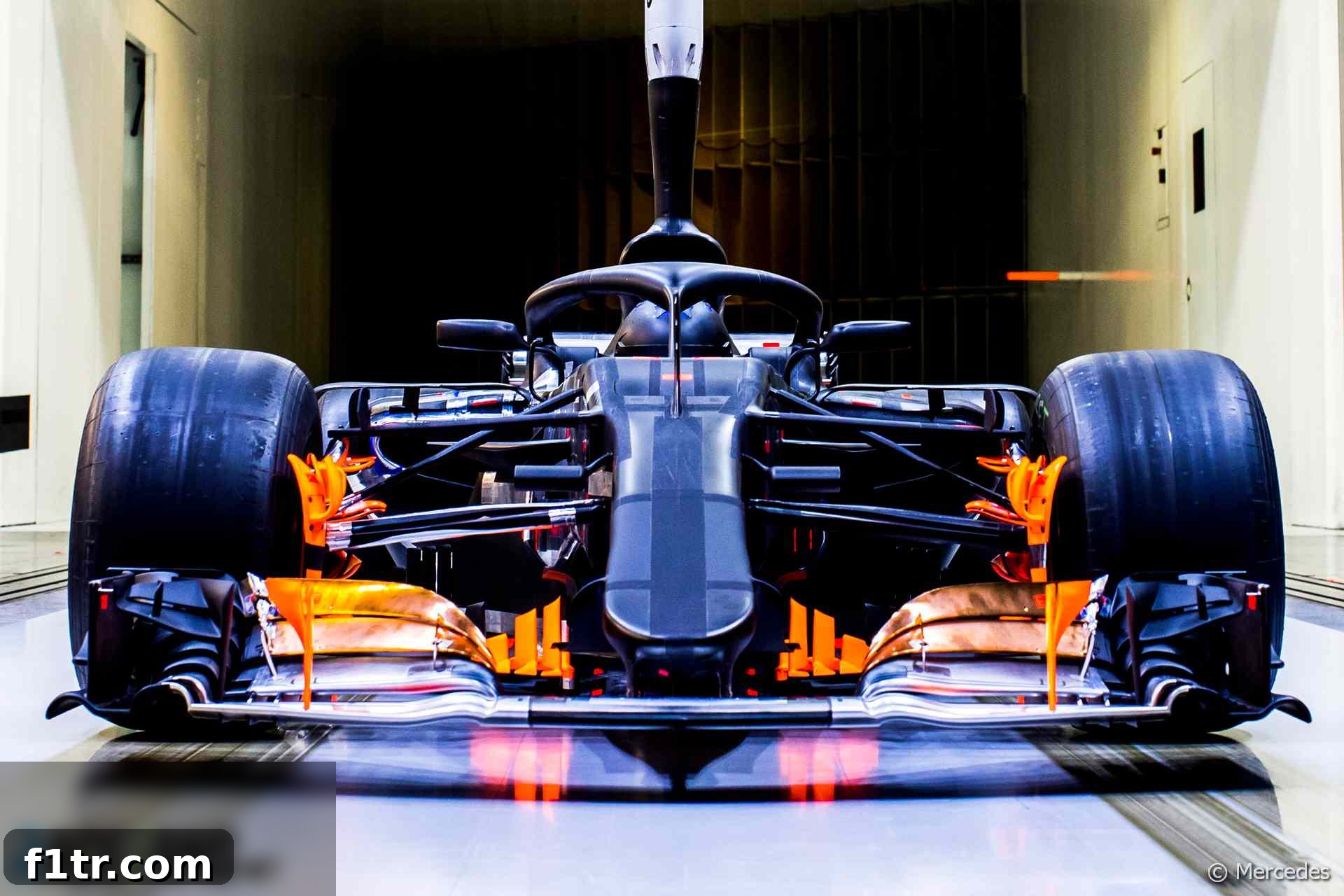
The highly anticipated 2026 Formula 1 season is poised to introduce the most significant technical revolution the sport has witnessed in over a decade. In a proactive move aimed at fostering unprecedented competitive balance and preventing any single team from establishing an early, unassailable lead, the FIA (Fédération Internationale de l’Automobile) has imposed strict limitations on when teams can commence development work on their new cars. This ban, in effect for more than a year, underscores the FIA’s commitment to ensuring a level playing field for all competitors as they navigate the complexities of these transformative regulations.
For the next two Formula 1 seasons (2024 and 2025), the championship intends to keep its technical regulations largely stable. However, the 2026 season marks a pivotal departure, ushering in a major overhaul that will redefine nearly every aspect of Formula 1 car design and performance. These changes encompass sweeping modifications to the chassis regulations, which are currently under extensive discussion and refinement, alongside the first fundamental shift in power unit rules since the hybrid era began in 2014. The core details of these new power unit regulations have already been agreed upon, signaling a monumental engineering challenge for every manufacturer and team involved.
Understanding the 2026 F1 Regulations: A Paradigm Shift
The forthcoming 2026 regulations are not merely incremental adjustments; they represent a holistic rethinking of Formula 1. At their heart, these changes aim to make the sport more sustainable, technologically relevant, and, crucially, more exciting for fans. The twin pillars of this regulatory overhaul are the revised power unit formula and the heavily debated chassis and aerodynamic concepts.
Revolutionary Power Unit Specifications
The new power unit regulations, which have been painstakingly developed and agreed upon, herald a significant evolution towards electrification and sustainability. Key changes include:
- Increased Electrical Power: The electrical component of the power unit will see a substantial boost, contributing approximately 50% of the total power output, moving closer to a 50/50 split with the internal combustion engine (ICE). This shift aligns F1 with global automotive trends and emphasizes hybrid technology.
- Removal of the MGU-H: The complex and costly Motor Generator Unit – Heat (MGU-H), a critical component of the current hybrid power units, will be removed. This simplification aims to reduce costs, encourage new power unit manufacturers to enter the sport (like Audi, and closer ties with Ford), and make the technology more accessible.
- Sustainable Fuels: A commitment to 100% sustainable fuels, which will be carbon-neutral, is a cornerstone of the 2026 regulations. This move significantly reduces the sport’s carbon footprint and showcases advanced fuel technology, providing a clear pathway for future automotive innovation.
- Cost Cap for Power Units: To further control expenses and level the playing field, a specific cost cap for power unit development and manufacturing will be introduced, ensuring that financial might alone doesn’t guarantee performance dominance.
These power unit changes present an immense engineering challenge, requiring a complete redesign of existing units and demanding innovative solutions from both incumbent manufacturers (Mercedes, Ferrari, Red Bull Powertrains, Renault) and newcomers. The complexity of integrating these new systems efficiently will be a defining factor in early 2026 performance.
Evolving Chassis and Aerodynamic Concepts
While the power unit rules are largely set, the chassis and aerodynamic regulations for 2026 are still very much under discussion and refinement. The FIA’s objectives here are clear: to create cars that are more agile, facilitate closer racing, and reduce reliance on complex, dirty-air-generating aerodynamic elements. Potential proposals include:
- Lighter and Smaller Cars: A common complaint about modern F1 cars is their increasing size and weight. Discussions revolve around making cars lighter and potentially more compact, which would improve nimbleness and raceability.
- Active Aerodynamics: To overcome the challenge of ‘dirty air’ and improve overtaking, the concept of active aerodynamics is being explored. This could involve movable wing elements (similar to DRS but more sophisticated) that drivers can adjust to reduce drag on straights and increase downforce in corners, potentially creating an ‘overtake mode’ system.
- Ground Effect Refinements: Building on the 2022 regulations, further refinements to ground effect aerodynamics are expected to ensure that cars can follow each other more closely without significant performance degradation due to turbulent air.
The combination of these radical changes means teams will need to develop entirely new car concepts, integrating the revolutionary power units with potentially drastically different chassis and aerodynamic philosophies. This is precisely why the FIA’s development ban is so crucial.
The FIA’s Strategy for Competitive Balance: The Development Ban
Formula 1 has a history of major regulation changes leading to periods of dominance by one or two teams that best interpret the new rules. To mitigate this risk for 2026, the FIA has implemented a stringent ban on early development. This measure is designed to:
- Prevent Early Dominance: By preventing teams from starting work too early, the FIA aims to prevent one team from gaining an insurmountable advantage before the season even begins. This ensures that all teams begin their development journey around the same time, promoting a more competitive grid.
- Manage Resources and Costs: F1 is an incredibly expensive sport. Allowing unlimited early development would disproportionately benefit teams with larger budgets, who could dedicate vast resources to the 2026 project while simultaneously developing for the current seasons. The ban helps control these costs, especially for smaller, independent teams.
- Ensure Fair Interpretation: The exact details of the 2026 regulations are still being finalized. The ban ensures that teams are not spending vast sums developing concepts based on preliminary drafts that might change, only for them to become obsolete. It encourages development based on settled rules.
- Focus on Current and Near-Term Performance: By restricting 2026 development, teams are compelled to focus their resources and engineering talent on maximizing performance for the 2024 and 2025 seasons, ensuring the present championship remains fiercely contested.
Specifics of the Ban: What’s Restricted and What’s Not
The updated sporting regulations for the 2024 F1 season clearly outline the parameters of this development freeze. The critical period for the ban is from December 1, 2023, until January 1, 2025, inclusive. During this time, teams are prohibited from conducting specific types of testing aimed at developing for the 2026 season.
The regulations state: “In order to prevent testing which aims to develop for the 2026 season, from 1/12/2023 until 1/1/2025 inclusive, RWTT [restricted wind tunnel testing] may only be carried out using a scale model that substantially complies with the 2023, 2024 or 2025 F1 technical regulations.” This means any aerodynamic testing conducted must be relevant to the car designs of the immediate preceding or current seasons, not future concepts.
Furthermore, the regulations go into specific detail to prevent circumvention: “With the exception of dyno testing aimed to develop brake system components with minimal air ducting and provided such tests do not concurrently test (or in any way provide incidental data or knowledge on) the performance or endurance of parts or systems classified as bodywork, no wind tunnel testing may be carried out using car geometry partially or wholly compliant with and/or substantially derived from drafts and/or published versions of the 2026 F1 Technical Regulations or FIA proposed 2026 bodywork geometries and concepts.”
This stringent wording is designed to close any potential loopholes. Teams cannot conduct wind tunnel tests using car parts or geometries that even partially resemble or are inspired by the 2026 regulations, even if those regulations are still in draft form. The only explicit exemption mentioned is for dyno testing of brake system components, provided such tests do not inadvertently provide data on aerodynamic performance or bodywork. This exemption is sensible, as brake systems often involve safety-critical components that benefit from early, focused development, and their primary function is not typically aerodynamic.
Similar language has been incorporated into the regulations governing restricted computational fluid dynamics (CFD) simulations. This ensures that digital development work, which accounts for a significant portion of modern F1 car design, is also subject to the same strict limitations, preventing teams from gaining an early virtual advantage.
Existing Development Controls: A Broader Regulatory Framework
The 2026 development ban doesn’t exist in isolation; it complements an already robust framework of regulations designed to manage development and promote fairness in Formula 1:
- Aerodynamic Testing Regulations (ATR): Teams already face strict limits on the amount of real-world wind tunnel testing and computer-simulated aerodynamic testing (CFD) they can conduct. Crucially, these limits are tied to their performance in the constructors’ championship. Teams that perform least well are granted more development time, a “sliding scale” approach designed to help them catch up to the front-runners and compress the performance gap across the grid.
- Financial Regulations (Cost Cap): Introduced in 2021, the budget cap imposes a strict limit on how much money teams can spend in a given season. This financial control works hand-in-hand with technical and sporting regulations to curb spending and ensure that all teams, regardless of their financial backing, operate within similar budget parameters. This makes the development ban even more effective, as teams cannot simply throw unlimited money at a problem to gain an advantage.
- Sporting and Technical Directives: The FIA regularly issues directives to clarify rules, address potential loopholes, or guide teams on specific interpretations. This ongoing communication helps maintain integrity and ensures that the spirit of the regulations is upheld.
These existing controls demonstrate the FIA’s continuous effort to manage the intense competitive nature of Formula 1. The 2026 development ban is a targeted measure within this broader strategy, specifically addressing the unique challenges posed by a major regulatory overhaul.
Implications for Teams and the Future of F1
The development ban presents both challenges and opportunities for Formula 1 teams:
- Strategic Planning: Teams must meticulously plan their engineering and design resources. The period before the ban lifts will be crucial for theoretical concept work, methodology development, and internal process refinement, without physically testing 2026 components.
- Resource Allocation: Teams must continue to balance development for the current and upcoming seasons (2024/2025) with preparatory work for 2026. This requires careful allocation of personnel and budget.
- Focus on Fundamentals: The ban forces teams to deeply understand the regulatory objectives and focus on fundamental research and simulation tools rather than iterative physical testing.
- Level Playing Field: When the ban lifts on January 1, 2025, every team will, theoretically, start from a similar point. This could lead to a highly unpredictable and exciting 2026 season, with the potential for unexpected front-runners and a much tighter grid.
Historically, significant regulation changes in F1 have often led to a dominant team emerging in the initial years (e.g., Brawn GP in 2009, Mercedes in 2014, Red Bull in 2022). The FIA’s aggressive stance with the 2026 development ban signals a strong intent to prevent such extended periods of one-sided competition. By ensuring a more synchronized start to development, the sport hopes to deliver intense battles and a truly open championship from the very first race of the new era.
The 2026 Formula 1 season promises to be a landmark year, driven by a profound commitment to innovation, sustainability, and competitive excellence. The FIA’s strategic ban on early development is a testament to this commitment, laying the groundwork for what could be one of the most exciting and closely fought championships in recent memory. As teams eagerly await the signal to commence physical development, the anticipation for this new chapter in Formula 1 continues to build.
2026 F1 season
- What must Formula 1 fix with its new rules – and what should it leave unchanged?
- Alpine denies “sabotaging” Colapinto and criticises social media “hate” posts
- Verstappen starts season with lowest score over three rounds since his debut in F1
- Poor starts a ‘very high priority’ for Mercedes as drivers lose 21 places in four races
- “Two balls of steel!” How Leclerc won his battery battle with Hamilton and Russell
Browse all 2026 F1 season articles