The Allure and Intricacies of Formula 1 Retro Weekends: A Deep Dive into Throwback Liveries and Fan Engagement
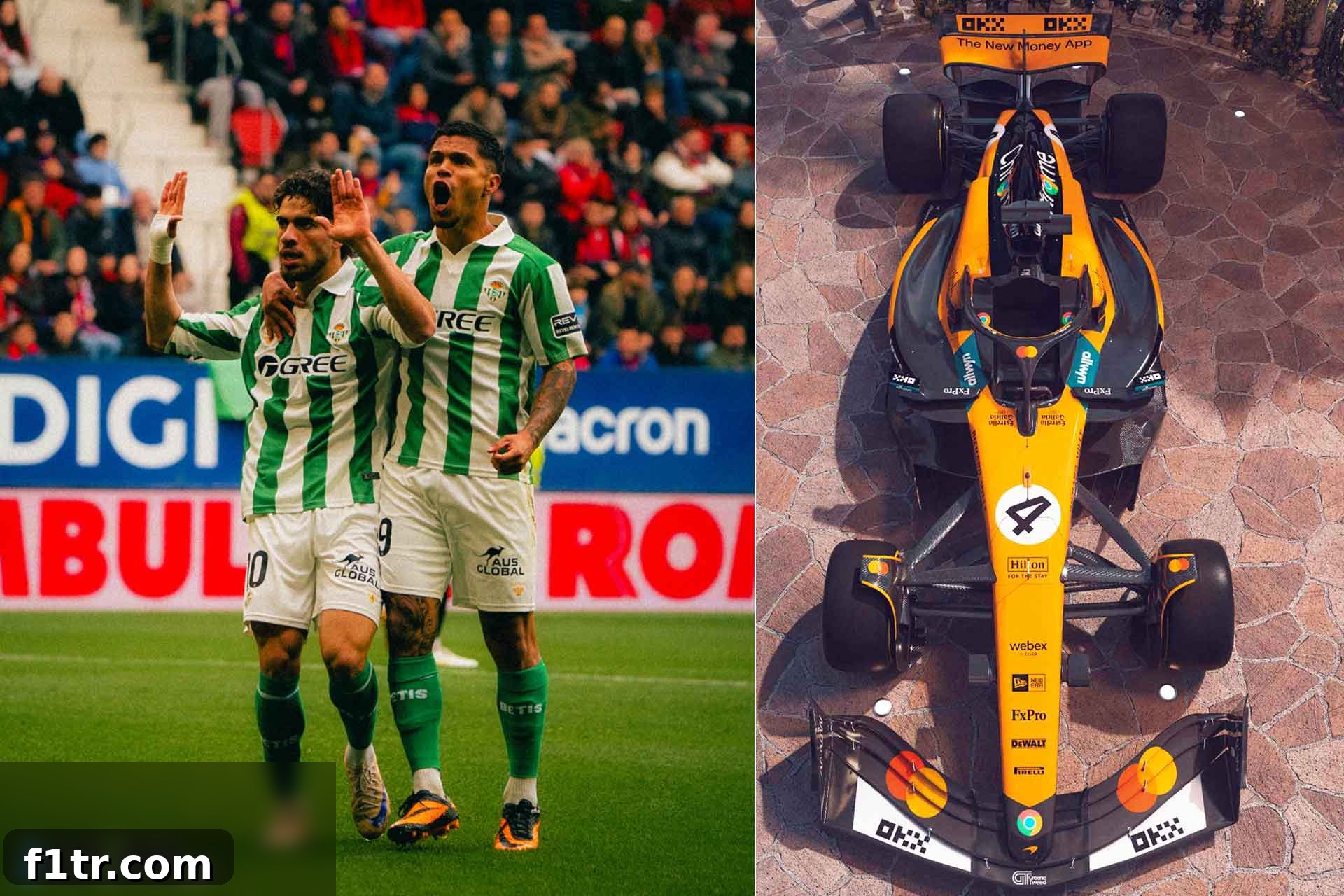
The world of sports is increasingly tapping into a rich vein of nostalgia, offering fans a unique blend of past and present. Last weekend, Spain’s two premier football divisions delivered a delightful ‘Jornada retro,’ immersing supporters in a bygone era. Over four captivating days, 38 of the 42 participating clubs donned specially designed kits, meticulously crafted to evoke their historical aesthetics. This visual feast was complemented by classic-style television graphics, bespoke retro kits for pitch officials, and even specially designed match balls, creating a truly immersive throwback experience for millions.
The Growing Trend of Retro Weekends Across Sports
The concept of a ‘retro weekend’ is not entirely new, having been successfully adopted by various sports leagues worldwide. Australia’s robust Football League and National Rugby League have long utilized such themed events to celebrate their rich histories and engage their passionate fan bases. These initiatives often generate significant interest, driving merchandise sales and fostering a deeper connection between clubs, their legacies, and their supporters.
In the high-octane world of motorsport, NASCAR famously pioneered a ‘throwback weekend’ concept as early as 2015. This proved initially popular, with teams embracing vintage liveries and celebrating the sport’s storied past. However, the format underwent a significant change this year, largely due to a noticeable decline in team participation. Fewer and fewer teams were willing to incur the considerable expense and effort required to re-sticker their cars in retro colour schemes, highlighting a crucial challenge inherent in such endeavours: maintaining enthusiasm and justification for the significant logistical and financial investment.
Given this broader trend, the suggestion for Formula 1 to explore a similar concept has naturally surfaced in the past. F1, with its unparalleled history and iconic imagery, certainly possesses the heritage to warrant such an event. However, the viability of a full-scale F1 retro weekend is increasingly being questioned, with many believing it’s an idea that might have already run its course or is simply better suited to sports with different operational dynamics, such as football, where the financial and logistical hurdles are less pronounced.
Formula 1’s Rich Heritage and the Livery Dilemma
Undoubtedly, several Formula 1 teams boast an incredibly rich history, offering a deep well of iconic designs and liveries to draw upon for any throwback initiative. Marquee teams like Ferrari, McLaren, Williams, and Mercedes have, in fact, graced the circuits with old-style liveries in recent seasons, often to significant fan appreciation. These sporadic retro designs serve as powerful reminders of their storied pasts, evoking powerful memories for long-time fans and introducing newer audiences to the sport’s visual evolution.
For other teams, however, the concept presents a more substantial challenge. Red Bull Racing, for instance, has maintained a largely consistent brand identity and livery over its nearly two decades in F1, making a “retro” interpretation somewhat less distinct. Haas, being a relatively newer entrant, has a mere decade of history, though this didn’t deter them from reverting to their original, albeit arguably dreary, grey livery for a specific race last year. This demonstrates a willingness to engage, even with a limited historical palette.
Aston Martin, while a historic name, has a brief original involvement in F1, meaning their most iconic motorsport liveries often stem from other racing categories. Newer or re-branded entities like Audi, Alpine, and Cadillac (if they join F1) would likely need to adapt liveries from their extensive past involvements in other racing series like Le Mans or WEC. While visually appealing, this stretches the definition of a ‘retro F1’ weekend, as these designs weren’t originally conceived for Formula 1. Similarly, Racing Bulls, the rebranded AlphaTauri, would likely find an obvious retro choice in the Toro Rosso livery in which Sebastian Vettel famously scored his maiden Grand Prix victory.
Aesthetics vs. Modern Commercial Realities
The fundamental question remains: would the considerable effort and expense associated with a full retro weekend be truly justified by a substantial increase in fan interest and engagement? F1 teams’ past attempts at retro liveries have, at times, been met with mixed reactions, often leaving fans feeling somewhat dissatisfied. Historically, these efforts were somewhat hampered by the imperative to reduce paint or sticker weight on the cars for performance gains. This particular technical constraint has been partially addressed this year with new regulations requiring teams to ensure a minimum percentage of coverage on their bare chassis, potentially offering more freedom for livery designers.
However, the most significant hurdle lies in the complex integration of today’s myriad sponsor demands with a classic look originally created for entirely different brands. Classic F1 liveries, from the likes of Williams-Renault or Ferrari, often presented a clean, bold aesthetic, dominated by one or two primary sponsors. Modern F1 cars, by contrast, are intricate canvases, adorned with dozens of sponsor logos, each demanding prominent placement.
The stark visual contrast is evident when comparing the iconic, clean lines of the 2002 Williams livery with the team’s commendable, yet ultimately compromised, attempt to recreate a similar aesthetic last year. Modern sponsor obligations often result in a cluttered appearance, making it difficult to faithfully reproduce the minimalist elegance of classic designs. The concept truly shines when a team can showcase a sponsor with its own rich history in motorsport, such as McLaren’s celebrated 2021 Monaco Grand Prix livery featuring Gulf oil. This proved a massive hit, resonating deeply with fans. However, orchestrating such a harmonious arrangement for all eleven teams simultaneously on the same weekend presents an almost insurmountable challenge.
Beyond Liveries: Enhancing the Retro Experience
While full-scale retro liveries for every team pose significant difficulties, some elements of La Liga’s retro weekend are far more achievable for F1 and could deliver substantial positive impact. The return of F1’s old-school television graphics, for instance, would almost certainly be welcomed by a vast segment of the fan base. A simpler, less cluttered look to the broadcast presentation, potentially incorporating classic fonts and colour schemes, coupled with the reintroduction of timing to three decimal points – which has been partially removed this year – would undoubtedly enhance the viewing experience and evoke a sense of cherished tradition.
Could F1 also draw inspiration from football by creating classic-style trackside furniture or infrastructure? A full-blown ‘Goodwood Revival’ approach, which meticulously recreates historical racing environments, would obviously be impossible due to stringent modern safety considerations. However, F1 could explore subtle yet impactful ways to apply a ‘classic’ look to certain elements of the circuit infrastructure. These would need to be visible often enough during television broadcasts to be worthwhile. For instance, while styling tyre walls to resemble old hay bales might be impractical and unsafe, a strategic repainting of kerbs in traditional colours, or implementing retro branding on specific pit lane structures, could subtly enhance the throwback atmosphere. This has, in fact, already occurred at some tracks for specific events, demonstrating its feasibility.
Logistical and Commercial Hurdles: The “When and Where” Conundrum
Perhaps the biggest and most complex challenge to successfully implementing a retro weekend in Formula 1 is the fundamental question of “when and where” such an event could be held. Unlike football leagues, where multiple rounds take place at the same venues throughout a season, F1 operates on a global calendar with distinct events. Race promoters invest colossal sums to host a Grand Prix, primarily to draw attention and showcase their specific regions, cities, or countries. This focus has become even more direct and prominent in recent years, exemplified by spectacles such as last year’s elaborate post-race light and fountain show following the Las Vegas Grand Prix.
These promoters do not necessarily want the event’s focus to be diverted elsewhere, especially not towards a generic historical theme that doesn’t directly promote their locality. A ‘retro’ weekend in F1 would, by its very nature, be primarily a marketing and fan engagement exercise, without direct sporting consequence. However, promotion and commercial maximization are areas where Liberty Media, F1’s current owners, demonstrably excel. Therefore, it would not be entirely surprising if they did decide to tackle this concept, recognizing its potential for new revenue streams and fan enthusiasm.
Drivers and teams have already witnessed first-hand the significant demand for special editions of their teamwear, proving the commercial viability of unique, limited-run items tied to specific themes. If there is a clear pathway to generating additional revenue by organizing a one-off ‘retro Grand Prix’ or incorporating retro elements, then it truly becomes a matter of “when,” rather than “if,” such an event or concept is implemented.
Nevertheless, NASCAR’s own extensive experiment with the throwback concept offers a crucial insight: it appears to have a limited shelf life. The fact that in its most recent iteration, fewer than half of the teams chose to participate suggests that the novelty can, and eventually does, wear off. Paradoxically, ‘throwback weekends’ themselves, it seems, may ultimately belong in the past as a fleeting trend rather than a sustainable annual fixture across all major motorsports.
Pictures: Formula 1 teams’ retro liveries