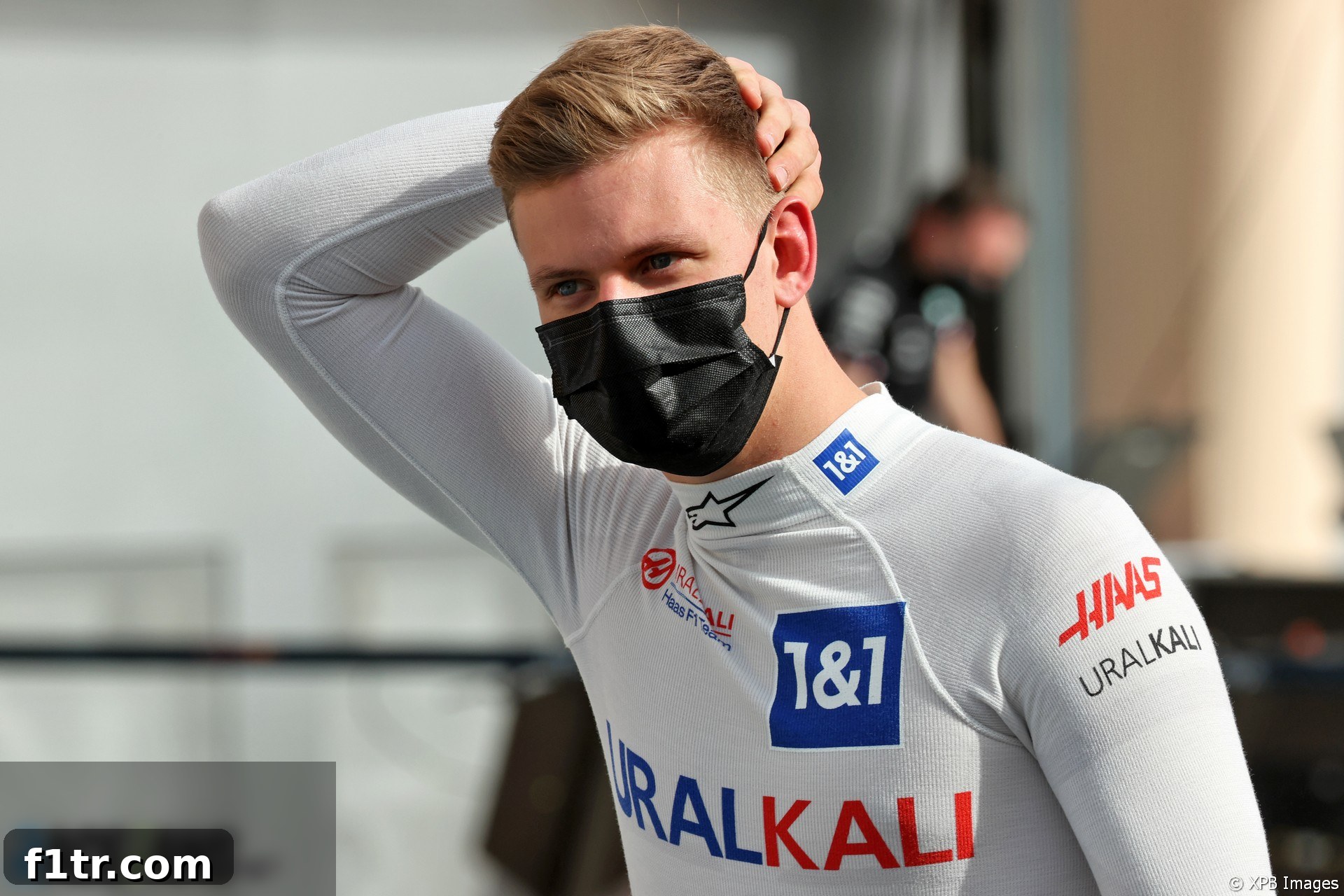
Haas F1 Team, a relatively young contender in the highly competitive world of Formula 1, has consistently faced significant challenges, often battling at the rear of the grid with limited resources. The pressure to perform while maintaining financial stability is immense, especially in an era of evolving regulations and global economic shifts. Amidst this backdrop, the team’s driver selections often come under intense scrutiny, with every decision analyzed for its potential impact on both on-track performance and the team’s coffers. The 2021 F1 season was no exception, marked by the arrival of two rookie drivers: Mick Schumacher and Nikita Mazepin. This particular driver lineup ignited a flurry of speculation, especially regarding the underlying motives behind their appointments. At the heart of this discussion was the widespread belief that Haas, facing acute financial pressures exacerbated by the global pandemic, had opted for drivers who brought substantial financial backing rather than purely selecting for talent. However, team principal Guenther Steiner has robustly countered these assertions, particularly concerning the highly anticipated debut of Mick Schumacher, the son of F1 legend Michael Schumacher.
Guenther Steiner firmly asserted that Mick Schumacher’s selection was a direct consequence of his outstanding performance in the Formula 2 championship, where he clinched the coveted title in 2020. Schumacher’s journey through the junior categories was marked by steady improvement and a clear demonstration of his racing prowess. Winning the F2 championship is no small feat; it demands exceptional skill, consistency, and mental fortitude against a grid of immensely talented young drivers all vying for an F1 seat. This triumph positioned Schumacher as one of the most promising talents in motorsport, signaling his readiness for the pinnacle of racing. His F2 season was a testament to his ability to manage pressure, develop race craft, and consistently deliver points, culminating in a dominant championship victory. For Haas, bringing in a driver with such a strong recent track record from the feeder series offers the promise of raw, unproven talent that can grow with the team. Steiner’s emphasis on Schumacher’s merit underscores the team’s ambition to foster genuine driving talent, rather than solely relying on commercial considerations.
Formula 1 is as much a financial battleground as it is a sporting one. The astronomical costs associated with designing, building, and campaigning an F1 car, coupled with extensive travel and a vast workforce, mean that budget management is a perpetual concern for every team, particularly those in the midfield and at the back of the grid. Historically, “pay drivers” – those who bring substantial sponsorship money to secure a seat – have been a contentious but often necessary reality in F1, especially for smaller teams struggling to compete with the financial might of manufacturer-backed giants. The global COVID-19 pandemic further exacerbated these financial strains, impacting sponsorship deals, hospitality revenue, and overall economic stability for many teams. Guenther Steiner himself admitted last year the team was in a difficult financial situation prior to the 2021 season. This context fuelled the narrative that Haas’s 2021 driver lineup was primarily dictated by financial necessity, leading to intense scrutiny over the backgrounds and commercial ties of both Mick Schumacher and Nikita Mazepin. Understanding this economic landscape is crucial to appreciating the delicate balance F1 teams must strike between securing talent and ensuring financial viability.
The financial component of Haas’s 2021 driver pairing became particularly apparent with the signing of Nikita Mazepin. Mazepin’s father, Dmitry Mazepin, is a prominent Russian billionaire and the owner of Uralkali, a major producer and exporter of potash fertilizers. Following Nikita’s signing, Uralkali was announced as Haas’s new title sponsor, a move that undoubtedly provided a crucial financial lifeline to the team. This direct link between a driver’s family and a significant team sponsorship is a classic example of a “pay driver” scenario, where the financial backing secured by the driver’s association plays a pivotal role in their entry into the sport. While Nikita Mazepin had competed in Formula 2, his championship standing was not as stellar as Schumacher’s, further fueling the perception that his seat was primarily driven by the substantial financial injection from Uralkali. This arrangement, while commercially sound for Haas, created a distinct contrast with the narrative surrounding Mick Schumacher’s arrival, prompting Steiner to draw clear lines of distinction between the two situations.
Adding another layer to the complex sponsorship landscape was Haas’s partnership with 1&1, a prominent German internet services firm. This negotiation gained public attention through its portrayal in the popular Netflix documentary series “Drive to Survive.” The series depicted 1&1 as an eager potential sponsor, with a clear interest in aligning its brand with a German driver – a detail that inevitably linked their potential sponsorship to Mick Schumacher, given his German nationality and immense family legacy in the sport. However, Guenther Steiner was quick to provide clarification, aiming to dispel any misconceptions about the direct correlation between Schumacher and the 1&1 deal. “The 1&1 sponsorship is a Haas team sponsorship, it’s not a Mick sponsorship, just to clarify that,” Steiner unequivocally stated. He further elaborated, “There is no direct connection between 1&1 and Mick. Obviously, 1&1 embraces Mick being at Haas, but this was a parallel development, not a combined development.” This statement is critical. While a German driver of Mick Schumacher’s stature undoubtedly makes the Haas F1 team a more attractive proposition for German companies like 1&1, the sponsorship agreement itself is with the team as a whole, rather than being a personal endorsement deal for the driver. It highlights the subtle yet important distinction between a driver indirectly increasing a team’s appeal and a direct “driver-linked” sponsorship. The presence of a charismatic and nationally celebrated driver like Schumacher undoubtedly creates synergy, making the team a more appealing platform for certain brands, even if the primary contract is with the team.
Mick Schumacher’s path to Formula 1 was also significantly influenced by his membership in the prestigious Ferrari Driver Academy (FDA). The FDA is Ferrari’s renowned young driver program, designed to identify, nurture, and develop the next generation of F1 talent. As a customer team of Ferrari, Haas benefits from a close technical and sporting relationship with the Italian Scuderia, including access to their power units and other components. This relationship often extends to driver placements. For Ferrari, placing a promising FDA talent like Schumacher in a customer team provides a valuable opportunity for them to gain vital F1 experience without the immense pressure of directly driving for the factory Ferrari team in their debut season. Steiner confirmed this strategic alignment: “For sure it helped us with 1&1 and 1&1 is very happy about having Mick at Haas. But that, it was more like a decision from Ferrari where to send the drivers and we asked if we can have him because he won Formula 2.” This revelation illustrates a key dynamic in modern F1: top teams often use their customer relationships to strategically deploy their academy drivers, allowing them to hone their skills in a less high-stakes environment before potentially moving up. Haas, in turn, gains a highly regarded, Ferrari-backed talent, which aligns with both their sporting ambitions and indirectly boosts their commercial appeal for partners like 1&1. The synergy here is multifaceted: Mick’s F2 title made him desirable, Ferrari wanted him to gain F1 experience, and Haas benefited from both the talent and the indirect commercial appeal.
Throughout this period of intense scrutiny and speculation, Guenther Steiner consistently played the role of the pragmatic and outspoken team principal. His straightforward communication style, often highlighted in “Drive to Survive,” allowed him to address sensitive topics like driver selection and sponsorship with transparency, albeit carefully. Steiner’s statements regarding Mick Schumacher’s selection were clear: talent was the primary factor, backed by his F2 championship. While acknowledging that sponsors like 1&1 were naturally pleased with a German driver of Schumacher’s caliber, he meticulously separated the direct financial ties from the driver’s merit. This careful distinction was crucial for maintaining credibility and upholding the narrative that Haas, despite its financial challenges, remained committed to sporting principles. Steiner’s leadership during this challenging phase for Haas involved not only securing vital sponsorships but also managing public perception and ensuring that the team’s long-term objectives of developing talent were not overshadowed by short-term financial narratives. His ability to navigate these complex waters is a hallmark of his tenure at Haas, where he consistently seeks to optimize the team’s limited resources.
The 2021 season proved to be a significant learning curve for both Mick Schumacher and the Haas F1 team. Operating with a largely undeveloped car due to strategic resource allocation towards the major 2022 regulation changes, Haas was consistently the slowest team on the grid. This scenario placed immense pressure on its rookie drivers. For Mick Schumacher, it meant a challenging debut, often competing against his teammate in a car that offered little opportunity to showcase his true potential against the rest of the field. Yet, this challenging environment also served as a valuable crucible, forcing Schumacher to adapt, learn, and grow without the immediate expectation of points or podiums. He demonstrated resilience and a professional approach, consistently working with the team to extract maximum performance from the car. His debut season laid the groundwork for future development, providing him with essential Formula 1 experience in terms of race procedures, tire management, and working within an F1 team structure. The distinction made by Steiner between talent and sponsorship was thus put to the test on the track, as Schumacher embarked on a journey to prove his inherent racing ability beyond any commercial considerations. His future, and that of Haas, rests on continued development, strategic choices, and the enduring pursuit of performance.
In summary, Guenther Steiner’s unequivocal stance clarifies that Mick Schumacher’s entry into Formula 1 with Haas was fundamentally a recognition of his formidable talent and his championship-winning performance in Formula 2. While the economic realities of F1 undeniably mean that financial backing plays a significant role in securing seats, particularly for smaller teams, Steiner was keen to differentiate Schumacher’s situation from a direct “pay driver” model. The synergy created by Schumacher’s presence—attracting partners like 1&1 and benefiting from the Ferrari Driver Academy’s strategic placement—underscored an indirect commercial value. Ultimately, Haas aimed to secure a promising talent for its long-term vision, leveraging the Ferrari pipeline while navigating the harsh financial climate. Mick Schumacher’s debut represented a critical step in his burgeoning career, a testament to his skill, and a strategic move by Haas to build for the future with genuine racing potential at its core.
2021 F1 season
- Masi ‘basically gifted the championship’ to Verstappen says 2021 FIA steward Sullivan
- Las Vegas race backers looking to extend F1 deal beyond 2025
- Why Mercedes put ‘a reminder of joy and pain’ on display in their factory lobby
- Verdict on error in GT race suggests Mercedes would have lost 2021 Abu Dhabi GP appeal
- Title ‘stolen’ from Mercedes made us ‘underdogs people cheer for’ – Wolff
Browse all 2021 F1 season articles