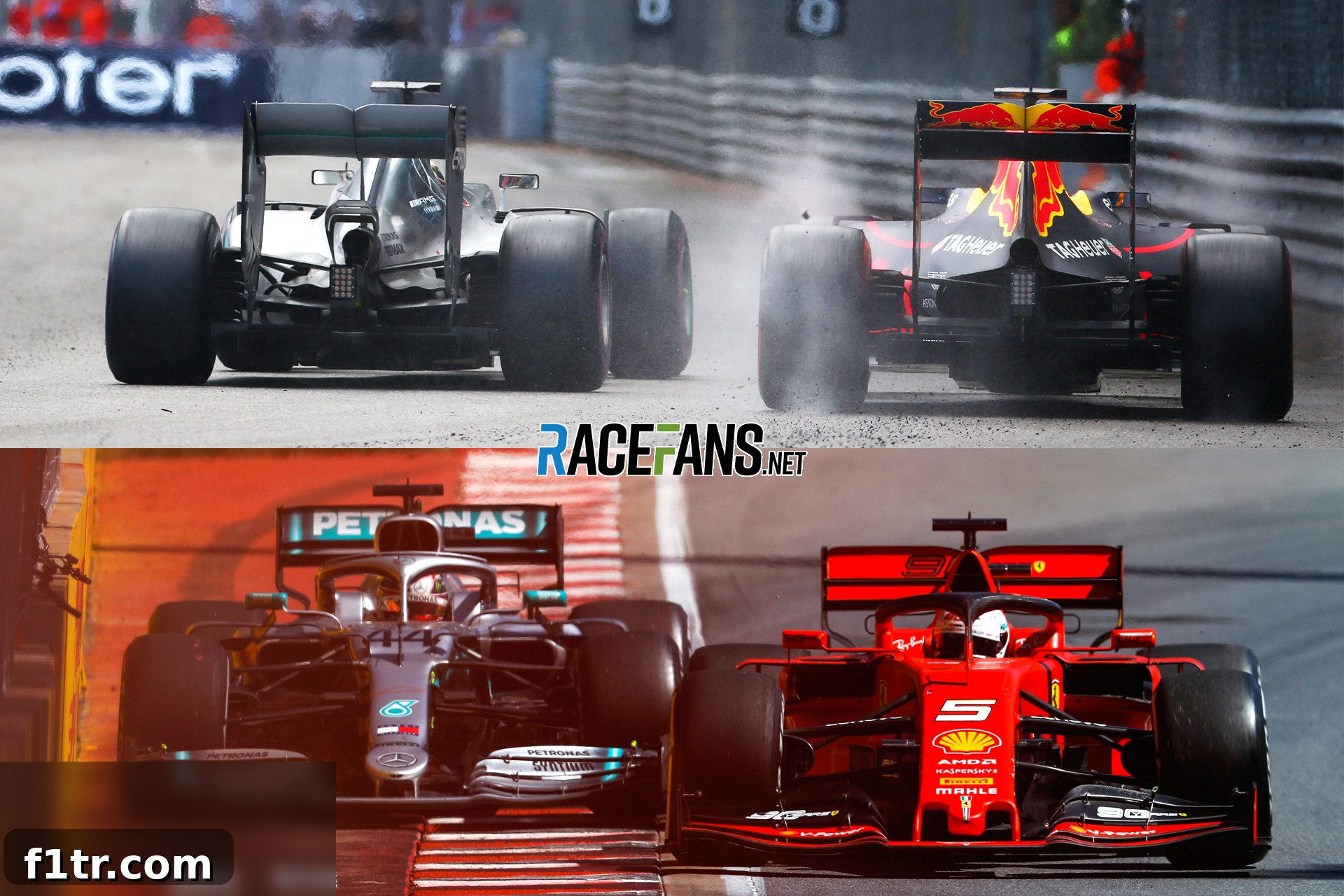
The highly controversial incident that ultimately decided the 2019 Canadian Grand Prix ignited a fierce debate, prompting widespread questions about the consistency of rulings made by the FIA stewards. This pivotal decision not only reshaped the outcome of a thrilling race but also cast a shadow over the sport’s application of its own regulations, drawing comparisons to past events and sparking a dialogue that resonated across the Formula 1 community.
The stakes at the Circuit Gilles Villeneuve last weekend could not have been higher. The contentious five-second time penalty handed to Sebastian Vettel for what stewards deemed an unsafe rejoining of the track, which forced Lewis Hamilton off, directly cost the Ferrari driver a hard-fought victory. This ruling became an immediate flashpoint, with fans, drivers, and team principals alike weighing in on its fairness and the broader implications for F1 stewarding consistency. The aftermath saw a deep dive into the FIA rulebook and a re-examination of similar race incidents from previous seasons.
Among the many points of contention raised by enthusiasts and media outlets was why a seemingly similar past incident did not receive the same penalty. Specifically, the spotlight turned to a 2016 event where Lewis Hamilton appeared to execute a comparable defensive maneuver against Daniel Ricciardo during their intense battle for the lead at the Monaco Grand Prix. The perception of inconsistency fueled much of the post-race discussion, demanding a clearer explanation of how stewards differentiate between such events.
A closer examination of the rulings for these two high-profile incidents, along with a more recent event, reveals the nuances in interpretation and the specific precedents that informed Vettel’s punishment. Understanding these distinctions is crucial to comprehending the complex world of Formula 1 regulations and the challenging task faced by race stewards.
Canada 2019: Vettel’s Unsafe Rejoin and the Hamilton Incident
On lap 48 of the Circuit Gilles Villeneuve, race leader Sebastian Vettel made an error at turn three, running wide and leaving the track entirely. His subsequent re-entry at turn four became the defining moment of the race. As Vettel rejoined, he veered significantly from the far left-hand side of the track to the right-hand side, directly cutting across the optimal racing line. The stewards meticulously reviewed the incident, concluding that in doing so, Vettel unequivocally forced Lewis Hamilton to take immediate and drastic evasive action, which included Hamilton himself driving off the track onto the grass, purely to avoid a high-speed collision.
The official stewards’ notes provided a clear rationale: “Car five [Vettel] left the track at turn three, rejoined the track at turn four in an unsafe manner and forced car 44 off track. Car 44 had to take evasive action to avoid a collision.” This statement highlights two critical elements: the unsafe nature of Vettel’s rejoining, and the direct impact it had on Hamilton, leaving him with no alternative but to take avoiding measures. The decision hinged not merely on Vettel going off track, but on the method and consequence of his return to the racing surface. The core of the stewards’ concern was the path Vettel took to re-enter the track and how this impacted a competitor who had maintained a legitimate position.
The penalty, a five-second addition to Vettel’s race time, was significant, as it effectively cost him the victory, demoting him to second place behind Hamilton. This immediate outcome fueled the widespread debate, with many arguing that such an incident should be treated as a “racing incident” without penalty, while others staunchly defended the stewards’ decision as upholding fundamental safety rules regarding track limits and rejoining procedures.
Monaco 2016: Hamilton’s Defense Against Ricciardo
Three years prior to the Canadian controversy, a seemingly similar incident unfolded during the 2016 Monaco Grand Prix. While leading, Lewis Hamilton ran wide at turn 10, the Nouvelle Chicane, before rejoining the racing line. As he accelerated through turn 11, Daniel Ricciardo, who was close behind, attempted an overtake by moving to the right. Hamilton then squeezed Ricciardo towards the barrier, obliging the Red Bull driver to back off and abandon his overtaking attempt. This incident also underwent an official investigation by the stewards, but notably, no action was taken against Hamilton.
The stewards’ reasoning for their decision in Monaco highlighted specific elements. They acknowledged that Hamilton “appeared to not leave enough room whilst defending a position in turn 11” but crucially ruled that he “left at least one car width between his own car and the edge of the track.” This distinction proved vital. The Monaco ruling effectively separated Hamilton’s act of rejoining the track after running wide from his subsequent defensive driving against Ricciardo. In the stewards’ view, Hamilton had already safely rejoined the racing line *before* the alleged blocking maneuver took place. His brief excursion off track at turn 10 was not even mentioned in the official ruling regarding the blocking incident, implying it was not deemed an unsafe rejoining that directly impacted Ricciardo.
This subtle but significant difference in interpretation is key when comparing the two events. Unlike Vettel, who was penalized for an unsafe re-entry *while* impacting a competitor, Hamilton’s incident was viewed as a separate act of defending a position *after* rejoining. While Ricciardo’s onboard footage suggested that Hamilton left very little more than a car’s width, the stewards deemed it compliant with the rules for defensive driving at that specific point. In stark contrast, the image of the Canada incident clearly shows Vettel utilizing the full width of the track upon his re-entry, leaving no viable room for Hamilton, forcing him completely off track. This further underscores why the stewards differentiated between a “rejoin” incident and a “defensive driving” incident.
Japan 2018: The Direct Precedent with Verstappen and Raikkonen
A much clearer and more direct comparison, providing the key precedent for Sebastian Vettel’s penalty in Canada, can be found in the 2018 Japanese Grand Prix. In that incident, Max Verstappen, while battling with Kimi Raikkonen, ran wide and left the track entirely at the chicane. Upon his rejoining, Verstappen failed to leave sufficient room for Raikkonen, impacting the Ferrari driver’s trajectory.
The stewards’ ruling for the Verstappen-Raikkonen incident read: “The stewards reviewed the video evidence, and determined that car 33 locked up his brakes and left the track at turn 16, cut the chicane and rejoined track on the racing line in turn 17 and in the process collided with car seven.” Verstappen subsequently received a five-second time penalty for this maneuver. The parallel with Vettel’s Canada incident is striking. In both cases, a driver left the track, attempted to rejoin, and in doing so, compromised the safety and trajectory of another car already on the track. The key difference was that Hamilton took evasive action to avoid collision with Vettel, whereas Raikkonen, staying on the track, was actually hit by Verstappen.
Despite this slight variation in outcome (collision vs. evasive action), the *nature* of the offense – an unsafe rejoining that directly impacted a competitor – was deemed identical, resulting in the same penalty. This consistency across different outcomes stemming from the same initial unsafe maneuver underscores the stewards’ interpretation of the rule. Interestingly, Sebastian Vettel himself, who was following Raikkonen closely at the time, had a clear view of the Verstappen incident. As Vettel pointed out at the time, critically understanding the rule: “He’s [Verstappen’s] off the track and he comes back and if Kimi just drives on they collide. But it’s not always right that the other guy has to move.” This statement perfectly encapsulated the FIA’s position on rejoining the track safely, placing the onus on the rejoining driver not to impede those already on the racing surface. It is indeed unfortunate that Vettel appeared to overlook or forget this crucial point during his own incident on Sunday in Montreal.
The Nuances of F1 Rules: Rejoining vs. Defending
The core of the stewarding debate often revolves around the nuances of the FIA International Sporting Code and Formula 1 Sporting Regulations. Specifically, Article 27.3 of the Sporting Regulations states: “Any driver rejoining the track must do so safely and without gaining a lasting advantage.” This rule is central to both the Vettel and Verstappen penalties. The emphasis is on “safely” and ensuring that the rejoining driver does not compromise the position or safety of others. In contrast, rules regarding defensive driving, such as leaving a car’s width, typically apply when both cars are legitimately on the track and battling for position, not when one is attempting to rejoin after an excursion.
The Hamilton-Ricciardo incident in Monaco fell under the “defensive driving” interpretation because Hamilton had *already* rejoined the track. The stewards viewed his actions as a battle for position rather than an unsafe re-entry. However, Vettel and Verstappen were penalized for the *act of rejoining itself*, specifically how they did so in a manner that forced another driver to react dramatically. This distinction, while subtle to a casual observer, is critical for stewards applying the rules. A driver gaining an advantage or endangering another car while off-track or rejoining is treated differently from two drivers battling on track within established racing lines, even if the result of the on-track battle is also close quarters.
Broader Implications for F1 Stewarding Consistency
The controversy surrounding the 2019 Canadian Grand Prix decision highlights the inherent challenges faced by F1 stewards. Their role is to apply complex regulations consistently across diverse racing scenarios, different track layouts, and varying levels of driver error. The subjective nature of some incidents, combined with the immense pressure of real-time decision-making, makes their task incredibly difficult. Calls for greater transparency, clearer rules, and potentially a more standardized review process are frequent, yet the sport’s dynamic nature often outpaces efforts to codify every conceivable scenario.
The “let them race” philosophy often clashes with the need for strict safety regulations. While fans generally appreciate aggressive, close-quarters racing, the line between robust defending and dangerous driving must be policed to ensure driver safety and fair competition. The precedents set by incidents like those involving Verstappen and Raikkonen are vital. They provide a framework for future decisions, aiming to establish a benchmark for what constitutes an “unsafe rejoining.” Even if the immediate outcome (a collision vs. evasive action) differs, the underlying principle of not impeding or endangering another car when rejoining the track remains paramount. This ongoing dialogue ensures that while the sport evolves, its core principles of safety and fairness are upheld, even if the path to perfect consistency remains a continuous journey.
2019 F1 Season Insights and Related Articles
- Crying in the Melbourne car park at 2019 grand prix was my career low – Ocon
- McLaren Racing reports reduced £71 million loss in 2019
- Kvyat: Hockenheim podium last year was “my biggest achievement” so far
- How the FIA’s new encrypted fuel flow meter targets Ferrari’s suspected ‘aliasing’ trick
- “He smashed my office door”: 23 must-see moments from ‘Drive to Survive’ season two
Browse all 2019 F1 season articles