Ferrari Fined After Charles Leclerc’s Unsafe Pit Release at Dramatic German Grand Prix
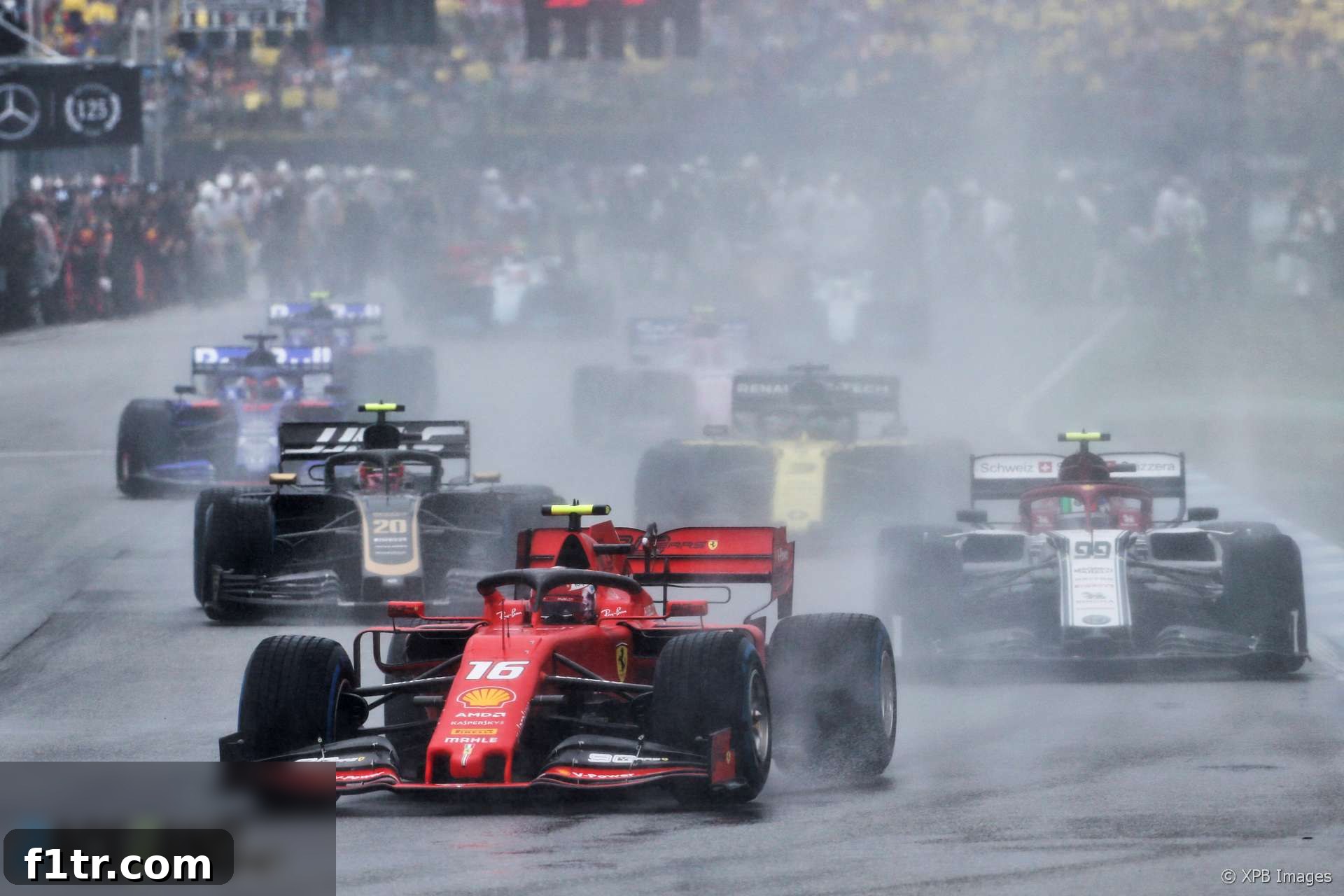
The challenging and unpredictable German Grand Prix delivered yet another moment of drama, not just on track, but also in the notoriously tight confines of the pit lane. Stewards at Hockenheim issued a significant fine to Scuderia Ferrari following an incident involving Charles Leclerc, who was deemed to have been released unsafely from his pit box during a crucial phase of the race. This incident resulted in contact with Haas driver Romain Grosjean, underscoring the constant peril and precision required during Formula 1 pit stops, especially under Safety Car conditions.
The race had already been a spectacle of changing conditions and strategic gambles. As rain began to fall sporadically on the Hockenheimring, multiple teams seized the opportunity to pit their cars for wet or intermediate tires. This convergence of cars into the pit lane created a chaotic scene, a pressure-cooker environment where split-second decisions and millimeter-perfect execution are paramount. It was amidst this frenetic activity that Ferrari’s pit crew released Leclerc.
During what should have been a routine tire change for Leclerc, Ferrari’s pit stop crew signaled for their Monegasque driver to depart his box. However, at precisely that moment, Grosjean was navigating his way through the pit lane, approaching his own pit box. The result was an unavoidable collision as Leclerc pulled out, making minor but impactful contact with the side of Grosjean’s car. While both cars were able to continue without immediate critical damage, the incident immediately drew the attention of race stewards, initiating an investigation into the safety protocols implemented by Ferrari.
Stewards’ Verdict: Unsafe Release and Ferrari’s €5,000 Fine
Following a thorough review of telemetry data, onboard camera footage, and pit lane surveillance, the German Grand Prix stewards concluded their investigation. Their findings confirmed that Ferrari had indeed released Leclerc “into the path of the approaching car eight [Grosjean].” The official report explicitly noted that the cars “made minor contact,” a statement that belied the potentially far more serious consequences an unsafe release could have had. The stewards emphasized that the responsibility for ensuring a clear path for a departing car lies squarely with the team, particularly during busy pit lane periods.
One of the key factors highlighted by the stewards in their report was the difficult position Leclerc found himself in. They noted that “Leclerc drove at an acute angle to avoid a tyre changer in the next pit and had no opportunity to drive in the merge area.” This detail provides critical context, indicating the tight working conditions and the spatial constraints within the pit lane, which can compound the risks of an unsafe release. Leclerc’s evasive maneuver, while perhaps preventing a more severe incident with nearby personnel, simultaneously brought him into Grosjean’s path. Despite these mitigating circumstances for the driver, the ultimate responsibility for a safe release rests with the team’s judgment and equipment, such as traffic light systems or human spotters.
As a consequence of the breach of safety regulations, Scuderia Ferrari was handed a fine of €5,000. Significantly, Charles Leclerc himself avoided a sporting penalty for the collision. This distinction is crucial, as F1 regulations often differentiate between team errors and driver errors. In this instance, the stewards deemed the unsafe release to be a procedural failure on the part of the team, rather than a dangerous driving infraction by Leclerc. The fine serves as a deterrent and a reminder to all teams about the stringent safety standards enforced in the pit lane, an area where human error or mechanical malfunction can have catastrophic implications for drivers, mechanics, and other personnel.
Precedents and Consistency in Pit Lane Penalties
The decision to fine Ferrari but not penalize Leclerc sportingly immediately drew comparisons to similar incidents in recent Formula 1 history, notably the Max Verstappen/Valtteri Bottas clash at the Monaco Grand Prix. In that prior incident, Verstappen was given a five-second time penalty for an unsafe release that forced Bottas to take evasive action, resulting in contact with the pit wall. The apparent discrepancy in penalties – a time penalty for a driver in one instance versus a team fine in another – often sparks debate among fans and pundits about the consistency of stewarding decisions in Formula 1.
However, careful analysis often reveals subtle but important differences that justify varied outcomes. In Verstappen’s case, the severity of the incident and its potential impact on Bottas’s race were deemed greater. The contact was more substantial, and it occurred in the notoriously unforgiving Monaco pit lane, leaving Bottas with little to no room for maneuver. The stewards in Monaco might have also viewed Verstappen’s release as more directly impeding Bottas’s progression and potentially affecting his race outcome. In contrast, the Leclerc/Grosjean contact, while certainly an unsafe release, was deemed “minor” by the German GP stewards, and Leclerc’s immediate evasive action was noted. These nuances, combined with the specific wording of the regulations concerning team responsibility versus driver responsibility, can lead to seemingly different, yet internally consistent, rulings.
The historical context also plays a role in understanding these penalties. The 2018 Formula 1 season, for example, saw five separate investigations for unsafe releases in the pit lane during races. All of these investigations resulted in fines, ranging from €5,000 to €50,000. Many of these incidents were related to cars being sent from their pit boxes before their new tires were fully secured – a much higher risk scenario that could lead to a wheel detaching at speed. While the Leclerc incident involved contact, it did not involve an unsecured wheel, which typically draws the most severe penalties due to the extreme danger it poses. This historical data suggests a pattern where direct procedural team failures, especially those resulting in minor contact or impeding, often lead to financial penalties for the team, reserving sporting penalties for drivers only when their actions are directly culpable or the incident’s severity warrants it.
The Critical Importance of Pit Lane Safety in Formula 1
Incidents like the one involving Leclerc and Grosjean serve as stark reminders of the inherent dangers lurking within the Formula 1 pit lane. Despite being a highly controlled environment, the pit lane is a hive of activity where powerful machines operate at high speeds in close proximity to dozens of human personnel. Pit stop crews, often numbering upwards of 20 individuals, work with incredible speed and precision, sometimes completing a tire change in under two seconds. This intensity, combined with the presence of other cars entering and exiting, creates a complex dynamic where safety cannot be compromised.
Over the years, the FIA (Fédération Internationale de l’Automobile) has implemented numerous regulations to enhance pit lane safety. These include strict speed limits within the pit lane, mandatory traffic light systems for pit exits, and regulations governing the safe release of cars. Teams invest heavily in technology and training to ensure their pit crews operate flawlessly. Sensor systems are often employed to confirm that all wheel nuts are securely fastened before a car is released. Despite these measures, human judgment remains a critical factor, particularly when multiple cars pit simultaneously under Safety Car or Virtual Safety Car conditions, leading to the kind of congestion witnessed at the German Grand Prix.
The financial penalties imposed by the stewards, such as the €5,000 fine for Ferrari, are not just punitive; they are also intended to incentivize teams to continuously review and improve their pit stop procedures and safety protocols. For a multi-million-euro operation like Ferrari, €5,000 might seem a minor sum, but the reputational damage and the potential for greater sporting penalties in the future serve as a powerful motivator to uphold the highest safety standards. The ultimate goal is to prevent more serious accidents that could injure drivers, mechanics, or trackside officials, ensuring that the spectacle of Formula 1 remains as safe as it is thrilling.
Impact and Future Implications for Ferrari
For Ferrari, the fine, while not a sporting penalty, added to a somewhat challenging weekend at the German Grand Prix. While Leclerc showed strong pace, the incident was an unnecessary distraction for the team. In the fiercely competitive world of Formula 1, every detail matters, and procedural errors like an unsafe release can reflect poorly on a team’s overall operational excellence. Such incidents prompt internal reviews and re-evaluation of protocols, ensuring that lessons are learned and procedures are tightened to prevent recurrence.
The FIA’s consistent stance on pit lane safety means that teams are under constant scrutiny. This incident reinforces the message that even minor contact or potential danger in the pit lane will be met with sanctions. For teams like Ferrari, with their championship aspirations, avoiding such errors is not just about financial penalties but also about maintaining focus and confidence. As the season progresses, every pit stop will continue to be a moment of intense focus for both teams and stewards, highlighting the critical balance between speed and safety that defines Formula 1.
Stay Connected with RaceFans
- Join RaceFans on Facebook
- Follow RaceFans on Twitter
- Get daily email updates from RaceFans
More from the 2019 F1 Season
- Crying in the Melbourne car park at 2019 grand prix was my career low – Ocon
- McLaren Racing reports reduced £71 million loss in 2019
- Kvyat: Hockenheim podium last year was “my biggest achievement” so far
- How the FIA’s new encrypted fuel flow meter targets Ferrari’s suspected ‘aliasing’ trick
- “He smashed my office door”: 23 must-see moments from ‘Drive to Survive’ season two
Browse all 2019 F1 season articles