The exhilarating world of Formula 1 consistently delivers moments of high drama, strategic masterclasses, and intense driver battles. The Singapore Grand Prix, renowned for its challenging street circuit and demanding conditions, often serves as a crucible where these elements converge. In a recent analysis following a particularly captivating race, Red Bull Racing’s Team Principal Christian Horner shed light on a critical moment involving Daniel Ricciardo and his elusive quest to overtake Kimi Raikkonen, underscoring the complexities of modern F1 racing and the often-debated impact of regulations like the Drag Reduction System (DRS). This comprehensive round-up delves into Horner’s insights, fan reactions, and other significant headlines from the dynamic world of motorsport, providing a deeper understanding of the sport’s evolving landscape.
Strategic Impasse: The DRS Train and Ricciardo’s Singapore Challenge
Christian Horner on Ricciardo’s Overtaking Dilemma
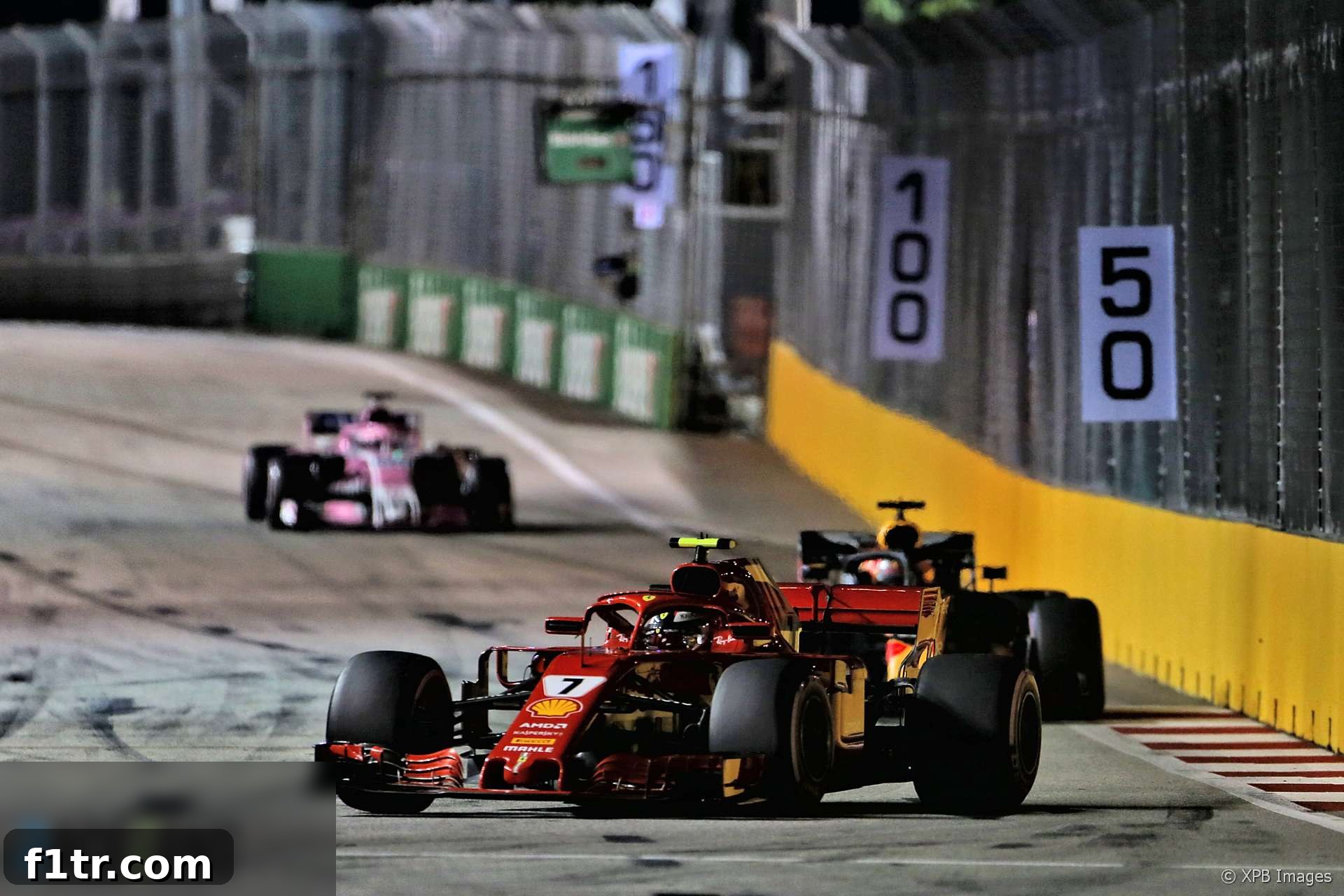
Following a valiant effort at the Singapore Grand Prix, a race celebrated for its nighttime spectacle and formidable demands, Daniel Ricciardo found himself in a frustrating predicament. Despite demonstrating impressive pace, the Australian driver was ultimately unable to convert his raw speed into a decisive overtake on Kimi Raikkonen’s Ferrari. Christian Horner, Red Bull Racing’s Team Principal, articulated the strategic dilemma faced by his team and the unique circumstances that repeatedly thwarted Ricciardo’s charge, specifically pointing to the ‘DRS train’ phenomenon as a key impediment to meaningful on-track action.
“Our only viable option to gain an advantage was to strategically extend Daniel’s first stint, meticulously saving his tyres during those crucial initial laps. This innovative approach allowed him to lead the Grand Prix for a significant four or five laps, creating a critical window for us to switch him onto the ultra-soft compound – a decidedly quicker tyre – with a substantial advantage of 13 fewer laps on it compared to, for instance, Sebastian [Vettel]’s tyre wear at that stage. Daniel subsequently demonstrated phenomenal pace in the car, undeniably among the fastest on the circuit. However, merely catching the cars ahead proved to be one challenge; actually executing an overtake, as we witnessed repeatedly today, was an entirely different proposition altogether.”
“This was particularly evident with the cars ahead forming a ‘DRS train’ comprising Valtteri Bottas and Kimi Raikkonen. Despite his superior tyre advantage and raw speed, Daniel could effortlessly close the gap and get right onto their tail within the DRS activation zone, consistently hitting their gearbox. Yet, the critical ability to launch a truly impactful attack was continuously denied. Consequently, he was forced into a frustrating cycle: dropping back, allowing his tyres to cool and recover, and then trying to build up the momentum for another attempt. This persistent cycle ultimately highlighted the profound limitations imposed by the DRS train in such tight, high-speed racing conditions, preventing what could have been a thrilling overtak.”
Horner’s detailed explanation provides a crucial insight into the intricate layers of modern Formula 1 strategy and the often-overlooked implications of certain regulations. The “DRS train” is a specific scenario that emerges when multiple cars are running in close proximity, with each driver benefitting from the Drag Reduction System within the designated activation zones. In essence, if a car ahead of a driver attempting to overtake also has DRS available because there’s another car within one second in front of them, the aerodynamic advantage the following car gains from its own DRS is significantly negated. This effectively creates a frustrating stalemate, making clean and decisive overtaking incredibly difficult, even for a car with superior pace and fresher tyres, as was the case with Ricciardo’s Red Bull.
Ricciardo’s strategy to run longer on his initial set of tyres was a bold and calculated move by the Red Bull pit wall. It was ingeniously designed to give him a significant tyre advantage in the latter stages of the race, allowing him to attack when his competitors’ tyres were fading. By meticulously preserving his tyres and then switching to the faster ultra-soft compound much later than his rivals, Red Bull aimed to unleash his raw speed at the most opportune moment. Indeed, he showcased exceptional pace, rapidly closing the gap to the Ferrari and Mercedes ahead, demonstrating the effectiveness of the strategy in terms of raw speed. However, the unique characteristics of the Marina Bay Street Circuit, with its tight corners, demanding walls, and limited genuine overtaking opportunities, severely exacerbated the DRS train issue. Even with a clear speed differential, the combined effect of DRS for Raikkonen and Bottas meant Ricciardo could get agonizingly close, but never quite close enough to make a decisive, clean move. This left both the talented driver and his strategic team frustrated, despite having executed a strong tactical play that otherwise might have yielded a podium position or even a race win on a different circuit.
Quotes: Dieter Rencken
Advert | Become a RaceFans supporter andgo ad-free
Social Media Pulse: Insights and Fan Frustrations from the F1 World
Notable Posts from Twitter, Instagram and More
Social media continues to serve as an indispensable and vibrant platform for Formula 1 drivers, teams, and the global fanbase to share their thoughts, experiences, and occasionally, their frustrations. In an era where direct engagement is highly valued, these digital conversations offer unique insights into the pulse of the sport. Here’s a look at some notable posts that captured significant attention and sparked discussion following recent events in the racing calendar.
Este año no hay domingos libres😁😁😄. Feliz de añadir carrera número 28 a esta súper temporada, las 6h del @CircuitoMuseoFA dentro de las series de resistencia. #karting pic.twitter.com/hh9yPFoevV
— Fernando Alonso (@alo_oficial) September 18, 2018
Fernando Alonso, a two-time Formula 1 World Champion and a true legend in the sport, used his platform to remind fans that his passion for racing extends far beyond the confines of the Grand Prix paddock. His tweet, which translates from Spanish as “No free Sundays this year 😁😁😄. Happy to add race number 28 to this super season, the 6h of @CircuitoMuseoFA within the endurance series. #karting,” powerfully showcased his relentless dedication to motorsport. Even amidst a demanding F1 schedule, Alonso remained actively involved in other forms of racing, specifically karting endurance events. This post highlighted his pure, unadulterated love for competition and the thrill of driving, regardless of the machinery. Such unwavering commitment resonates deeply with fans globally, offering a glimpse into the mindset of a true racing enthusiast who is perpetually seeking the next challenge and the raw excitement of speed.
Finally a reply from @f1 about their terrible tv service. They are telling me because there was a major issue with the broadcast of the Singapore Grand Prix they will not be offering a refund for that particular GP. Only for 4 of them they believe I’ve had an issue with.
— Chris Le Petit (@clepetit) September 19, 2018
On the other side of the fan experience spectrum, Chris Le Petit’s tweet brought to light significant concerns regarding the official F1 TV streaming service. His frustration stemmed from a “major issue” experienced during the live broadcast of the Singapore Grand Prix, a premium event. Le Petit reported that F1’s response declined to offer a full refund for that particular race, only acknowledging problems with four other races he had reportedly encountered issues with. This incident serves as a stark reminder of the challenges inherent in direct-to-consumer streaming platforms, particularly when dealing with live sports where broadcast reliability is absolutely paramount. For dedicated fans who invest in premium subscription services, a seamless and high-quality viewing experience is not just a luxury, but an expectation. Such recurring technical issues can significantly detract from the overall enjoyment, leading to considerable dissatisfaction and prompting important discussions within the F1 community about service quality, responsive customer support, and the long-term future viability of F1’s digital content offerings.
- Find more official F1 accounts to follow in the F1 Twitter Directory
Beyond the Track: Motorsport Headlines and Key Discussions
More Motor Racing Links of Interest from Around the Globe
The motorsport world is a dynamic and constantly evolving arena, perpetually buzzing with news, influential opinions, and critical developments that collectively shape its future trajectory. From strategic insights into car design to legal battles and the growing popularity of endurance racing, there’s always something significant unfolding. Here’s a curated selection of recent headlines and discussions from across the various racing disciplines, offering a snapshot of the current state of play.
Advert | Become a Supporter & go ad-free
F1 shouldn’t fear reduced downforce – Brawn (Racer)
Ross Brawn, Formula 1’s highly respected managing director of motorsports, recently weighed in on the ongoing and crucial debate about aerodynamic regulations. He put forward a compelling argument suggesting that Formula 1 should not be apprehensive about significantly reducing downforce levels. To support his stance, Brawn cited the IndyCar Series as a compelling contemporary example: “In IndyCar they have reduced the levels of downforce substantially, and at least on the road courses the drivers are very positive about the style of racing. They have some issues on the ovals, but that is a pretty unique environment.” Brawn’s perspective is aligned with a broader industry push to make F1 cars easier to follow closely and, crucially, to overtake, thereby enhancing the overall spectacle and excitement of racing. Lowering downforce could lead to more challenging cars to drive at the absolute limit, rewarding raw driver skill and potentially creating more dynamic and unpredictable racing sequences – a direction many fans, drivers, and technical experts believe F1 should seriously explore for the future.
Bob Pockrass (ESPN) – Kevin Ward Jnr Lawsuit Dismissal
Veteran motorsport journalist Bob Pockrass, known for his insightful reporting, shared a significant legal development: the wrongful death lawsuit filed by the parents of Kevin Ward Jnr against NASCAR legend Tony Stewart was officially dismissed. This legal resolution brought to a definitive close a long-running and highly publicized case that stemmed from a tragic sprint car race incident in 2014, where Ward was struck and killed by Stewart’s car during a caution period. The dismissal marks a pivotal legal conclusion in a tragedy that sent profound shockwaves through the entire racing community, prompting important and necessary discussions about safety protocols, driver conduct, and the complex legal liabilities associated with various forms of motorsport. The case has left a lasting impact on how safety and responsibility are viewed in the sport.
Record early ticket sales at Sebring (WEC)
Excitement is palpably building for the eagerly anticipated 2019 “Super Sebring” event, as evidenced by unprecedented, record-breaking early ticket sales. The FIA World Endurance Championship (WEC) officially reported that “First-day sales of tickets and parking for what is being called by Sebring Raceway the 2019 ‘Super Sebring’ rose more than 314% over opening day ticket sales for the 2018 event.” This incredible surge in demand highlights the immense anticipation for the unique combined event featuring both the WEC and the IMSA WeatherTech SportsCar Championship. This collaborative format promises a spectacular festival of endurance racing, drawing motorsport enthusiasts from around the globe. The blend of international and domestic top-tier endurance series, coupled with the historic appeal of the challenging Sebring International Raceway, continues to draw massive crowds, cementing its status as a premier global motorsport destination and a must-attend event for sports car racing fans.
Is Raikkonen right to stay in F1? (BBC)
The BBC, a respected voice in sports journalism, recently posed a pertinent and thought-provoking question regarding Kimi Raikkonen’s continued presence and role in Formula 1, igniting a fervent debate among fans and pundits alike. The article critically noted, “The results haven’t been there of recent years. He hasn’t outperformed a team-mate since the first half of 2013 against Grosjean in the Lotus. In 2014, he scored a third of the points of team-mate Fernando Alonso on his return to Ferrari.” This blunt, performance-based assessment reflects a growing sentiment within the F1 community: that while Raikkonen remains an immensely popular figure, his raw on-track performance has often been eclipsed by his teammates in recent seasons. His high-profile move from Ferrari further intensified discussions about whether his extensive experience still unequivocally justifies a top-tier seat, or if younger, hungry talent should be given an opportunity to shine and inject fresh energy into the sport. The ongoing debate underscores the ruthless, performance-driven nature of Formula 1, where legacy must ultimately yield to current results.
- Did Raikkonen deserve to lose his Ferrari seat?
Perez’s Singapore GP battles may prove costly (Sky)
Sky Sports, a leading broadcaster of Formula 1, provided an in-depth analysis of Sergio Perez’s often-aggressive driving style during the Singapore Grand Prix, particularly focusing on his intense on-track battles. The report suggested that these spirited engagements “may prove costly” in the long run. The analysis specifically highlighted his first-lap contact with then-teammate Esteban Ocon, adding, “When it comes to fighting your team-mate, given that his future team-mate is potentially Lance Stroll, that first lap touch with Ocon could turn out to have been very expensive for him.” This particular incident not only had an immediate impact on the team’s race result but also brought into sharp focus Perez’s established reputation for assertive, sometimes overly aggressive, driving and its potential repercussions. Especially significant was the context of evolving team dynamics, with a new teammate like Lance Stroll potentially on the horizon. Such internal team rivalries, particularly when they lead to car-on-car contact, are frequently scrutinized for their broader implications on team morale, constructor championship points, and ultimately, a driver’s standing within the sport.
We always endeavour to credit original sources and provide diverse perspectives. If you have a tip for a link to feature in the next RaceFans round-up, or spot an interesting story, please don’t hesitate to send it in here:
- Contact RaceFans
Advert | Become a RaceFans supporter andgo ad-free
Fan Perspectives: The Q3 Tyre Rule Debate in Formula 1
Comment of the Day: Are Q3 Tyre Rules Truly Improving Racing?
One of the long-standing and most actively debated topics among Formula 1 enthusiasts and pundits alike revolves around the efficacy of the sport’s various sporting regulations, particularly those specifically intended to inject more excitement and strategic variability into the racing action. A frequent and passionately discussed point of contention is the rule that mandates drivers who qualify for Q3 (the final qualifying session) to start the Grand Prix on the specific set of tyres they used to set their fastest Q2 lap. Many, like our insightful featured commenter, increasingly question whether this particular rule genuinely achieves its stated goal of enhancing the racing spectacle or if it inadvertently creates a strategic bottleneck.
“At this point I don’t know that starting the race by using your Q2 qualifying tyres is supposed to do. It just makes sure that everyone in the top 10 does the exact same change and they race with the same compound. If they had free choice we could have different strategies inside the top 10, depending on how each car works with each tyre type.”
Iosif (@Afonic)
Iosif’s comment brilliantly and concisely encapsulates the core argument often leveraged against the current Q3 tyre rule. The regulation was initially introduced with the laudable intention of fostering strategic diversity and unpredictability among the front-runners. The idea was to force teams to manage a potentially suboptimal starting tyre or to commit to a specific, potentially compromised, race strategy from the very early stages of the Grand Prix. However, as Iosif astutely points out, in practical application, this rule often leads to an undesirable homogenization of strategies within the top ten. Teams frequently converge on the safest or most optimal compound that can competently manage both a strong Q2 lap time and a reasonable first stint in the race, effectively negating the intended strategic variation.
Instead of creating a wide array of divergent approaches and opening up the strategic playbook, the rule frequently results in the leading teams making remarkably similar tyre choices. This unintended consequence effectively eliminates a significant strategic variable that could otherwise lead to more exciting, unpredictable, and dynamic races. If drivers and teams were granted the freedom to choose their starting tyre compound, irrespective of their Q2 performance, it could genuinely unlock a much wider and more creative array of strategic plays. Teams might then be emboldened to gamble on harder compounds for an exceptionally long first stint, or conversely, opt for softer, more aggressive tyres for an early surge, depending keenly on their car’s specific characteristics, the prevailing track conditions, and the unique demands of each circuit. This genuine free choice could authentically introduce the strategic differentiation that the current rule paradoxically aims for but often fails to deliver, ultimately leading to a more dynamic, less predictable, and far more engaging opening phase of the Grand Prix.
Happy Birthday to Our Fellow RaceFans!
A very special and heartfelt happy birthday goes out today to some incredibly dedicated members of the RaceFans community! We’re sending our warmest wishes to Americantifosi, Aus_Steve, Calum, Deadman, Geemac, and Saints! We sincerely hope you all have a fantastic day celebrating, filled with joy and perhaps some exciting motorsport moments.
If you’d like to receive a birthday shout-out in a future RaceFans round-up, simply let us know when your special day is via our easy-to-use contact form, or by conveniently adding your birth date to our dedicated list here. We truly love celebrating with our vibrant and passionate community!
On This Day in F1 History
- Born today in 1975: Juan Pablo Montoya
Today marks the birthday of the charismatic, uncompromising, and exceptionally talented Colombian racing driver, Juan Pablo Montoya. Born in 1975, Montoya left an indelible and memorable mark on the sport of Formula 1 during his thrilling tenure with both Williams and McLaren. He quickly became renowned for his aggressive overtaking maneuvers, fearless driving style, and often-outspoken personality. A winner of seven Grand Prix races, he also achieved significant and diverse success in other major motorsport categories, prominently including the IndyCar Series (where he notably won the prestigious Indianapolis 500 twice) and a competitive period in the NASCAR Cup Series. His remarkable career embodied versatility, raw speed, and an unyielding competitive spirit, making him a true fan favorite and an undeniably memorable figure in the rich tapestry of motorsport history.