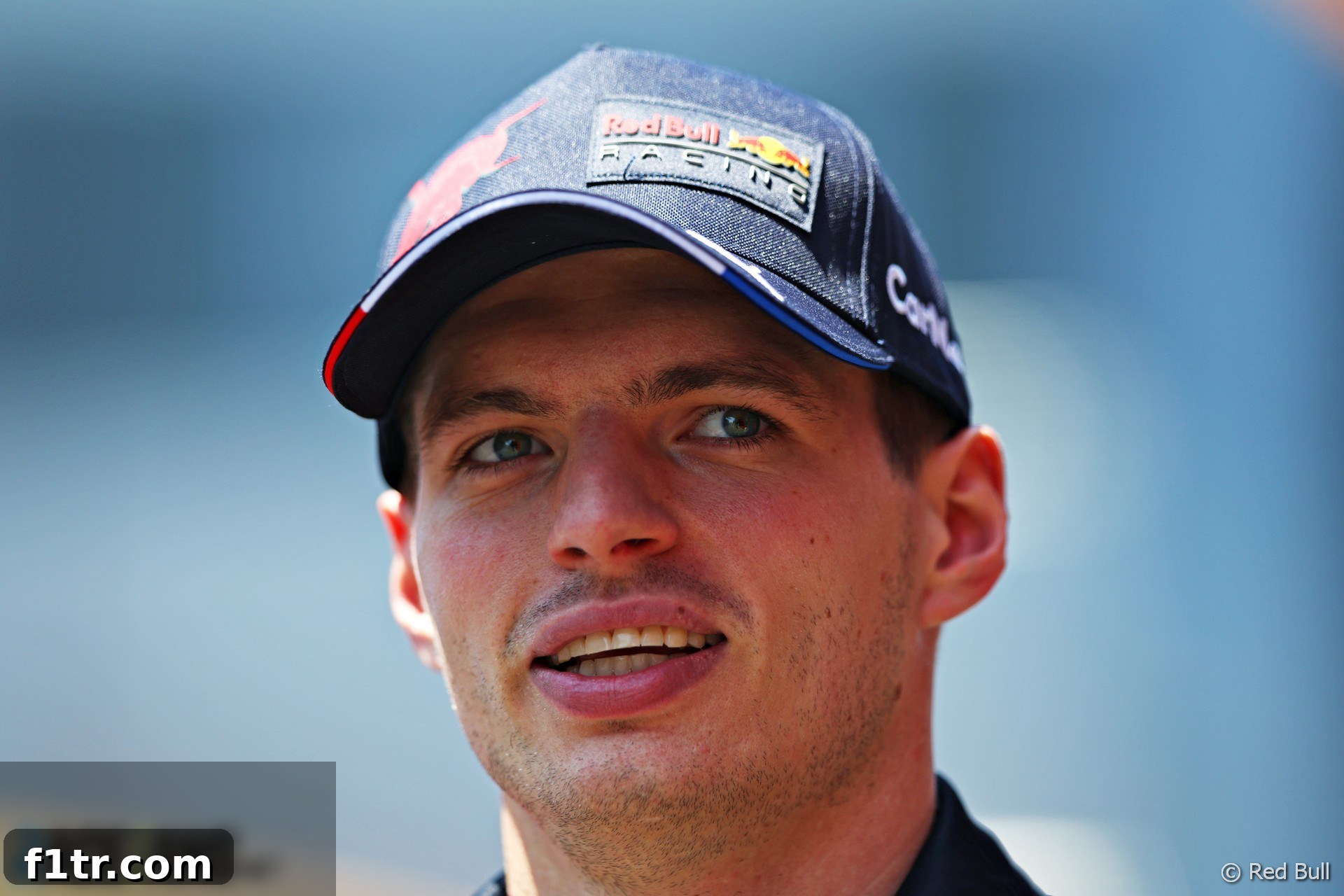
In the highly competitive world of Formula 1, where every point can be the difference between championship glory and a season of what-ifs, the prospect of a driver missing a race is a source of immense concern. This season, as the globe continues its complex dance with the pandemic, Max Verstappen, the reigning world champion and current championship leader, has voiced a poignant apprehension. He candidly expressed that it would be “very sad” if any F1 drivers were compelled to sit out crucial races during the remainder of the 2022 season due to illness, specifically COVID-19. His remarks underscore a shared sentiment within the paddock, highlighting the delicate balance between public health measures and the integrity of a fiercely contested championship.
Advert | Become a Supporter & go ad-free
As the championship battle intensifies, Verstappen currently commands a significant 38-point lead over his closest rival, Charles Leclerc. With 11 enthralling races yet to unfold in this gripping season, every grand prix presents an opportunity for points, for drama, and for twists in the title narrative. The thought of either contender, or indeed any driver, being sidelined due to unforeseen circumstances like a positive COVID-19 test, casts a long shadow over the sport. It’s a stark reminder that even two years after the initial onset of the pandemic, its implications continue to ripple through global sports, including the pinnacle of motorsport, emphasizing the fragility of continuity in elite competitions.
The precedent for drivers missing races due to COVID-19 has unfortunately been set, impacting both championship hopefuls and promising talents across various racing series. Early in the 2022 Formula 1 season, four-time world champion Sebastian Vettel was unable to participate in the opening two rounds in Bahrain and Saudi Arabia after testing positive for the virus. His absence was a significant setback for Aston Martin and a visible sign that despite widespread vaccination efforts and evolving protocols, the virus remains a tangible threat capable of disrupting even the most meticulously planned schedules. This isn’t just an F1 phenomenon; the broader motorsport community has felt its impact. For instance, Jake Hughes faced a similar fate, being absent from both this weekend and next weekend’s Formula 2 rounds for the very same reason, underscoring the ongoing challenges across different racing series and the pervasive nature of the virus.
With reports indicating an increase in COVID-19 cases across various parts of Europe and the United Kingdom, a sense of cautious vigilance is returning to some areas of the Formula 1 paddock. Whispers of a potential new wave or at least a significant rise in infections have prompted some drivers and team personnel to take proactive measures, opting to wear masks around the paddock once again. This renewed caution highlights the enduring unpredictability of the virus and the persistent need for adaptability within the sport. Verstappen’s statement, “Of course we are all opening up, but sometimes it seems like people forget that it’s still around,” perfectly encapsulates this tension between a societal desire for normalcy and the lingering threat. He further emphasized his hope that “It will be very sad if drivers have to miss again races because of it,” reflecting a collective desire within Formula 1 to see the championship unfold without external interruptions and to prioritize the health of all participants while maintaining the competitive integrity of the season.
Throughout the two-and-a-half seasons since the World Health Organization declared COVID-19 a pandemic, Max Verstappen has remarkably not been among the approximately ten known F1 drivers who have tested positive for the virus as part of the championship’s regular testing regime. This streak of good health has undoubtedly contributed to his consistent performance and championship dominance during a period of global uncertainty. However, his Red Bull team mate, Sergio Perez, was notably the first driver to miss races due to the virus, testing positive early in the 2020 season when he was competing for Racing Point. This early experience served as a stark warning to the entire paddock about the potential for disruption and the importance of stringent health protocols, setting a critical precedent for how the sport would handle future cases and emphasizing the need for robust contingency plans.
When questioned about his personal inclination to wear a mask within the bustling paddock environment, Verstappen adopted a pragmatic stance, prioritizing collective guidelines over individual preference. He indicated that his approach would continue to align with the directives issued by the FIA (Fédération Internationale de l’Automobile), which are meticulously set in accordance with local regulations prescribed by the governments of each host nation. This hierarchical approach ensures that F1’s health and safety protocols are not only uniform where possible but also respectful of diverse national health mandates, reflecting a global sport’s commitment to local laws. “Of course everyone has their own preferences and how they want to do it,” Verstappen acknowledged, recognizing individual choices. However, he quickly pivoted to a broader perspective, noting that the issue extends beyond personal preference to the shared environment and the responsibilities inherent in a collective sporting endeavor.
Advert | Become a RaceFans supporter andgo ad-free
Verstappen further elaborated on the complexities of maintaining safety in varying environments within the paddock, distinguishing between fleeting encounters and prolonged exposure. He stated, “If you stay somewhere for like five to ten minutes, it’s not too bad. But if you really start to be in closed-off areas with people who are not testing any more, it’s a bit of a different story as well.” This insightful observation highlights the evolving challenge: as widespread, routine testing becomes less common, the risk associated with crowded, enclosed spaces potentially increases, demanding greater individual awareness and adapted strategies from event organizers. It underscores the need for continuous vigilance and adaptive measures from both individuals and the governing bodies to ensure a safe working environment. He concluded by reiterating the FIA’s overarching principle: “Of course these are things that can be looked at. But also I think, in general, the FIA is following the local authorities,” cementing the commitment to local health directives as paramount for the sport’s global operation and maintaining the integrity of the race calendar.
It’s also worth noting that Verstappen confirmed his vaccination status in March of the previous year, revealing that he had received his COVID-19 vaccination prior to heading to Bahrain for the 2021 season opener. This proactive measure aligns with broader public health recommendations and likely provides an additional layer of protection, albeit not an absolute guarantee against infection. Many drivers and team personnel have followed similar paths, recognizing the importance of vaccination in mitigating the severity of the illness and reducing transmission risks, thus contributing to the overall health security of the Formula 1 ecosystem. These personal health decisions, combined with team and FIA protocols, form a multi-layered defense against the virus’s potential impact on the championship.
A Look Back: F1 Drivers Affected by COVID-19
The pandemic has left an indelible mark on Formula 1, necessitating significant adjustments to its operations and occasionally impacting its star drivers. The list below chronicles the F1 drivers who have, at various points, tested positive for COVID-19, leading to missed races or disrupted schedules. Each instance served as a stark reminder of the virus’s pervasive nature and the continuous challenge it posed to maintaining a full and uninterrupted championship calendar. These absences often had ripple effects, not just for the individual drivers and their teams, but also for the competitive dynamics of the season. From championship contenders to seasoned veterans, no one was immune, illustrating the widespread vulnerability within the high-stakes world of Formula 1 and prompting a continuous evolution of safety protocols.
| Date | Driver | Team | Notes |
|---|---|---|---|
| 30/07/2020 | Sergio Perez | Racing Point | Missed 2020 British and 70th Anniversary Grands Prix. As the first F1 driver to test positive, his case set a critical precedent for how the sport would handle subsequent infections, highlighting the immediate need for stringent isolation protocols and contingency planning within teams. |
| 21/10/2020 | Lance Stroll | Racing Point | Missed 2020 Eifel Grand Prix. Stroll’s positive test further underscored the challenges faced by teams in managing the health of their personnel and ensuring continuity during a highly unpredictable season, demonstrating the ripple effect of individual cases. |
| 1/12/2020 | Lewis Hamilton | Mercedes | Missed 2020 Sakhir Grand Prix. This was a particularly high-profile case, as Hamilton had just clinched his seventh world title. His absence allowed George Russell to make a sensational debut for Mercedes, creating a memorable moment in F1 history and demonstrating the depth of talent on the grid. |
| 5/1/2021 | Lando Norris | McLaren | Confirmed his positive test while on holiday in Dubai. Although it didn’t impact a race, it served as a reminder that drivers remained susceptible even during the off-season, requiring ongoing vigilance and responsible personal conduct to safeguard the upcoming season. |
| 13/1/2021 | Charles Leclerc | Ferrari | Announced his positive test shortly after Norris, also during the winter break. These early 2021 cases highlighted the importance of strict protocols not just during race weekends but also in personal lives to safeguard the upcoming season and prevent broader outbreaks within the paddock. |
| 31/1/2021 | Pierre Gasly | AlphaTauri | Gasly confirmed his infection at the start of February 2021, making him the sixth F1 driver to contract the virus. His recovery was closely monitored, ensuring he was fit for pre-season testing and ready for the demands of a new championship campaign. |
| 4/9/2021 | Kimi Raikkonen | Alfa Romeo | Missed 2021 Dutch and Italian Grands Prix. Raikkonen’s absence necessitated Robert Kubica stepping in, showcasing the readiness of reserve drivers and the robust contingency plans in place for such situations, ensuring the show could go on. |
| 12/12/2021 | Nikita Mazepin | Haas | Missed 2021 Abu Dhabi Grand Prix. This unfortunate timing meant Mazepin couldn’t participate in the season finale, underlining the unpredictable nature of the virus right up to the very last race and its potential to disrupt crucial competitive opportunities. |
| 11/03/2022 | Daniel Ricciardo | McLaren | Missed second 2022 pre-season test in Bahrain. While not a race, missing critical testing time severely hampered his preparation for the season, a significant disadvantage in a sport where every minute of track time counts and pre-season development is crucial. |
| 17/02/2021 | Sebastian Vettel | Aston Martin | Missed 2022 Bahrain and Saudi Arabian Grands Prix. Vettel’s absence at the start of the season was a major blow, particularly for a team looking to make an impact. Nico Hulkenberg stepped in, demonstrating the depth of talent available to F1 teams and the essential role of reserve drivers. |
These instances highlight not only the health risks but also the significant logistical and competitive challenges posed by COVID-19 to Formula 1. The sport has, however, demonstrated remarkable resilience and adaptability, continuously refining its protocols to ensure the safety of all participants while striving to deliver compelling racing for fans worldwide. The collective hope remains that such disruptions can be minimized as the championship progresses, allowing the focus to remain firmly on the on-track action and the sporting spectacle.
Advert | Become a RaceFans supporter andgo ad-free
Beyond the Paddock: The Wider Implications for the 2022 French Grand Prix and Future Races
The discussions surrounding driver health and the potential for COVID-19-related absences resonate particularly strongly as Formula 1 navigates the intensity of its mid-season schedule. While the 2022 French Grand Prix has concluded, its preparation and the surrounding health context remain relevant for subsequent races. The sport operates on a tight calendar, moving from one European venue to another with demanding travel and logistical requirements. Any disruption, especially involving key personnel like drivers, can have cascading effects on team operations, championship standings, and race outcomes, potentially altering the course of the entire season. The commitment to delivering a full season of spectacular racing, combined with the imperative of safeguarding the health of everyone involved, forms a central pillar of Formula 1’s ongoing strategy for sustained success.
The collective experience from previous seasons has armed teams and the FIA with robust frameworks to manage potential outbreaks and mitigate risks effectively. However, as global health guidelines evolve and societies ‘open up,’ the nature of the challenge shifts. The emphasis moves from mandated, universal testing to a more nuanced approach, balancing individual responsibility with broader protective measures. This delicate balance is crucial for ensuring that the sport can continue to thrive, minimizing the risk of drivers missing out on the competitive action that defines their careers and entertains millions of fans globally. The continued vigilance, coupled with adherence to local health guidelines and a proactive approach to potential health threats, will be key to navigating the rest of the 2022 season successfully and ensuring the integrity and excitement of the championship.
- Ferrari’s season of missed chances led to “difficult” criticism for Binotto
- McLaren looking into why their starts are “more inconsistent” this year
- Mercedes expect Hungarian GP will ‘expose our qualifying weakness’
- Hamilton and Russell ‘out-performing a car that’s not good enough’ – Wolff
- “We need to decide now”: Inside Sainz and Ferrari’s French GP strategy dilemma
Browse all 2022 French Grand Prix articles