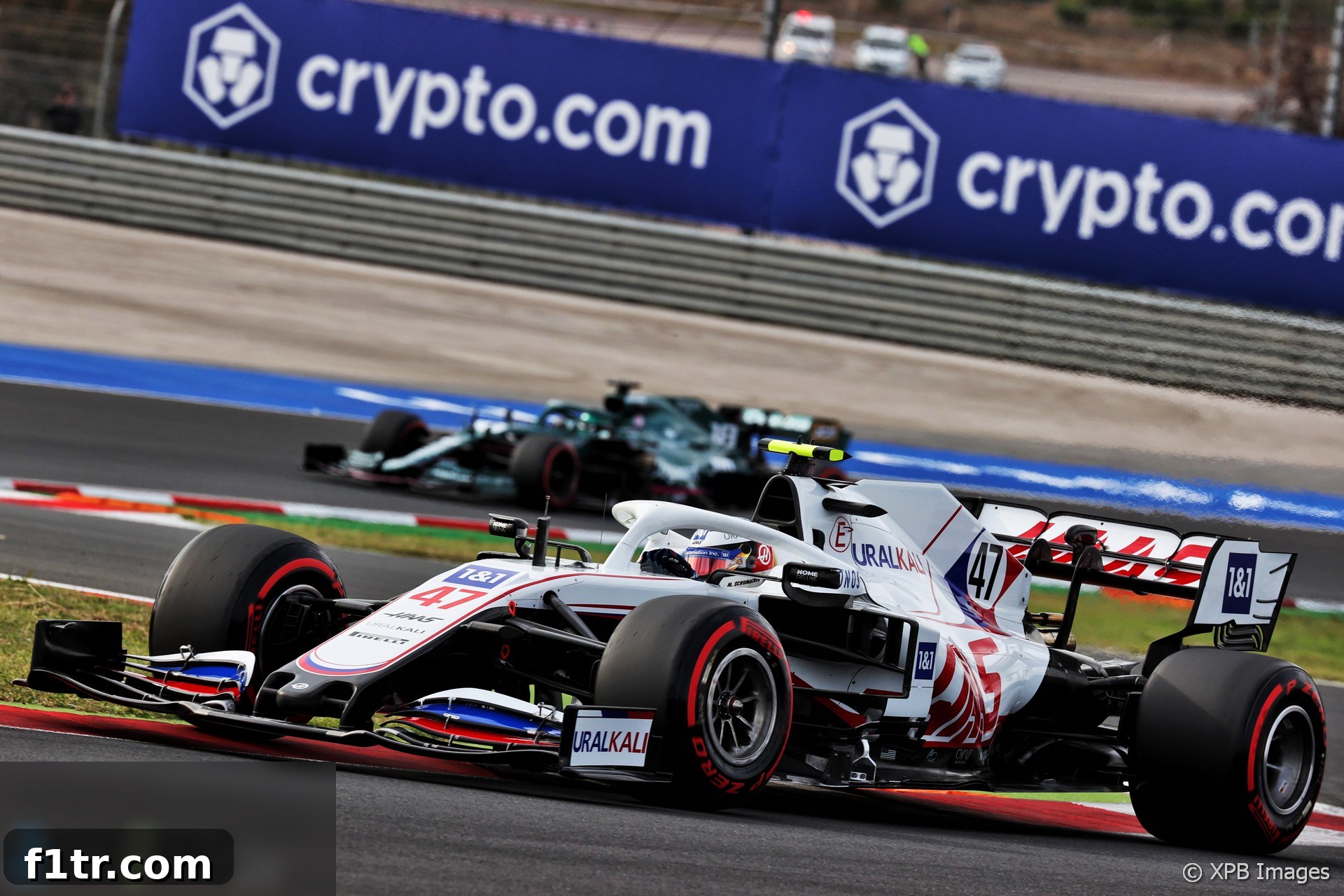
The stage was dramatically set for the 2021 Turkish Grand Prix even before the cars hit the track. On Friday, championship leader Lewis Hamilton received a significant 10-place grid penalty for utilizing his fourth power unit of the season, a critical tactical decision in his fierce battle for the drivers’ championship. Despite this setback, the Mercedes ace immediately showcased formidable pace, topping both free practice sessions at the historic Istanbul Park circuit. This potent combination of a grid penalty balanced by exceptional raw speed instantly signaled an intriguing, high-stakes race weekend ahead.
Advert | Become a Supporter & go ad-free
Hamilton’s dominant performance saw him set new lap records in both the morning and afternoon sessions, asserting a clear advantage over the rest of the field. His confidence in the car’s setup was palpable, a stark contrast to his title rival Max Verstappen. The Red Bull driver openly expressed his struggles with car balance, admitting, “It’s not looking too good,” following the second practice session. This early disparity in driver feedback added another layer of intrigue to the developing weekend narrative, highlighting the contrasting fortunes of the two championship contenders.
Expectations regarding track conditions were significantly different this year compared to the notoriously slippery surface of 2020. Ahead of the Turkish Grand Prix weekend, the Istanbul Park circuit underwent a specific treatment involving water jets to thoroughly clean the asphalt. Pirelli’s Head of F1, Mario Isola, confirmed that their detailed measurements indicated the surface was no rougher than what would be anticipated from a typical Formula 1 grand prix venue. Crucially, the grip levels had substantially improved since last year, transforming the circuit into one of the calendar’s premier tracks for traction. This newfound grip presented both opportunities and challenges for the teams.
Many teams had initially anticipated lower grip levels than what the treated track ultimately provided. This miscalculation led to a frantic scramble in the garages as engineers worked tirelessly to tweak their car setups. Several teams opted to trim downforce from their vehicles to optimize for the unexpectedly grippier conditions. Haas, in particular, experienced the most dramatic improvement in lap times, clocking in over seven seconds quicker than their performance at Istanbul Park last year, underscoring the profound impact of the track surface transformation.
Nikita Mazepin of Haas elaborated on the extensive adjustments made by his team: “We haven’t started in the window. With the set-up, we anticipated a lot less grip and therefore we started with a too stable car, which was one of the very few times this year where we struggled with rotation in corners. So it took us time to wind it back.” This insightful comment highlighted the delicate balance teams strive for and how easily pre-weekend assumptions can be overturned by real-world track conditions, forcing a rapid engineering response.
While some teams adapted, Red Bull faced an uphill battle. Verstappen acknowledged that the issues plaguing their car would make for “a bit of an evening” for the team’s engineers. Their task was further complicated by the evolving weather forecast for Saturday morning, which predicted a high likelihood of rain. Confidence in this forecast grew throughout Friday, prompting Formula 1 officials to issue each driver an additional set of intermediate tyres, reflecting the increased probability of needing them for a wet Free Practice 3 session. This added an element of unpredictability to the weekend, potentially shaking up the pecking order ahead of qualifying.
Despite the predicted morning rain, conditions were expected to improve significantly before qualifying commenced at 3 pm local time. Four-time world champion Sebastian Vettel expressed a candid preference for the opposite scenario – a dry practice and a wet or damp qualifying session. “In quali you have enough shots to put it right. We had a decent session this morning, so out of the two we’ll find the optimum. But I would like the rain to be there for quali, not for FP3,” Vettel commented, underscoring the strategic advantage a wet qualifying could offer in shuffling the grid and providing opportunities for unexpected results.
Advert | Become a RaceFans supporter andgo ad-free
The Friday sessions were notably windy, as forecasters had predicted. While wind often poses challenges for car stability, AlphaTauri’s Yuki Tsunoda revealed that it had actually been beneficial for his team, at least in certain sections of the track. “Today was really good conditions, for the dry. It was windy, but I think was, for us, a good direction. If it was the opposite, maybe it was a little bit difficult for the car balance, but overall, the wind direction was positive, [we had a] tailwind to turn 12, which is a long straight and we don’t want to have headwind there,” Tsunoda explained. This nuanced perspective highlighted how environmental factors can unexpectedly influence performance and car setup choices. The wind is expected to maintain a similar direction during qualifying, with gusts potentially reaching speeds of up to 50 kph during the main race, promising an additional variable for drivers to contend with.
Before Formula 1’s return to Istanbul Park in 2020, there were considerable concerns about whether the Pirelli tyres would be robust enough to withstand the immense demands of the circuit, particularly the notorious, high-speed, multi-apex Turn 8. However, last season, these concerns proved unfounded as cars were forced to navigate the incredibly low-grip surface with extreme caution. This year, with the significantly improved grip, Turn 8 has returned to its former glory as a major test of tyre durability and driver commitment, with many drivers tackling it flat-out. Managing the relentless punishment inflicted upon the front tyres will be absolutely vital for any successful strategy.
Pirelli’s Mario Isola provided critical insight into the tyre challenges: “Graining is visible on all the three compounds, especially on the softer one, and particularly on the front right. The graining, especially on the inside shoulder, is accelerating the wear. And so it will be very important for the teams to measure and analyze the data from FP2 to understand which is the wear life of the tyres.” Graining occurs when the tyre surface tears off in small pieces due to excessive sliding, creating a rough, ‘grained’ texture that reduces grip and accelerates wear. This phenomenon underscores the delicate balance teams must strike between outright pace and tyre preservation, especially at a demanding circuit like Istanbul Park.
During the second practice session, drivers primarily focused on completing extensive long runs using the medium compound tyres, gathering crucial data for race strategy. Carlos Sainz Jnr of Ferrari put in by far the longest stint, completing an impressive 24 laps on a single set of yellow-walled tyres. Several other drivers, including Valtteri Bottas, Kimi Raikkonen, and both Aston Martin drivers, also demonstrated strong endurance, logging more than 15 laps on a single set. This data will be instrumental in formulating robust race strategies, especially considering the potential for a multi-stop race.
The lap time differential between the soft and medium compound tyres appears to be less pronounced than initially anticipated, with Pirelli estimating a gap of approximately 0.4 seconds. This narrow margin places a significant strategic onus on drivers to attempt to progress through Q2 on the more durable medium tyres, if at all possible. Starting the race on the soft compound would severely limit the length of their initial stint, potentially forcing an earlier pit stop and complicating overall race strategy. The ideal scenario for many teams would be to start on the medium tyre, offering greater flexibility and a longer first stint.
Isola further elaborated on the strategic implications: “The soft is quite an aggressive choice. I believe that some teams are using the softer today just to get rid of them and focus on the medium and hard for the race, if they want to plan a one stop strategy.” This tactical approach suggests that teams might use the soft tyres for maximum attack in Q1 and Q2, but strategically avoid them for the race start if aiming for a longer first stint. Hamilton concurred with this assessment, expressing skepticism about the viability of single-stop strategies in a dry race. “I’ve not seen the tyre wear, but in the long run that I did it didn’t feel too bad. It was relatively consistent,” Hamilton observed. “But I think it’s quite aggressive on the tyres side. If it’s a dry race, I would imagine it’s not going to be a one-stop here, which makes it more exciting.” This strong indication from a seasoned driver like Hamilton suggests that a two-stop strategy is the more probable scenario, promising a more dynamic and unpredictable race with multiple strategic windows.
Quotes: Dieter Rencken
Advert | Become a RaceFans supporter andgo ad-free
Combined practice times
| Pos | Driver | Car | FP1 | FP2 | Total laps |
|---|---|---|---|---|---|
| 1 | Lewis Hamilton | Mercedes | 1’24.178 | 1’23.804 | 55 |
| 2 | Charles Leclerc | Ferrari | 1’24.654 | 1’23.970 | 54 |
| 3 | Valtteri Bottas | Mercedes | 1’24.842 | 1’24.214 | 57 |
| 4 | Sergio Perez | Red Bull-Honda | 1’25.459 | 1’24.373 | 50 |
| 5 | Max Verstappen | Red Bull-Honda | 1’24.603 | 1’24.439 | 49 |
| 6 | Lando Norris | McLaren-Mercedes | 1’25.347 | 1’24.525 | 48 |
| 7 | Fernando Alonso | Alpine-Renault | 1’25.383 | 1’24.660 | 45 |
| 8 | Esteban Ocon | Alpine-Renault | 1’24.909 | 1’24.672 | 54 |
| 9 | Pierre Gasly | AlphaTauri-Honda | 1’25.382 | 1’24.756 | 60 |
| 10 | Antonio Giovinazzi | Alfa Romeo-Ferrari | 1’25.813 | 1’24.796 | 51 |
| 11 | Carlos Sainz Jnr | Ferrari | 1’24.860 | 1’24.903 | 58 |
| 12 | Yuki Tsunoda | AlphaTauri-Honda | 1’26.424 | 1’24.882 | 56 |
| 13 | Lance Stroll | Aston Martin-Mercedes | 1’26.361 | 1’25.020 | 58 |
| 14 | Daniel Ricciardo | McLaren-Mercedes | 1’25.750 | 1’25.060 | 47 |
| 15 | Kimi Raikkonen | Alfa Romeo-Ferrari | 1’25.933 | 1’25.143 | 49 |
| 16 | Sebastian Vettel | Aston Martin-Mercedes | 1’25.810 | 1’25.229 | 54 |
| 17 | Nicholas Latifi | Williams-Mercedes | 1’25.863 | 1’25.307 | 56 |
| 18 | George Russell | Williams-Mercedes | 1’25.685 | 1’25.358 | 52 |
| 19 | Mick Schumacher | Haas-Ferrari | 1’26.636 | 1’25.480 | 50 |
| 20 | Nikita Mazepin | Haas-Ferrari | 1’27.019 | 1’25.698 | 52 |
Teams’ progress vs 2020
Go ad-free for just £1 per month>> Find out more and sign up
2021 Turkish Grand Prix
- Fifth place was possible from back row without slow pit stop – Sainz
- Giovinazzi ignoring position swap order was “not ideal”, admit team
- Bottas becomes 35th Formula 1 driver to reach 10 race wins
- Medical Car driver van der Merwe likely to miss further races due to Covid-19 rules
- Drivers to ask Masi why Alonso and Norris went unpunished for “very clear” incidents
Browse all 2021 Turkish Grand Prix articles