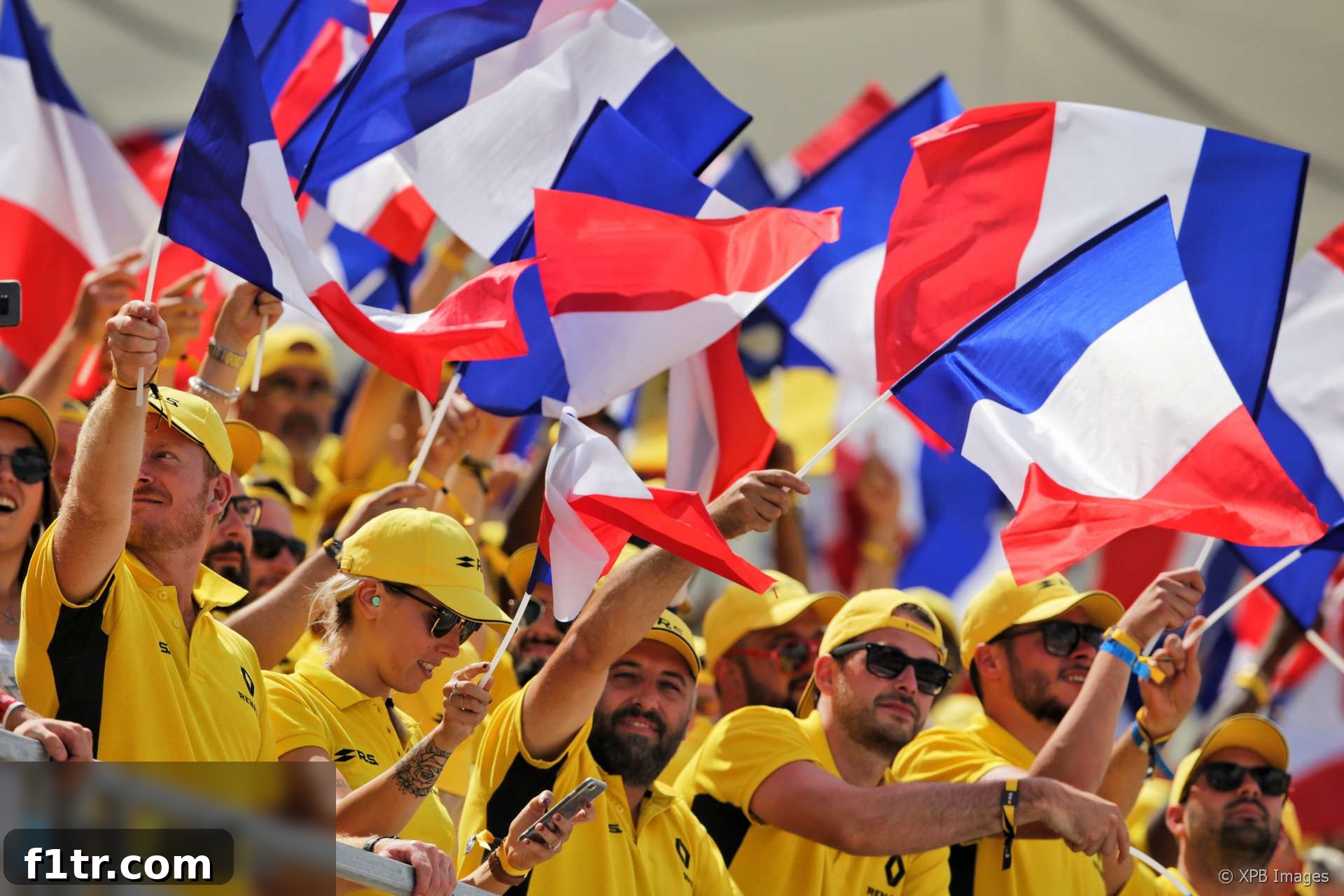
The long-awaited return of Formula 1 to the French Grand Prix at Paul Ricard was unfortunately overshadowed by four days of profound disorganisation. This logistical nightmare transformed what should have been a celebratory comeback into a deeply frustrating ordeal for fans and media alike, making access to and from the circuit a truly miserable experience. Dieter Rencken reflects on his personal journey through Paul Ricard’s first Grand Prix in 28 years, detailing the chaos and missed opportunities.
Sunday Morning: A Tale of Two Realities
Advert | Become a Supporter & go ad-free
After a much-needed night’s rest and checking out of my cottage, I embarked on my final journey to the circuit on race day. The drive, lasting approximately 30 minutes, was, for me, unexpectedly smooth, a stark contrast to the narratives that would soon dominate the weekend. My dedicated route, meticulously barricaded and vigilantly manned by two gendarmerie officers, ensured that only accredited pass holders could proceed. This exclusive access meant the road was entirely devoid of the suffocating traffic jams that plagued countless other attendees. While I enjoyed this unusual tranquility, serenaded by the distant roar of historic sports cars warming up on the track as part of the vibrant support package, it served as a poignant reminder of the chaotic experience awaiting the general public. This privileged passage only amplified the stark divide between those with special access and the vast majority of F1 enthusiasts who faced daunting logistical challenges.
As I settled into the circuit, a palpable sense of exhaustion permeated the paddock. Despite leaving my accommodation two hours later than usual, a glance at my watch confirmed that it was still over six hours until the race was scheduled to begin. This extended waiting period, compounded by the previous days’ chaos, was a common sentiment. My feelings were instantly echoed by a team media officer I encountered en route to Ferrari for breakfast. Her weary expression spoke volumes before she even uttered a word. “Yesterday was unequivocally the longest day I have ever spent working in F1,” she confessed, a hint of exasperation in her voice. “We were forced to leave our hotel at a pre-dawn 6 AM just to stand a chance of beating the notorious traffic, and we didn’t return until well after midnight. It’s simply unsustainable.” Her account underscored the immense strain placed on team personnel, whose professional duties were severely hampered by the abysmal organisation of the event, extending their working hours far beyond reasonable limits and impacting their ability to effectively perform their roles.
10:00 AM: Fueling Up for a Long Day
Breakfast provided a brief, comforting respite amidst the growing tension. A simple yet satisfying spread, it consisted of creamy yoghurt, fresh fruit, and perfectly toasted bread adorned with a truly delicious orange marmalade. This was followed by a warming cup of tea and a delicate, sweet pastry – a testament to the renowned culinary skills of our Italian hosts. This early meal was precisely what was needed, as the demanding schedule of race day meant that lunch would not be served until after 2 PM. Such thoughtful details, however small, provided a necessary anchor in a day otherwise characterised by uncertainty and logistical frustrations.
11:00 AM: Paddock Insights – The Plight of Legends
My next stop brought me to the Williams garage, where I caught up with some good friends. The conversation left me deeply saddened, reflecting on the current predicament of this once-dominant and fiercely tenacious team. It was disheartening to witness such a storied name in Formula 1 grappling with such dire circumstances, consistently finding themselves at the back of the grid. This moment prompted a broader reflection: just two ‘doors’ down in the paddock, another legendary British F1 team, McLaren, was facing equally challenging times. Both iconic outfits, once symbols of innovation and success, now seemed firmly entrenched at the rear of the field, with no clear path to recovery in sight. This scenario highlights a significant, underlying challenge within the sport, where even historical titans struggle to maintain competitiveness against the ever-evolving landscape of modern Formula 1.
The media’s perception of these struggles presents an interesting contrast. While McLaren frequently endures merciless scrutiny and critical attacks, Williams seems to elicit a notable degree of sympathy from journalists. This disparity led me to ponder the underlying reasons. Why is one team treated with more understanding than the other, despite both facing similar performance crises? Could it be a matter of humility and transparency? Williams, in its current state, has been remarkably open about its failings, actively engaging with the media and acknowledging its challenges. This collaborative approach, rather than adopting a defensive posture, appears to foster a more empathetic relationship with the press, standing in stark contrast to the perceived insularity of some other teams. This open dialogue not only helps to manage public perception but also allows for a more nuanced understanding of their complex situation.
Advert | Become a RaceFans supporter andgo ad-free
During my visit, I also had the opportunity for an insightful chat with Chris Murray, Williams’ Head of Marketing. Chris is a seasoned veteran in the world of F1 sponsorship, having navigated its intricate landscape numerous times. Our discussion delved into the complex legal complications that Formula 1 teams frequently encounter due to varying territorial restrictions across different markets. This surprisingly fascinating area involves intricate legal frameworks, diverse advertising regulations, and cultural nuances that profoundly impact how sponsors can activate their partnerships globally. The conversation illuminated the immense behind-the-scenes work involved in securing and managing sponsorships, far beyond simply displaying a logo. It’s a crucial and often overlooked aspect of F1 operations, and one we intend to explore in greater depth in a future feature, offering readers a unique glimpse into the unseen challenges faced by teams.
12:00 PM: Mounting Concerns and Calendar Clashes
With four long hours still stretching ahead until the race commenced, the grandstands began to visibly fill. Yet, the question of how precisely these thousands of fans had managed to navigate the reported traffic chaos and successfully enter the circuit remained a genuine mystery to me. Even more pressing was the burgeoning anxiety about the inevitable mass exodus after the checkered flag – how would everyone manage to leave efficiently and safely? This pervasive concern about logistics continued to cast a shadow over the event. Attempting to set these worries aside temporarily, I focused on gathering more information, which included a revealing conversation with Gerard Neveu, a prominent figure in motorsport. Neveu confirmed a “strong chance” of a significant date clash between the 2019 Sebring race, which is set to be part of the World Endurance Championship (WEC) and scheduled for March 13-16, and the weekend currently pencilled in for the Australian Grand Prix. This potential conflict has wide-ranging implications for drivers, teams, and fans across multiple disciplines.
Most saliently, this clash directly impacts a driver of Fernando Alonso’s calibre. At that time, Alonso would be under contract with Toyota for their WEC campaign, but, critically, not necessarily with an F1 team. This raises a fascinating hypothetical: assuming he would be leading the World Endurance Championship early in 2019 – a seemingly safe bet given his talent and Toyota’s performance – where would his loyalties lie? Which series would he prioritise? This calendar conflict exemplifies the growing challenge for motorsport’s biggest stars who wish to compete across different championships, forcing difficult decisions and potentially depriving fans of seeing their heroes in action across various arenas. It highlights a broader issue within global motorsport scheduling, where the ambitions of drivers and the demands of different series are increasingly coming into conflict.
2:00 PM: Midday Respite and International Distractions
Lunch at the Mercedes hospitality suite offered another welcome break from the burgeoning pre-race intensity. The televisions in the suite were, unsurprisingly, tuned to a live World Cup match, providing a moment of shared distraction for many. I observed several of my colleagues, clearly enthusiastic football fans, who had donned blue, red, and white shirts in fervent support of their respective teams. For a brief, amusing moment, I found myself momentarily confused, wondering if they had suddenly adopted French nationality. This fleeting moment of cultural confusion was amusingly mirrored later when similar blue, white, and red flags were seen being waved in both the French and Dutch driver ‘areas’ before the race start, highlighting the vibrant mix of nationalities and allegiances present in the F1 paddock. Such small, human moments often punctuate the high-pressure environment of a Grand Prix weekend.
However, the real blessing of the midday period was the media centre itself. It was almost completely deserted until approximately 3:30 PM. This unexpected calm provided a rare and invaluable window of opportunity, allowing me to focus intently on my work without the usual hustle and bustle. In a weekend fraught with organisational challenges, this quiet interlude was a silver lining, enabling a period of concentrated effort before the final, frenetic push of race preparation and coverage.
3:30 PM: Grid Access – A Flawed Initiative
As the race approached, I headed down to the grid, the anticipation building. However, upon arrival, I quickly realised that the cars were already on their out-laps – a full ten minutes earlier than typically scheduled. This accelerated timeline was a direct consequence of a new directive from Liberty Media, aimed at providing extended media access time with the drivers on the grid. The intention was commendable: to offer more opportunities for journalists and broadcasters to engage with the stars of the show, thereby enhancing fan engagement and media coverage.
But did it work as intended? Of course not. F1, being F1, has a long-standing tradition of teams and drivers instinctively seeking ways to circumvent new regulations they perceive as inconvenient. In this instance, drivers simply completed their mandated out-laps ahead of schedule, parked their cars, and promptly retreated to the relative sanctuary of their garages. They would only re-emerge for their compulsory appearance during the national anthem ceremony. This strategic maneuver effectively negated the spirit of Liberty’s new rule, rendering the extended media window largely ineffective. It became clear that this particular regulation, in its current form, would either need to be significantly rewritten to close these loopholes or, perhaps, simply scrapped altogether, as its objective was being undermined by the very participants it sought to engage.
4:10 PM: Race Start and Media Centre Deficiencies
The race commenced precisely as scheduled, unfolding on the track. However, my view of the action was not from a designated media monitor, but rather via my personal FanVision device. This necessity stemmed from a surprising and critical deficiency within the media centre itself: it was insufficiently equipped with televisions. In a major international sporting event like a Formula 1 Grand Prix, the absence of adequate viewing facilities for accredited media is a glaring oversight. So pronounced was this lack that many of my esteemed colleagues were forced to wander across to the photographer’s room, a space typically deserted during the race as photographers are trackside. There, they occupied the empty desks, attempting to follow the live action as best they could. This logistical failure was yet another undeniable mark against the French Grand Prix organisers, highlighting a fundamental lack of consideration for the working press and underscoring the broader disorganisation plaguing the entire event. It directly impacted the media’s ability to cover the race effectively, a critical component of any successful Grand Prix.
6:00 PM: Post-Race Rush and Interview Scarcity
As the race concluded and the checkered flag waved, I immediately set off for the paddock, eager to secure post-race interviews. However, the anticipated flurry of driver and team boss soundbites was noticeably absent. Due to the combination of the relatively late race start time and the already well-documented, dire traffic situation, most drivers and senior team personnel had already made their hasty departures. Many had rushed to the local airport for pre-arranged charter flights, while others were making their way to Marseille to catch the 10 PM flight to London, a crucial connection for many European-based teams.
This rapid exodus explains why readers would have undoubtedly noticed a significant paucity of post-race coverage across much of the F1 media in the immediate aftermath of the French Grand Prix. In a typical race weekend, journalists can expect to conduct around twelve scheduled interview sessions, providing ample opportunities to gather quotes and insights. In stark contrast, at Paul Ricard, we were presented with a mere five such opportunities. This drastic reduction in access was a direct and unfortunate side-effect of the Grand Prix’s woeful disorganisation, making it incredibly challenging for media outlets to provide their usual depth and breadth of post-race analysis and reactions. It deprived fans of crucial insights directly from the protagonists, further diminishing the overall experience of the event.
9:30 PM: The Perilous Journey Home
Despite the numerous tales of widespread traffic chaos circulating throughout the paddock, I decided to risk my departure, holding onto a slim hope that the situation might have eased. My optimism was quickly shattered. I promptly found myself at a complete standstill for a frustrating 45 minutes, trapped in what felt like an endless queue. Eventually, after what seemed an eternity, I managed to reach the coveted “F1 Lane” heading towards Marseille, where I had a hotel booked near the airport in anticipation of an early morning flight. The journey, a mere 40 miles under normal circumstances, eventually stretched into a grueling two-and-a-half hours. Consequently, I did not check into my hotel until well after midnight, utterly exhausted and thoroughly exasperated by the persistent and systemic traffic issues that marred the entire weekend. This personal experience vividly underscored the severity of the logistical failures, impacting not just fans but every individual associated with the event.
Monday, 1:00 AM: A Damning Reflection
Alone in my hotel room, well into the early hours of Monday morning, I had time to reflect on the entirety of the French Grand Prix weekend. The overarching sentiment was one of profound disappointment. Despite receiving a substantial £12 million in taxpayer funding, the promoters of the event demonstrated an alarming inability to manage even the most basic aspects of organisation. To put it bluntly, they couldn’t organise a sandstorm in a desert. This gross mismanagement, which led to such widespread misery and inconvenience for thousands, frankly means they deserve to lose the race from the Formula 1 calendar. The only acceptable path forward, if the event were to stand any chance of retaining its place, would be the provision of cast-iron guarantees. These guarantees must be presented directly to Liberty Media and, by extension, to the public, ensuring comprehensive measures including full ticket refunds for all affected fans, coupled with additional compensation for the severe inconvenience and disruption endured.
Advert | Become a RaceFans supporter andgo ad-free
However, the cynical truth suggests that such decisive action is unlikely to materialise. The intricate web of political interests deeply embedded within the event’s structure, coupled with Liberty Media’s primary focus on its share price over genuine fan engagement, means that a fundamental shift in approach is improbable. The influence of various political stakeholders often prioritises their own agendas over the experience of attendees, while Liberty Media, as a publicly traded company, is ultimately beholden to its investors. This unfortunate reality leaves many disillusioned, understanding that while calls for accountability are loud and clear, the mechanisms to enforce meaningful change often remain elusive within the complex world of Formula 1 governance. The promise of an exhilarating return to France was ultimately betrayed by poor planning, leaving a lasting impression of disarray rather than celebration.
Further Reading on the 2018 French Grand Prix
- Hamilton has now won at every track on the F1 calendar
- 2018 French Grand Prix Star Performers
- Hamilton regains points lead in F1’s forgettable return to France
- Top ten pictures from the 2018 French Grand Prix
- Woeful organisation spoils F1’s return to France
Browse all 2018 French Grand Prix articles