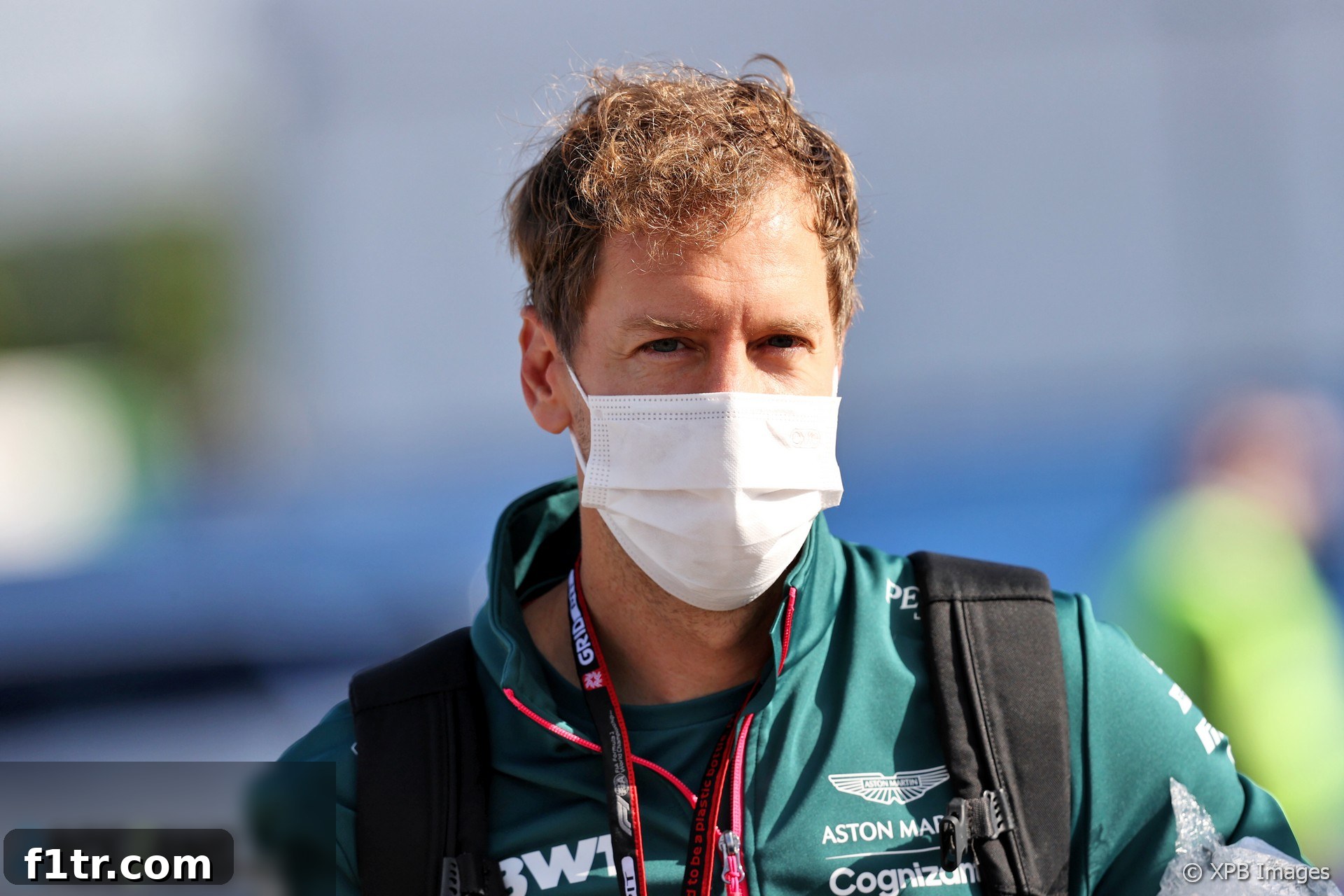
In a compelling intervention that has ignited debate across Germany and beyond, four-time Formula 1 World Champion Sebastian Vettel has lent his formidable voice to the growing chorus advocating for the imposition of speed limits on Germany’s iconic autobahns. These stretches of motorway, celebrated globally for their unrestricted sections, are increasingly at the heart of a national conversation weighing tradition against pressing modern concerns of safety and environmental sustainability. Vettel’s stance, articulated with his characteristic clarity and conviction, underscores a significant shift in public discourse, particularly coming from a figure synonymous with high-speed performance.
Sebastian Vettel: From Racetrack Champion to Road Safety Advocate
Sebastian Vettel, a name etched into the annals of Formula 1 history with 53 Grand Prix victories – a record surpassed only by legends Lewis Hamilton and Michael Schumacher – has consistently shown a thoughtful engagement with societal issues beyond the racing circuit. His recent comments regarding the autobahn debate are not merely an opinion but a profound statement from an individual who understands the physics and risks of speed better than most. By supporting calls for an end to unlimited speeds, Vettel challenges the romanticized image of the autobahn, urging a pragmatic re-evaluation rooted in tangible benefits for both people and the planet.
The future of the autobahn remains an intensely emotive subject within Germany, a nation proud of its engineering prowess and home to global automotive giants like Mercedes, Audi, Porsche, and BMW. For many, the absence of speed limits symbolizes a unique aspect of German culture, a testament to engineering excellence and individual liberty. However, this long-held tradition is now confronting mounting objections, primarily driven by critical concerns over road safety and the environmental impact of unrestricted high-speed driving.
The Dual Imperatives: Safety and Climate Action
“It’s a way to save up to two million tonnes of CO2 when it comes to emissions,” Vettel stated unequivocally in response to a question from RaceFans, highlighting the significant environmental dividends of such a policy change. This figure, though debated, represents a substantial reduction potential that cannot be ignored in an era defined by climate crisis. Beyond the raw numbers, Vettel emphasized an even more profound benefit: enhanced road safety.
“And even bigger, it’s probably making the roads a little bit safer. There are accidents in Germany we have because we don’t have a speed limit. So if it helps to save only one person from being injured or one person’s life, then I think it’s a no-brainer.” This heartfelt appeal resonates deeply, transforming the debate from abstract policy into a matter of human lives and well-being. Accidents on high-speed roads, often exacerbated by the vast differentials in vehicle speeds, can be catastrophic. A unified speed limit, even if set generously, could significantly reduce the severity and frequency of such incidents by promoting more consistent traffic flow and allowing drivers greater reaction time.
Environmental Impact: A Glimmer of Hope for Emissions Reduction
Germany, as a leading industrial nation and automotive powerhouse, bears a substantial responsibility in global climate efforts. While individual driving habits might seem negligible in isolation, the collective impact of millions of vehicles on unrestricted autobahns contributes meaningfully to greenhouse gas emissions. Faster driving generally leads to higher fuel consumption and, consequently, increased CO2 output. Implementing a nationwide speed limit, even a relatively high one like 130 km/h (around 80 mph), could translate into significant annual carbon savings, aligning with Germany’s ambitious climate targets and setting a precedent for other nations.
Road Safety: A Clear Path to Fewer Tragedies
The argument for improved safety is equally compelling. While German autobahns are renowned for their high engineering standards and driver discipline, the sheer variation in speeds – from heavy trucks adhering to strict limits to high-performance cars travelling at 200 km/h or more – inherently creates hazardous situations. Such speed differentials contribute to longer stopping distances, reduced reaction times, and increased crash energy. Statistical data from countries with comprehensive speed limits consistently show a correlation between controlled speeds and fewer serious accidents. Vettel’s appeal to saving “only one person’s life” underscores the moral imperative that often underpins such policy discussions, prioritizing human life over the perceived convenience of unrestricted speed.
Reclaiming “Freedom”: A Matter of Habit, Not Liberty
Vettel directly addressed one of the most fervent arguments put forth by opponents of speed limits: that such restrictions would diminish personal freedoms. With a seasoned global perspective gained from his extensive travels as a Formula 1 driver, he offered a rebuttal grounded in personal experience.
“Very often it gets confused with a freedom that people have, that we don’t have a speed limit in Germany. Now, honestly, I don’t feel un-free when I come to Turkey or when I come to the US or to the UK or any other country where there is a speed limit. It’s not like I crossed the border and I feel like I’m not free anymore.” This poignant observation dissects the notion of freedom, suggesting that the resistance to speed limits often stems from deeply ingrained habits and cultural identity rather than a genuine loss of liberty. Drivers in countries with speed limits navigate their roads without feeling oppressed; their focus shifts from maximum velocity to efficient, safe, and regulated travel. Vettel argues that true freedom lies not in the absence of rules but in the ability to make responsible choices that benefit the collective good.
“So I think it’s not a freedom we’re talking about it’s just something we got used to, and it’s probably something that’s going to fall in the future, whether it’s now or in a couple of years. I have no problem if it disappears.” His pragmatic outlook suggests an inevitability to this change, recognizing that societal evolution often requires reassessing long-standing customs in light of new knowledge and priorities. For Vettel, letting go of this particular “freedom” is a small price to pay for significant gains in safety and environmental protection.
Where Speed Truly Belongs: The Sanctuary of the Racetrack
For those who genuinely crave the thrill of high-speed driving, Vettel offered a clear, responsible alternative – the racetrack. As a professional racing driver, he understands the exhilaration of pushing limits, but he also knows the critical importance of doing so in a controlled and safe environment.
“Anybody who wants to go fast should do so in a place where it’s safe to do so, which in that case would be the race track. Obviously, I get very excited by going fast, otherwise, I would have chosen a different job, but I also see that it makes far more sense to do so on a track where you can judge, you can experience and test your limits and not put it to the risk of other people around it.” This statement beautifully encapsulates the ethos of professional motorsport: the pursuit of speed and precision within a carefully managed ecosystem designed to minimize risk to participants and spectators alike. Public roads, by contrast, are shared spaces where the diverse capabilities and intentions of all drivers must be considered. The thrill of speed, he argues, should never come at the expense of another person’s safety or life. Track days and amateur racing events offer ample opportunities for enthusiasts to experience speed responsibly, without endangering the wider public.
Germany at a Crossroads: Politics, Progress, and a New Era
The outcome of the recent federal elections in Germany has significantly heightened the possibility of speed limits being introduced on its motorways. The elections marked a historic moment, leading to a defeat for the party of long-serving Chancellor Angela Merkel and ushering in a new political landscape potentially more amenable to such reforms.
Despite his admiration for Merkel, Vettel expressed no disappointment regarding the election results. He viewed the shift as an opportunity for Germany to embrace a new chapter, one focused on proactive solutions to pressing global issues. “I think in a way the whole of Germany or the whole Europe or world might miss Angela Merkel,” he reflected, acknowledging her legacy as “a great leader” who navigated “very difficult times.” However, he quickly added, “But I also feel we are ready for a change. I’m not disappointed by the result, I hope that with the result that we have, the next government that will be in place will apply a lot of actions.”
A Call for Action on Social Injustice and Climate Change
Vettel’s hopes for the new government extend far beyond the autobahn debate, encompassing broader societal challenges. “I think it’s time for actions when talking about social injustice or talking about the climate crisis. I think there’s lots of things that have to be addressed now. I’m not a specialist in politics, but I think there’s just certain topics around the globe that we can be pioneers [in].” This passionate plea highlights his belief that Germany, as a prosperous and influential nation, has a moral obligation to lead by example. He sees the new government as having a mandate not just for domestic policy but for inspiring global change.
“Germany is a very rich country and we can use our wealth and our network of a strong industry and clever people and engineering power to hopefully be the first ones to shift towards a better future. And by doing so, inspire a lot of other nations to do the same.” This vision positions Germany as a catalyst for a sustainable and equitable future, leveraging its formidable resources and intellectual capital. Whether through pioneering renewable energy technologies, championing fair social policies, or re-evaluating long-standing traditions like the autobahn’s unlimited speed, Vettel believes Germany is uniquely poised to lead.
“So I think that’s why it’s been so important these elections and hopefully the outcome of whoever will be the new government will put things in place and will act rather than talk.” His closing remark underscores a desire for tangible progress, moving beyond rhetoric to implement meaningful policies that address the critical challenges of our time. Sebastian Vettel’s articulate advocacy for autobahn speed limits is therefore not an isolated comment but part of a larger, coherent vision for a more responsible, safer, and sustainable future for Germany and, by extension, the world.
Related Articles and Further Reading
- Understanding the Impact of Road Safety Measures
- Germany’s Evolving Climate Policy Ambitions
- The History and Future of Germany’s Autobahn
- Sebastian Vettel: A Champion for Environmental Causes
- A Comparative Look at Speed Limits Across Europe
Browse all articles on German Policy and F1 Perspectives