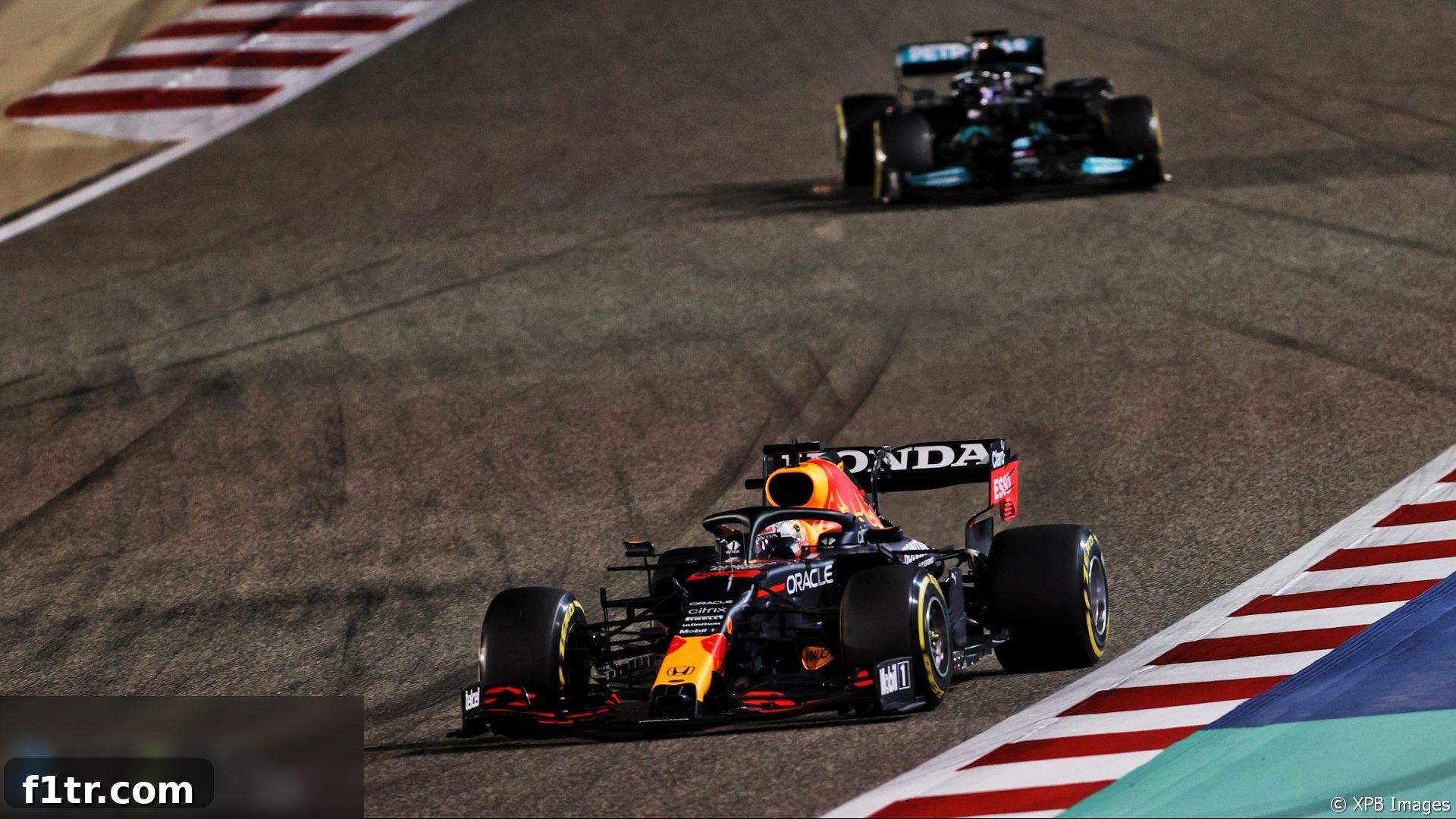
The exhilarating season-opener of the Formula 1 calendar, the Bahrain Grand Prix, delivered a thrilling spectacle, culminating in a fierce strategic battle between two titans of the sport. While Max Verstappen of Red Bull Racing dominated much of the weekend, securing pole position and leading the early stages, he ultimately finished second to Mercedes’ Lewis Hamilton. Verstappen, reflecting on the narrow defeat, firmly believes that ceding track position to his championship rival was the decisive factor that cost him the victory, underscoring the critical importance of strategic execution in modern Formula 1.
The Dominant Start and the Strategic Turnaround
Verstappen arrived in Bahrain with palpable momentum, showcasing Red Bull’s formidable pace from the outset. He secured pole position with a commanding performance, setting the stage for what many anticipated would be a dominant race victory. Indeed, the Dutchman demonstrated his prowess by confidently leading the initial laps, seemingly in control of the race. However, the strategic chess match between Red Bull and Mercedes quickly unfolded, revealing the subtle yet profound nuances of F1 racing.
The turning point arrived during the first round of pit stops. Mercedes opted for an aggressive undercut strategy, bringing Lewis Hamilton in for his first tire change four laps earlier than Verstappen. This seemingly small window proved instrumental. While Verstappen continued on worn tires, Hamilton, on fresh rubber, unleashed a blistering pace, gaining crucial seconds. When Verstappen eventually pitted, the gap had sufficiently closed, allowing Hamilton to emerge ahead, snatching the coveted track position. This bold strategic gamble by Mercedes transformed a race Verstappen was controlling into an uphill battle for the Red Bull driver.
The Unforgiving Nature of Track Position in Modern F1
For Verstappen, the disappointment of finishing second was compounded by the clear realization that track position, even with what he perceived as superior tire performance later in the race, dictates success. “It’s disappointing to be second,” Verstappen stated post-race. “It just shows again that track position is super-important, even when you think you have the better tyres.” His words highlight a fundamental truth in contemporary Formula 1: the difficulty of overtaking.
The aerodynamic design of current F1 cars means that following another car closely results in significant loss of downforce, commonly known as ‘dirty air’. This aerodynamic disturbance reduces grip, making it incredibly challenging for a pursuing driver to maintain the pace needed to launch an attack. Verstappen eloquently described this phenomenon: “I was closing quite comfortably but then when I got close [to] Lewis, with how the wind was today in those critical low-speed corners, I just had no grip. Still better grip than Lewis, but not enough to really make a difference.” Even with a tire advantage and a car that felt quicker in clean air, the inherent challenge of passing meant Verstappen was battling physics as much as Hamilton.
The Bahrain International Circuit, with its mix of fast straights and tight, technical corners, further amplified this challenge. While DRS (Drag Reduction System) offers an advantage on straights, it often isn’t enough to compensate for the grip lost in the preceding corners, making it difficult to get within striking distance for a clean overtake. Verstappen’s struggle to find that decisive edge, despite feeling he had the better package, perfectly encapsulated the premium placed on leading from the front.
The Relentless Chase and the Controversial Overtake
Having lost the lead, Verstappen found himself in a familiar F1 scenario: chasing down a rival with superior track position. In the final stint of the race, Red Bull strategically equipped Verstappen with tires that were 10 laps fresher than Hamilton’s, a deliberate move to give him a significant performance advantage for a late-race charge. The gap began to shrink, and the tension mounted as Verstappen relentlessly pursued the Mercedes.
However, the nature of these powerful machines means that the perceived advantage of fresher tires diminishes rapidly once a driver gets within a certain proximity to the car ahead. “With this car, that advantage goes away very quickly once you get within one and a half seconds,” Verstappen explained. “With these cars, I think the last few years, it is very important to have track position, and we gave that up today.”
As the laps dwindled, Verstappen managed to close the gap to Hamilton, setting the stage for a dramatic climax. On Lap 53, he launched a daring move into Turn 4, successfully overtaking Hamilton to regain the lead. The Red Bull garage erupted in cheers, but their celebration was short-lived. Race control swiftly deemed the move illegal, as Verstappen had exceeded track limits during the maneuver, gaining an unfair advantage. He was promptly instructed to yield the position back to Hamilton, a decision he complied with, letting his rival pass him back into Turn 10.
This incident proved to be the final nail in the coffin for Verstappen’s victory hopes. “That one lap I had a shot at him, I think also the backmarker [Antonio Giovinazzi] was not really helping him, giving him a bit of a snap, so that was not ideal,” Verstappen recounted, adding another layer to the intricate dance of racing. “I ran a bit wide out of Turn 4, so I had to give the position back and then it was just impossible any more to really go for it. I was always just too far behind.” The lost momentum, combined with the psychological blow of relinquishing the lead, meant he couldn’t mount another challenge in the remaining laps, leaving Hamilton to cross the finish line victorious.
Lessons Learned and the Road Ahead
Despite the frustration, Verstappen and Red Bull were quick to acknowledge the lessons learned from the Bahrain Grand Prix. The race served as a potent reminder of the fine margins that separate victory from defeat in Formula 1, particularly when battling a competitor of Hamilton’s caliber and a team as strategically astute as Mercedes. “We’ll analyse what we can do better,” Verstappen confirmed. “Clearly today showed that track position was key again.”
The opening race of the 2021 season not only provided an electrifying start but also laid bare the strategic complexities and the raw competitive spirit that defines Formula 1. While the result was disappointing for Verstappen, his performance throughout the weekend, from qualifying dominance to his relentless pursuit in the race, unequivocally demonstrated Red Bull’s potential to challenge Mercedes for the championship. The Bahrain Grand Prix was a strategic masterclass, a physical battle, and a psychological test, all rolled into one. It set the tone for what promises to be an epic season, where every strategic call, every lap, and every inch of track position will undoubtedly matter.
The relentless pursuit of perfection will continue for Red Bull, as they aim to refine their strategy and execution to convert their raw pace into championship points. This intense rivalry, epitomized by the Bahrain showdown, is exactly what fans crave, promising more thrilling encounters where strategic foresight and on-track prowess will clash in a high-stakes dance for supremacy.
2021 Bahrain Grand Prix Further Insights:
- Why one driver says there’s no easy solution to F1’s ‘messy’ track limits problem
- Verstappen: Lost win in Bahrain “is not going to matter” if we have fastest car
- The classic rivalry for ‘best of the rest’ and six more Imola talking points
- Ocon: We need to extract the maximum from the car to score points
- Vettel feeling “not at home in the car yet” after tough weekend
Browse all 2021 Bahrain Grand Prix articles