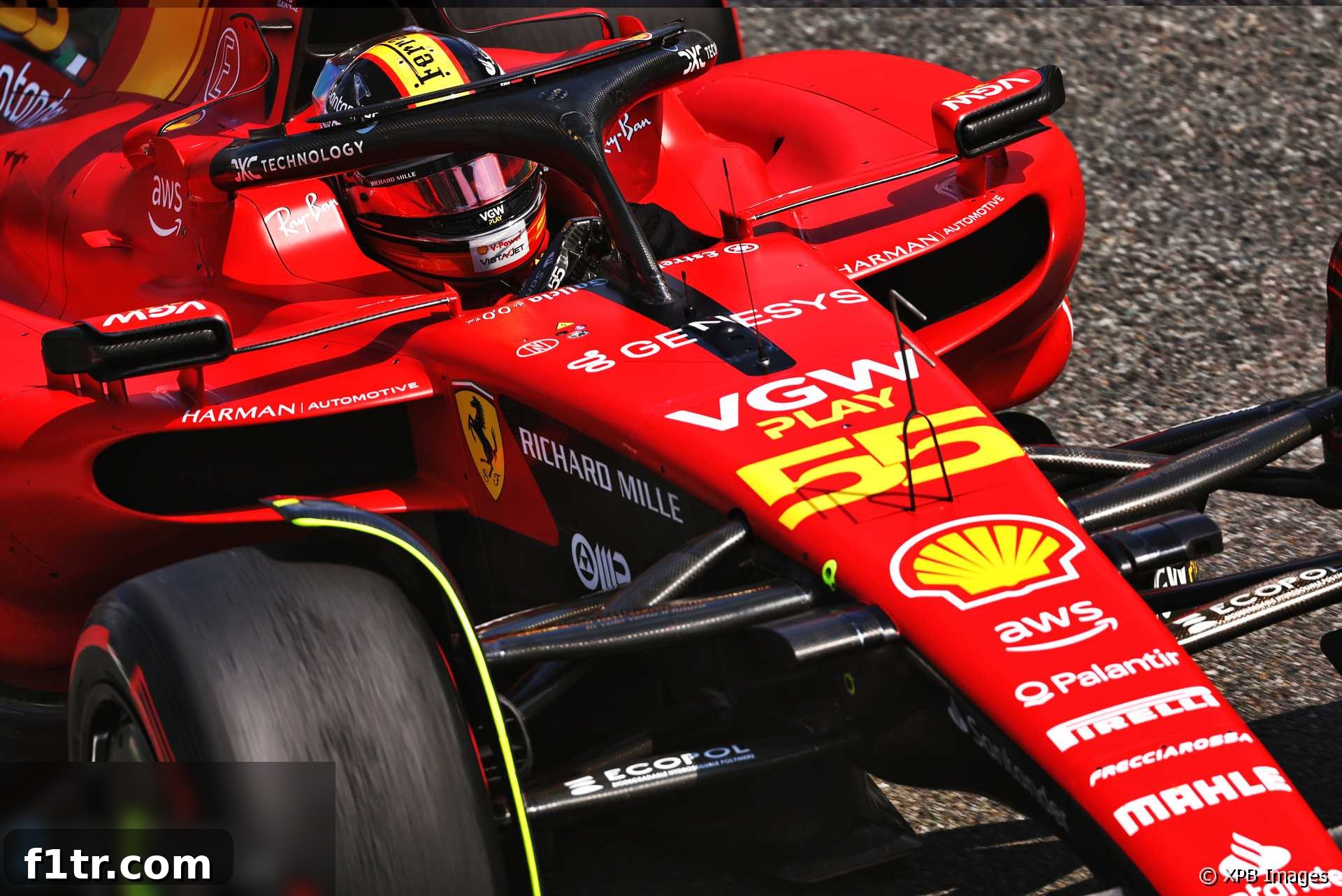
The exhilarating qualifying session for the Italian Grand Prix at the legendary Monza circuit concluded with a sigh of relief for Ferrari fans, as Carlos Sainz Jnr officially secured his hard-fought pole position. The Spanish driver’s top spot on the starting grid for Sunday’s race remained intact after a post-session investigation by the stewards, who ultimately ruled that he had not driven “unnecessarily slowly” during an early part of the session, despite exceeding the newly reinforced maximum lap time.
Sainz’s teammate, Charles Leclerc, also faced scrutiny for the same potential infringement. Fortunately for the Monegasque driver and the Tifosi, Leclerc was similarly cleared of any wrongdoing, ensuring he will start tomorrow’s highly anticipated race from a strong third place. This decision was a significant boost for the Scuderia, especially heading into their home Grand Prix, a race steeped in history and emotional significance for the Italian team.
The investigation itself cast a brief shadow of uncertainty over what had been a thrilling qualifying spectacle. Following the conclusion of Q1, the race stewards announced that both Ferrari drivers were under investigation. The alleged breach concerned exceeding the maximum lap time, a specific directive issued by F1 Race Director Niels Wittich. The racing world held its breath, but a swift decision was handed down just minutes after the final qualifying segment, Q3, had concluded, dispelling any prolonged suspense.
The maximum lap time rule is a crucial element of Formula 1’s sporting regulations, primarily designed to ensure driver safety and fair competition. Traditionally, this regulation mandates a maximum lap time between the Safety Car line at the pit exit and a second Safety Car line at the pit entry, applicable during all in-laps in qualifying and after the chequered flag. However, ahead of the Italian Grand Prix qualifying session, Wittich introduced a significant amendment. In a proactive measure to prevent cars from deliberately bunching up on track to create slipstream opportunities for their push laps – a common strategy at high-speed tracks like Monza – the maximum time of 1 minute 41 seconds was extended to apply to all laps during qualifying. This included crucial out-laps and cool-down laps, placing an additional layer of complexity on drivers’ traffic management.
The specific incidents under review occurred during Q1. Carlos Sainz was found to be just under a second over the 1’41 maximum lap time between the two Safety Car lines during one of his cool-down laps. His teammate, Charles Leclerc, exceeded the limit by more than a second in the second Ferrari. Despite these clear breaches of the numerical limit, the stewards, after reviewing all available data and driver explanations, confirmed that no further action would be taken against either Ferrari driver, a testament to the nuances often present in interpreting racing rules.
The updated instructions issued to all drivers on Saturday morning had explicitly stated that those who breached the time limit “may be deemed to be going unnecessarily slowly,” with allowances only for “exceptional circumstances.” This made the Ferrari investigation particularly potent, as it tested the boundaries of what constitutes “unnecessarily slowly” versus “appropriate action” in complex racing scenarios.
In their detailed explanation for the decision, the stewards confirmed they were entirely satisfied that both Ferrari drivers had indeed taken “appropriate actions” despite technically exceeding the maximum lap time. Their reasoning highlighted the practical realities of managing traffic during a highly competitive qualifying session. They noted, “Both drivers stayed at or above speeds necessary to stay below 1’41.0 around the vast majority of the circuit and especially on the straights.” This suggests that their general pace was within acceptable parameters for most of the lap.
Crucially, the stewards elaborated on the specific circumstances that led to the time breach. They stated, “However, in both cases the stewards determined that the drivers took appropriate actions to slow and stay to the side to the track so as to not impede other drivers, and in both cases they did this significantly to allow four drivers to pass while giving those drivers a clear track.” This detail reveals the core of their ruling: the drivers were not seeking an advantage by going slow, but rather deliberately slowed down and moved out of the way to *avoid* impeding faster cars on their push laps. This act of sportsmanship and safety, paradoxically, caused them to exceed the maximum lap time. The stewards concluded, “The stewards therefore determine that they did not drive ‘unnecessarily slowly’, and that evidently the reason they were both slightly above the maximum time was due to their appropriate actions and take no further action.” This decision underscores the stewards’ willingness to interpret rules with a degree of common sense and an understanding of on-track dynamics, prioritizing safety and fair play over rigid adherence to a numerical delta when justified.
Interestingly, no other drivers faced investigation for exceeding the maximum lap time during the qualifying session, nor were there any reports or investigations for impeding rivals, suggesting that the broader field managed the new rule effectively, or at least avoided the specific circumstances that befell the Ferraris.
Carlos Sainz himself expressed a lack of concern regarding the investigation, even before the official ruling was announced. His confidence stemmed from his clear conscience and understanding of his actions on track. He explained that his primary focus during the lap in question was to allow cars on push laps to overtake him safely, rather than attempting to gain any competitive advantage by deliberately slowing down. “I [was] not very worried about that,” Sainz stated after qualifying. “I had to slow down so much to not impede other cars that were on fast laps.”
Sainz further articulated the difficult dilemma faced by drivers under such stringent regulations. He pointed out the inherent conflict between adhering strictly to the delta time and ensuring the safety and fairness of the session. “It was almost impossible to respect the delta that the race director gave us because, if I would have respected it, I would have impeded my competitors,” he clarified. This insight highlights the tightrope walk drivers perform, especially at circuits like Monza where high speeds and slipstream dynamics create complex traffic management situations. “So I just played it safe, preferred to not impede anyone. Even if I was one or two seconds off the delta, I think that’s safer than actually impeding someone.” His comments not only justify his actions but also provide a valuable perspective on the practical application of such rules in the high-stakes environment of Formula 1 qualifying.
The confirmation of Carlos Sainz’s pole position and Charles Leclerc’s third-place start sets the stage for a thrilling Italian Grand Prix. For Ferrari, this ruling is more than just about grid positions; it’s a moral victory at their spiritual home. It allows them to approach their home race with renewed confidence, free from the lingering uncertainty of potential penalties. The stewards’ reasoned decision also provides a valuable precedent for the interpretation of traffic management rules, emphasizing driver judgment in prioritizing safety and avoiding impedance, even if it means slightly deviating from strict numerical targets.
Bringing the F1 news from the source – Support Independent Journalism
Here at RaceFans, we are dedicated to delivering our readers news directly from the key players and decision-makers in Formula 1. This commitment to original, in-depth journalism is made possible thanks to the invaluable and generous backing of our RaceFans Supporters.
By contributing just £1 per month or £12 per year (or the equivalent in your local currency), you can play a vital role in helping us cover the substantial costs involved in producing truly independent journalism. This includes expenses for travelling to races, extensive research and writing, content creation, website hosting, direct contact with sources, and ongoing platform development.
We have been proudly supported by our dedicated readers for over a decade, allowing us to maintain our unique perspective and unwavering independence. If you appreciate our coverage and enjoy receiving unvarnished insights into the world of F1, please consider becoming a RaceFans Supporter today. As an added bonus, all our esteemed Supporters can also browse the entire site completely ad-free, enhancing their reading experience. Discover more or sign up via the links below:
- Become a RaceFans Supporter
- RaceFans Supporter FAQ
Enhance your reading experience! Become a RaceFans supporter andgo ad-free
2023 Italian Grand Prix: Further Insights & Updates
- Despite close battles at Monza, F1 drivers want more powerful DRS
- Monza “frustrating” for Alonso but Aston Martin expect better form in coming races
- F1 changed rules to stop Mercedes in 2021 but we won’t ‘cry foul’ now – Wolff
- McLaren will bring ‘follow-up to Austria upgrade’ before focusing on 2024 car
- Magnussen explains why his driving style rarely works with the Haas VF-23
Browse all 2023 Italian Grand Prix articles