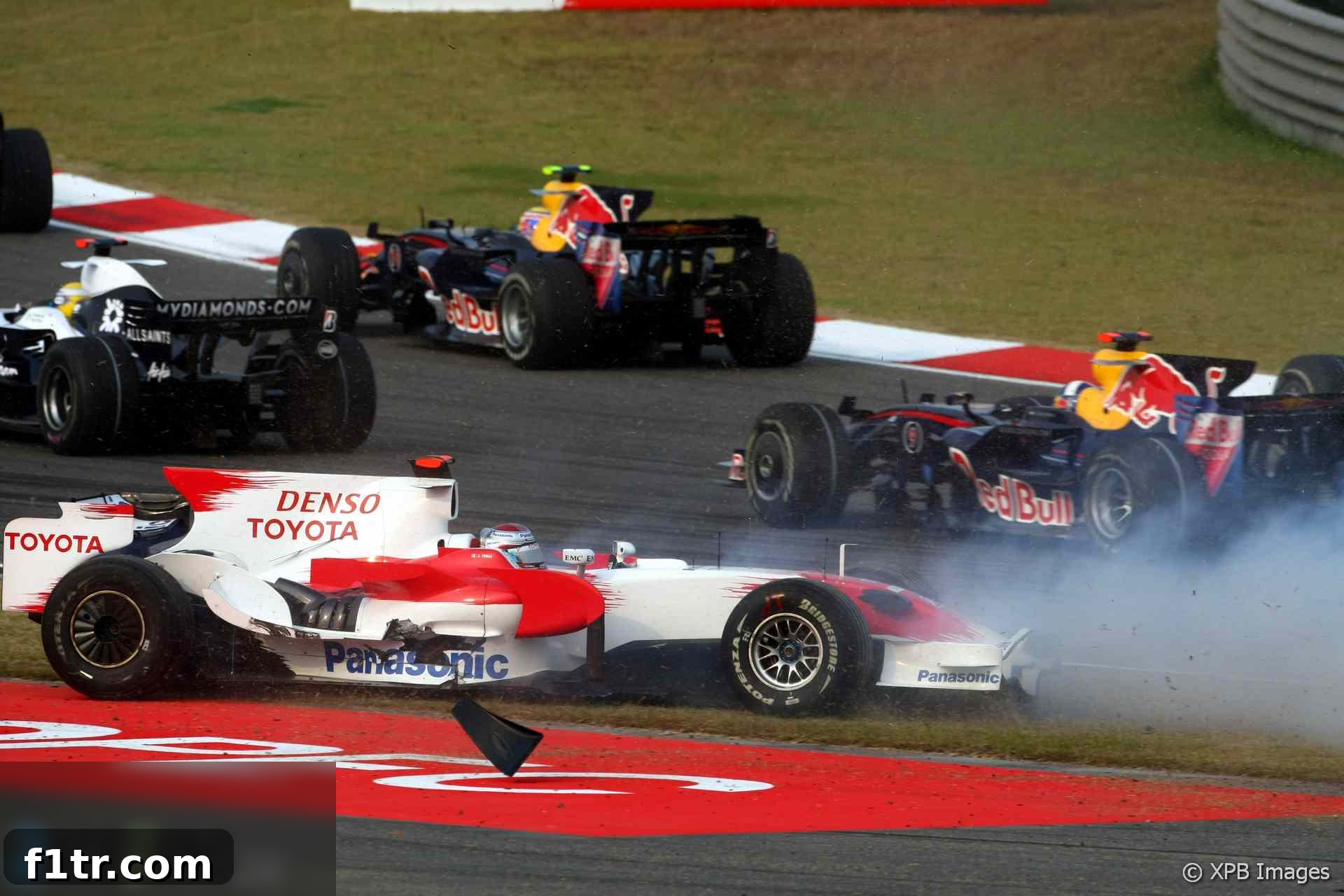
“Please make sure that tomorrow’s headlines don’t read: ‘Toyota finally returns to F1’,” implored Akio Toyoda, the company’s astute CEO, as he unveiled a new technical collaboration with Haas. This measured statement perfectly encapsulates the Japanese automotive giant’s cautious reentry into the high-stakes world of Formula 1, marking their first involvement since abruptly withdrawing their full works team at the close of the 2009 season.
Unlike their previous, all-encompassing factory effort aimed at conquering the championship, this new alliance with Haas represents a significantly more modest and strategic engagement with the sport. It’s a testament to a company that, having experienced the immense challenges of F1 firsthand, is now approaching the pinnacle of motorsport with a different philosophy. Toyota’s initial foray into Formula 1, while financially colossal, ultimately yielded no championship glory and taught them invaluable, albeit difficult, lessons about the elusive nature of success at the highest level.
The Genesis of a Giant’s Ambition: Toyota’s Grand F1 Entry
As the 20th century drew to a close, Toyota, one of the automotive industry’s undisputed titans, harbored aspirations of making the new millennium their own on the global motorsport stage. Their intent to join the Formula 1 World Championship was not a sudden impulse but a meticulously planned endeavor, publicly hinted at as early as October 1998 by then-president Hiroshi Okuda. The official announcement on December 22, 1999, was nothing short of seismic: Toyota had secured an agreement with the FIA to become Formula 1’s 12th official entrant, sending ripples of anticipation and intrigue throughout the motorsport world.
Leveraging their well-established Germany-based Toyota Motorsport division and a state-of-the-art factory in Cologne, Toyota committed to joining revered marques like Ferrari and Jaguar as only the third full factory-backed outfit in the championship. This was a statement of serious intent, showcasing Toyota’s readiness to compete directly against the best in the business. Ove Andersson, president of Toyota Motorsport at the time, articulated the company’s confidence: “The timing is right, the feel is right, and we are ready to go,” a sentiment that underscored the profound belief within the organization that their time had come.
A Baptism of Fire: The Early Years (2002-2004)
Toyota wasted no time in laying out their ambitious roadmap. Their strategy involved building their inaugural F1 car in the spring of 2001, dedicating an entire year to private testing, and only then joining the grid in 2002. This extensive development period was designed to ensure they would be competitive from their very first race. In March 2001, after rival teams had already commenced their championship campaigns, Toyota held an elaborate launch event for their TF101 test car, featuring confirmed race driver Mika Salo and test driver Allan McNish. This public display was meant to signify their thorough preparation and unwavering commitment.
Over the subsequent eleven months, Toyota’s testing program was relentlessly rigorous. They accumulated thousands of laps with the TF101 at Paul Ricard and took the car on a grueling tour to eleven of the seventeen circuits scheduled for the 2002 season. The team proudly announced that they had covered over 3,000 laps and nearly 21,000 kilometers – a staggering distance more than twice that typically covered by most drivers across an entire 17-race championship season. This unprecedented level of pre-season preparation reflected Toyota’s belief that sheer dedication and exhaustive development would pave their path to success.
As their debut season approached, Toyota’s ambitions only intensified. In October 2001, 31-year-old McNish was confirmed as the second race driver alongside Salo, setting the stage for an all-new challenge. The TF102, Toyota’s first actual F1 race car, was unveiled before the year’s end, with the team asserting that their intensive development year had yielded the desired results. Andersson articulated their pragmatic goals for 2002: “Our goal for next year is first to ‘learn,’ and second to be recognised as having been competitive.” Given that points were awarded only to the top six finishers in 2002, even a single point would be considered a significant achievement for a debutant team.
Toyota’s debut race at Albert Park proved to be a chaotic affair. With nine of the twenty-two cars, including McNish, eliminated in a first-corner melee, Mika Salo, despite a tap from his teammate, skillfully navigated the chaos. In an attrition-heavy race, Salo steadily climbed the ranks, eventually chasing down Mark Webber for fifth place in the closing laps. A late spin saw Webber regain position, but Salo still secured a remarkable sixth-place finish, putting Toyota on the scoreboard in their inaugural Grand Prix. This immediate points finish was a morale booster, hinting at the potential within the fledgling team.
However, the initial promise quickly faded. While Salo earned a second point two races later in Brazil, these were the only points Toyota scored all season. Despite achieving eleven top-ten finishes from thirty-four starts, the team concluded their debut year in tenth place in the constructors’ championship, last among the teams that completed the season. Even minnows Minardi, aided by Webber’s memorable Australian result, managed to finish ahead. This stark reality served as a potent reminder of the immense competitive gap between their exhaustive testing and actual race performance.
Evidently, Toyota had envisioned a more impactful initial foray into Formula 1. For the 2003 season, the TF103 represented an evolution rather than a revolution technically, but the team introduced an entirely new driver lineup: veteran Olivier Panis and ChampCar champion Cristiano da Matta. The second year of the program showed a modest improvement, with the team gradually gaining pace to accumulate sixteen points and secure eighth place in the championship. Highlights included Da Matta leading Toyota’s first-ever Grand Prix laps at Silverstone and scoring crucial points at their home race in Suzuka, on rival Honda’s circuit.
Despite these incremental gains, progress continued at a slower pace than Toyota desired. The 2004 season largely mirrored the previous one, with Da Matta being replaced mid-season by Ricardo Zonta, followed by the arrival of Renault refugee Jarno Trulli for the final rounds. Toyota once again finished eighth in the constructors’ standings, positioning them as the lowest-ranked factory manufacturer among Ferrari, Renault, Jaguar, and themselves. In a strategic move, the team decided to abandon development of their 2004 car after the twelfth round in Germany, shifting all resources to focus on the upcoming 2005 season and its significant regulatory changes.
The Gascoyne Era: A Glimpse of Potential (2005)
Determined to reverse their fortunes, Toyota invested heavily in securing the talents of renowned Renault technical director Mike Gascoyne. His arrival marked a turning point, with the TF105, the first chassis designed under his leadership, proving to be Toyota’s most competitive machine to date. For the 2005 season, Ralf Schumacher joined Jarno Trulli, forming a driver line-up that boasted multiple Grand Prix victories. Schumacher’s lucrative contract famously raised eyebrows, prompting questions about the sheer scale of Toyota’s investment, but it underlined their commitment to attracting top-tier talent.
The 2005 season stands as Toyota’s most successful year in the Formula 1 World Championship. Trulli capitalized on Toyota’s second consecutive front-row start in Malaysia, securing their maiden podium finish with a remarkable second place. He continued this strong form, returning to the podium at the subsequent round in Bahrain and again in Spain. Ralf Schumacher then added to the team’s tally, achieving two further top-three finishes in Hungary and China towards the end of the year. This period of consistent performance finally showcased the potential that Toyota had so earnestly pursued.
Beyond their own factory team, 2005 also saw Toyota expand its footprint in F1 by becoming an engine supplier for the first time, forging a deal with the Jordan team. This partnership extended into the following season, continuing as Jordan transitioned into Midland. While Toyota had finally broken into the upper half of the constructors’ championship, their hard-won momentum proved difficult to sustain, as the subsequent two seasons would regrettably demonstrate.
The Honda Rivalry and Stagnation (2006-2007)
Despite the promise of 2005, Toyota struggled to build upon their successes. Across the 2006 and 2007 seasons, the team managed only a single podium finish, achieved by Ralf Schumacher at the 2006 Australian Grand Prix. This period was particularly frustrating given the enormous financial investment and the deployment of world-class facilities, such as their cutting-edge wind tunnel in Cologne. The return on investment seemed disproportionately low for a team with such significant resources.
Adding insult to injury, Toyota’s fierce Japanese rival, Honda, had also entered the grid as a full factory team, taking over the former BAR outfit. The initial head-to-head competition between the two Japanese giants could hardly have gone worse for Toyota. Honda not only decisively outscored Toyota in the constructors’ championship, accumulating more than double their points tally, but also famously stormed to a Grand Prix victory in Hungary with Jenson Button. This triumph, only the third Grand Prix victory for a Japanese factory team in history, was achieved in just thirteen races – a feat Toyota had failed to accomplish in eighty-three starts.
While Honda celebrated their on-track victory, Toyota sought a different kind of win, securing a deal to move the Japanese Grand Prix from the Honda-owned Suzuka circuit to their own Fuji Speedway for the 2007 and 2008 seasons. This move was a clear strategic effort to leverage their home advantage and promote their brand. However, after two events held on a modified, less challenging version of the Fuji track previously used in the seventies, the Grand Prix ultimately returned to its traditional home at Suzuka, highlighting the broader challenges Toyota faced in asserting dominance.
A Fleeting Resurgence Amidst Global Crisis (2008-2009)
The 2008 season brought a slight improvement in Toyota’s fortunes. Jarno Trulli returned them to the podium with a third-place finish at the French Grand Prix. His new teammate, Timo Glock, capitalized on a challenging race for Lewis Hamilton and a late retirement for race leader Felipe Massa to climb to a remarkable second place in Hungary, fending off Kimi Räikkönen’s Ferrari. Toyota also expanded its engine supply role, partnering with Williams in a three-year deal commencing with the 2007 season. This collaboration notably allowed them to place Toyota-supported Japanese talent Kazuki Nakajima into a Formula 1 seat, fulfilling a long-held desire to promote local drivers.
However, the latter half of 2008 brought an unforeseen and devastating global financial crisis that profoundly impacted Formula 1. The immediate consequence was Honda’s sudden and complete withdrawal from the sport at the end of the season. Despite reporting losses exceeding a billion pounds in 2008, Toyota’s then-president Katsuaki Watanabe publicly reaffirmed the company’s commitment to F1 for 2009. Yet, he candidly admitted that continuing to fund their F1 activities at the same exorbitant level would be “extremely difficult,” signaling the immense pressure building within the organization.
Despite the looming financial uncertainty, Toyota’s TF109, designed under the heavily revised regulations for 2009, proved to be one of their most successful cars. At the season opener in Australia, Jarno Trulli, despite starting 19th on the grid, recovered to claim a podium finish. This achievement, initially complicated by a penalty for overtaking under a safety car which was later overturned after Lewis Hamilton was found to have misled stewards, demonstrated the car’s raw pace. Further progress followed in Bahrain, where Trulli secured Toyota’s third-ever F1 pole position. While he couldn’t convert it into that elusive first victory, Trulli still delivered Toyota’s third podium from the first four rounds of the season, marking a strong start to what would tragically be their final year.
Although Toyota continued to chase a Grand Prix victory through the remainder of the season, it never materialized. However, Glock and Trulli each secured one more podium finish in Singapore and Japan, respectively. A significant moment arrived when Timo Glock was injured during qualifying at Suzuka, paving the way for 23-year-old Japanese driver Kamui Kobayashi to make his Grand Prix debut. His immediate pace and remarkable racecraft in his first two races thoroughly impressed observers, igniting hopes that he could be the homegrown talent Toyota and Japan had long yearned for, ready to lead them to future glory.
The Abrupt Farewell and Lingering Regrets
Any dreams Kobayashi or the rest of the team harbored for a successful 2010 season were abruptly shattered. On November 4th, just days after the final race of the season in Abu Dhabi, the Toyota Motor Corporation announced its immediate withdrawal from Formula 1. While Toyota maintained a desire to remain a competitor, the crushing financial pressures of the global economic downturn compelled the company’s management to conclude that the immense investment required to continue simply wasn’t justifiable. It was a swift, decisive, and heartbreaking end to a decade-long endeavor.
Toyota’s tenure as a Formula 1 constructor concluded after 140 Grands Prix, yielding three pole positions, thirteen podium finishes, 278.5 championship points, and 14,363 racing laps – but crucially, zero victories. For a company that entered with the explicit aim of proving its mettle against the very best in single-seater racing, it is difficult to classify their F1 journey as a resounding success. Beyond the inability to secure a win, their overall achievements – a mere three top-five placings in the constructors’ championship over eight years, with a best of fourth – offered a meager return on the enormous financial investment poured into their F1 program, especially when compared to the triumphs of other teams operating on significantly smaller budgets.
Reflecting on this chapter, CEO Akio Toyoda today admitted a degree of regret regarding their first team’s failure. More poignantly, he revealed that the inability to foster and promote more Japanese drivers like Kamui Kobayashi bothered him the most. “I think that, somewhere deep in his heart, that ordinary older car-loving guy Akio Toyoda had always regretted having blocked—by pulling out of F1—Japanese youths’ path toward driving the world’s fastest cars,” he shared, expressing a deep-seated personal lament for the opportunities lost to a generation of aspiring drivers.
Despite this profound sentiment, Toyoda stood firm on his past decision: “That said, with the media watching my every step, I dare to add that I still believe my decision as the president of Toyota to withdraw from F1 was not wrong.” His vision now extends to a future where Japanese talent can thrive at the sport’s highest echelons through different avenues. “I would like to see the day when a Super Formula driver grips the steering wheels of the world’s fastest cars,” he added, hinting at a renewed focus on nurturing talent through established regional series.
A Different Path: Endurance Racing and the Haas Collaboration
After their F1 departure, Toyota quickly pivoted back to the more familiar and historically successful realm of sports car racing. They embarked on an ambitious LMP1 program in the World Endurance Championship (WEC) and the prestigious Le Mans 24 Hours, a program that has since evolved into their dominant hypercar effort. However, even in endurance racing, success was not immediate. Toyota endured years of bitter defeats and near-misses until they finally conquered Le Mans in 2018, significantly aided by the expertise of Fernando Alonso. Their subsequent five consecutive triumphs, while impressive, largely occurred during periods when Toyota was arguably the strongest and best-funded program in its class, highlighting the perennial challenge of achieving outright dominance even with vast resources.
Given this background, Toyota’s new technical collaboration with Haas, one of the most under-resourced teams on the Formula 1 grid with one of the lowest budgets, appears, on the surface, unlikely to yield immediate, dramatic results. However, Haas has, at times, shown flashes of overachievement throughout its nine years in the sport, albeit without the consistent ability to maintain that momentum. If this tie-up with Toyota can help Haas break free from its feast-and-famine performance cycle, providing stability, technical insight, and a pathway to consistent improvement, that in itself would represent a significant achievement for both parties. Crucially, today’s announcement strongly indicated that Toyota has no immediate appetite or intention to return to full-scale, factory-backed competition in motorsport’s most expensive and demanding category. This partnership is about strategic collaboration and shared learning, not a renewed quest for outright F1 glory under the Toyota banner.
Conclusion: Learning from the Past, Shaping the Future
Toyota’s journey through Formula 1, from its high-flying entry to its quiet exit, is a rich tapestry of ambition, challenge, and invaluable lessons. The company poured immense resources into its first F1 project, learned the hard way about the brutal competitiveness of the sport, and ultimately recognized the limits of its investment in the face of global economic pressures. Akio Toyoda’s cautious approach to the new Haas collaboration is a clear reflection of this past experience. It signifies a shift from a direct, all-out assault on the championship to a more nuanced strategy focused on technical partnership and the long-term development of motorsport talent.
This new era for Toyota in Formula 1 is not about immediate podiums or championship bids under their own marque. Instead, it’s about providing support, sharing expertise, and potentially contributing to Haas’s growth, while also reigniting a connection to the sport’s pinnacle and fostering the next generation of Japanese motorsport stars. The lessons from their initial, often difficult, F1 adventure have clearly shaped Toyota’s current philosophy. The road ahead with Haas may be less about conquering F1 with sheer force and more about strategic engagement, sustainable impact, and ultimately, a more measured, yet meaningful, contribution to the sport they once sought to dominate.