Bahrain Grand Prix Fallout: Unpacking the Yuki Tsunoda and Daniel Ricciardo Team Orders Controversy
The opening race of the 2024 Formula 1 season at the Bahrain International Circuit was not without its share of drama, even extending beyond the chequered flag. A particular incident involving RB F1 teammates Yuki Tsunoda and Daniel Ricciardo sparked widespread discussion, highlighting the intense pressures and complex dynamics inherent in Formula 1 team strategies.
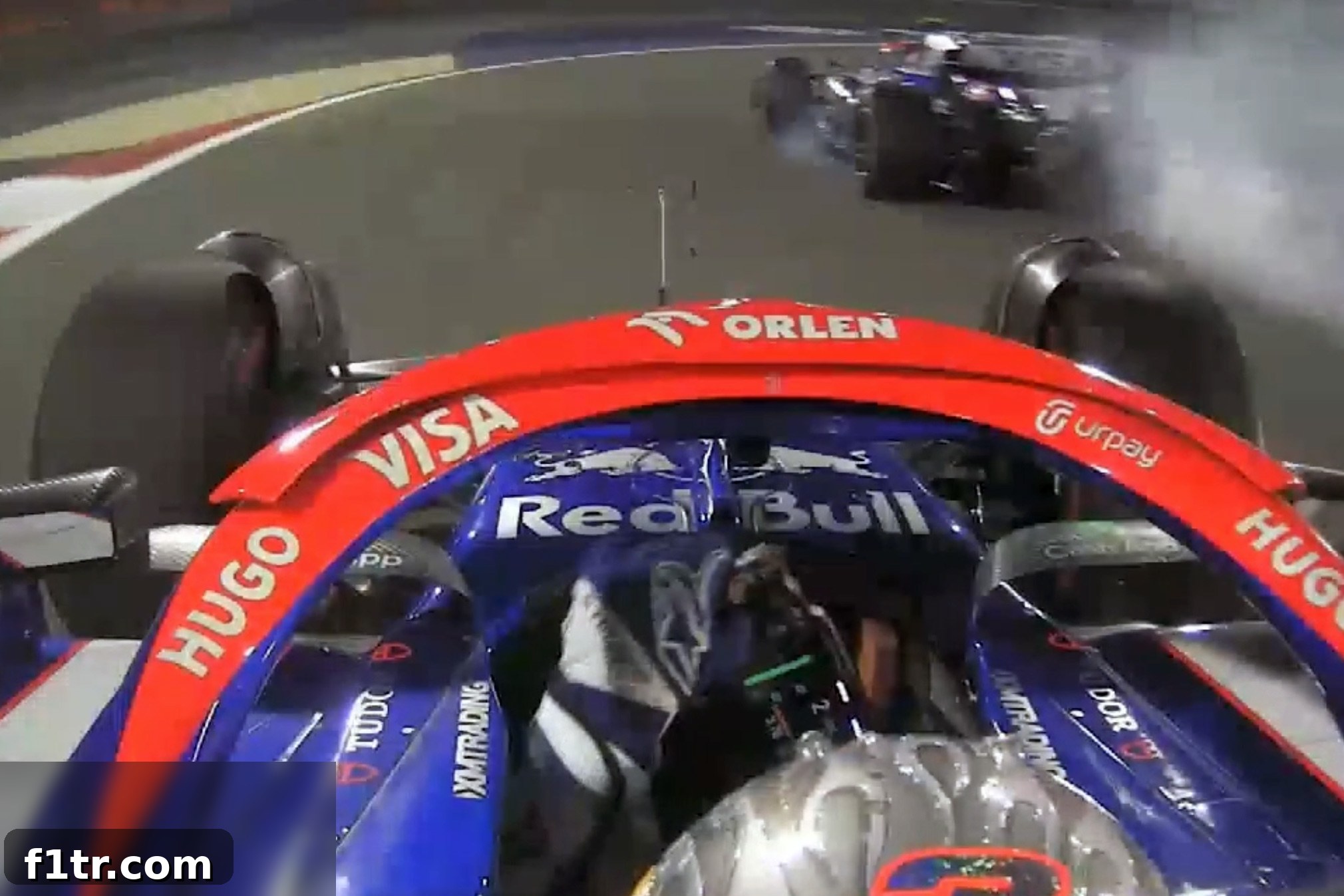
As the Bahrain Grand Prix concluded and the cars began their cool-down lap back to the pits, an unexpected maneuver unfolded. A visibly unhappy Yuki Tsunoda executed a decisive re-pass on his teammate Daniel Ricciardo. The Japanese driver was observed locking his tyres as he aggressively dived down the inside of Ricciardo at Turn 8, just moments after taking the chequered flag. This wasn’t merely a playful jest; Tsunoda then drove conspicuously close to his teammate’s car as they approached Turn 9, a clear demonstration of his simmering frustration. The abruptness and nature of the move elicited a sharp reaction from Ricciardo, who was heard exclaiming, “What the fuck?” over team radio, followed by a dismissive “Oh, save it.”
The Root of the Tension: A Mid-Race Team Order
The catalyst for Tsunoda’s post-race display of dissatisfaction stemmed from a team order issued earlier in the Grand Prix. During the race, both RB drivers were positioned behind Kevin Magnussen, with Tsunoda running in 13th place on hard compound tyres and Ricciardo trailing him slightly on softer tyres. Recognizing a potential pace advantage, Ricciardo promptly communicated with his team, urging them to consider a position swap. He articulated his concern, stating, “Whatever advantage I have, we lose it,” emphasizing the fleeting nature of their performance window. Shortly thereafter, the instruction came through: “We will do driver swap this lap.”
Tsunoda’s immediate reaction to being told to yield his track position was laced with palpable anger and sarcasm. After complying with the instruction and allowing Ricciardo to pass him, he relayed his feelings to the team with a sharp tone: “Yeah, thanks guys, I appreciate it.” This exchange underscored the deep-seated frustration felt by drivers when asked to compromise their individual race efforts for a perceived team benefit, especially when points finishes are not a certainty.
Ricciardo’s Perspective: Experience vs. Immaturity
Following the race, Daniel Ricciardo was questioned about Tsunoda’s unusual post-race maneuver. Ricciardo admitted his surprise, stating, “I don’t know. I came on the radio and was trying to stay cool.” He then offered a more candid assessment of the situation in an interview with the official F1 channel. “I’m being very sensible right now, but let’s call it immaturity,” he remarked, directly addressing Tsunoda’s actions. Ricciardo acknowledged his teammate’s frustration, attributing it to the team orders call, but also provided crucial context.
The seasoned Australian driver elaborated that the possibility of such a strategic decision had been discussed well in advance of the race. “But let’s be real, this is something we talked about before the race. It was very likely I was going to use a soft at the end of the race. So he knew that there was a chance that I would have a pace advantage at the end and if he gets the call, then it’s going to happen.” This revelation indicates that the team had laid out potential scenarios, including strategic swaps, as part of their pre-race planning. Ricciardo further justified the team’s decision, emphasizing the broader goal: “He’s not giving me points, we’re fighting for 13th, so at least give us the best chance to get at least one car in the points.” While neither driver was in a points-scoring position (top 10), optimizing their relative positions can still be critical for a team, impacting things like constructor standings, future grid positions in certain scenarios, or simply gathering better data from the car with more potential.
The Complex World of Formula 1 Team Strategy and Driver Dynamics
Team orders in Formula 1 are a perpetual source of debate and controversy. While often deemed necessary for maximizing a constructor’s points haul or executing specific race strategies, they frequently clash with the fiercely competitive spirit and individual ambitions of the drivers. Teams like RB (formerly AlphaTauri) operate within a delicate ecosystem, where young, aspiring talents like Tsunoda are eager to prove their worth, often alongside experienced veterans like Ricciardo, who himself is looking to reaffirm his place at the sport’s pinnacle.
The incident in Bahrain casts a spotlight on this intricate dynamic. For Tsunoda, a driver actively striving to cement his position in Formula 1 and potentially move up the grid, giving up a hard-earned track position, even for a few places outside the points, can feel like a direct blow to his personal performance and confidence. It raises questions about trust within the team and the perceived fairness of decisions. On the other hand, from a team management perspective, optimizing strategy, making the most of tyre advantages, and ensuring the best possible outcome for the collective RB effort is paramount. This often means making tough calls that prioritize the overall team performance over individual driver preferences.
Pre-Race Agreements and On-Track Realities
Ricciardo’s mention of pre-race discussions is a key element often overlooked by casual observers. F1 teams spend countless hours analyzing scenarios, predicting tyre degradation, fuel loads, and potential strategic windows. Drivers are typically briefed on these possibilities, including potential overtakes or swaps, to ensure a coordinated effort. However, the heat of the moment during a race, combined with the adrenaline and personal desire to outperform a teammate, can make pre-agreements difficult to accept when they translate into a real-time disadvantage. Tsunoda’s strong reaction, while perhaps deemed “immature” by Ricciardo, is a raw demonstration of a driver’s competitive instinct being overridden by a team directive.
The significance of finishing 13th versus 14th might seem trivial in the grand scheme of an F1 season, especially when points are awarded only to the top ten. However, for midfield teams, every position matters. It affects prize money distribution, team morale, and provides invaluable data for future development. A car with fresher, softer tyres, driven by an experienced campaigner like Ricciardo, might have a marginal chance of closing a gap or fending off rivals, even if a points finish remains out of reach. These marginal gains are what F1 is built upon.
Looking Ahead: The Impact on the RB F1 Team
The Bahrain incident serves as an early litmus test for the RB F1 team’s internal dynamics. Resolving such tensions swiftly and effectively is crucial for maintaining a harmonious and productive working environment. While Tsunoda later accepted he “got a bit heated” in the dispute, open communication and clear understanding of roles and expectations will be vital as the season progresses. The relationship between a seasoned driver and a promising young talent is often portrayed as mentor-mentee, but incidents like this reveal the underlying competitive current that always exists between teammates in Formula 1. How the team navigates these internal rivalries will undoubtedly play a significant role in their overall performance in the challenging 2024 season.
2024 Bahrain Grand Prix Related Articles
- Tsunoda accepts he got “a bit heated” in team orders dispute with Ricciardo
- “We’re fighting with one arm behind our back”: Hamilton and Russell’s race radio
- Red Bull say RB20 draws inspiration from rivals in less obvious areas
- All cars finish two consecutive F1 races for first time ever
- “I don’t know what the car’s going to do every time I brake”: Leclerc’s race radio
Browse all 2024 Bahrain Grand Prix articles