Daniel Ricciardo’s Belgian Grand Prix Woes: Rear Wing Setback and Overtaking Frustrations at Spa
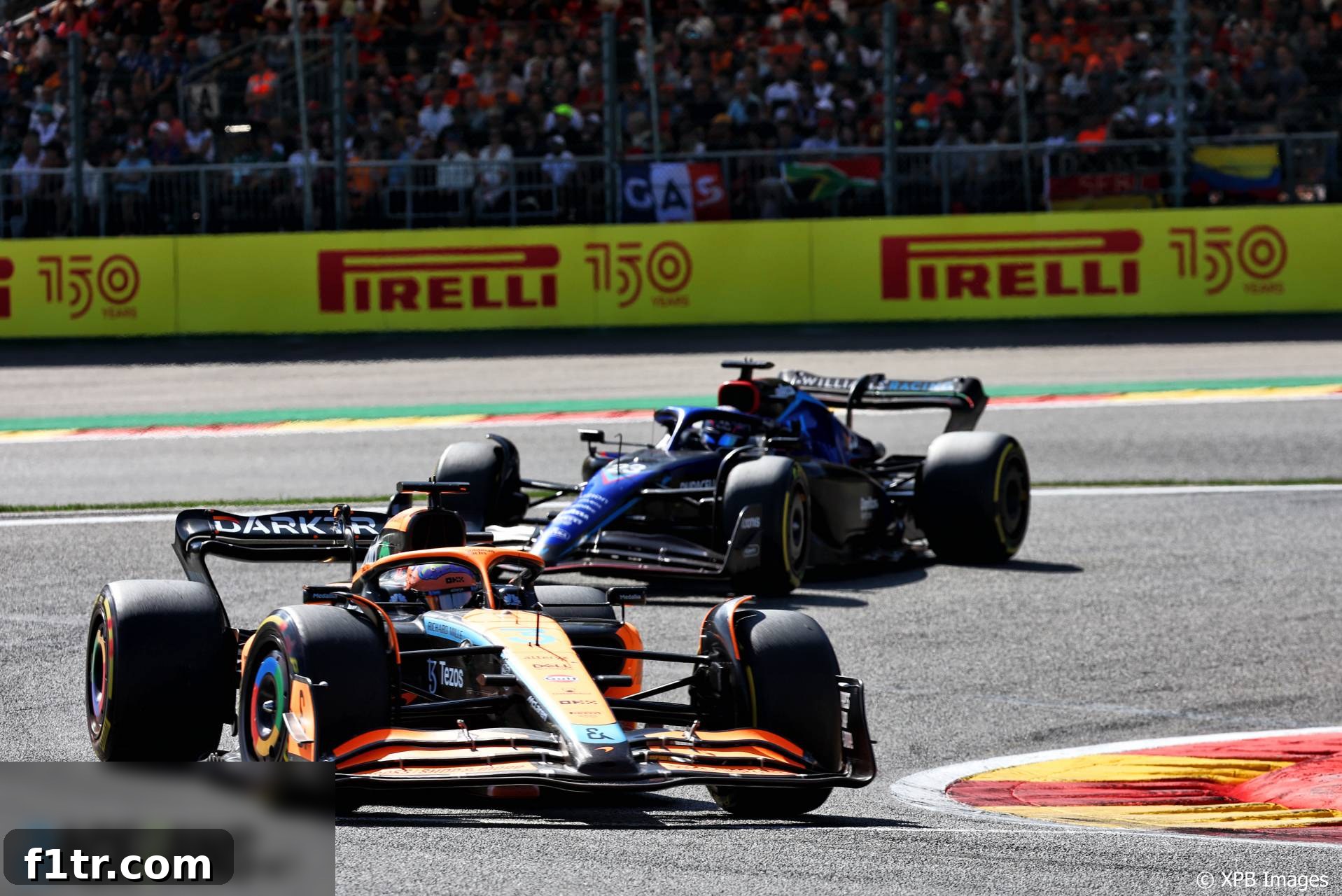
The 2022 Formula 1 Belgian Grand Prix at the iconic Spa-Francorchamps circuit proved to be a particularly challenging weekend for Daniel Ricciardo. A critical technical issue with his McLaren MCL36 forced him to compete without the team’s new, low downforce rear wing, significantly compromising his performance on a track where top speed is paramount. This unexpected setback, coupled with broader performance struggles, saw the Australian driver drop from a respectable seventh on the grid to a disappointing 15th at the finish line.
A Crucial Rear Wing Compromise at Spa
The heart of Ricciardo’s weekend struggles lay in an unforeseen problem with the latest specification of McLaren’s rear wing. McLaren team principal Andreas Seidl shed light on the situation, explaining why Ricciardo’s car appeared to be running a different aerodynamic setup compared to his teammate, Lando Norris, who was also battling his own challenges after grid penalties.
“On Daniel’s side, we had an issue with the latest rear wing and we only had two for this event here,” Seidl confirmed. “So we had to go back to an older rear wing, which meant slightly more downforce and therefore a bit less top speed, which wasn’t what we wanted to run, clearly.”
The Downforce vs. Top Speed Dilemma
Spa-Francorchamps is a circuit renowned for its high-speed sections, including the legendary Eau Rouge-Raidillon complex and the lengthy Kemmel Straight. For these sections, a low-downforce setup is typically preferred to maximize top-end speed and minimize drag, crucial for both lap time and overtaking opportunities. The inability to utilize the latest low-downforce wing meant Ricciardo’s car was carrying more drag, making it inherently slower on the straights. This aerodynamic compromise put him at a significant disadvantage even before the race began, forcing him into a setup that fundamentally contradicted the demands of the circuit.
This technical hiccup underscored the delicate balance F1 teams navigate in optimizing car performance. A modern Formula 1 car is a complex symphony of thousands of components, and a single fault can derail an entire weekend’s strategy and execution. For McLaren, having only two of the new-spec wings available meant there was no direct replacement, forcing them to revert to an older, less optimized design for the specific demands of the Belgian Grand Prix.
Ricciardo’s Frustrating Battle for Pace
From Ricciardo’s perspective, the race was a prolonged exercise in frustration. He echoed Seidl’s technical explanation, emphasizing the direct impact on his ability to compete.
“We simply just weren’t quick on the straights,” Ricciardo stated. “A fault meant I couldn’t use my lower-downforce rear wing. We had to put a different wing on because our race spec one had a bit of an issue. So we knew today was probably going to hurt us on the straights just with more drag.”
Beyond the rear wing, the McLaren MCL36 itself struggled to find consistent pace and grip throughout the race weekend. Seidl’s post-race analysis pointed to more systemic issues:
“Independent of that, it doesn’t matter which downforce level, unfortunately with these conditions today we simply didn’t have the pace. We were struggling with traction, for example, out of Turn 1 [La Source] especially. Therefore, we were never really in a position to move forward or to gain a position to overtake – even lost some positions getting overtaken.”
This admission highlighted that while the rear wing issue was a specific hindrance for Ricciardo, McLaren was battling broader performance deficiencies at Spa. Poor traction out of slow corners like La Source meant the car struggled to accelerate effectively, further compounding the lack of straight-line speed and making it incredibly difficult for Ricciardo to defend or attack positions.
The Overtaking Conundrum at Spa
Ricciardo also voiced a shared sentiment among many drivers about the unique challenges of overtaking in the 2022 season, particularly at a track like Spa. He didn’t believe his struggles were solely due to his car’s setup.
“I don’t think I was the only one struggling to pass on the straights,” he commented. “I think I had speed to use in the second sector. But then first and third, even with DRS I couldn’t pass. So [it was a] pretty long and frustrating race; it just felt like we were just waiting for a mistake.”
The 2022 technical regulations were designed to promote closer racing and make overtaking easier by reducing the disruptive “dirty air” effect for following cars. While this has generally been successful, it came with an unexpected side effect: a reduction in the “tow” effect, where a following car gains significant speed by punching a hole in the air for the car behind.
“I said on the radio, obviously I’m trying but unless they make a mistake in front, it’s literally impossible to pass,” Ricciardo added. “The good thing about this year is you can race closer, but the bad thing is the tow effect is smaller. So actually on a track like this I felt like it made overtaking more tricky.”
At a circuit like Spa, with its immense straights where the tow effect has historically been a potent tool for overtaking, the reduced benefit of slipstreaming, combined with Ricciardo’s high-drag setup, created a perfect storm of difficulty. Even with the Drag Reduction System (DRS) open, the advantage wasn’t sufficient to overcome the fundamental deficit, turning the race into a defensive struggle rather than an attacking one for Ricciardo.
McLaren’s Broader Performance Picture
“It was just not a good day for us,” Seidl concluded, encapsulating the team’s sentiment. The Belgian Grand Prix highlighted McLaren’s ongoing battle to consistently challenge at the sharp end of the grid in 2022. While Lando Norris showed flashes of pace, qualifying fourth before grid penalties, the race pace on Sunday proved challenging for both drivers.
The team’s aspiration for the Constructors’ Championship was to solidify its position as the “best of the rest” behind the top three teams. However, inconsistent performance and technical reliability issues, as seen with Ricciardo’s rear wing, posed significant hurdles. The Spa weekend served as a stark reminder of the intense competition in Formula 1 and the critical importance of having every component of the car performing optimally.
Implications and Looking Ahead
For Daniel Ricciardo, the Belgian Grand Prix added another layer to what was already a challenging season. His ongoing struggles to consistently match Lando Norris’s pace, combined with unfortunate technical incidents like the rear wing issue, further fueled speculation about his future in Formula 1. Each race weekend presented an opportunity to turn the tide, but Spa underscored the difficulties faced when both car setup and overall pace are compromised.
McLaren, as a team, would have undoubtedly used the data from Spa to scrutinize both their component reliability and their overall car characteristics. The issues with traction and the general lack of pace, even for Norris, indicated areas that required immediate attention. As the 2022 season progressed, the lessons learned from weekends like Spa would be crucial in their development efforts and strategic planning for the remaining races, as well as for the following season’s car design.
Ultimately, the 2022 Belgian Grand Prix for Daniel Ricciardo was a race where a technical fault led to a suboptimal setup, exacerbating the car’s inherent struggles and highlighting the changed dynamics of overtaking under the new regulations. It was a race that exemplified the fine margins of success and failure in the fiercely competitive world of Formula 1.
Related 2022 Belgian Grand Prix Content
- How many victory chances did Hamilton have in his first winless F1 season?
- Sainz doesn’t believe Red Bull’s huge Spa advantage is here to stay
- Alonso: Hamilton’s nationality explains “huge” media reaction to radio comment
- “Big question marks” remain over policing of Formula 1’s budget cap – Ferrari
- Williams: Points-scoring Belgian GP pace not just due to straight line speed
Browse all 2022 Belgian Grand Prix articles