Formula 2’s Major Shift: Embracing 18-Inch Wheels and the Future of Motorsport Technology
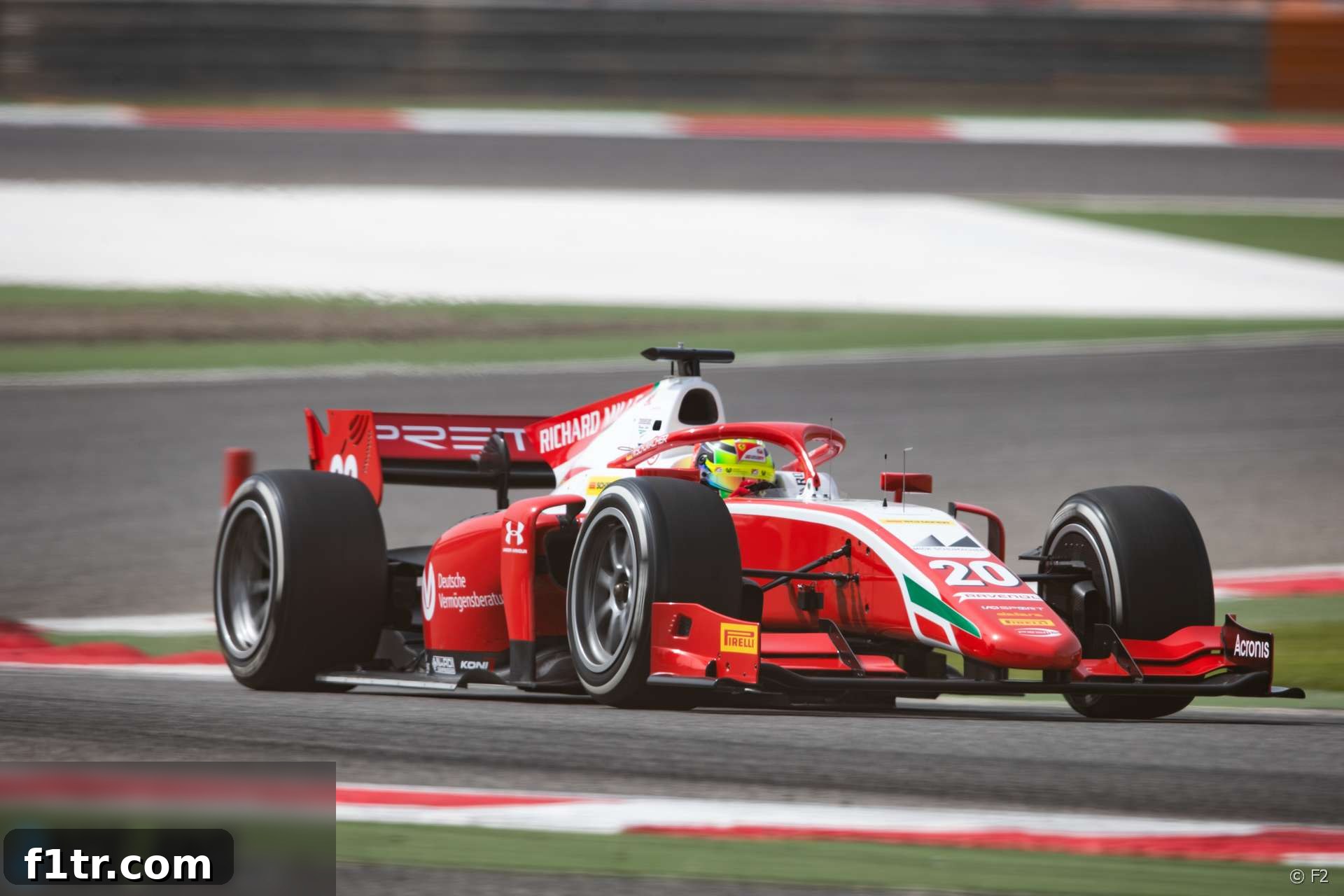
The world of motorsport is in a constant state of evolution, pushing the boundaries of engineering, performance, and driver skill. One of the most significant recent changes, setting the stage for Formula 1’s future, is Formula 2’s bold transition to 18-inch wheels. This pivotal move, which debuted in competition this weekend, introduces a fresh dynamic to the series, but not without its inherent challenges. Chief among these is a substantial 30kg increase in the car’s overall weight, a factor that profoundly impacts vehicle dynamics and strategy.
The adoption of larger diameter wheels in F2 serves as a crucial testing ground for Formula 1, which is set to follow suit. This development is not merely cosmetic; it represents a fundamental rethinking of tire construction, suspension setup, and vehicle packaging. Engineers at Pirelli, the sole tire supplier, along with the F2 technical teams, have worked tirelessly to adapt to these new specifications. The 18-inch rims necessitate tires with much lower sidewalls, bringing them closer to modern road car technology and aiming to improve tire responsiveness and reduce thermal degradation.
However, integrating these larger wheels has presented a complex engineering puzzle. The increase of approximately 30 kilograms in weight, stemming from the heavier wheels and associated components, has demanded a comprehensive redesign of various parts of the F2 car. This isn’t just about adding mass; it’s about managing unsprung weight – the weight not supported by the suspension – which has a disproportionate effect on handling, braking, and acceleration. Engineers have had to recalibrate suspension geometry, damper settings, and even aerodynamic profiles to compensate for this added mass and maintain the desired performance characteristics. The result, as many have noted, is effectively a “brand-new car” with distinctly different handling traits, requiring drivers to adapt their techniques significantly. This shift underscores a commitment to innovation, preparing both drivers and engineers for the next generation of Formula 1 racing while offering fans a glimpse into future technological advancements.
Social Media Insights: Voices from the Paddock and Beyond
The world of motorsport is vibrant on social media, offering candid perspectives and real-time reactions from drivers, engineers, and fans alike. Here’s a look at some notable discussions and updates:
F1 along with many sports is a meritocracy (leave driver debate plz…) but you can only ever identify, employ, develop the best talent from “the pool” in front of you. The point is simple: let’s take meaningful action to ensure that pool is as big as it can be. More can be done.
— Dan Milner (@EngineeringDan) June 29, 2020
Dan Milner’s insightful tweet raises a critical point about the concept of meritocracy within Formula 1 and other elite sports. While F1 prides itself on identifying and nurturing the best talent, Milner highlights that the “pool” from which this talent is drawn is often limited. This sparks an important discussion about diversity, accessibility, and the need for proactive measures to broaden the talent pipeline. To truly uphold meritocracy, efforts must extend beyond simply selecting the best from existing candidates; they must focus on expanding the initial pool of potential contenders. This means investing in grassroots motorsport, making it more affordable and inclusive, and actively seeking out talent from underrepresented backgrounds. By doing so, F1 can ensure it truly identifies the absolute best, regardless of socio-economic factors or geographical location, ultimately strengthening the sport’s competitive integrity and appeal for future generations.
It’s race week!*
*Again…#F1 #F2 #F3 pic.twitter.com/G2lk7YUWBp
— RaceFans (@racefansdotnet) June 29, 2020
The “It’s race week!* *Again…” tweet from RaceFans perfectly encapsulates the pent-up excitement and slight disbelief that motorsport seasons, after unprecedented delays, were finally getting back into full swing. For fans and participants across F1, F2, and F3, the return to racing was a much-anticipated event, signaling a return to some semblance of normalcy and the thrill of competition. This simple yet effective message conveyed the collective sentiment of joy and relief after months of uncertainty, reminding everyone of the enduring passion for racing despite the challenges faced globally.
I get to test an @IndyCar next week! A big thanks to my friends @CGRIndyCar & @GanassiChip for the opportunity. Now back to the gym for a crash course in IndyCar specific strength training. pic.twitter.com/Bc7JLB1O8T
— Jimmie Johnson (@JimmieJohnson) June 29, 2020
Legendary NASCAR driver Jimmie Johnson’s announcement of an upcoming IndyCar test provided a fascinating glimpse into the cross-pollination of talent within motorsport. His move from a highly successful stock car career to open-wheel racing represents a formidable challenge, both mentally and physically. Johnson’s immediate acknowledgment of the need for “IndyCar specific strength training” highlights the distinct physical demands of different racing disciplines. IndyCar racing, with its high g-forces and lack of power steering, requires immense upper body and neck strength, vastly different from the endurance required for longer NASCAR races. This test not only showcases Johnson’s versatility and ambition but also generates significant buzz among fans keen to see how a champion adapts to a completely new racing environment. It’s a testament to the universal drive of top-tier athletes to continually seek new challenges and push their limits.
Advert | Become a RaceFans supporter andgo ad-free
- Find more official F1 accounts to follow in the F1 Twitter Directory
Further Insights from the World of Motor Racing
Beyond the immediate headlines and social media buzz, various detailed reports and analyses continue to shape our understanding of the motorsport landscape:
Advert | Become a Supporter & go ad-free
What can we expect from the 18-inch tyres? (F2)
As detailed by the official F2 report, the introduction of 18-inch tires has triggered a profound transformation for the series. Accommodating the larger rims and lower profile tires required a complete re-evaluation of the car’s design. This led to a series of innovative solutions to prevent any drop in performance, despite the significant challenge posed by an approximate 30kg weight increase. The modifications have been so extensive that the car is effectively described as “brand-new” with “entirely different characteristics.” This redesign impacts everything from suspension kinematics and aerodynamics to brake cooling and overall vehicle balance. Drivers now face a new learning curve, adapting to a car that behaves differently under braking, cornering, and acceleration, which promises to make the racing even more compelling and challenging.
- New 18-inch tyres will make F1 cars up to two seconds slower – Allison
Echoing the F2 experience, James Allison, then Technical Director at Mercedes-AMG Petronas F1 Team, anticipated a similar, if not more pronounced, effect on Formula 1 cars. His projection that 18-inch tires could make F1 cars up to two seconds slower highlights the immense engineering challenge awaiting teams. This performance drop isn’t merely due to the weight increase but also the altered aerodynamic interaction with the new wheel and tire profiles, as well as changes in how the tires generate grip and handle thermal loads. F1 teams will grapple with optimizing their car designs to mitigate this speed reduction, pushing the boundaries of aerodynamic efficiency and mechanical grip. This transition signifies a new era of technical development, where every millisecond gained will be a testament to ingenuity.
Christian’s Column: The Fire Up (Red Bull)
Christian Horner’s column for Red Bull Racing provided a fascinating insight into the practicalities of motorsport’s return amidst a global pandemic. His account of “The Fire Up” detailed how teams were learning to operate under strict COVID-19 prevention measures, including working in personal protective equipment (PPE). This wasn’t just about driver acclimatization; it was a comprehensive effort to retrain entire teams on new operational protocols, from garage sanitation to social distancing. The ability to practice live pit stops, achieving sub-two-second times even under these restrictive conditions, underscored the professionalism and adaptability of F1 crews. Running through grid procedures was equally vital, ensuring seamless execution on race day, highlighting the meticulous planning required to restart the season safely and efficiently. Horner’s column revealed the human element behind the return to racing, emphasizing the dedication and resilience of the hundreds of individuals who make the sport possible.
Ma Qinghua to miss six-race Berlin final (Formula E)
The news of Ma Qinghua missing the six-race Berlin finale for Formula E due to COVID-19 risks underscored the significant logistical and health challenges facing international motorsport. His statement, “It is quite difficult to travel and race abroad at present, as this would expose us to more Covid-19 risks,” reflected a broader concern for many drivers and team personnel. Travel restrictions, quarantine requirements, and the paramount need to protect health became critical considerations in shaping championship calendars and driver participation. This decision highlighted how personal and team safety became intertwined with competitive aspirations, forcing difficult choices that impacted championship standings and team compositions. It served as a stark reminder of the global pandemic’s pervasive influence on every aspect of professional sports, requiring extraordinary measures and sacrifices.
2020 Austrian GP and Steiermark GP: Preview (Alfa Romeo)
Alfa Romeo’s preview for the Austrian and Steiermark GPs captured the mixed emotions surrounding the restart of the Formula 1 season. The sentiment that “It will feel a bit weird to get back to racing in these conditions” resonated throughout the paddock. The absence of fans, the strictly controlled environment, and the need for rigorous health protocols undeniably altered the traditional race weekend atmosphere. However, the preview also emphasized the intrinsic motivation of drivers and teams: “once we are in the car we will not focus on the restrictions but just on doing the best job we can.” This speaks to the unwavering focus and competitive spirit inherent in motorsport professionals. Despite the unusual circumstances, the desire to compete, push limits, and perform at the highest level remains paramount, proving that the essence of racing endures even in the most challenging times.
We always endeavour to credit original sources. If you have a tip for a link to feature in the next RaceFans round-up please send it in via the contact form.
Advert | Become a RaceFans supporter andgo ad-free
Comment of the Day: The Unpredictable Thrill of a Revised F1 Calendar
Amidst all the technical and operational challenges, the revised F1 calendar offered a glimmer of exciting unpredictability, a sentiment beautifully captured in today’s standout comment:
If Canada gets rescheduled in October and actually does happen, I’m very very curious to see how the teams will cope to the low temperatures combined with rain and perhaps snow.
If we have a almost-snowy grand prix, along with the sudden appearance of Mugello, Algarve and possibly Hockenheim and Imola at the expense of Paul Ricard and Sochi that will bring more unpredictability as the teams have zero data, plus the crazy 85-plus lap ‘oval’ race in Bahrain as the second-to-last round then this season… and the smaller old-school championship that means points are more valuable than before and if something bad happens on a race for a driver it would take a significant toll on the standings, then we might actually have a much better, crazy and unpredictable championship than we originally planed and hoped.
@Black
The compelling insight from reader @Black perfectly articulates the unique charm and potential chaos introduced by an unprecedented F1 season. The prospect of an October Canadian Grand Prix, battling low temperatures, rain, and even the possibility of snow, presents a thrilling scenario that would test drivers and teams to their absolute limits. Such extreme weather conditions would instantly elevate the unpredictability, forcing teams to make difficult tire choices and strategic calls with very little prior data.
Furthermore, the inclusion of historic and challenging circuits like Mugello, Algarve (Portimão), Hockenheim, and Imola – tracks often revered for their demanding layouts and rich history – would inject a fresh dose of excitement. These venues, replacing more modern and perhaps less-loved tracks like Paul Ricard and Sochi, offer different characteristics and, crucially, a lack of recent F1 data for the current generation of cars. This “zero data” challenge levels the playing field, forcing engineers and strategists to adapt quickly, relying more on simulation and raw intuition rather than years of accumulated knowledge. This dynamic shifts the balance, potentially favoring teams and drivers who can think on their feet and exploit unfamiliar conditions.
The mention of a “crazy 85-plus lap ‘oval’ race in Bahrain” alludes to potential alternative circuit layouts, such as the outer track configuration, which could drastically change the nature of racing, emphasizing slipstreaming and tire management over traditional cornering prowess. Such an event, late in the season, could dramatically swing the championship battle.
Ultimately, @Black’s comment highlights the allure of a “smaller old-school championship.” With fewer races and potentially more high-variance events, every point becomes infinitely more valuable. A single mistake, a mechanical failure, or a DNF could have a disproportionate impact on the standings, making consistency and flawless execution paramount. This creates a championship narrative far more intense and dramatic than a longer, more predictable season. The unexpected twists and turns, born out of necessity, could indeed deliver a “much better, crazy and unpredictable championship than we originally planned and hoped,” rekindling the raw, unadulterated excitement that fans crave.
Happy Birthday!
We extend our warmest birthday wishes to Rhys, Mike-E, and Optmist! May your day be filled with joy and celebration.
If you’d like a birthday shout-out on RaceFans, simply let us know when yours is via our contact form or by adding your date to our dedicated list here.
On This Day in F1 History
- Happy 45th birthday to Ralf Schumacher! Today, we celebrate the 45th birthday of Ralf Schumacher, a formidable competitor who achieved six Grand Prix victories during his Formula 1 career. His memorable drives and sibling rivalry with Michael Schumacher remain etched in the annals of F1 history.