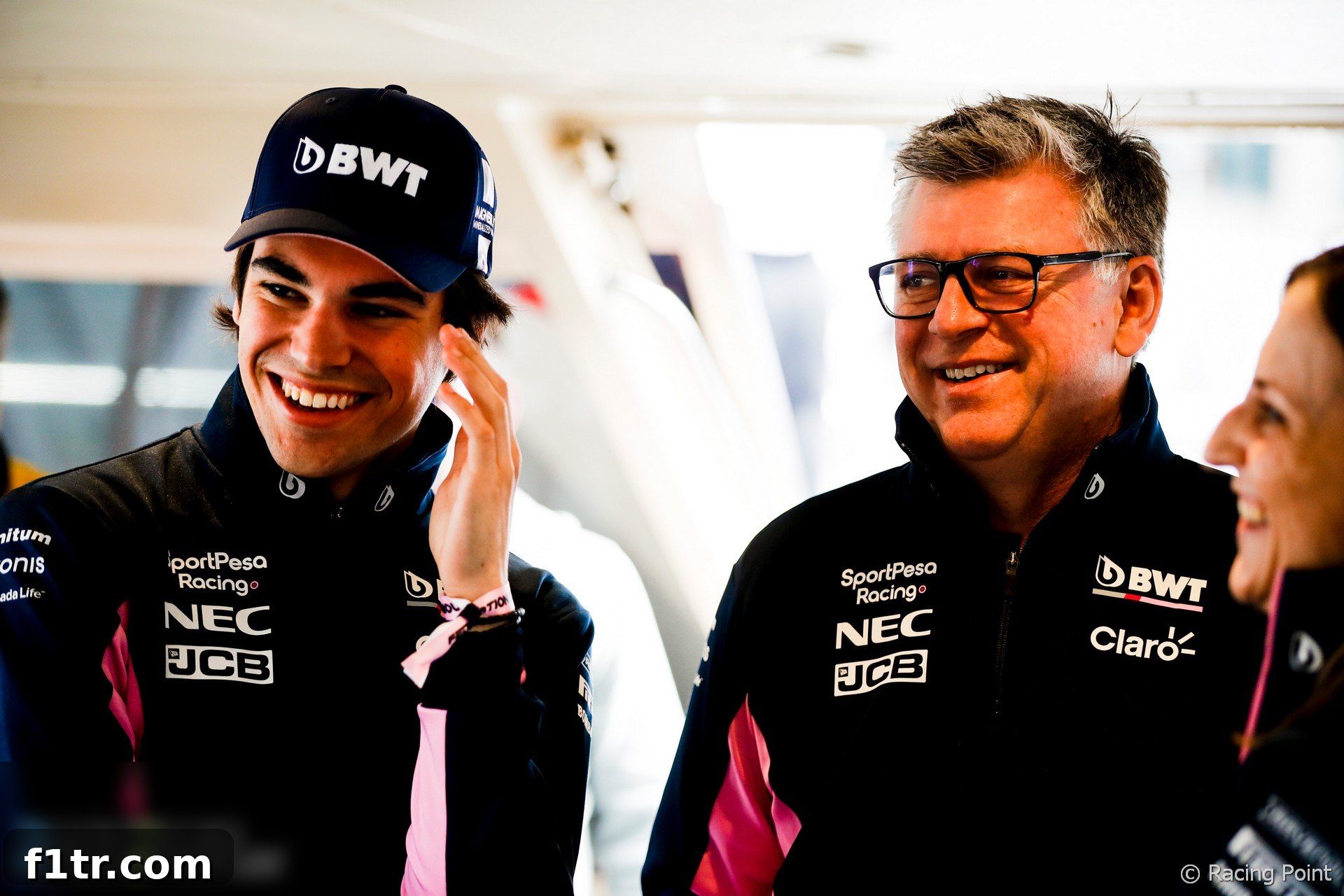
In the high-octane world of Formula 1, the perennial debate surrounding regulation stability versus continuous change often takes center stage. This discussion gained fresh momentum when Racing Point team principal Otmar Szafnauer echoed Mercedes boss Toto Wolff’s sentiment that maintaining consistent regulations could ultimately foster closer competition among teams. This philosophy, while seemingly counter-intuitive to those who advocate for rule overhauls to shake up the pecking order, finds strong backing in historical precedent and the inherent dynamics of technological development within motorsport.
The core argument is simple yet profound: when rules remain largely unchanged, teams initially possessing an advantage see their lead gradually erode as competitors catch up through relentless research, development, and optimization. This convergence leads to a more level playing field, where margins between the front-runners and the rest of the grid shrink, intensifying the spectacle for fans and demanding even greater precision from drivers and engineers alike.
The Case for Stable Regulations: An Asymptote of Perfection
There is considerable merit to the argument for stable regulations, and the evolution of the Formula 1 powertrain offers a compelling illustration. In the initial phases of the hybrid era, Mercedes held a significant, almost insurmountable, advantage. However, by keeping the fundamental rules governing the power units consistent over several seasons, we witnessed a remarkable phenomenon. Manufacturers like Honda, who entered the fray relatively late compared to the established players, faced a colossal time deficit in development. Yet, through sustained effort and innovation within a stable regulatory framework, they have systematically closed the gap.
This trajectory supports the notion that if regulations remain stable, every team will inherently tend towards an ‘asymptote of perfection.’ The curve of improvement is steep at the beginning, where large gains are relatively easier to find. But as teams approach the theoretical maximum performance allowed by the rules, these gains become incrementally smaller, and the performance differences naturally even out. This process ensures that everyone, over time, converges. While the smartest, wealthiest, or fastest teams will invariably find ways to win, the crucial difference lies in the significantly smaller margins of victory and defeat. This philosophy, prioritizing convergence through consistency, is one I wholeheartedly endorse.
Quotes: Dieter Rencken
Advert | Become a RaceFans supporter andgo ad-free
The concept of an “asymptote of perfection” is particularly insightful. In engineering and scientific contexts, an asymptote represents a value that a function approaches but never quite reaches. In Formula 1, it symbolizes the theoretical maximum performance achievable under a given set of regulations. When rules are in constant flux, teams are perpetually resetting their development curve, focusing on understanding the new parameters rather than refining existing designs. This often allows better-resourced teams to capitalize on their larger R&D departments to interpret new rules more quickly and effectively, thus widening performance gaps. Conversely, stable rules encourage a deep dive into every minute detail, pushing all teams towards the absolute limits of performance and efficiency, inevitably leading to tighter competition.
Formula 1’s Regulatory Balancing Act: Innovation vs. Competition
The debate around regulation stability isn’t just about closing gaps; it’s also about the very identity of Formula 1. On one hand, F1 prides itself as the pinnacle of motorsport engineering, a platform for cutting-edge innovation. Radical rule changes, such as the introduction of hybrid power units or significant aerodynamic overhauls, are often justified as necessary to keep the sport at the forefront of automotive technology and relevant to road car development. These changes can also be engineered to prevent a single team from dominating for too long, in theory at least, by creating new challenges that could shuffle the competitive order.
However, the downside of frequent rule changes is often increased costs and the potential for a new era of dominance if one team nails the new regulations better than anyone else. This creates a difficult balancing act for the sport’s governing bodies: how to foster innovation without stifling competition, and how to maintain competitive parity without resorting to overly prescriptive rules that limit engineering creativity. Szafnauer’s and Wolff’s arguments lean towards the belief that natural convergence, fueled by stable rules, is a more sustainable path to exciting racing than artificial resets.
Social Media: The New Frontier of Motorsport Engagement
In today’s digital age, social media platforms have become indispensable tools for motorsport organizations, teams, and drivers to connect with fans, disseminate information, and build brand loyalty. Beyond traditional media, channels like Instagram and Twitter offer immediate access to behind-the-scenes glimpses, real-time updates, and interactive content, fostering a global community around the sport.
Below are some notable posts from these platforms, highlighting diverse aspects of the racing world:
https://www.instagram.com/p/BysxzWznkQX/
https://www.instagram.com/p/ByswXKZFPCX/
https://www.instagram.com/p/ByrsRd5ItSX/
📃 Here is what you NEED TO KNOW about 2020 regulations and HYPERCARS :
✅ Hypercars : Endurance racing’s top category
✅ Top-tier cars
✅ The 2020 Hypercar
✅ The Hyper sport category#LeMans24 @fiawec pic.twitter.com/9aV5mtUZw3— 24 Hours of Le Mans (@24hoursoflemans) June 14, 2019
The tweet from the 24 Hours of Le Mans provides a glimpse into the future of endurance racing with the introduction of the Hypercar category for the 2020 season. This new class aims to rejuvenate the top tier of the FIA World Endurance Championship (WEC) by attracting a broader range of manufacturers with cars more closely related to high-performance road vehicles. The Hypercar regulations are designed to be more cost-effective than the preceding LMP1 rules, encouraging greater participation and ensuring the long-term sustainability and excitement of iconic events like Le Mans. The move represents a significant strategic shift, seeking to balance advanced technology with a more accessible and relatable platform for manufacturers and fans alike.
- Find more official F1 accounts to follow in the F1 Twitter Directory
Insights from Across the Motorsport World
Beyond the immediate headlines, various aspects of motorsport continue to evolve, from the burgeoning influence of social media to intense intra-team rivalries and the strategic restructuring of endurance racing categories. Here’s a curated selection of interesting reads from around the racing universe:
Advert | Become a Supporter & go ad-free
Strong Social Media Growth for Formula E as Hamilton Continues F1 Onslaught (Motorsport Broadcasting)
This article underscores the undeniable power of social media in shaping modern motorsport narratives and fan engagement. Lewis Hamilton, as the most followed driver in Formula 1, exemplifies the individual brand strength that transcends the sport itself. His colossal following, exceeding 21 million across major platforms, not only highlights his global appeal but also demonstrates how a single personality can command a digital audience equivalent to, or even greater than, the combined reach of numerous other top-tier drivers. This phenomenon is crucial for F1 in expanding its demographic and converting casual viewers into dedicated fans. Simultaneously, the robust social media growth of Formula E signals its successful strategy in carving out a niche in the electric motorsport landscape, attracting a younger, tech-savvy audience and proving that new racing series can effectively leverage digital platforms to build significant traction.
MPH: F1 Qualifying Scores — The Drivers on Top in Team-Mate Battles (Motorsport Magazine)
Qualifying is a critical arena in Formula 1, often setting the tone for the entire race weekend. This piece delves into the intense intra-team battles, specifically highlighting the dynamic between Charles Leclerc and Sebastian Vettel at Ferrari. Leclerc’s rookie season at Sauber showcased immense raw talent and speed, yet his transition to Ferrari brought increased scrutiny and pressure. The analysis points to instances where Leclerc’s own errors or team misjudgments impacted his qualifying record, suggesting a learning curve still in progress. Despite his undeniable pace, particularly at challenging circuits like Baku and Monaco, a certain inconsistency, perhaps stemming from a less developed “data bank” of experience compared to the seasoned Vettel, was evident. These observations underline the multifaceted challenges young drivers face in adapting to top teams, where not only speed but also strategic acumen and flawless execution under immense pressure are paramount for success.
Inside ACO’s Hypercar Development Timeline (Sportscar365)
Further elaborating on the WEC’s strategic pivot, this article offers a detailed look into the ACO’s vision and development timeline for the Hypercar category. The shift towards a single, low-power hybrid system for the top class, slated for 2020, is a deliberate move aimed at reining in escalating costs that had previously deterred manufacturers from entering or staying in LMP1. By simplifying the technological requirements and focusing on concepts that are more relatable to road-going hypercars, the ACO sought to create a more attractive proposition for constructors. This initiative represents a concerted effort to ensure the long-term viability and competitive appeal of premier endurance racing, making it more accessible and financially sustainable for teams while maintaining a high level of technological relevance and excitement for fans.
We always endeavour to credit original sources. If you have a tip for a link to feature in the next RaceFans round-up please send it in via the contact form.
Advert | Become a RaceFans supporter andgo ad-free
The Enduring Challenge of Rule Interpretation: F1’s Cost Cap Debate
The introduction of a cost cap in Formula 1, intended to level the financial playing field, has sparked considerable debate, particularly regarding its enforceability and the potential for teams to exploit loopholes. As commentator Socksolid eloquently points out in their analysis of F1 cost cap challenges, the very essence of Formula 1 has always been about ingenious interpretation of the rulebook.
F1 is fundamentally a sport built upon the inventive interpretation of its regulations to gain a competitive edge. This foundational principle is precisely how Formula 1 has consistently spawned groundbreaking innovations and controversial designs: from the revolutionary ground effect cars and the sealing skirts that circumvented aerodynamic limitations, to vehicles that cunningly met ride height rules in the pit lane only to alter their stance on track. We’ve witnessed the advent of double diffusers, the F-duct, mass dampers, and countless other ‘grey area’ solutions.
It is not, and has never been, the teams’ primary responsibility to adhere to the most literal or strictest definitions of the rules. Instead, the onus lies with the rule makers to craft regulations that are robust and watertight, capable of functioning effectively even when subjected to the most inventive and lateral interpretations by engineering minds. Budget cap rules are no different; they present another complex game within the broader framework of regulations. We’ve seen examples throughout F1 history: Renault hiring ex-FIA personnel, Mercedes’ innovative oil burning, the contentious “new team/old team” entry fee debate involving Force India/Racing Point, or Ferrari’s historical veto powers. And when I state this, I do not mean it cynically. Rules, by their nature, define what is permissible and what is not. In Formula 1, it is every participant’s inherent objective to extract the maximum possible advantage from within those defined boundaries.
This perspective highlights the intrinsic challenge of legislating in a sport driven by constant innovation and competitive pressure. A cost cap, while conceptually sound for promoting financial sustainability and competitive balance, introduces a new dimension of rule interpretation. Teams will inevitably seek creative accounting methods, reallocate resources, or structure their operations in ways that maximize performance within the stipulated budget. The history of F1 demonstrates that the human element of ingenuity, combined with relentless competition, will always push the boundaries of any regulatory framework. Therefore, the success of a cost cap hinges not just on its initial design but on the FIA’s ability to police it effectively and adapt to novel interpretations, ensuring its spirit is upheld without stifling the creativity that makes Formula 1 so unique.
Happy Birthday to Our RaceFans Community Members!
A very special happy birthday goes out to David A, Mateuss, Vikas, David A, and Eoin Harrington! We hope you all have a fantastic day celebrating.
If you’d like to receive a birthday shout-out in our future round-ups, please don’t hesitate to let us know your birth date via our contact form, or by adding your details to our dedicated list here. We love celebrating with our community!
On This Day in F1 History
- On this day in 1993, the Formula 1 world mourned the loss of the charismatic 1976 world champion, James Hunt. Hunt, known for his flamboyant personality and fierce driving style, left an indelible mark on the sport during his career, particularly remembered for his epic rivalry with Niki Lauda.