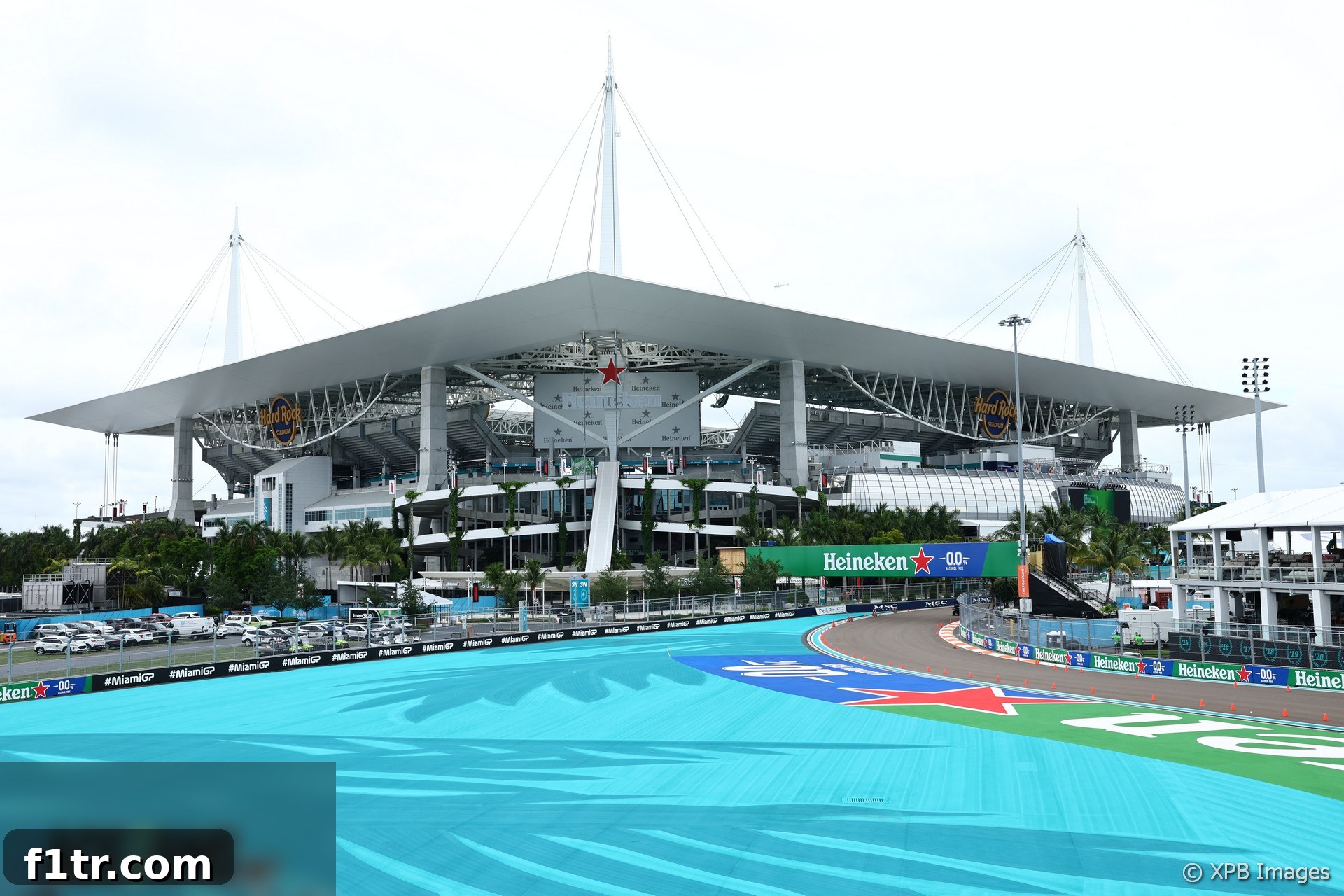
Miami Grand Prix: Navigating Initial Challenges and Paving the Way for a Future F1 Spectacle
The highly anticipated Miami International Autodrome, a vibrant new addition to the Formula 1 calendar, encountered minor but quickly resolved challenges ahead of its inaugural Grand Prix weekend. Just hours before the first official practice session, the bespoke circuit situated within the iconic Hard Rock Stadium complex required swift attention to its track surface. This proactive measure underscored the commitment of the event organizers to deliver a world-class racing experience right from the outset.
Despite these initial adjustments, Miami Grand Prix CEO Richard Cregan exuded confidence that these minor repairs would in no way impede the smooth running or overall success of the high-profile event. Addressing concerns, Cregan assured stakeholders and fans that all necessary checks and fixes were performed efficiently and thoroughly.
“We’re okay with that,” Cregan stated in response to inquiries regarding the track conditions. “We had a look at that after the sessions yesterday and we’re fine. It was a very localized, very small repair. No impact on the race.” This swift action highlighted the preparedness of the event management team to tackle unforeseen issues with minimal disruption, a crucial factor when hosting an event of Formula 1’s global magnitude.
Addressing Initial Track Concerns at the Miami International Autodrome
The specific areas requiring attention were identified at turns seven and 17 of the sprawling 5.4-kilometre circuit. Overnight, dedicated teams worked diligently to carry out these localized repairs. The quick turnaround meant that by the time teams and drivers hit the track for Free Practice 1, the surface was deemed suitable for competitive racing. Such rapid response is a testament to the operational efficiency required in modern Formula 1 circuits, especially for a brand-new venue learning its unique characteristics.
“We did some localised repairs and it’s all okay,” Cregan further elaborated, emphasizing the meticulous nature of the work. He added a crucial reassurance: “The clerk of the course, race director, everybody is happy with it so we’re in a good place.” This collective approval from key officials, responsible for the safety and integrity of the race, was paramount. It signaled to teams, drivers, and the governing body, the FIA, that the track met all necessary safety and performance standards. The incident, though minor, served as an early test of the circuit’s maintenance capabilities and the organizational team’s responsiveness, passing with flying colors.
Track surface issues, particularly on new or temporary circuits, are not uncommon in Formula 1. Factors such as varying asphalt compositions, weather conditions, and the immense stresses exerted by F1 cars can sometimes lead to minor degradation. The ability to identify, address, and rectify these issues swiftly is critical for maintaining driver confidence and ensuring fair and safe competition. The Miami International Autodrome demonstrated this capability effectively, setting a positive precedent for its future as a host venue.
The Unique Design of the Miami International Autodrome: A Driver’s Challenge
The 5.4-kilometre (3.36-mile) circuit, masterfully laid out within the dynamic grounds of the Hard Rock Stadium, home of the Miami Dolphins, was designed to challenge drivers while offering an exhilarating spectator experience. Richard Cregan expressed immense satisfaction with the circuit’s configuration, a design that blends high-speed straights with intricate, technical sections. Among these, the unusually tight and narrow turns 14, 15, and 16 garnered particular attention even before the race weekend commenced.
This demanding sequence, a chicane-like section, was anticipated to be a significant talking point among drivers and fans alike. “That combination is going to be amazing,” Cregan predicted, highlighting the strategic thinking behind its inclusion. He confirmed there were no immediate plans to alter this distinctive part of the track. “So I’m pretty sure we’re not going to touch that one,” he confidently stated, underscoring the organizers’ belief in its integrity and entertainment value.
The design philosophy of the Miami International Autodrome aimed to create a street circuit feel, despite being a purpose-built temporary track within a permanent sports complex. This hybrid approach allowed for flexibility in design while leveraging existing infrastructure. The circuit’s 19 corners, three DRS zones, and a projected top speed of over 320 km/h (200 mph) promised ample opportunities for overtaking and strategic racing. Turns 14-16, with their reduced width and tight radii, demanded precision and discipline from drivers, pushing their braking and car control skills to the limit. This unique blend of high-speed sections and challenging technical corners was engineered to produce captivating on-track action and provide varied setup challenges for teams, ensuring a dynamic race weekend.
Strategic Growth: Managing Attendance and Catering to Soaring Demand
The inaugural Miami Grand Prix welcomed a daily attendance limited to 82,500 spectators. This deliberate cap was a strategic decision by the organizers, aiming to ensure an impeccable first-time experience. “We kept the attendance at a manageable level for this year because we want to get it right,” Cregan explained, emphasizing the importance of quality over immediate quantity. This cautious approach allowed the event to fine-tune its logistical operations, crowd management, and overall fan experience before considering larger capacities.
The decision proved wise, as Formula 1 continues to experience an unprecedented surge in popularity, particularly in the United States. Demand for tickets to the Miami Grand Prix was extraordinarily high from the moment they went on sale, signaling a robust market for top-tier motorsport events in the region. This enthusiastic reception provides a strong foundation for future growth and expansion. Cregan hinted at the potential for increasing attendance in the coming years.
“We have the possibility to increase grandstands and then we’ll see where and if we do that. We may decide to keep the event as it is. It’s based on demand. We’ve had huge demand from day one.” This statement highlights a flexible strategy, allowing organizers to adapt to market dynamics while maintaining the premium quality of the event. Expanding grandstands and general admission areas could significantly boost capacity, catering to the ever-growing fanbase eager to witness Formula 1 live. The success of the initial limited attendance model provides valuable data and insights for sustainable expansion, ensuring that future growth enhances rather than detracts from the event’s unique appeal and operational excellence.
Beyond the Race: Crafting an Unforgettable Fan Experience in Miami
Beyond the thrill of the on-track action, the Miami Grand Prix organizers are deeply committed to enhancing the overall fan experience. Richard Cregan underscored the importance of offering new and engaging attractions to returning visitors, ensuring that the event remains fresh and exciting year after year. “That’s always something for fans that they want,” he noted. “They want to come and see great racing but they want to be entertained and we need to look at different ways of doing that.” This holistic approach acknowledges that modern F1 spectators seek a comprehensive entertainment package, extending far beyond the race itself.
The Hard Rock Stadium complex provides an “amazing facility,” offering vast potential for diverse activations and experiences. Cregan expressed enthusiasm for leveraging this venue even more effectively in subsequent years. “I think we can utilise that facility even more for next year. We’re already looking at how we can utilise the actual field itself in a better way,” he revealed. This could involve transforming various areas into innovative fan zones, interactive displays, hospitality suites, or even entertainment stages, creating a festival-like atmosphere throughout the race weekend.
The stadium’s multi-purpose nature, including its role in hosting a major 10-day open tennis event, offers unique opportunities for synergy and year-round utilization. Cregan specifically highlighted plans to maximize the use of the stadium’s core infrastructure once the tennis tournament concludes. “We do the 10-day open tennis so we want to make sure that when the tennis is over, which is an amazing event, we utilise the stadium. So one area we will look at for next year is that stadium and the field, how we can utilise it better.” This forward-thinking strategy ensures that the Miami Grand Prix continually evolves, offering fresh perspectives and immersive experiences to both local and international attendees, solidifying its place as a premier destination on the global sporting calendar.
Looking Ahead: The Enduring Legacy and Evolution of the Miami Grand Prix
The Miami Grand Prix has swiftly established itself as a significant highlight on the Formula 1 calendar, embodying the sport’s burgeoning growth and appeal in the United States. From addressing initial track surface challenges with remarkable efficiency to strategically managing fan attendance, the event organizers have demonstrated a clear vision for its success and longevity. The unique circuit design, particularly its challenging tight corners, promises to be a fixture that continues to test drivers and captivate audiences, fostering memorable racing moments for years to come.
As the event matures, the focus remains on enriching the fan experience beyond the traditional boundaries of motorsport. By continually seeking innovative ways to utilize the impressive facilities of the Hard Rock Stadium and integrate diverse entertainment options, the Miami Grand Prix is poised to become more than just a race; it aims to be a comprehensive lifestyle event. This commitment to evolution, driven by demand and a desire to deliver unparalleled spectacle, ensures that Miami will not only attract new fans but also retain loyal enthusiasts through a constantly refreshing and engaging program. The future of the Miami Grand Prix looks bright, promising an enduring legacy as a cornerstone event for Formula 1 in North America.
2022 Miami Grand Prix
- Why TecPro barriers weren’t used at Miami chicane where Sainz and Ocon crashed
- Miami’s track surface is ‘a safety issue and does not offer good racing’ – Russell
- Miami Grand Prix draws F1’s largest live US television audience
- Alpine complain they had no say over penalty which cost Alonso points
- Red Bull wary of Ferrari’s high-speed cornering strength in Barcelona
Browse all 2022 Miami Grand Prix articles