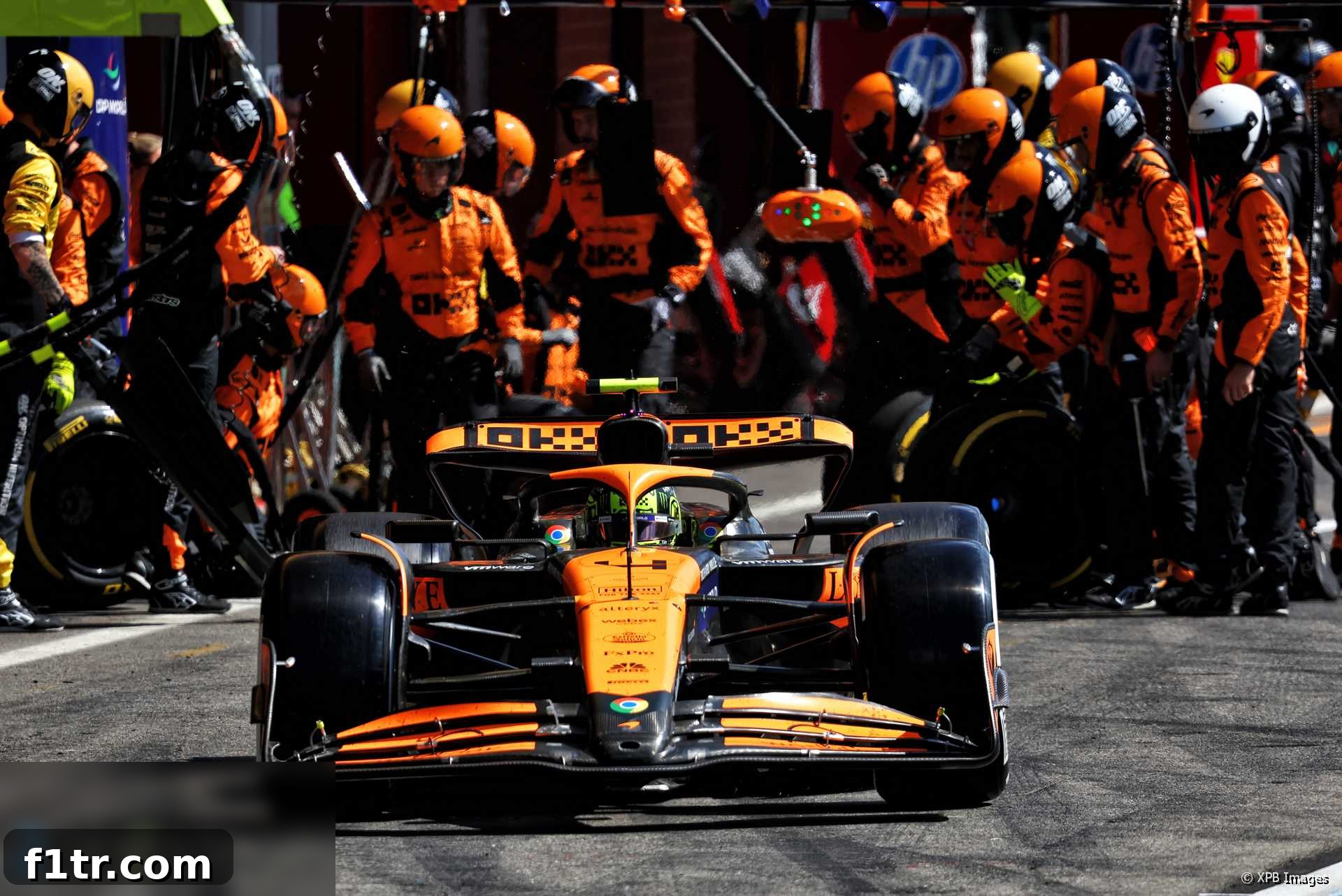
Lando Norris, the charismatic British driver for McLaren, has vocally defended his team against mounting criticism regarding their recent performances. While acknowledging that a series of errors and strategic missteps potentially hindered their progress in the initial phase of the Formula 1 championship, Norris staunchly believes the team’s trajectory since the previous season has been nothing short of remarkable. His remarks come amidst a period of intense scrutiny for McLaren, a team that has re-established itself as a consistent front-runner and a potent threat to the dominant Red Bull Racing outfit.
The 2024 season has marked a significant turning point for the Woking-based squad, recording two impressive victories within the first fourteen rounds – a feat not achieved by McLaren since 2012. This resurgence has placed them firmly in contention, often seen as the most consistent challenger to Max Verstappen and Red Bull. However, the path to success has not been without its bumps. Recent races, particularly at iconic venues like Silverstone and Spa-Francorchamps, saw crucial points potentially slip away due to a combination of tactical errors from the pit wall and personal mistakes made by Norris himself. These incidents fueled a narrative among some observers that McLaren, despite its newfound pace, might be struggling to consistently execute at the very sharp end of the grid.
McLaren’s Remarkable Resurgence: From Underdog to Contender
McLaren’s journey back to the top echelons of Formula 1 has been a story of resilience and strategic redevelopment. After years of struggling through uncompetitive seasons, the team has systematically rebuilt its infrastructure, refined its aerodynamic philosophy, and invested heavily in talent both on and off the track. The current season’s two victories are not just isolated incidents; they are symptomatic of a deeper, more fundamental improvement in car design and operational efficiency. Norris eloquently articulated this transformation, dismissing notions that McLaren has “forgotten how to compete.” He stated, “The team are doing an amazing job. From where we were last year to where we are now is one point, but of course where we are now and performing against the rest of the teams is also another point.” This perspective highlights the monumental leap McLaren has made, transitioning from a midfield contender to a legitimate challenger capable of vying for podiums and race wins consistently.
The pace shown by McLaren’s MCL38 in various track conditions has been a testament to the team’s relentless development efforts. Drivers Lando Norris and Oscar Piastri have both demonstrated the car’s potential, showcasing its strength in high-speed corners and its ability to manage tire degradation effectively. This intrinsic performance gain has been the bedrock of their success, allowing them to capitalize on opportunities and challenge the established order. The internal belief within the team, as conveyed by Norris, remains incredibly strong, driven by the tangible progress witnessed week after week. They understand that competing at the front comes with heightened expectations and greater scrutiny, but they are embracing this challenge as a necessary step in their championship aspirations.
Norris Addresses Criticism: Acknowledging Errors, Praising Team Spirit
Lando Norris, ever the honest and self-critical competitor, did not shy away from acknowledging the areas where he and the team need to improve. While defending McLaren’s overall performance, he openly admitted, “Obviously and clearly we’ve not done the best job and there’s been things we need to be better on. But we know that, we don’t need everyone else to say that on the outside.” This statement perfectly encapsulates the team’s internal philosophy: a culture of self-assessment and continuous improvement, rather than being swayed by external opinions. Norris understands that to truly challenge for a championship, every detail matters, and every potential error must be analyzed and rectified.
The specific incidents at Silverstone and Spa, though not explicitly detailed by Norris, likely refer to strategic decisions or on-track moments that, in hindsight, could have yielded better results. Such occurrences are part and parcel of high-stakes Formula 1 racing, where margins are incredibly fine. However, Norris’s emphasis was less on dwelling on past mistakes and more on highlighting the collective strength and positive mindset within the McLaren garage. He affirmed, “I’m still very happy with how the team have been performing. I think we’ve still been out-performing the majority of other teams.” This sentiment underscores the team’s internal benchmarks; while they might not have perfectly executed every race, their overall performance against most of the grid remains exceptionally strong. The ambition, however, extends beyond outperforming the majority. “We want to out-perform everyone, and consistently, which is probably the biggest factor of it all.” This aspirational goal is what drives McLaren forward, pushing them to seek perfection in every aspect of their operation.
The Cost of Championship-Level Ambition: Learning from Mistakes
The step from being a consistent points scorer to a championship contender is monumental, demanding an almost flawless level of execution from every member of the team. As McLaren finds itself increasingly in this elevated position, the consequences of minor errors become amplified. Norris candidly articulated this challenge: “When we’re fighting for a championship and we’ve got to fight at a championship level, you can’t afford to make those little mistakes. So from my side, just trying to iron some of those things out is the main points.” This self-awareness is crucial for a driver who aspires to be a world champion. It speaks to a deep understanding that the fine margins in Formula 1 mean that a small tactical error, a brief lapse in concentration, or a slight misjudgment can be the difference between a victory and a distant finish.
For McLaren, these “little things” are invaluable learning opportunities. The team’s robust internal mentality, as described by Norris, is a key asset in this process. “People can say what they want on the outside, but the mentality inside the team is very strong. Everyone’s very motivated and we just keep doing what we’re doing because we’re improving. We know we have work to do, but we keep our heads down and keep doing what we do.” This speaks volumes about the culture within McLaren: a focus on internal development, maintaining morale, and relentlessly pursuing marginal gains. It’s a pragmatic approach that recognizes the journey is ongoing and that sustained success is built on consistent improvement rather than instant perfection.
The Summer Reset: A Crucial Pause for Reflection
The Formula 1 summer break, often seen as a crucial juncture in the season, provided McLaren with a much-needed opportunity to pause, reflect, and “reset.” Norris emphasized the utility of this period, stating, “I’ve had time to review and look back on plenty of things so that’s been a good thing for myself and for the whole team.” This downtime allows drivers to mentally recuperate from the intense demands of racing, while also offering engineers and strategists the chance to conduct thorough analyses of the season’s first half. It’s a strategic pause that enables teams to address underlying issues, refine car development plans, and recalibrate their approach for the remaining races.
For McLaren, the break was particularly important given the fluctuating fortunes of their recent performances. While the overall picture was one of significant progress, the minor setbacks highlighted areas needing immediate attention. The ability to step back from the immediate pressure of race weekends and conduct a holistic review is invaluable. It permits a fresh perspective on car setup, race strategies, and even driver performance, all aimed at optimizing every possible parameter for the challenging second half of the season. Norris’s comments suggest that this period of introspection has been productive, fostering a renewed sense of purpose and clarity within the team.
The Road Ahead: A Tightening F1 Field
Looking ahead to the remainder of the championship, Lando Norris anticipates an even tougher fight. The competitive landscape of Formula 1 is constantly evolving, and recent races have indicated a significant shift in the balance of power among the top teams. While Red Bull remains the benchmark, their dominance is facing increased challenges from multiple fronts. Norris specifically pointed out the resurgence of Mercedes-AMG and Ferrari, both of whom appear to be solving persistent problems with their respective cars and emerging as strong victory contenders.
“Now, we’re not just fighting against Max [Verstappen],” Norris observed. “We’re fighting against, Ferrari, Red Bull and Mercedes. There’s eight cars who are all fighting to try and win and to get the good points. So I don’t think we expect it to be any easier now.” This encapsulates the heightened intensity of the competition. The prospect of four different teams – Red Bull, McLaren, Mercedes, and Ferrari – having the potential to win races means that strategic brilliance, operational excellence, and driver performance will be more critical than ever. Every point will be fiercely contested, and the championship battle, both for drivers’ and constructors’ titles, is set to become even more enthralling.
Battling the Best: Red Bull, Mercedes, and Ferrari
The convergence of performance among the leading teams signals a thrilling conclusion to the season. Red Bull, while still formidable, has seen its once seemingly insurmountable lead diminish slightly, offering a glimmer of hope to its rivals. Mercedes, after a period of trying to understand their W15 car, appears to have found a more consistent operating window, with Lewis Hamilton and George Russell demonstrating strong pace in recent outings. Ferrari, too, has shown flashes of brilliance, particularly in qualifying, and seems to be unlocking more potential from their SF-24, making Charles Leclerc and Carlos Sainz formidable opponents.
For McLaren, this means the challenge isn’t just about closing the gap to Red Bull, but also about defending their position against the renewed threat from the other powerhouses. The fight for constructor points will be intense, requiring flawless weekend execution. Norris, however, remains undeterred and confident in McLaren’s capabilities. “If anything, we expect it still to be more difficult through the season. But we’ve been performing very well. The team has been doing an amazing job. So if we improve on some certain things, then I’m confident we can be very strong.” This confidence is rooted in the tangible progress McLaren has made, coupled with their unwavering commitment to addressing weaknesses and building on strengths. The second half of the season promises to be a true test of character and capability for McLaren, as they aim to solidify their position among Formula 1’s elite.
Sustaining Momentum: McLaren’s Long-Term Vision
McLaren’s narrative this season is not just about isolated successes but about sustaining momentum and building a foundation for long-term competitiveness. The challenges ahead, as Norris outlined, are significant, but the internal belief and methodological approach of the team suggest they are well-equipped to tackle them. The focus on identifying and rectifying “little mistakes” points to a meticulous pursuit of perfection that is essential for championship aspirations. Their consistent improvement, coupled with a strong team spirit, positions McLaren not just as a temporary threat but as a formidable force for seasons to come. The goal is clear: not just to perform well in individual races, but to consistently outperform every competitor, establishing themselves as the benchmark in Formula 1.
Related Reading
- McLaren’s Development Strategy: Unpacking the Mid-Season Gains
- Lando Norris: The Driver’s Journey and Leadership Role at McLaren
- F1 Team Dynamics: How Top Teams Handle Pressure and Criticism
- The 2024 Championship Battle: Who Are the Real Contenders?
- Inside the Paddock: The Impact of the F1 Summer Break