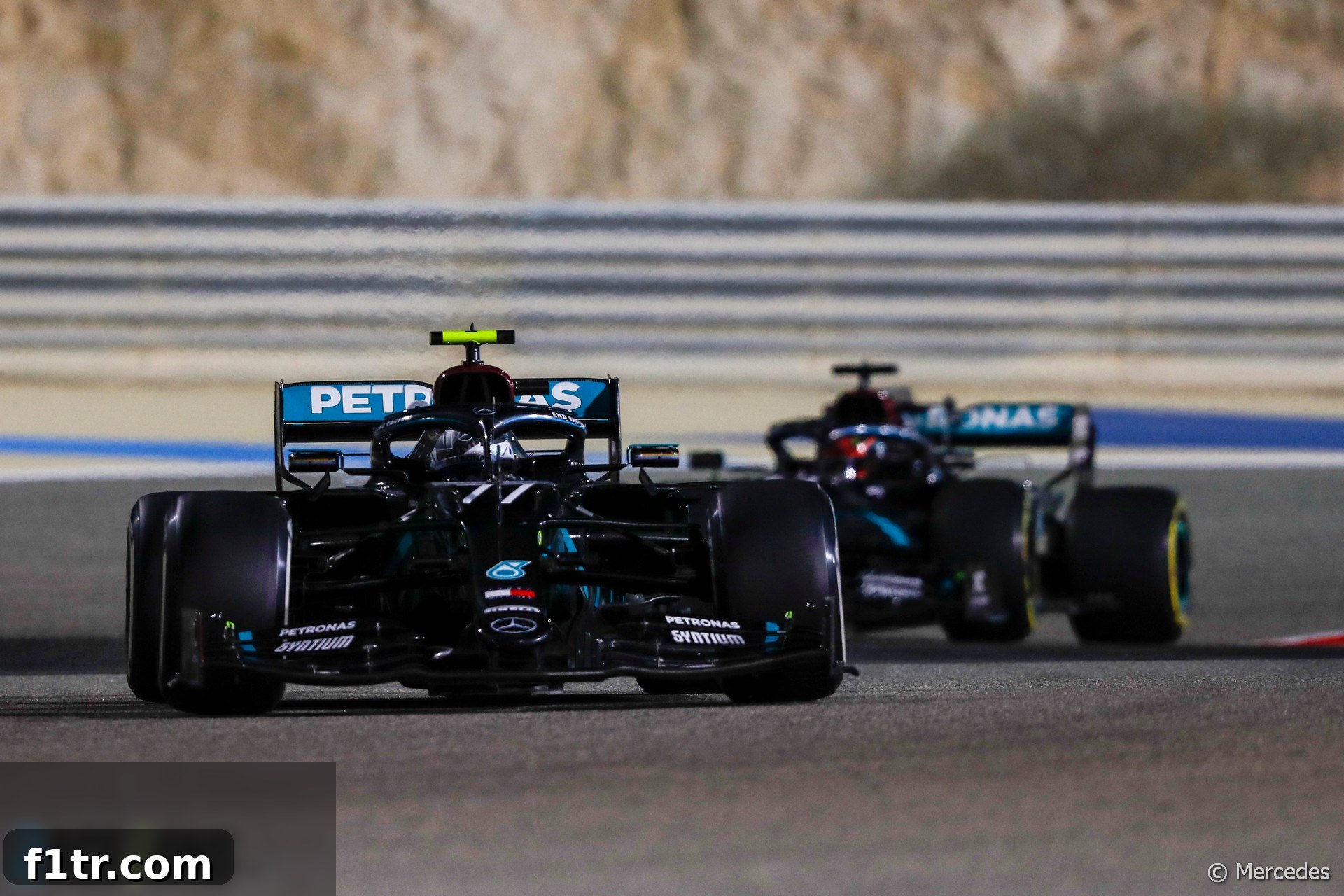
The tale of Valtteri Bottas at Mercedes-AMG Petronas Formula One Team is one of unexpected opportunity, immense pressure, and a quiet, yet significant, contribution to one of F1’s most dominant eras. His arrival in 2017 wasn’t part of the original plan; he was thrust into the spotlight as Lewis Hamilton’s new teammate, replacing the recently crowned and surprisingly retired world champion, Nico Rosberg.
Advert | Become a Supporter & go ad-free
Rosberg’s shock announcement at the end of 2016, just days after securing his maiden championship, sent ripples through the paddock. It left Mercedes, the reigning constructors’ champions, in a precarious position with an immediate void to fill alongside their superstar driver, Hamilton. Bottas, then at Williams and expecting to partner rookie Lance Stroll for the 2017 season, suddenly found himself the prime candidate for one of the most coveted seats in Formula 1.
Five years later, Bottas’s tenure with Mercedes is drawing to a close, a decision that has been anticipated for some time. He seized an opportunity that few drivers ever get, yet the ultimate prize – a world championship – remained tantalizingly out of reach. This article delves into Bottas’s journey at Mercedes, evaluating his performance, the challenges he faced, and his enduring legacy within the team.
The Unexpected Beginning and Initial Promise
Valtteri Bottas joined Mercedes at a critical juncture. After three seasons of utter dominance, the 2017 regulations brought about a significant shake-up, and Mercedes suddenly faced a much stiffer challenge from Ferrari. This new dynamic meant Bottas’s integration was crucial, and his initial performances were highly encouraging. He adapted quickly, demonstrating both speed and consistency.
His breakthrough moment came at the fourth round of the season, the Russian Grand Prix in Sochi. After the formidable Ferraris of Sebastian Vettel and Kimi Raikkonen locked out the front row, Bottas executed a superb start. He capitalized on their slipstream, sweeping past both Ferraris to take the lead into Turn 2. He then drove a masterful race, fending off a late charge from Vettel to claim his maiden Formula 1 victory. This win, in only his fourth start for Mercedes, hinted at a bright future and suggested he could indeed challenge Hamilton.
Had Bottas maintained that incredible one-in-four strike rate, he would have amassed 23 victories by now. Instead, his win tally stands at nine. In stark contrast, Lewis Hamilton secured nine wins in 2017 alone and has added a remarkable 46 victories during their time as teammates. These numbers starkly highlight the ultimate gap in performance between the two drivers and illustrate why Bottas never truly mounted a sustained championship challenge against his formidable teammate.
Evaluating Performance: Beyond Raw Numbers
While the gap in victories is undeniable, it would be an oversimplification to judge Bottas’s entire Mercedes career solely on this metric. His contribution to the team’s unprecedented success, particularly in the constructors’ championship, has been substantial. Mercedes team principal Toto Wolff’s praise upon Bottas’s departure was genuine, describing it as “not an easy process or a straightforward decision” and affirming that “he would absolutely have deserved to stay with the team.” This sentiment underscores the value Bottas brought to the team beyond individual wins.
A more nuanced analysis reveals that Bottas has consistently delivered strong points finishes, contributing a respectable 41% of Mercedes’ total points during his time alongside Hamilton. This percentage is highly significant, especially when compared to the performance of other drivers alongside dominant teammates, such as Max Verstappen’s recent teammates, for example. His consistency and ability to secure strong points were crucial in locking down five consecutive constructors’ titles for Mercedes.
Qualifying Pace: A Consistent Threat
One of Bottas’s enduring strengths has been his qualifying pace. While Hamilton often secured pole position, Bottas was rarely far behind. He out-qualified Hamilton nearly a third of the time, and on many occasions when he didn’t, the margin was often less than a tenth of a second. This is an impressive feat, considering he was up against a driver who holds the record for the most pole positions in Formula 1 history, currently standing at 101. To consistently be within striking distance of such a monumental talent speaks volumes about Bottas’s raw speed over a single lap.
However, the slight average deficit in qualifying often translated into a larger one in race conditions. There isn’t a single identifiable area where Bottas consistently lost time to Hamilton; rather, it was a cumulative effect across various aspects of race craft, tire management, and adapting to changing conditions. Over his five seasons, the unfortunate trend has been a gradual widening of this gap: his peak performances became rarer, while his less competitive weekends became slightly more frequent.
The Shifting Dynamics: From Contender to Support Driver
The 2020 season serves as a stark illustration of this trend. Despite Mercedes’ continued dominance and the reduced threat from rivals, Bottas was never truly in contention for the title against his teammate. In 17 races, Bottas only finished ahead of Hamilton four times, and on each of those occasions, Hamilton’s performance was often compromised by external factors such as penalties or strategic disadvantages. This lack of conversion from strong qualifying positions or early race leads into outright victories became a defining characteristic of his later years at Mercedes.
The defining moment that irrevocably shifted the narrative around Bottas’s future arrived unexpectedly at the Sakhir Grand Prix in late 2020. With Lewis Hamilton sidelined due to illness, George Russell, a Mercedes junior driver then at Williams, was drafted in as a last-minute replacement. This was a clear indication that Mercedes was actively assessing its future driver options. The weekend proved devastating for Bottas: Russell came astonishingly close to out-qualifying him, then overtook him at the start and seemed on course for a sensational victory before misfortune, in the form of a botched pit stop and a slow puncture, intervened for both drivers. To add insult to injury, Russell managed to sweep past Bottas again on fresher tyres late in the race.
While Mercedes publicly downplayed the notion that the Sakhir race tipped the scales in Russell’s favor, it undeniably catalyzed deeper discussions within the team about Bottas’s performance. From the very next race, Toto Wolff took the unusual step of offering Bottas words of encouragement over the team radio – a move rarely seen between a team principal and a driver of Bottas’s experience. This, however, didn’t have the desired effect, as Bottas was subsequently outpaced by Max Verstappen for pole and victory, with a still-recovering Hamilton following behind.
The Final Chapter at Mercedes: 2021 Season
The encouragements from Wolff continued into the 2021 season, but they often served as unfortunate footnotes to Bottas’s less remarkable performances. As Hamilton faced his stiffest title fight to date against Verstappen, Bottas increasingly found himself playing a dedicated ‘number two’ role, often tasked with supporting Hamilton strategically. This naturally impacted his individual results and perception of his competitiveness, with notable lows at races like Imola and Baku.
The culmination of this dynamic was perhaps best illustrated by the events surrounding the recent fastest lap attempt. Bottas, despite specific instructions from the team to hold position and not pursue the bonus point for fastest lap, came remarkably close to snatching it away from Hamilton. This subtle act of defiance, while potentially frustrating for the team, likely stemmed from Bottas already knowing his fate. The news of his impending departure for Alfa Romeo, while anticipated, must have been a painful blow for any driver who starts their Formula 1 career dreaming of a world championship. He is now trading a seat at the top team for one currently battling in the mid-field, ninth in the constructors’ standings.
Valtteri Bottas’s Legacy at Mercedes
Despite the challenges and the ultimate outcome, Valtteri Bottas’s five-year stint at Mercedes is an undeniable achievement. He spent half a decade in a seat he was never originally meant to occupy, alongside arguably the greatest driver Formula 1 has ever seen. His reliability, team-player mentality, and consistent points contributions were integral to Mercedes’ historic run of constructors’ championships. He provided stability, pushed Hamilton in qualifying, and largely avoided internal team friction, which was crucial for Mercedes to maintain its focus on external rivals.
While he may not have achieved his ultimate goal of a world title, Bottas leaves Mercedes having cemented his place as a highly respected, fast, and dedicated Formula 1 driver. His ability to perform consistently at the highest level, even in the shadow of a dominant teammate, is no mean feat and a testament to his talent and resilience. As he embarks on a new chapter with Alfa Romeo, Bottas will undoubtedly carry the experience and lessons learned from his extraordinary time with Mercedes.
Bottas versus Hamilton at Mercedes: A Statistical Snapshot
Data up to and including the 2021 Dutch Grand Prix:
Season Summaries and Teammate Battles:
- 2017 F1 team mate battles: Hamilton vs Bottas
- 2018 F1 team mate battles: Hamilton vs Bottas
- 2019 F1 team mate battles: Hamilton vs Bottas
- 2020 F1 team mate battles: Hamilton vs Bottas
- 2021 F1 team mate battles at mid-season: Hamilton vs Bottas
Advert | Become a RaceFans supporter andgo ad-free
Related 2021 F1 Season Articles:
- Masi ‘basically gifted the championship’ to Verstappen says 2021 FIA steward Sullivan
- Las Vegas race backers looking to extend F1 deal beyond 2025
- Why Mercedes put ‘a reminder of joy and pain’ on display in their factory lobby
- Verdict on error in GT race suggests Mercedes would have lost 2021 Abu Dhabi GP appeal
- Title ‘stolen’ from Mercedes made us ‘underdogs people cheer for’ – Wolff
Browse all 2021 F1 season articles