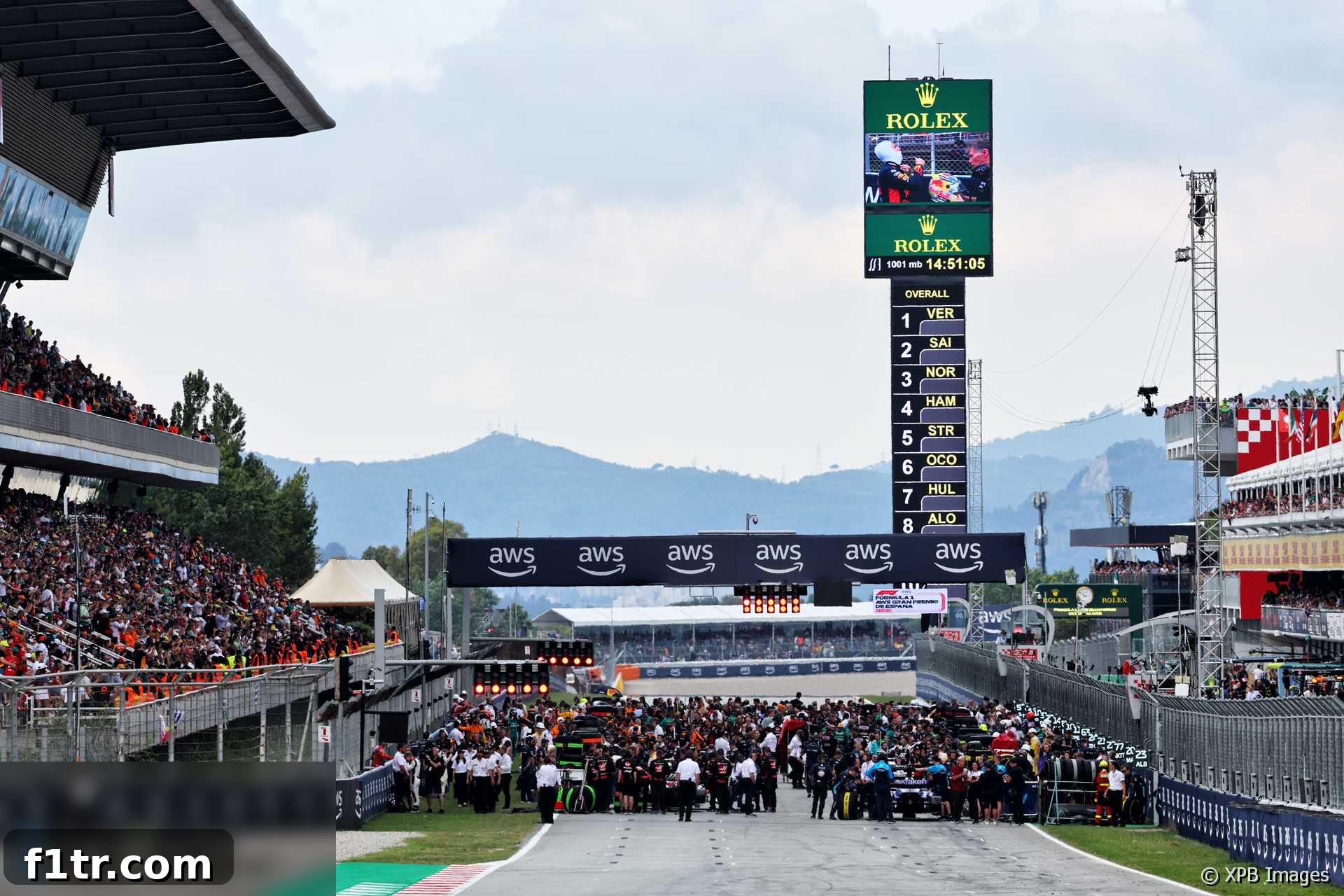
The global landscape of motorsport is constantly evolving, presenting both thrilling opportunities and critical challenges. At the forefront of addressing these challenges is the Fédération Internationale de l’Automobile (FIA), under the decisive leadership of President Mohammed Ben Sulayem. Recent discussions at the FIA’s World Motor Sport Council (WMSC) meeting, hosted by Ben Sulayem in Cordoba, Spain, underscored the federation’s unwavering commitment to safety, alongside pivotal decisions shaping the future technical and financial framework of Formula 1 and broader motorsport categories. A central theme of the meeting revolved around the escalating concerns over safety protocols, particularly concerning the growing number of individuals on race grids and the integrity of track environments during events.
Prioritizing Safety: The FIA’s Stance on Grid Integrity
Grid safety has emerged as a significant talking point within the motorsport community, drawing sharp focus from the FIA President himself. Mohammed Ben Sulayem has actively sought assurances from race promoters across various disciplines that safety standards will not be compromised by the increasing number of personnel granted access to the starting grids. This proactive stance reflects a recognition of the inherent risks associated with crowded grid environments and the potential for incidents that could endanger drivers, team members, officials, and even spectators.
Escalating Concerns Over Grid Congestion
The WMSC meeting addressed several “safety and security issues at events,” highlighting a pattern that the FIA is determined to mitigate. The president’s comments suggest a growing apprehension that the sheer volume of people on grids, which often includes guests, media, and support staff in addition to essential team personnel, could inadvertently create hazardous situations. Such congestion can impede emergency services, obstruct sightlines, and generally increase the complexity of managing a critical operational zone just moments before a high-speed race begins. Ben Sulayem’s direct engagement with this issue underscores the FIA’s commitment to preemptively address potential vulnerabilities rather than reacting solely after an incident occurs.
Examining Recent Incidents
Two specific incidents served as catalysts for these heightened safety discussions. The first was a disturbing post-race track invasion at the Australian Grand Prix in Melbourne earlier this season. Such an uncontrolled influx of fans onto an active circuit, even after the race has concluded, poses immense risks, including collisions with still-moving vehicles, debris hazards, and challenges for medical response. An official report on this incident is anticipated at the end of the month, which will provide crucial insights into the breach of security and potential measures to prevent recurrence.
The second critical incident occurred during the formation lap at the Spanish Grand Prix, held at the historic Circuit de Catalunya. While the exact details of this incident were not fully disclosed in the public statement, any event during a formation lap, when cars are still completing their final preparations and positioning, is deeply concerning. This phase of a race demands absolute concentration from drivers and pristine track conditions. Any external interference or unexpected presence could lead to dangerous diversions or even collisions. Ben Sulayem emphasized, “We must take learnings from the incident at the Spanish Grand Prix,” indicating a thorough review and the implementation of corrective actions are underway.
Collaborative Efforts and Assurances from Formula 1
Recognizing the shared responsibility in maintaining top-tier safety standards, the FIA has engaged directly with Formula 1’s commercial rights holder. Mohammed Ben Sulayem confirmed that he has received assurances from Formula 1 CEO Stefano Domenicali that “measures are being taken to ensure that there is no repeat of the incident.” This collaboration between the regulatory body and the commercial entity is vital. Potential measures could range from stricter accreditation processes and redesigned grid layouts to increased security personnel and advanced crowd control technologies. The goal is to strike a balance between allowing essential personnel and VIPs access to the unique atmosphere of the grid, while uncompromisingly upholding safety protocols.
A Broader Motorsport Challenge
The issue of grid congestion and safety is not exclusive to the pinnacle of motorsport. Ben Sulayem highlighted its prevalence across multiple categories, stating, “It is an issue not just in F1 but also in Formula E and World Endurance Championship and other categories from my recent experiences with too many people on the grid at some events.” This broad perspective underscores that challenges in managing large crowds and ensuring secure operational zones are universal in high-profile motorsport events. Whether it’s the electric urban circuits of Formula E or the endurance challenges of WEC, the principles of stringent safety management remain paramount. The FIA’s consistent oversight aims to establish a unified benchmark for safety across all championships under its purview.
The Unwavering Commitment to Safety
The FIA’s stance on safety is unequivocal. “I have no doubt that in all cases, the promoter will adhere to the FIA requirements on safety and security. It is the duty of the FIA to ensure a safe environment for all. Safety in motorsport is the federation’s main priority,” Ben Sulayem affirmed. This statement reiterates that the ultimate responsibility for implementing and enforcing safety measures on the ground lies with the event promoters, who are contractually obligated to meet the stringent safety and security standards set by the FIA. The federation, in turn, acts as the governing body, providing the framework, conducting inspections, and ensuring compliance, thereby creating a robust safety ecosystem for everyone involved in and attending motorsport events.
Shaping the Future of Motorsport: Key Decisions from the WMSC Meeting
Beyond immediate safety concerns, the WMSC meeting addressed other critical aspects of motorsport governance and future planning, particularly for Formula 1, demonstrating the FIA’s multifaceted role in the sport.
Evolution of F1 Power Unit Regulations (2026-2030)
A significant development was the approval of revisions to Formula 1’s power unit regulations, slated for implementation from the 2026 to 2030 seasons. These new regulations are designed to usher in a new era of F1, focusing on greater sustainability, cost efficiency, and relevance to road car technology, while also aiming to attract new engine manufacturers to the sport. The emphasis on sustainable fuels, increased electrical power, and the removal of the MGU-H component are key pillars of this strategic shift.
In support of these future regulations, the WMSC also appointed the suppliers for two crucial standard parts. Bosch will supply the knock sensors, which are vital components in modern power units. These sensors detect irregular vibrations, or “knocking,” in the engine, which can indicate pre-ignition or detonation—a phenomenon that can severely damage an engine. By providing precise data, knock sensors enable engine management systems to adjust ignition timing and fuel delivery, ensuring optimal performance and reliability while preventing catastrophic failures. Meanwhile, Bender will provide insulation monitoring devices, critical for the safety and performance of the increasingly complex hybrid components within the power units. These devices continuously monitor the electrical insulation resistance in high-voltage systems, detecting any potential faults that could lead to electric shocks or short circuits, thereby ensuring the safety of personnel and the integrity of the hybrid system.
Navigating Financial Prudence: The 2022 Budget Cap Submissions
The FIA also provided an update on the verification process for teams’ 2022 budget cap submissions. Introduced to create a more level playing field and ensure the financial sustainability of the sport, the budget cap restricts how much F1 teams can spend in a calendar year. This is the second instance of teams submitting their financial figures for formal approval since the cap’s introduction, signifying a maturing process of financial oversight.
President Ben Sulayem stated that the verification process is “progressing well,” though he did not provide a timeline for its completion. The scrutiny applied to these submissions is intense, particularly given the events surrounding the inaugural 2021 budget cap. Last year, Aston Martin and Williams were fined for committing procedural errors, which, while not leading to an overspend, indicated shortcomings in their financial reporting. More significantly, Red Bull Racing faced a substantial penalty, including a $7 million fine and a reduction in their Aerodynamic Testing Restriction allocation, for materially overspending the 2021 budget cap. The implications of these penalties underscore the FIA’s seriousness in enforcing the financial regulations, making the 2022 audit results eagerly awaited by the F1 community. The ongoing nature of these compliance checks is crucial for maintaining the credibility and fairness of the budget cap system.
Expanding the Horizon: The Pursuit of New F1 Teams
Another area of focus for the FIA is the potential expansion of the Formula 1 grid. President Ben Sulayem confirmed that “progress is being made with the applications submitted from potential new F1 teams,” following the invitation for expressions of interest opened in February. While no specific number of applications was disclosed, the fact that progress is being made indicates significant interest in joining the sport.
Adding new teams to Formula 1 is a complex process, involving stringent criteria that potential entrants must meet. These criteria typically include a robust financial foundation, demonstrated technical capability, a credible business plan, and a long-term commitment to the sport. The FIA conducts a thorough evaluation of each application to ensure that any new entry would bring genuine value, competition, and sustainability to the championship. The prospect of new teams joining the grid is exciting for fans and could inject fresh dynamics into the competition, potentially expanding F1’s global reach and appeal further.
Looking Ahead: The FIA’s Vision for a Safer, More Sustainable Motorsport
The outcomes of the recent WMSC meeting reinforce the FIA’s proactive and comprehensive approach to governing motorsport. From prioritizing the safety of participants and fans through stringent grid protocols and incident reviews, to strategically guiding the technical evolution of Formula 1 with new power unit regulations and enforcing financial fairness with the budget cap, the federation is actively shaping the future of the sport. The commitment to safety, sustainability, and competitive integrity remains at the core of the FIA’s mission, ensuring that motorsport continues to thrive as a thrilling, responsible, and globally impactful endeavor.
2023 F1 season
- FIA president cleared of alleged interference in two 2023 races
- First week viewing figures for new Drive to Survive season fall again
- Max who? Drive to Survive season six prefers its favourite faces
- RaceFans’ complete 2023 season review
- The F1 drivers who pulled off the 10 biggest charges through the field in 2023
Browse all 2023 F1 season articles