FIA Tightens F1 Engine Rules: Strategic Power Unit Changes to End with 2026 Cost Cap
Formula 1 is set for a significant overhaul in its regulatory framework for the 2026 season, particularly concerning power unit management. The Federation Internationale de l’Automobile (FIA) has confirmed that upcoming rules will effectively curb a long-standing, controversial practice: teams strategically fitting new power units to exploit poor qualifying positions or existing grid penalties for performance advantages. This proactive measure aims to bolster sporting integrity, promote fairness, and align financial regulations more closely with technical and sporting directives.
For years, teams have occasionally utilized a clever, albeit debatable, strategy. When a driver faces an already compromised starting position due to a poor qualifying session or an unavoidable penalty, the impact of taking an additional grid drop for a new power unit becomes negligible. In such scenarios, swapping in a fresh engine offers a significant performance boost – peak power delivery, improved reliability, and reduced risk of mechanical failure from an older, higher-mileage unit. This practice became a tactical maneuver, allowing teams to effectively get a “free” performance upgrade at minimal sporting cost.
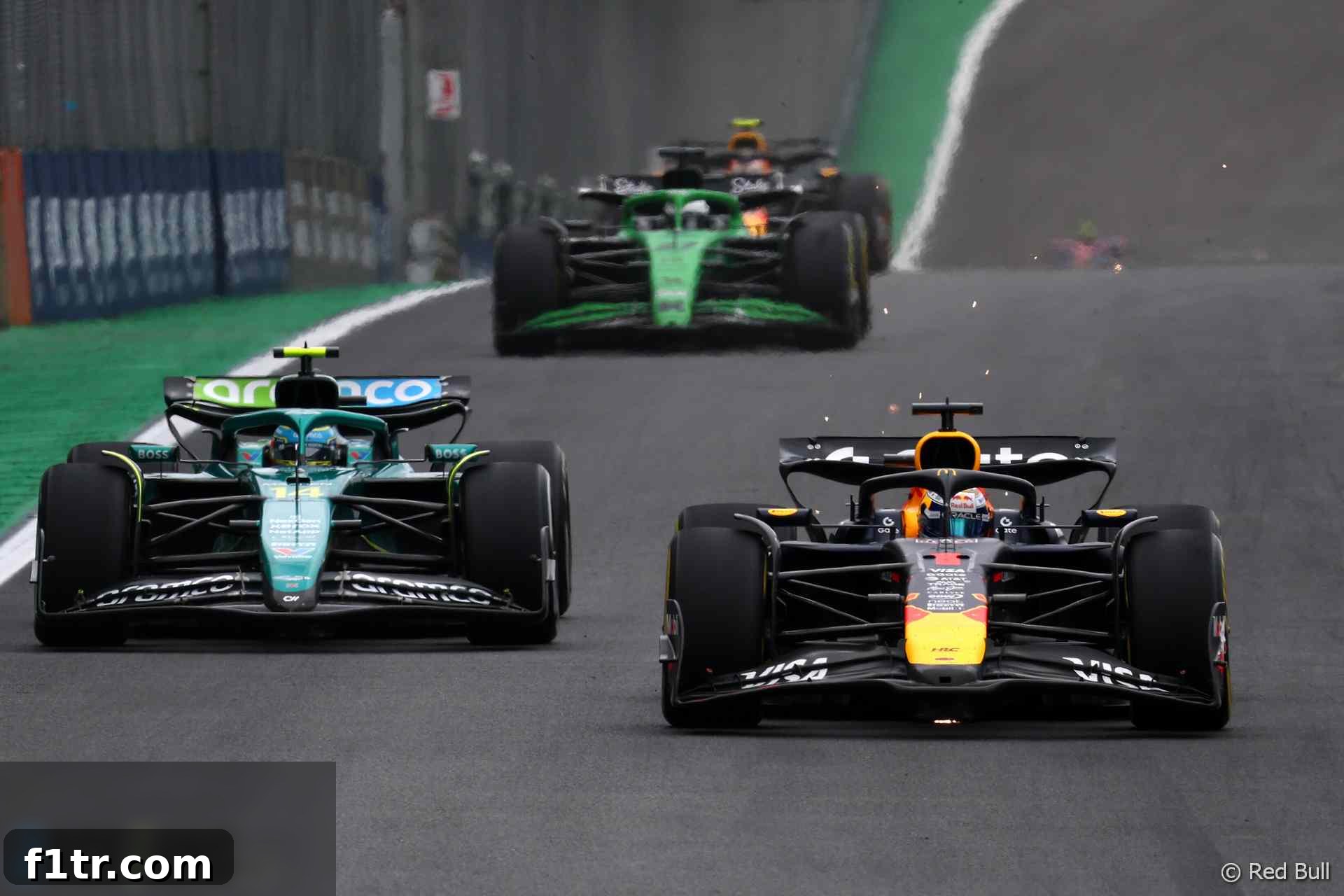
A notable instance of this strategy unfolded recently at the Interlagos circuit. Red Bull Racing opted to fit a new power unit to Max Verstappen’s car after his elimination in Q1. Given his low starting position, the accompanying grid penalty had a diminished impact on his race prospects. This move, while legal under current interpretations, highlighted the loophole that allowed teams to gain a competitive edge by introducing a fresher, more potent engine without severe deterrents. This wasn’t an isolated incident; several teams across various seasons have employed similar tactics, transforming potential setbacks into calculated advantages.
The Budget Cap Conundrum and McLaren’s Challenge
The strategic deployment of new power units has not gone unnoticed by rival teams, leading to questions about the financial implications under Formula 1’s budget cap regulations. McLaren, for example, publicly queried whether the cost associated with replacing an apparently undamaged power unit should be fully accounted for within a team’s annual spending limit. The core of their concern revolved around the potential for teams, or more specifically, their power unit manufacturers, to absorb these costs in a way that circumvented the spirit of the budget cap. If the cost of such a replacement could be argued away as a manufacturer’s responsibility or classified outside the main team budget, it would inadvertently create an unfair advantage for teams backed by wealthier or more resource-rich engine suppliers.
This challenge brought to light a significant grey area in the existing rulebook. Nikolas Tombazis, the FIA’s head of single-seater matters, openly acknowledged that the current regulations lacked sufficient clarity and enforcement mechanisms in this specific domain. The FIA’s reluctance to intervene directly stemmed from a practical dilemma: distinguishing between a genuine reliability issue necessitating an engine change and a strategically motivated swap. Proving intent, especially when telemetry data could be ambiguous, presented an immense challenge for the governing body.
“What we’ve not been keen to get involved in, as the FIA at the moment, is a situation where when there’s an engine change, we have to argue with the team or the PU manufacturer whether a bit of telemetry indicates potentially a reliability issue or not,” Tombazis explained. He further elaborated on the FIA’s limitations, stating, “We don’t feel we have the expertise to argue with them whether it’s really a reliability or strategic change.” This highlights a crucial point: the FIA, while regulators, are not necessarily equipped to be expert diagnosticians of every subtle telemetry fluctuation or the underlying motivations behind every technical decision made by highly sophisticated engineering teams.
The complexity is compounded by the “crossover area” where the lines between a genuine fault and a convenient justification blur. “In some cases it’s obviously in one or the other camp. But when you’re in that crossover area, it would be difficult,” Tombazis admitted. This ambiguity has been a fundamental “weakness” in the present regulatory framework, particularly where financial, technical, and sporting regulations intersect. The current approach has been to accept these changes without delving into contentious discussions about their precise impact on the cost cap, primarily to avoid endless, subjective disputes that could bog down the championship’s administration.
The Game-Changer: The 2026 Engine Cost Cap
However, this era of ambiguity and strategic exploitation is set to conclude with the introduction of the new engine cost cap for the 2026 season. This cap, distinct from the overall team budget cap, specifically targets the spending of power unit manufacturers on the development, production, and maintenance of their engines. Tombazis expressed strong confidence that this new financial regulation will provide a definitive solution to the current loophole, rendering the entire discussion obsolete.
The mechanism is brilliantly straightforward: financial disincentive. Under the new rules, power unit manufacturers will operate within strict budgetary limits. If a team requests an additional, “strategic” engine change – one not genuinely necessitated by a critical reliability failure – the cost of that replacement unit will directly impact the power unit manufacturer’s allocated budget. Tombazis estimated the cost of a single engine, even just the internal combustion component, to be around one million pounds. This substantial figure represents a direct financial penalty for the manufacturer, making strategic changes an economically unviable proposition.
“It [will be] one of the areas where next year, with the cost cap for the PU manufacturers as well as the teams, this matter is resolved,” Tombazis affirmed. He emphasized that under these new constraints, “the PU manufacturers would never find it convenient to make a strategic change, because each time it’s going to cost them approximately the cost of an engine – a million, if it’s just the internal combustion or whatever.” This introduces a “natural mechanism” for self-regulation within the sport. Instead of the FIA having to arbitrate every engine change, the economic reality will deter both teams and manufacturers from pursuing such strategies.
This resolves what the FIA previously identified as a significant “weakness in the current set of regulations, where there’s no PU cost cap.” The governing body is confident that with the 2026 rules, this loophole will be “completely resolved,” ensuring it “will stop being a topic of discussion.”
Broader Implications for F1 Strategy and Sporting Fairness
The introduction of the engine cost cap for power unit manufacturers signals a pivotal shift in Formula 1’s approach to engine management and race strategy. This change extends far beyond merely closing a loophole; it promises to fundamentally alter how teams and their engine suppliers approach an entire season.
Enhanced Engine Management and Reliability
Without the option for “strategic” replacements, teams and power unit manufacturers will be compelled to prioritize durability and meticulous engine management from the outset of the season. Every power unit assigned will need to be meticulously planned, maintained, and operated to maximize its lifespan and performance within the allocated usage limits. This could lead to more conservative engine modes in certain practice sessions or less critical races, ensuring units are preserved for crucial championship battles. The focus will shift even more towards engineering excellence in designing robust, high-performance engines that can withstand the rigors of a full season without incurring prohibitive additional costs.
Leveling the Playing Field
Perhaps one of the most significant benefits of this new rule is its potential to further level the competitive landscape. In the past, teams with more generous budgets or closer ties to their power unit manufacturers might have found it easier to absorb the implicit costs of strategic engine changes. The engine cost cap creates a more equitable environment where all manufacturers operate under similar financial constraints, fostering a fairer competition based on genuine engineering prowess and efficient resource allocation rather than spending power.
Impact on Race Weekend Strategy
Race weekend strategy will also evolve. The incentive to intentionally incur a grid penalty for a new engine, especially from an already compromised position, will vanish. This means teams will need to be even more precise in their qualifying performance and race execution, knowing that a fresh engine “get-out-of-jail-free” card is no longer available. Every decision regarding engine usage, component changes, and risk-taking will carry more weight, potentially leading to more intense and unpredictable racing scenarios where engine longevity becomes a more prominent factor.
Aligning Regulations for a Sustainable Future
This move is also consistent with Formula 1’s broader goals for sustainability and cost control. By limiting expenditure at the manufacturer level, the sport reinforces its commitment to reducing overall financial outlay, encouraging innovation within budgetary constraints, and ultimately making Formula 1 a more sustainable and accessible sport for participants. It’s a holistic approach, ensuring that financial regulations work in harmony with technical and sporting ones to create a more coherent and just competitive environment.
The FIA’s decision to implement the engine cost cap for 2026 represents a decisive step towards eliminating a long-standing strategic loophole. By shifting the financial burden of “strategic” engine changes directly onto power unit manufacturers, the governing body has created a potent, self-policing mechanism. This move is poised to enhance sporting integrity, foster fairer competition, and ensure that Formula 1 remains a pinnacle of racing excellence driven by genuine performance and meticulous planning, free from the shadow of questionable tactical advantages.