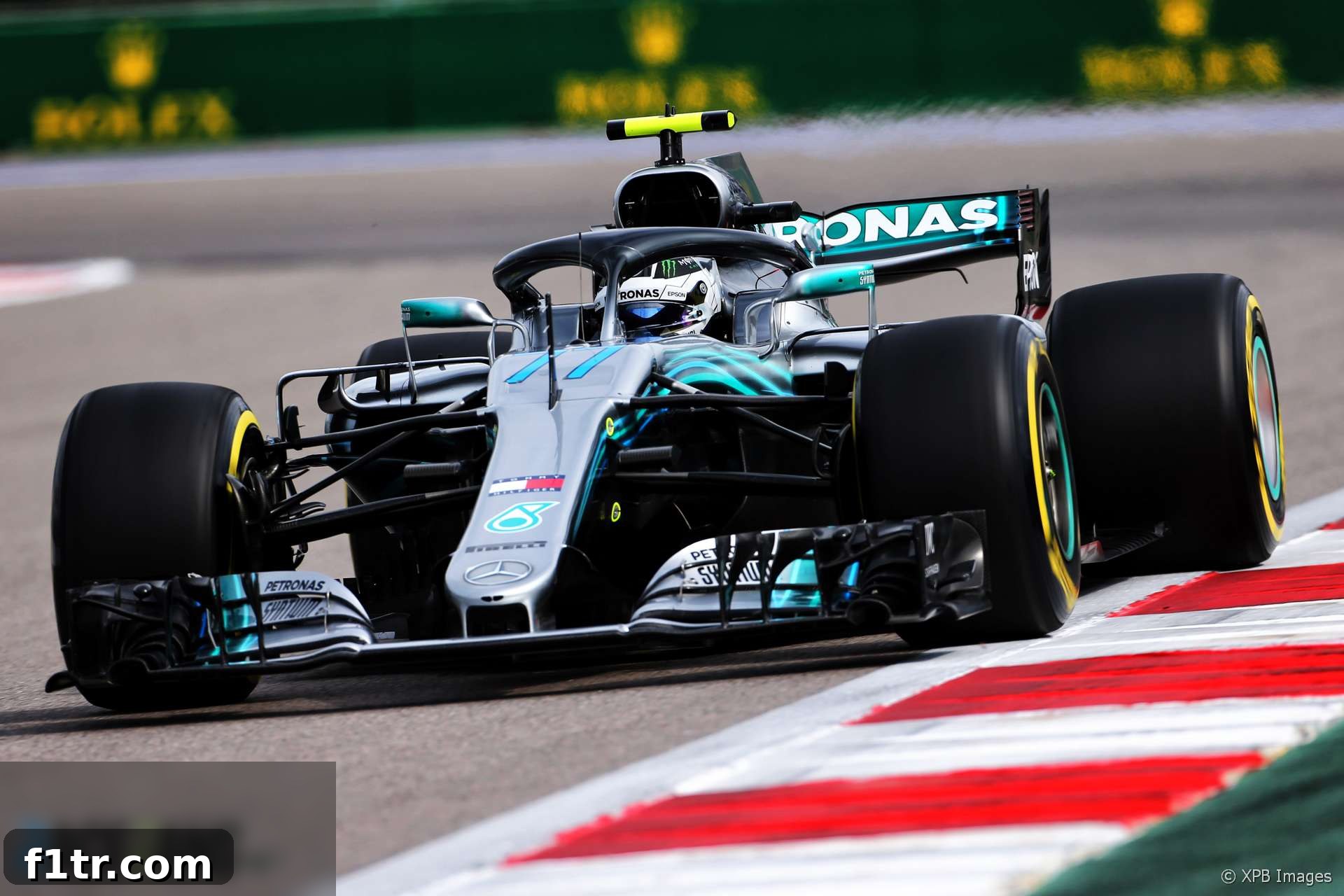
The 2018 Russian Grand Prix qualifying session at the picturesque Sochi Autodrom delivered a captivating blend of raw speed, strategic plays, and unexpected twists. Ultimately, it was Valtteri Bottas who emerged triumphant, snatching a sensational pole position in a fiercely contested battle against his teammate, Lewis Hamilton. This dominant performance culminated in a Mercedes-AMG Petronas Formula 1 Team front-row lockout, a powerful statement of their strength at this unique circuit. Their nearest competitors, Scuderia Ferrari, found themselves relegated to the second row of the grid, a significant half a second behind the blistering pace set by the Silver Arrows.
The Sochi Autodrom, a purpose-built track winding around the iconic Olympic Park, is renowned for its smooth asphalt and distinctive layout. Its long straights, combined with a series of challenging medium and low-speed corners, demand a delicate balance from car setups – prioritizing both outright speed and precise handling. For the weekend, Pirelli supplied the Hyper-soft, Ultra-soft, and Soft tyre compounds. The Hyper-soft was anticipated to be the fastest over a single qualifying lap but also the most susceptible to degradation during the race. The stakes were considerably high, not just for qualifying supremacy, but also for crucial points in the ongoing championship battle between Lewis Hamilton and Sebastian Vettel, adding an extra layer of intensity to every session.
Qualifying 1: Mercedes Assert Their Dominance Early
From the very outset of Q1, Mercedes-AMG Petronas F1 Team left no doubt about their intentions and formidable pace. Championship leader Lewis Hamilton, clearly determined to lay down a marker, wasted no time in attacking the track. Utilizing the grippy Hyper-soft tyres and benefiting from continuously improving track conditions, Hamilton masterfully lowered the track record to an impressive 1’32.410 after a series of meticulously executed laps. This early benchmark not only highlighted the superior performance capabilities of the Mercedes W09 but also underscored Hamilton’s exceptional prowess in extracting maximum performance from his machinery at Sochi.
Valtteri Bottas seamlessly mirrored his teammate’s strong showing, immediately slotting into second place on the timesheets. This provisional Mercedes 1-2 sent a clear message to their rivals. While the Red Bull Racing duo of Max Verstappen and Daniel Ricciardo managed to position themselves between the Mercedes and Ferrari cars, their ultimate weekend prospects were already hampered by pre-existing grid penalties. Sebastian Vettel, despite his characteristic aggression and pushing hard, found himself over a full second slower than Hamilton’s scorching pace, a stark illustration of the significant advantage Mercedes had managed to unlock from their package during the initial phase of qualifying.
As the first runs concluded and the clock ticked down, attention invariably turned to the ‘drop zone’ at the bottom of the standings. Despite the evolving track conditions that typically favour late improvements, none of the five drivers teetering on the brink of elimination were able to mount a successful escape in the crucial final moments of Q1. The Williams and McLaren drivers, in particular, appeared to endure immense struggles throughout the session, consistently lacking the pace to genuinely contend for a place in Q2. Fernando Alonso’s hopes were prematurely extinguished by a noticeably slow run through the demanding first sector, and his McLaren teammate, Stoffel Vandoorne, was unable to convert any marginal opportunities, ultimately qualifying a disappointing 19th.
For Sergey Sirotkin, racing on home soil, Q1 ended in a particularly frustrating manner. A critical spin at the challenging exit of Turn Eight completely compromised his final flying lap, devastating any chance he had of progressing beyond the initial stage in front of his eagerly watching home crowd. Rounding out the list of eliminated drivers in Q1 was Brendon Hartley of Toro Rosso, who consistently trailed his teammate by a margin of more than half a second throughout the session. This persistent deficit pointed towards a clear struggle with the car’s balance or an ongoing challenge in adapting fully to the nuances of the Sochi circuit.
Drivers Eliminated in Q1
| 16 | Brendon Hartley | Toro Rosso-Honda | 1’35.037 |
| 17 | Fernando Alonso | McLaren-Renault | 1’35.504 |
| 18 | Sergey Sirotkin | Williams-Mercedes | 1’35.612 |
| 19 | Stoffel Vandoorne | McLaren-Renault | 1’35.977 |
| 20 | Lance Stroll | Williams-Mercedes | 1’36.437 |
Qualifying 2: Strategic Manoeuvres and Grid Penalty Impact
The second qualifying session, Q2, which is traditionally a high-stakes battle for the coveted top ten spots in Q3, unfolded in an unusually subdued and strategically driven manner at Sochi. The diminished on-track excitement was primarily a consequence of significant grid penalties already facing several key contenders. Both Red Bull Racing drivers, Max Verstappen and Daniel Ricciardo, alongside Pierre Gasly of Toro Rosso, were already destined to start from the back of the grid. These penalties stemmed from exceeding their allotted season quota for various engine components, rendering their Q2 performance largely irrelevant for their starting positions.
Further contributing to the quiet atmosphere, the Renault F1 Team made a calculated strategic decision not to send their drivers, Carlos Sainz Jnr and Nico Hulkenberg, out for timed laps. Recognizing that they were unlikely to genuinely challenge for Q3 and with other teams facing penalties that would shuffle the grid, Renault opted to preserve their tyre allocation. This shrewd move ensured they would start the race with fresh tyres, guaranteeing a sixth-row grid slot and providing a crucial strategic advantage for Sunday’s main event, maximizing their chances for a strong opening stint on optimal rubber.
With a considerable portion of the Q2 field electing to remain in the pits, the remaining drivers turned their focus squarely on making their critical tyre choices for the race start. The Mercedes and Ferrari pairs, battling at the absolute sharp end, both strategically opted for the more durable Ultra-soft compound. This pivotal decision allowed them to commence the race on a longer-lasting tyre, potentially offering greater strategic flexibility and reducing the necessity for an early pit stop. In contrast, the midfield contingent—comprising Sauber, Force India, and Haas—collectively chose to start the race on the faster, but more degradation-prone, Hyper-soft rubber. This choice reflected their ambition to gain crucial positions in the opening laps, prioritizing outright pace over extended tyre longevity. Despite the underlying strategic intrigue, the overall absence of genuine competition for Q3 spots meant that the second part of qualifying ultimately proved to be a ‘damp squib’ in terms of on-track drama, characterized by conservative laps rather than aggressive, make-or-break efforts.
Drivers Eliminated in Q2
| 11 | Max Verstappen | Red Bull-TAG Heuer | No time set (Grid Penalty) |
| 12 | Daniel Ricciardo | Red Bull-TAG Heuer | No time set (Grid Penalty) |
| 13 | Pierre Gasly | Toro Rosso-Honda | No time set (Grid Penalty) |
| 14 | Carlos Sainz Jnr | Renault | No time set (Strategic Choice) |
| 15 | Nico Hulkenberg | Renault | No time set (Strategic Choice) |
Qualifying 3: Bottas Claims Pole in a Tense Mercedes Duel
The final qualifying session, Q3, delivered the anticipated peak of intensity and a truly captivating head-to-head showdown between the two Mercedes drivers. The unique characteristics of the Sochi Autodrom’s sectors played a pivotal role in this internal duel, as both Hamilton and Bottas demonstrated distinct strengths across different parts of the lap. Lewis Hamilton, renowned for his exceptional car control and ability to extract every ounce of performance, consistently held a tangible edge through the demanding first sector on both of his Q3 runs. Bottas, despite his best efforts, found it challenging to get within two-tenths of a second of his teammate’s blistering pace in this initial, crucial phase.
However, the middle part of the lap proved to be Valtteri Bottas’s indisputable domain. Car number 77, often described as a ‘Sochi specialist’ due to his previous strong performances here, was conclusively quicker through the flowing sequence of corners, effectively negating Hamilton’s early advantage. After their initial runs, the tension was palpable across the pit lane: Bottas had edged ahead by an astonishingly slender margin of just four-thousandths of a second. This razor-thin difference perfectly set the stage for a dramatic, winner-takes-all final showdown. Meanwhile, Ferrari remained firmly out of contention for pole position, with their red cars consistently over half a second adrift of the pace-setting Mercedes, unequivocally highlighting the German manufacturer’s outright speed superiority at this particular venue.
As the final flying laps commenced, all eyes were fixated on the Silver Arrows. Hamilton, pushing his W09 to its absolute limit, was once again quicker in the first sector, appearing to be on course to snatch pole. However, a crucial and dramatic moment unfolded at Turn Seven. Pushing the limits of available grip, Hamilton caught an unexpected snap of oversteer, momentarily losing control and running wide off the track. With that critical mistake, his opportunity to claim pole position was irrevocably gone. Despite his teammate’s misfortune, Bottas remained utterly focused and pressed on, meticulously completing his final lap. He not only maintained his slender lead but extended his advantage to over a tenth of a second as he crossed the chequered flag, clinching a richly deserved pole position for the 2018 Russian Grand Prix, his first of the season.
Behind the dominant Mercedes, Sebastian Vettel expressed a subtle hint of disappointment, suggesting he believed there was perhaps an additional 15 hundredths of a second potential in his Ferrari had he not made a minor mistake on his final run. Nevertheless, his effort was still more than sufficient to out-qualify his teammate, Kimi Raikkonen, securing a commendable third place on the grid. The battle for the ‘best of the rest’ was equally tight and fiercely contested amongst the midfield teams. Esteban Ocon and Charles Leclerc began their last efforts separated by a mere six-thousandths of a second, locked in a fierce fight to lead the third row of the grid. Neither driver ultimately managed to improve on their final attempts. However, a truly superb effort from Kevin Magnussen, who had reportedly been quite unhappy with the balance of his Haas car during practice sessions, propelled him past both Ocon and Leclerc into an excellent fifth place. This impressive performance underscored the raw potential of the Haas-Ferrari package when everything clicks, positioning him perfectly to challenge for strong points in the race.
Top Ten in Q3
| 1 | Valtteri Bottas | Mercedes | 1’31.387 |
| 2 | Lewis Hamilton | Mercedes | 1’31.532 |
| 3 | Sebastian Vettel | Ferrari | 1’31.943 |
| 4 | Kimi Raikkonen | Ferrari | 1’32.237 |
| 5 | Kevin Magnussen | Haas-Ferrari | 1’33.181 |
| 6 | Esteban Ocon | Force India-Mercedes | 1’33.413 |
| 7 | Charles Leclerc | Sauber-Ferrari | 1’33.419 |
| 8 | Sergio Perez | Force India-Mercedes | 1’33.563 |
| 9 | Romain Grosjean | Haas-Ferrari | 1’33.704 |
| 10 | Marcus Ericsson | Sauber-Ferrari | 1’35.196 |
2018 Russian Grand Prix Related Articles
- 2018 Russian Grand Prix team radio highlights
- Top ten pictures from the 2018 Russian Grand Prix
- 2018 Russian Grand Prix Star Performers
- Verstappen did 2018’s best recovery drive yet – in eight laps
- No backsies for Bottas: Hamilton wins on Mercedes team orders
Browse all 2018 Russian Grand Prix articles