The Fédération Internationale de l’Automobile (FIA) has underscored its unwavering commitment to refining and publicly disseminating its guidelines concerning driving standards and penalties in Formula 1. Following the initial public release of these crucial documents, the FIA anticipates a continuous process of revision and enhancement, reflecting the dynamic nature of top-tier motorsport.
Advert | Become a Supporter & go ad-free
Significant updates to these comprehensive guidelines were recently finalized after a pivotal meeting between Formula 1 drivers and the FIA at the Qatar Grand Prix last November. However, Garry Connelly, the esteemed chairperson for F1 stewards, emphasized that these documents are by no means static or definitive. Instead, they represent an ongoing evolution, adapting to the sport’s ever-changing landscape.
The Dynamic Nature of F1 Regulations: “Living Documents”
Connelly meticulously explained the philosophy behind the guidelines, stating, “Both the penalty guidelines and the driving standards guidelines are ‘living documents’. They are regularly reviewed and subject to refinement.” This designation highlights the FIA’s adaptive approach, acknowledging that Formula 1 is a sport constantly evolving with technological advancements, new car designs, and the progressive development of driver skills. The commitment to regular updates ensures that the framework governing on-track conduct remains relevant, robust, and capable of addressing unforeseen scenarios.
The collaborative spirit driving these revisions is paramount. “Certainly, in the case of the driving standards guidelines, the consultation with the drivers has been of enormous value. The drivers’ contribution in Qatar was fabulous. They really adopted a great, cooperative spirit, and we all benefited from it,” Connelly added. This direct input from those who experience racing at its most intense level provides invaluable insights, ensuring the guidelines are practical, fair, and reflect the realities of competition. The iterative process, integrating feedback from both teams and drivers, ensures these documents are constantly refined to cope with changing regulations, different demands on cars and drivers, and the broader evolution of Formula 1 as a global spectacle.
Guidelines, Not Regulations: A Framework for Consistency and Fairness
It is crucial to understand the fundamental purpose of these documents. Connelly stressed, “It’s really important to remember two things. Firstly, the guidelines are not regulations, they have no regulatory value. They are documents that have been created to assist the Formula 1 stewards in the objective of achieving fairness and consistency.” This distinction is vital for fans and participants alike. While they provide a clear reference point for interpreting F1’s complex rulebook, they do not supersede the regulations themselves. Instead, they serve as a powerful tool to ensure that across various races and incidents, stewards apply the rules with a consistent philosophy, reducing ambiguity and enhancing predictability.
Advert | Become a RaceFans supporter andgo ad-free
The Depth of Stewarding: Beyond the Surface
“Secondly, in relation to penalties, they are solely a guide and one that stewards use in conjunction with a vast amount of other information,” Connelly continued. This statement unveils the profound complexity behind every stewarding decision. What fans witness on television is merely the tip of the iceberg. Stewards have access to an unparalleled array of data, allowing them to conduct an exhaustive investigation into every incident. This includes a large volume of CCTV footage, often unseen by teams or the public, providing angles and perspectives crucial for a holistic understanding. Furthermore, comprehensive telemetry data, detailing everything from speed, braking points, throttle application, and steering inputs, paints a precise picture of a car’s actions. Radio messages between drivers and their teams offer vital context regarding intent, awareness, and immediate reactions during an incident.
Therefore, while the guidelines might suggest a particular penalty, such as a 10-second time penalty, the stewards’ final decision is a nuanced one. It incorporates all available data points, allowing for a different, more appropriate penalty to be applied if the circumstances warrant it. The guidelines are designed to offer a framework, not an inflexible decree. This approach ensures that justice is served based on the totality of evidence, rather than a rigid, one-size-fits-all application of rules that might overlook critical contextual details.
Flexibility and Discretion: The Art of Penalty Imposition
The penalty guidelines are intentionally not “hard and fast” requirements. Connelly elaborated, “The recommended penalties sometimes sit within a range, where mitigating or aggravating circumstances are considered by the stewards in imposing a penalty at the lower end or the higher end of the range, or in extraordinary circumstance[s], outside of the range listed in the guidelines.” This critical flexibility is what elevates F1 stewarding from mere rule enforcement to a sophisticated judicial process. Mitigating circumstances, such as an unavoidable mechanical failure leading to an incident, or an attempt by a driver to avoid contact, can lead to a lighter penalty or even no penalty at all. Conversely, aggravating circumstances, such as reckless driving, repeated infringements, or an incident that severely compromises another competitor’s race, can result in a harsher penalty, moving towards the upper end of the recommended range, or even beyond it in truly exceptional cases.
This nuanced approach acknowledges that racing incidents are rarely black and white. Factors like track conditions, weather, prior conduct of the drivers involved, and the actual consequences of the incident all play a role in determining a fair outcome. The stewards’ ability to exercise discretion within these guidelines is fundamental to maintaining a competitive yet safe environment, fostering respect for both the rules and fellow competitors.
Driving Standards and Transparency: Building Public Trust
The creation of the driving standards guidelines was a direct response to concerns voiced by F1 drivers regarding stewarding decisions during the intensely competitive 2021 season. Publishing these guidelines represents a significant step towards greater transparency within the sport. Connelly articulated that this move will make it considerably easier for fans globally to comprehend the rationale behind decisions made during F1 races and other motorsport events. The FIA recognizes its accountability not only to the sport’s participants but also to its vast and passionate global audience.
“Twenty years ago, stewards’ decisions were a couple of lines at best,” Connelly recalled, highlighting the evolution of communication. “These days, you’ll frequently find that they exceed a page in length because we’re trying to explain the rationale behind decisions. We feel we are accountable not just to the sport, but to the public as well. We need to provide clarity and explain why we make the decisions we do.” This commitment to providing detailed explanations ensures that fans are not left guessing, fostering a deeper understanding and appreciation for the complexities of race control. It reinforces public trust in the integrity and fairness of the sport, legitimizing the crucial work of the stewards.
Advert | Become a RaceFans supporter andgo ad-free
The Nuance of Incidents: Why No Two Are Alike
A frequent point of contention among fans is the perceived inconsistency of penalties for seemingly similar incidents. Connelly addressed this directly, stating, “It is also extremely important to note that rarely are two incidents identical. They may look the same on TV but when the stewards ‘deep dive’ into the additional data available to them, there can be valid reasons why one incident is penalised differently to another seemingly similar one, or indeed, not penalised at all.” This “deep dive” involves meticulously scrutinizing every millisecond of data, cross-referencing telemetry with multiple camera angles, and analyzing radio communications. Subtle differences in driver intent, reaction time, car positioning, track grip, or even the precise point of contact can fundamentally alter the context of an incident, leading to varying outcomes.
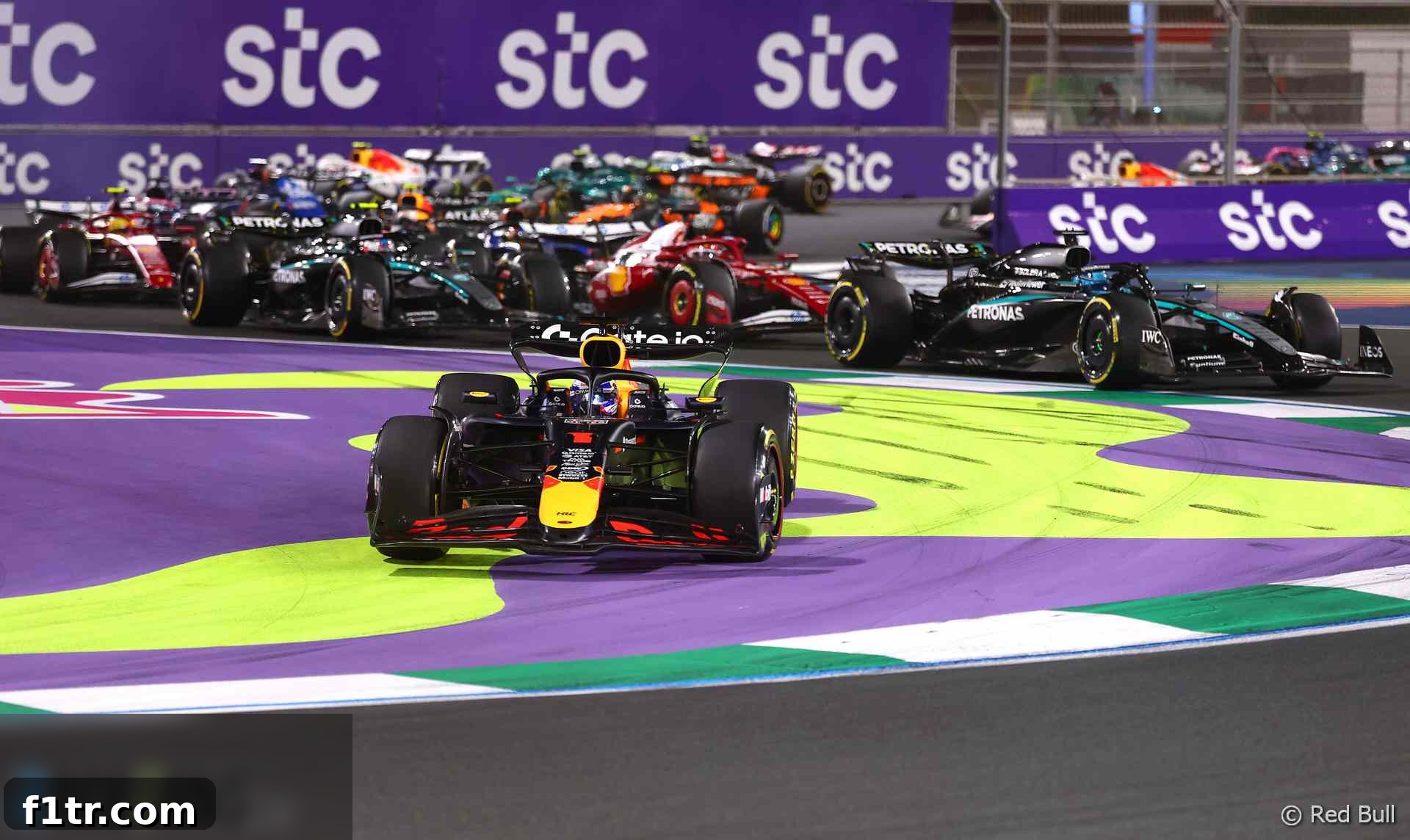
Furthermore, stewards often apply a greater degree of tolerance to multi-car incidents occurring early in the first lap of a race. This pragmatic approach acknowledges the inherent chaos and close-quarters racing typical of opening laps, where drivers are vying for position amidst crowded conditions. While significant infractions are still penalized, minor bumps and scrapes, often unavoidable in such congested scenarios, may be viewed with a greater understanding of the circumstances. This distinction reflects a sensible application of the rules, recognizing the unique dynamics of different race phases.
Miss nothing from RaceFans
Get a daily email with all our latest stories – and nothing else. No marketing, no ads. Sign up here:
Looking Ahead: The Continued Evolution of Formula 1 Stewarding
The FIA’s initiative to publicly release and continuously refine its driving standards and penalty guidelines marks a significant milestone in its ongoing commitment to fairness, consistency, and transparency in Formula 1. By treating these documents as “living” entities, incorporating invaluable feedback from drivers and teams, and leveraging advanced data analysis, the sport is better equipped to adapt to future challenges. The detailed explanations accompanying stewards’ decisions, coupled with the clarity provided by these guidelines, foster a deeper understanding and appreciation among fans for the complexities of race control. As Formula 1 continues to evolve at breakneck speed, the FIA’s proactive approach ensures that the integrity of the competition remains paramount, balancing the thrilling spectacle of racing with the imperative of fair and consistent application of its rules for all participants.
Formula 1
- GT driver killed in multi-car crash at Nurburgring Qualifiers
- Should F1 change tracks or racing guidelines to tackle dangers in 2026 rules?
- Controversies, Norris, Newey and more: Five new motorsport books reviewed
- One of F1’s greatest races happened 15 years ago today. Or did it?
- “Overtaking is overtaking”: Domenicali denies F1’s yo-yo racing is “artificial”
Browse all Formula 1 articles