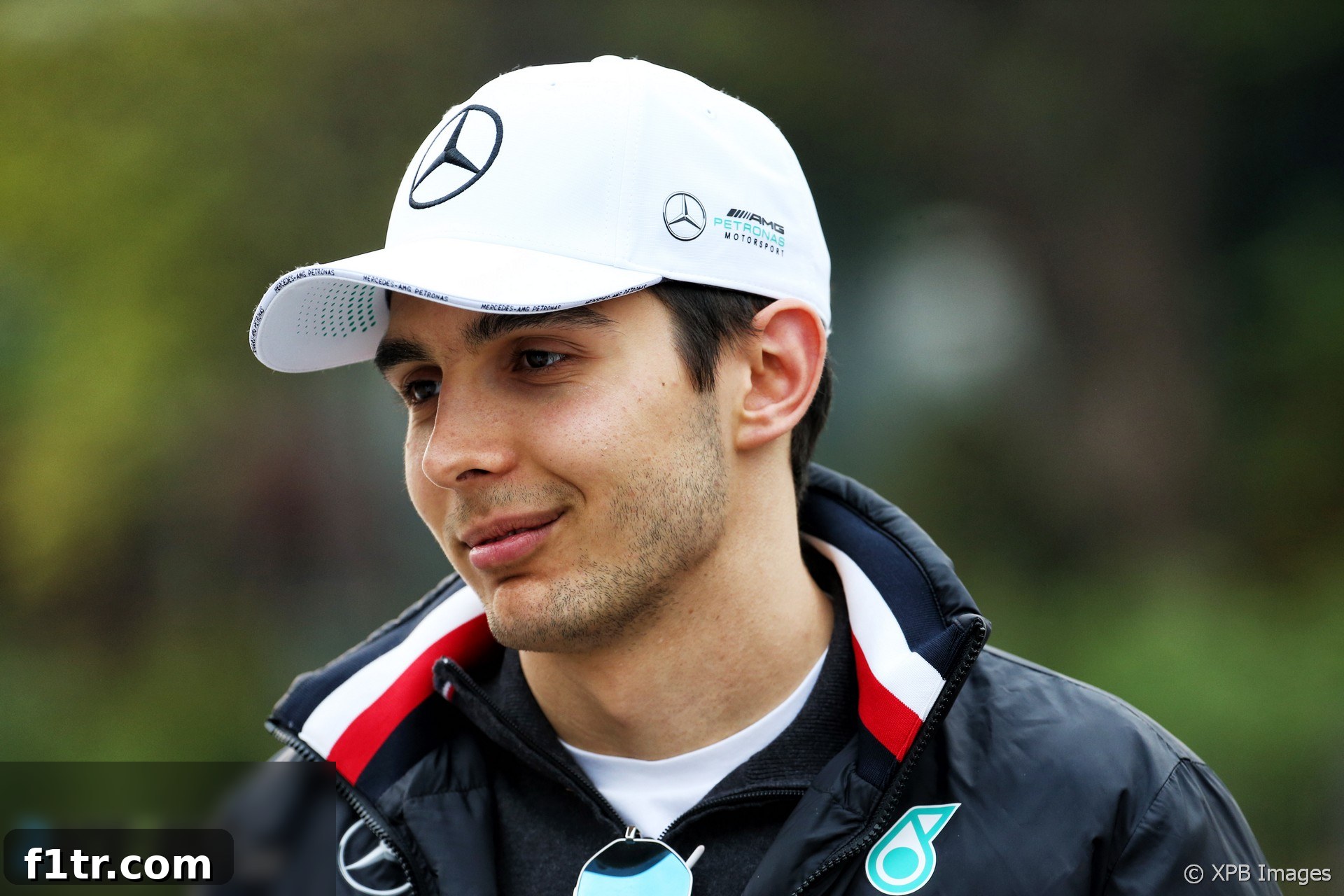
Esteban Ocon’s F1 Future: A Mercedes Dilemma Amidst Unprecedented Dominance
For anyone outside the silver arrow camp, the championship standings from the start of the 2019 Formula 1 season delivered a stark, almost painful, reality check. Mercedes-AMG Petronas Motorsport was in a league of its own, demonstrating a level of supremacy rarely witnessed in the sport’s modern era. Four races into the 2019 F1 season, their performance was nothing short of perfection: a flawless record of first and second place finishes in every single Grand Prix. This unprecedented start left their rivals trailing far behind, grappling with the sheer pace and reliability of the Mercedes W10.
The only minor blemish on their otherwise impeccable record was securing the point for the fastest lap only once in those opening four races. Yet, accumulating an astounding 173 points out of a possible 176 underscored their near-absolute control over the championship. This dominance, while celebrated within the Mercedes garage, inadvertently cast a long shadow over the career prospects of one particular Mercedes team member: Esteban Ocon. While his colleagues basked in the glory of their team’s historic performance, Ocon faced a future filled with increasing uncertainty, watching from the sidelines as opportunities seemed to dwindle.
The Unfortunate Turn: Ocon’s Exit from Force India
Esteban Ocon’s predicament began in earnest with the financial turmoil surrounding the Force India team in 2018. When Lawrence Stroll’s consortium stepped in to acquire the struggling outfit, effectively transforming it into Racing Point, the writing was on the wall for Ocon. Despite a commendable season where he consistently out-qualified his teammate Sergio Perez and contributed a respectable share of the team’s points, political and financial realities dictated his fate. Perez, having played a pivotal role in triggering the administration process that led to Stroll’s takeover, effectively secured his position within the newly formed team.
The arrival of Lance Stroll, son of the new owner, was an inevitable consequence of the acquisition, making the second seat a foregone conclusion. This left Ocon, a highly-rated Mercedes junior driver, without a drive. The Netflix documentary “Drive to Survive” might have presented a more dramatic narrative, but in the cut-throat world of Formula 1, the connection between ownership and driver selection is often a decisive factor. Ocon’s talent was undeniable, but circumstances conspired against him, highlighting the often-brutal intersection of sport and business.
A Missed Opportunity? The Williams Dilemma
With both coveted Mercedes factory seats occupied by Lewis Hamilton and Valtteri Bottas, the only other Mercedes-powered option available to Ocon for the 2019 season was at Williams. However, Ocon made the strategic decision to decline this offer, primarily because it would have locked him into a multi-year deal. This choice, at the time, was met with varying opinions, but in hindsight, it proved to be a remarkably astute move.
Williams endured an appalling start to the 2019 season, with their car proving uncompetitive and often lagging significantly behind the rest of the field. Being tied to such a challenging project for multiple years would have been detrimental to Ocon’s career trajectory, potentially sidelining him from competitive racing for an extended period. Instead, he opted for a year behind the scenes at Mercedes, committing to their rigorous simulator programme. This role allowed him to stay intimately connected with a top-tier F1 team, contributing to their development while meticulously honing his skills and patiently awaiting a more favourable opportunity for the 2020 F1 season.
The Bottas Renaissance: A New Hurdle for Ocon
Esteban Ocon’s decision to play the waiting game was largely predicated on the assumption that a Mercedes seat would likely open up for 2020. This hope was primarily focused on Valtteri Bottas, who had a challenging 2018 season, finishing firmly under the shadow of his teammate Lewis Hamilton, who comfortably secured his fifth world championship. Bottas was on a one-year deal for 2019, making him the most obvious candidate for replacement if Mercedes sought a change. Ocon, with his proven talent and Mercedes backing, was the logical successor.
However, the 2019 season witnessed a remarkable resurgence from Valtteri Bottas. He began the year with renewed vigour, demonstrating significantly improved pace, consistency, and race craft. Bottas was not just keeping pace with Hamilton; he was challenging him directly. Their head-to-head record in the initial races of 2019 was astonishingly even: two wins apiece and two pole positions each. This unexpected turn of form from Bottas dramatically altered the landscape of the Mercedes driver market. As Mercedes team principal Toto Wolff succinctly put it when asked by RaceFans in China, there was “little reason to consider changing a driver line-up” when they were delivering consistent one-two finishes.
The continuation of their dominant run, including another one-two finish after Wolff’s comments, solidified Bottas’s position. Had Lewis Hamilton dominantly won all four races, the narrative might have been different, perhaps creating pressure for Mercedes to consider a change for variety or future planning. But with Bottas performing at such a high level, matching the reigning champion, another contract extension for the Finn became an increasingly foregone conclusion. This stellar performance from Bottas, while a triumph for him, presented a significant new hurdle for Ocon, whose path to a Mercedes race seat seemed to be narrowing with each passing Grand Prix.
Where Next for Esteban Ocon? The Search for a “Good Car”
With the Mercedes factory seats seemingly locked down for 2020, Esteban Ocon’s options within the Mercedes-powered customer teams remained largely unchanged from 2018 – effectively non-existent. The core question became: what car would he be driving next year? Last season, Toto Wolff had expressed strong confidence in Ocon’s future, stating, “One thing I can guarantee is that he’s going to be in a good car in 2020 because there’s many teams out there that have an interest in Esteban.” While reassuring, the definition of “a good car” in the context of Formula 1 is crucial.
The F1 grid is incredibly competitive, and securing a seat, let alone a competitive one, is a monumental challenge for any driver, even one of Ocon’s calibre. Several teams might have expressed interest, but the availability of a truly “good Formula 1 car” – one capable of scoring consistent points and challenging towards the front of the midfield – was far from guaranteed. Potential avenues for Ocon could lie in teams like Renault, Haas, or even potentially Alfa Romeo, depending on their driver changes and technical partnerships. However, each of these avenues presented its own set of complexities, from internal politics to existing contractual obligations.
The relentless nature of the Formula 1 driver market means that opportunities can emerge quickly, but they can also vanish just as fast. For a driver of Ocon’s talent, being on the sidelines for a full year is a risky proposition, as out of sight can sometimes mean out of mind. While his simulator work kept him sharp and valuable to Mercedes, it couldn’t replicate the crucial race mileage and pressure of Grand Prix weekends.
Wolff’s intriguing closing remark about “a good car” perhaps not necessarily meaning “a good Formula 1 car” opened up another intriguing possibility: Formula E. Mercedes was set to enter Formula E later in the year, and Wolff had two seats to fill. While a move to Formula E would keep Ocon within the Mercedes family and in a top-tier electric racing championship, it would undoubtedly be a significant departure from his Formula 1 aspirations. For a driver who had proven his mettle in F1, a transition to Formula E, while a legitimate career path, would represent a pivot away from the pinnacle of motorsport and a tacit admission that his F1 dreams might be on hold, or perhaps even over, for the foreseeable future. The decision for Esteban Ocon would be a pivotal one, shaping the trajectory of his promising career amidst the challenging realities of professional motorsport.
Related Articles: 2019 F1 Season Insights
- Crying in the Melbourne car park at 2019 grand prix was my career low – Ocon
- McLaren Racing reports reduced £71 million loss in 2019
- Kvyat: Hockenheim podium last year was “my biggest achievement” so far
- How the FIA’s new encrypted fuel flow meter targets Ferrari’s suspected ‘aliasing’ trick
- “He smashed my office door”: 23 must-see moments from ‘Drive to Survive’ season two
Browse all 2019 F1 season articles