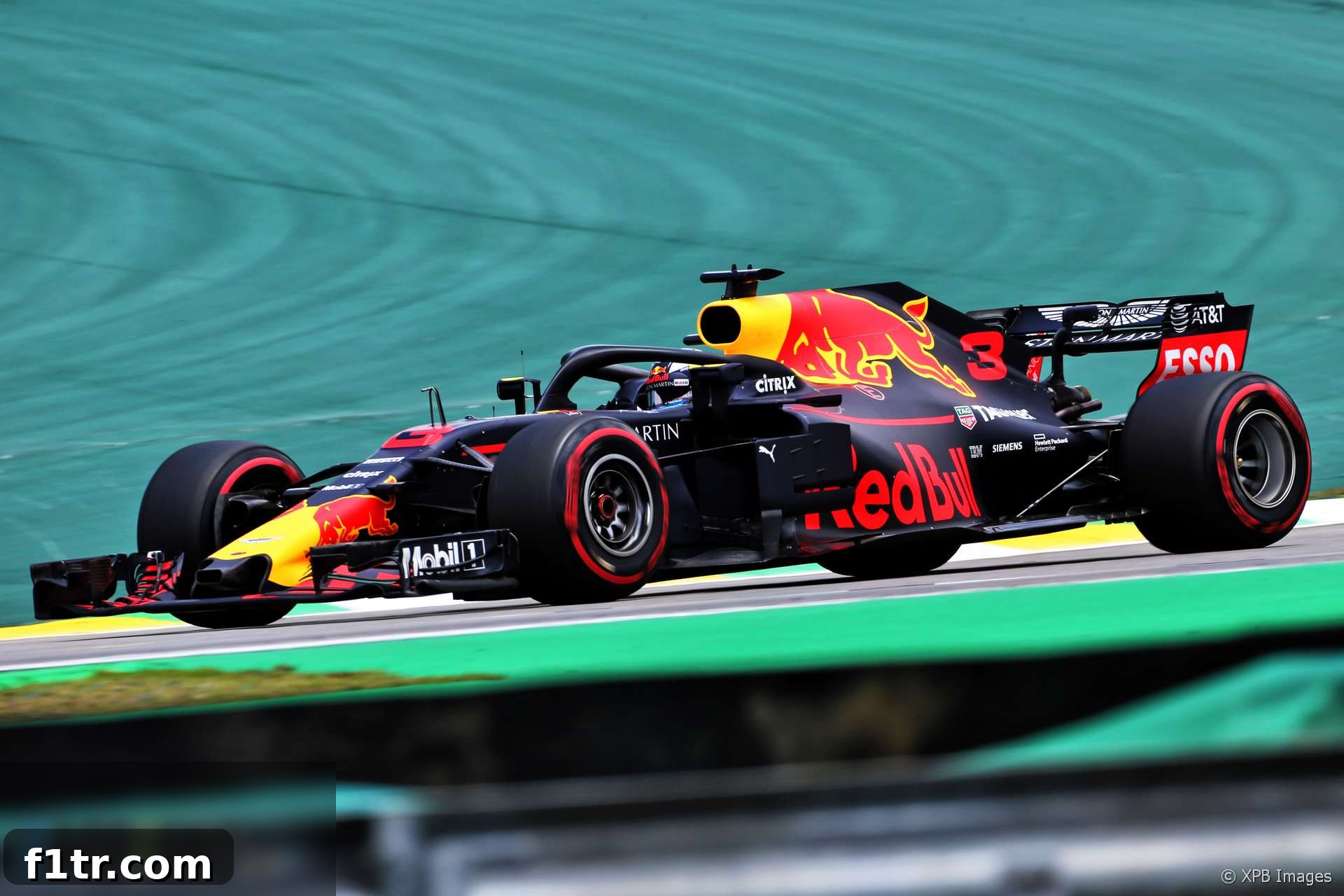
In the high-stakes world of Formula 1, every race is a meticulously choreographed battle of engineering, skill, and strategy. Yet, sometimes, external circumstances can dramatically alter a driver’s weekend, even before the lights go out. Such was the case for Red Bull Racing’s Daniel Ricciardo, who found himself grappling with a grid penalty just days after a disheartening retirement from the Mexican Grand Prix. The news, delivered via a phone call, confirmed what would be another hurdle in a season already marked by its share of ups and downs, forcing him to start a subsequent race further down the grid.
Advert | Become a Supporter & go ad-free
The genesis of this penalty traces back to the dramatic climax of the Mexican Grand Prix. Ricciardo, who had been in stellar form throughout the race at the Autodromo Hermanos Rodriguez, was running a strong second, poised for a crucial podium finish. However, his race came to an abrupt and frustrating end when a clutch problem forced his retirement. As his Red Bull RB14 was being recovered from the track, an unforeseen incident occurred: a marshal, in the process of ensuring the car’s safety, inadvertently caused significant damage to the car’s turbocharger. The details revealed that the marshal had discharged a fire extinguisher directly into the exhaust system, a standard procedure in some recovery scenarios to prevent fires, but in this instance, it proved detrimental to the intricate turbo unit.
“I’d kind of got over it that week, the retirement in Mexico, and then I got that call and I was like ‘ah well, it is what it is’,” Ricciardo recounted, reflecting on the call that delivered the unwelcome news. “They notified me of what happened when we broke down in Mexico. I think the marshals put extinguisher straight up the exhaust and went to town on it, and damaged the turbo.” The damage meant that the team would be forced to fit a new turbocharger, exceeding his season’s allocation for power unit components and triggering an automatic five-place grid penalty for the upcoming race. For a driver who had already faced a string of reliability issues throughout the 2018 season, this news was yet another bitter pill to swallow, adding to the growing list of frustrations.
Understanding F1’s Power Unit Penalty System
In modern Formula 1, strict regulations govern the number of power unit components a team can use across a season. The hybrid power unit is comprised of six key elements: the Internal Combustion Engine (ICE), Motor Generator Unit-Kinetic (MGU-K), Motor Generator Unit-Heat (MGU-H), Turbocharger (TC), Energy Store (ES), and Control Electronics (CE). For the 2018 season, drivers were permitted to use only three ICE, MGU-H, and TC units, and two MGU-K, ES, and CE units. Exceeding these allocations results in grid penalties. A first infringement for using an additional component typically incurs a 10-place grid penalty, with subsequent components of the same type incurring a further five places. In Ricciardo’s case, since a new turbocharger was required beyond his allocated three, he received a five-place drop on the starting grid. This system is designed to control costs and encourage reliability, but it often leads to tactical headaches and penalizes drivers for circumstances sometimes beyond their control, as evidenced by the incident in Mexico.
Ricciardo’s Undiminished Optimism and Practice Performance
Despite the setback, Daniel Ricciardo, known for his infectious grin and his “Honey Badger” mentality – a refusal to give up or be intimidated – remained remarkably optimistic. His ability to compartmentalize disappointment and focus on the task at hand is one of his defining characteristics. “The penalty doesn’t help but the pace this afternoon was better,” he stated after the initial practice sessions for the race weekend, indicating an immediate shift in focus from past frustrations to current performance. “I think we made improvements with the car.”
His observations from Friday practice offered genuine grounds for encouragement. While the morning session’s pace wasn’t groundbreaking, the team managed to extract significant improvements from the car by the afternoon. “This morning we weren’t that bad but for sure we wanted to be quicker. I think we made a step forward this afternoon, I think there’s still a little bit left,” Ricciardo elaborated. More crucially, the long-run pace, which is often a strong indicator of a car’s race performance and tire management capabilities, appeared to be robust. “The long-run pace seemed decent so we’ll see,” he commented, hinting at a potential strength that could help him mitigate the penalty during the race.
Ricciardo also noted the versatility of the tire compounds available. “All three tyres don’t seem that far off at the moment,” he observed, referring to the super-soft, soft, and medium compounds. This flexibility in tire strategy is a significant advantage, especially when facing a grid penalty, as it opens up more options for an aggressive or alternative race plan. He specifically mentioned seeing strong performance on both super-soft and medium compounds, even referencing rival Valtteri Bottas’s pace on the medium as a benchmark. “I know the long runs were decent on the super[-soft] but also the medium, I think Valtteri [Bottas] on the medium didn’t look too bad, from memory. We’ll see.”
Navigating the Race with a Grid Penalty: Strategy and Challenges
A grid penalty fundamentally alters a driver’s approach to a race weekend. Starting further back means a greater need for overtakes, increased tire degradation in traffic, and a higher risk of being caught in first-lap incidents. However, for a driver of Ricciardo’s caliber, it also presents an opportunity to showcase his formidable race craft and overtaking prowess. “It opens up the options for me – obviously I’ll start further back in the race so I’ll have a crack and see what happens,” he declared, embodying his signature attacking style.
The strategy for such a race often involves a combination of factors: a clean start to gain positions immediately, effective tire management to allow for longer stints or aggressive pushes, and opportunistic overtaking. The flexibility in tire choices, as noted by Ricciardo, could be pivotal. A unique tire strategy, perhaps starting on a less conventional compound, could allow him to run longer or shorter than his rivals, providing clean air when needed or exploiting potential safety car periods. The challenge, however, lies in navigating the midfield pack, which often involves battling with cars that might have different performance characteristics or less to lose, increasing the intensity of the early stages of the race.
Red Bull’s 2018 Season and Ricciardo’s Journey
The 2018 F1 season was a complex one for Red Bull Racing and Daniel Ricciardo. While the team showed flashes of brilliance, particularly with Ricciardo’s victories in China and Monaco, reliability issues frequently plagued his side of the garage. These mechanical failures, often occurring while he was in strong contention for podiums or wins, undoubtedly contributed to his decision to seek a new challenge at the end of the year. The penalty stemming from the turbocharger damage was yet another chapter in a season defined by missed opportunities due to technical woes. Despite these setbacks, Ricciardo consistently demonstrated his raw speed, race craft, and unwavering positive attitude, making him one of the most exciting drivers on the grid.
Advert | Become a RaceFans supporter andgo ad-free
In conclusion, while a five-place grid penalty is never ideal, Daniel Ricciardo’s approach and the promising pace of his Red Bull car offered a glimmer of hope. His characteristic resilience and strategic thinking would be vital in turning this adversity into an opportunity for a memorable charge through the field. The race promised to be another testament to Ricciardo’s enduring spirit and his relentless pursuit of performance, regardless of the challenges thrown his way.
2018 F1 season
- F1 feared “death knell” for Drive to Survive after Ferrari and Mercedes snub
- McLaren staff told us we were “totally crazy” to take Honda engines in 2018 – Tost
- ‘It doesn’t matter if we start last’: How Red Bull’s junior team aided Honda’s leap forward
- Honda’s jet division helped F1 engineers solve power unit problem
- McLaren Racing losses rise after Honda split
Browse all 2018 F1 season articles