Formula 1 Spanish Grand Prix: A Deep Dive into 2018 Tyre Strategy
Formula 1 is a thrilling blend of cutting-edge engineering, raw driving talent, and intricate strategy. Among the myriad factors influencing race outcomes, tyre selection stands as one of the most critical, shaping both qualifying prowess and race-day endurance. The 2018 Spanish Grand Prix at the iconic Circuit de Barcelona-Catalunya presented a fascinating case study in strategic diversity, particularly regarding how teams approached Pirelli’s tyre compounds.
As teams converged on Montmeló, their tyre choices revealed a striking spectrum of philosophies, hinting at varied qualifying ambitions and race day tactics. This event was especially significant as it marked the first time teams were selecting tyres for a race weekend after having extensively tested their new cars at the very same venue during pre-season. Despite this familiarity, the final selections showcased anything but uniform confidence, setting the stage for a captivating strategic battle.
The Gruelling Demands of Circuit de Barcelona-Catalunya
Circuit de Barcelona-Catalunya is renowned for being one of the most demanding tracks for tyres on the Formula 1 calendar. Its unique layout features a blend of high-speed corners, technical chicanes, and a long main straight, all contributing to significant tyre wear and degradation.
The high-speed corners, particularly Turn 3 (Curva Campsa) and the sweeping Turn 9 (Campsa), exert immense lateral forces, leading to high energy transfer through the tyres. This constant load puts the tyre structures under considerable stress, heating them up rapidly and accelerating wear. The track surface itself is notoriously abrasive, acting like sandpaper on the rubber and causing significant wear over long stints. The final sector, with its series of slower corners, also tests the tyres’ ability to generate grip under acceleration and braking, often leading to overheating and graining.
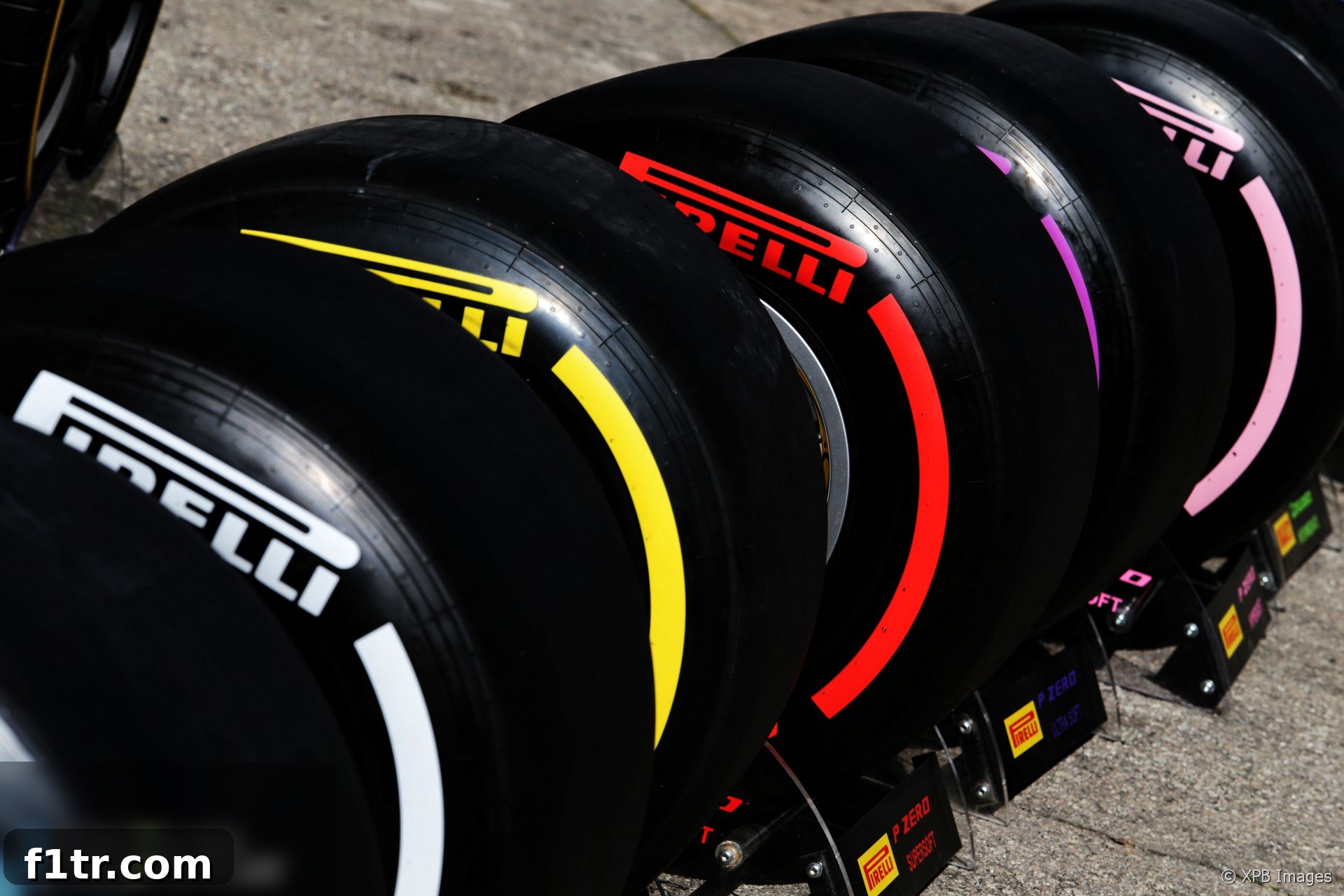
Pirelli, as the exclusive tyre supplier, typically brings a range of compounds tailored to the expected conditions. For the 2018 Spanish Grand Prix, the choices were the SuperSoft (red), Soft (yellow), and Medium (white) compounds. The SuperSoft, being the fastest but least durable, offered a significant qualifying advantage and initial race pace. The Soft compound provided a balance of speed and longevity, making it a versatile option, while the Medium was the workhorse, offering maximum durability for longer stints, albeit at a slower pace.
Understanding these dynamics is paramount for teams. A precise balance must be struck between raw pace (often found on softer compounds) and the need for durability to execute a successful pit stop strategy. The unique challenge at Catalunya is that while teams possess vast amounts of testing data from this circuit, race conditions – with rubber build-up, varying temperatures, and competitive pressures – often paint a different picture, making final tyre selections a high-stakes gamble.
Strategic Divergence: A Look at Team Approaches
The diverse tyre selections for the 2018 Spanish Grand Prix underlined each team’s unique interpretation of the Circuit de Catalunya’s demands and their own car’s characteristics. These choices offered a fascinating glimpse into their pre-race confidence, car performance expectations, and strategic priorities.
Mercedes’ Calculated Conservatism
World championship leader Lewis Hamilton and teammate Valtteri Bottas opted for a comparatively conservative approach, selecting the fewest SuperSoft sets (five each) among the front-running teams. This decision likely stemmed from Mercedes’ profound confidence in their W09’s ability to manage tyre degradation effectively, even on the harder compounds. Their strategy might have aimed for a more flexible race plan, potentially enabling a longer first stint on the Soft tyre or relying on a strong qualifying performance with fewer SuperSoft attempts to save tyres for the race. It suggested a belief in their car’s inherent pace and superior tyre management capabilities rather than needing multiple soft tyre runs to secure a strong grid position.
Ferrari and Red Bull’s Balanced Aggression
In contrast, Ferrari’s Sebastian Vettel and Kimi Räikkönen each chose seven sets of SuperSofts. This more aggressive allocation, shared with Red Bull Racing’s Max Verstappen and Daniel Ricciardo, and Force India, suggested a focus on maximizing qualifying performance and ensuring they had enough fresh soft tyres for critical moments. This could include multiple Q3 runs to secure pole position or an aggressive early race push to gain track position. It highlighted their intent to challenge Mercedes directly on ultimate pace and potentially put pressure on their rivals through strategic tyre usage.
Williams’ Bold Gamble
The most striking deviation came from Williams, with Sergey Sirotkin taking an astonishing ten sets of SuperSofts and Lance Stroll nine. For a team often struggling for outright pace in 2018, this was a bold, almost desperate, gamble. It indicated a clear intent to prioritize qualifying lap time at almost any cost, hoping to gain track position on Saturday. However, such an an aggressive allocation inherently limited their options for the more durable Soft and Medium compounds, potentially making their race strategy incredibly challenging, especially if degradation was high or unforeseen circumstances arose. This could also be a strategy to gather more data on the softest compound, given their development struggles and desire to understand their car’s performance envelope.
The Midfield Spectrum
Other teams like Toro Rosso, Haas, McLaren, and Sauber settled on eight sets of SuperSofts, indicating a desire for strong qualifying performance while still retaining a reasonable allocation of harder compounds for race strategy flexibility. Renault, like Ferrari and Red Bull, also went with seven SuperSofts, suggesting a similar strategic philosophy among those teams vying for the upper midfield and challenging the top three. These teams often seek to differentiate themselves through smart strategy, and a balanced tyre choice allows for more tactical versatility.
Implications for the Race Weekend: Qualifying and Grand Prix Strategy
These varied tyre selections had profound implications for both qualifying and the race. For qualifying, teams with more SuperSofts, such as Williams, had the luxury of more attempts to extract the optimal lap time, potentially allowing for more aggressive pushing or recovery from errors without compromising their tyre stock. However, it also meant fewer new sets of the more durable compounds for Sunday’s main event.
On race day, the number of available tyre sets directly influenced pit stop strategy. Teams with fewer SuperSofts, like Mercedes, might be forced into longer stints on Soft or Medium tyres, demanding exceptional tyre management from their drivers. This required precise driving to avoid overheating and blistering, extending the life of the tyres as much as possible. Conversely, those with an abundance of SuperSofts could theoretically consider a more aggressive two-stop strategy, featuring shorter, faster stints on the softest compound, aiming for maximum attack.
The ever-present threat of tyre degradation, combined with the strategic chess game of undercuts (pitting earlier to gain track position on fresh tyres) and overcuts (staying out longer on older tyres to find clear air and make up time), promised an unpredictable and thrilling Spanish Grand Prix. Furthermore, unforeseen circumstances like Safety Cars or changes in track temperature could completely upend pre-race strategies, rewarding those with flexibility in their tyre allocation.
2018 Spanish Grand Prix Tyre Selections
| Driver | Team | Tyres (SuperSoft / Soft / Medium) |
|---|---|---|
| Lewis Hamilton | Mercedes | 5 / 4 / 4 |
| Valtteri Bottas | Mercedes | 5 / 4 / 4 |
| Sebastian Vettel | Ferrari | 7 / 3 / 3 |
| Kimi Raikkonen | Ferrari | 7 / 3 / 3 |
| Daniel Ricciardo | Red Bull | 7 / 3 / 3 |
| Max Verstappen | Red Bull | 7 / 3 / 3 |
| Sergio Perez | Force India | 7 / 3 / 3 |
| Esteban Ocon | Force India | 7 / 3 / 3 |
| Lance Stroll | Williams | 9 / 2 / 2 |
| Sergey Sirotkin | Williams | 10 / 1 / 2 |
| Carlos Sainz Jnr | Renault | 7 / 3 / 3 |
| Nico Hulkenberg | Renault | 7 / 3 / 3 |
| Pierre Gasly | Toro Rosso | 8 / 3 / 2 |
| Brendon Hartley | Toro Rosso | 8 / 3 / 2 |
| Romain Grosjean | Haas | 8 / 3 / 2 |
| Kevin Magnussen | Haas | 8 / 3 / 2 |
| Fernando Alonso | McLaren | 8 / 3 / 2 |
| Stoffel Vandoorne | McLaren | 8 / 3 / 2 |
| Marcus Ericsson | Sauber | 8 / 3 / 2 |
| Charles Leclerc | Sauber | 8 / 3 / 2 |
Conclusion: The Strategic Chessboard of F1
The 2018 Spanish Grand Prix tyre selections were a microcosm of Formula 1’s strategic depth and the constant pursuit of competitive advantage. From Mercedes’ calculated conservatism, aiming to leverage their car’s inherent balance and tyre management prowess, to Williams’ audacious gamble for qualifying glory, each choice represented a team’s best estimate of performance, degradation, and strategic opportunity at the demanding Circuit de Barcelona-Catalunya.
As the first race following extensive pre-season testing at the very same venue, these decisions were under intense scrutiny. The outcome of the race would not only be dictated by driver skill and car performance but also significantly by the shrewdness of these critical tyre strategy calls, promising a captivating start to the European leg of the F1 season and a vivid reminder of the strategic chess game at the heart of Formula 1 racing.
2018 F1 season
Browse all 2018 F1 season articles