In the high-stakes arena of Formula 1, where dreams are forged and shattered with breathtaking speed, the recent decision by Alpine to drop Jack Doohan from their driver lineup after just six rounds of his debut season has sent ripples through the paddock. This abrupt change, seeing Franco Colapinto step into the highly coveted seat, has ignited a conversation about the brutal realities of professional motorsport and the intense pressure on young talents. Several of Doohan’s peers and former rivals have voiced their support, highlighting the unforgiving nature of a sport where performance is paramount and time to prove oneself is a luxury rarely afforded.
Advert | Become a Supporter & go ad-free
Advertisement
The Alpine Shake-Up: A Sudden End for Doohan’s Debut
For Jack Doohan, the 2024 season was meant to be the culmination of years of hard work, dedication, and significant investment in his junior career. Making his Formula 1 debut with Alpine, the young Australian driver faced the formidable challenge of adapting to the pinnacle of motorsport. His promotion to a full-time seat was a moment of immense pride and expectation, symbolizing his progression through the competitive ladder of Formula 2 and his established connection with the Alpine academy.
However, his tenure proved to be remarkably short-lived, with Alpine opting for a change just six races into the calendar. Franco Colapinto, a rising talent himself, is now poised to make his first start for Alpine as Doohan’s replacement. This move not only marks a pivotal moment for both drivers but also casts a spotlight on the precarious nature of an F1 career, especially for rookies striving to make their mark.
The swiftness of the decision has sparked considerable debate, particularly among those who understand the immense learning curve involved in transitioning to Formula 1. Rookies often require time to acclimatize to the complexities of the cars, the intensity of the competition, and the unique demands of each circuit. To be judged and moved on after such a limited window raises pertinent questions about the fairness and practicality of team expectations in modern F1, where instant success is increasingly demanded.
Nico Hulkenberg: A Veteran’s Empathy for Doohan’s Plight
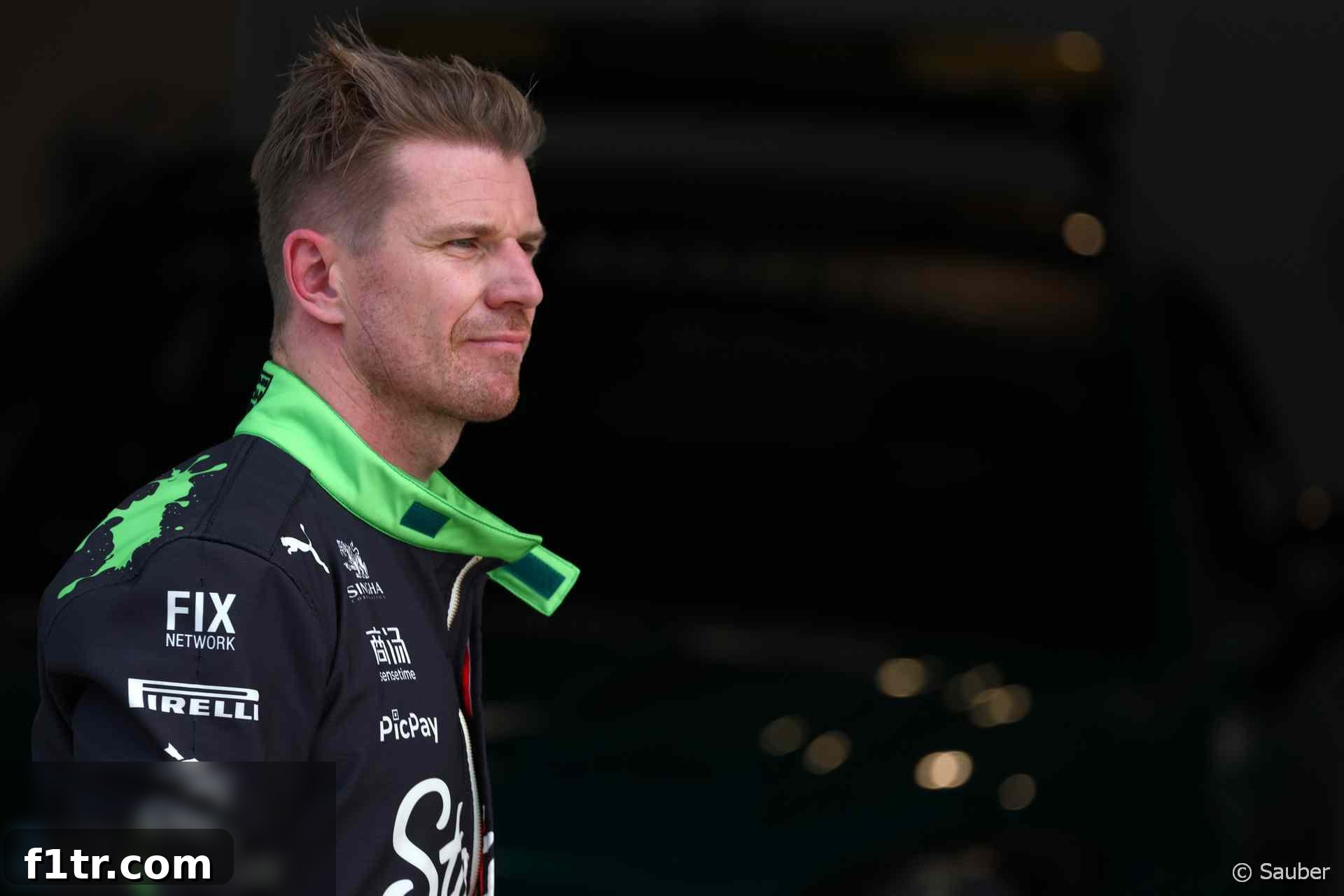
One of the most experienced voices to weigh in on the situation is Nico Hulkenberg, a driver who has himself navigated the treacherous waters of Formula 1 across multiple stints and with various teams. Hulkenberg’s own career trajectory, which saw him lose his initial F1 seat after just one season with Williams, only to return with Force India after a year as a test driver, offers a profound understanding of Doohan’s predicament. Later, after losing his Renault seat, he spent another four seasons out of a full-time drive – making only a handful of substitute appearances – before his impressive return with Haas. This personal history of career highs and lows makes his empathy for Doohan particularly resonant.
Hulkenberg, who drove for Alpine when it was known as Renault from 2017 to 2019, commented to the official Formula 1 channel, “It’s obviously tough. I think even when Jack started there, over the winter it was always, obviously, with Franco around, it was a tough environment to start in as a rookie.” His words suggest that the writing may have been on the wall for Doohan even before his debut, with Colapinto’s appointment as a reserve driver signaling an immediate sense of jeopardy for the rookie’s position. This constant internal competition within driver academies can create an incredibly high-pressure atmosphere from the outset.
Expressing genuine sympathy, Hulkenberg elaborated, “I feel sorry for him in a way, he didn’t obviously have much time to prove and to grow. I know how difficult it is as a rookie to come in. Being in such a tight mid-pack, it’s hard to really convince [people].” His insights underscore the monumental challenge for any rookie, let alone one thrust into the intensely competitive midfield where fractions of a second can separate multiple cars. In such an environment, showcasing consistent potential and delivering immediate, convincing results can be an overwhelming task, often requiring more than just raw speed.
Hulkenberg succinctly summarized the prevailing sentiment within the sport, stating, “So that’s typical Formula 1, very cutthroat, very unforgiving in these days. I think especially in that team at that moment.” This description resonates deeply within the F1 community, highlighting how the sport often prioritizes immediate results and commercial viability over long-term driver development, particularly for teams fighting to climb the constructor standings and secure their financial future.
Advert | Become a RaceFans supporter andgo ad-free
Advertisement
Oliver Bearman: A Peer’s Call for Fairness and Perspective
Oliver Bearman, another highly touted rookie who also began his first full season in Formula 1 this year, echoed Hulkenberg’s sentiments regarding the sport’s ruthless nature. “I think it shows that we live in a cutthroat sport,” Bearman remarked, drawing parallels between Doohan’s situation and the constant pressure faced by all drivers, especially those just starting their F1 journey. As a contemporary, Bearman’s view offers a candid glimpse into the mindset of young drivers navigating the F1 landscape.
However, Bearman went a step further, openly questioning the timing and justification of Alpine’s decision. “Even if I don’t really fully agree with what’s happened in that team, I think it’s a little harsh and a little early to make judgments on someone after only six races.” This statement reflects a common feeling among many observers and younger drivers: that six races are an insufficient sample size to definitively evaluate a rookie’s capabilities and potential for growth within the sport. F1 cars are notoriously difficult to master, requiring subtle inputs and extensive data analysis, and extracting consistent performance often takes time and significant seat time, which Doohan was simply not afforded.
Bearman continued, “I think Jack did a great job and I agree that it’s very harsh what happened to him. But it’s also a reminder for all of us that we need to be performing at all times.” His words encapsulate a dual message: profound empathy for Doohan’s perceived unfair situation, combined with a stark reminder of the ever-present sword of Damocles hanging over every F1 driver’s head. The pressure to perform is ceaseless, and any lapse, perceived or real, can have severe consequences, irrespective of a driver’s raw talent or potential for future development.
Liam Lawson: From One Young Talent to Another
The collective support for Jack Doohan also came from Liam Lawson, a driver who knows firsthand the sharp end of F1 team decisions. Lawson himself experienced a similar kind of ruthlessness when Red Bull relegated him back to their junior F1 team just two rounds into the new season, after he impressed as a substitute in 2023. This personal experience of being brought into F1 under challenging circumstances and then being sidelined despite strong performances makes his words particularly resonant and authoritative on the subject.
Lawson described Alpine’s handling of Doohan as “cutthroat,” reinforcing the pervasive theme. “I spoke to Jack, obviously for him it’s very tough,” Lawson shared, emphasizing the personal toll such decisions take on young athletes who have dedicated their lives to reaching F1. “I think he showed enough to stay in Formula 1, for sure.” This endorsement from a peer who understands the nuances of the junior categories and the F1 environment speaks volumes about Doohan’s perceived capabilities and potential among his fellow drivers.
Lawson further articulated the core dilemma facing rookie drivers: “But also, it’s hard — how can you be expected in five races to show everything you have, especially in your rookie season? Unfortunately, it’s very cutthroat.” His question highlights the often unrealistic expectations placed on newcomers. F1 is a complex sport where car setup, race strategy, tire management, and sheer experience play crucial roles alongside raw speed. To demand a complete demonstration of skill, consistency, and racecraft within such a limited timeframe, particularly in a midfield car that may not always flatter a driver, sets an incredibly high bar that few can realistically meet.
The Broader Implications: F1’s Unforgiving Ladder and Future Talent
The situation with Jack Doohan serves as a stark reminder of the intense pressures and swift judgments that define careers in Formula 1. The journey to F1 is itself a grueling odyssey, demanding immense talent, financial backing, and unwavering dedication through junior formulas like Formula 3 and Formula 2. Once a driver reaches F1, the competition doesn’t cease; it intensifies dramatically. Teams operate under immense commercial and sporting pressure, with millions of dollars and their reputations on the line. This often translates into short-term thinking when it comes to driver lineups, especially in the midfield where every point is crucial for constructors’ championship standings and prize money.
The ‘cutthroat’ nature extends beyond individual decisions. It reflects a wider trend in modern F1 where teams are increasingly reluctant to invest in long-term development for rookie drivers, unless they exhibit immediate, spectacular results akin to generational talents. The expectation is often for drivers to hit the ground running, a feat few can accomplish without significant prior experience or a highly dominant car. This dynamic places an immense burden on young drivers, forcing them to perform under conditions that are far from ideal for showcasing their full potential and allowing for natural growth.
For Doohan, the immediate future is uncertain, but his talent and determination are undeniable. Many drivers have faced setbacks early in their careers only to return stronger, proving that a single team’s decision does not define an entire career. The hope is that this premature departure from Alpine does not derail his Formula 1 ambitions entirely but rather serves as a difficult, yet valuable, lesson in the relentless world of top-tier motorsport. His journey, like that of Hulkenberg, Bearman, and Lawson, underscores the precarious nature of an F1 career and the constant battle for survival at the pinnacle of racing. The F1 paddock remains a place of dreams and harsh realities, where even the most promising talents must contend with the ever-present threat of being replaced.
This article will be updated as more information becomes available.
Miss nothing from RaceFans
Get a daily email with all our latest stories – no marketing, no ads. Sign up here:
Latest on the 2025 Emilia Romagna Grand Prix
- Antonelli was tiring from home race at Imola attention by Friday – Wolff
- Ferrari struggling to recreate set-up which “worked well” in Shanghai – Hamilton
- Verstappen told Red Bull to use Tsunoda before “hold him up” call
- ‘Saturdays have been mine for years but for some reason it’s drifted away’ – Norris
- “Plan C?”: Why McLaren only got their strategy right for one driver at Imola
Browse all 2025 Emilia Romagna Grand Prix articles