In the high-stakes world of Formula 1, where fractions of a second can determine victory or defeat, the interpretation of racing rules is a constant source of debate. Ferrari driver and Grand Prix Drivers’ Association (GPDA) director, Carlos Sainz Jnr, has vocalized significant concerns regarding the efficacy of Formula 1’s current guidelines on driving standards, suggesting they have inadvertently led to a surge in penalties issued by race stewards.
Sainz’s comments come at a critical juncture, as drivers are scheduled to convene with representatives from the Fédération Internationale de l’Automobile (FIA) this weekend. This eagerly anticipated meeting aims to thoroughly discuss the enforcement mechanisms of the series’ racing rules, a topic that has stirred considerable controversy and division within the paddock and among fans alike throughout the season.
The Evolution and Impact of FIA Guidelines
The FIA first introduced comprehensive guidelines for policing racing rules in 2022, a move intended to foster greater consistency and transparency in stewarding decisions. The most recent iteration of these guidelines was published in June, with the explicit goal of enhancing public understanding of why specific penalties are levied. While stewards frequently reference these guidelines in their official rulings, Sainz contends that some of the more contentious judgments warrant deeper scrutiny and a more collaborative review process.
“Our first step must be to gather and meticulously analyze several incidents where there appears to be a notable divergence of opinion between the drivers and the FIA stewards,” Sainz stated during a recent FIA press conference. He highlighted the existence of “different ways to judge different incidents,” which has contributed to a palpable sense of confusion and frustration among competitors this year.
Sainz advocated for a calm, constructive dialogue, away from the immediate pressure of a race weekend. “There’s been quite a bit of confusion regarding a few of them this year. I believe we need to sit together, go through each case, and analyze them calmly, out of the heat of the moment, much like we are now on a Thursday before a race,” he explained. The objective, he stressed, is to collaboratively devise “a better solution for the future” that satisfies all stakeholders and upholds the integrity of the sport.
The Erosion of “Racing Incidents” and the Call for Nuance
A core tenet of Carlos Sainz’s critique centers on what he perceives as a significant reduction in incidents being classified as legitimate “racing incidents.” Traditionally, Formula 1 has embraced the concept of a “racing incident” to acknowledge unavoidable contact or minor infractions that occur during intense, wheel-to-wheel competition, where no single driver is overwhelmingly at fault, and the consequences are an inherent part of the racing spectacle. This approach allows for aggressive, yet fair, racing without every slight bump or deviation resulting in a penalty, preserving the thrill and natural flow of the sport.
“My personal opinion – and here I’m not speaking from a GPDA perspective, but purely as Carlos Sainz – is that there is definite room for improvement,” he asserted. Sainz believes the very guidelines designed to clarify rules have, paradoxically, introduced more complications than solutions, particularly concerning how on-track incidents are assessed.
“There’s been barely any room for racing incidents this year; it’s always been either white or black because we’ve been supported by the guidelines,” Sainz lamented. He suggested that the detailed, often prescriptive nature of the guidelines leaves little scope for nuanced judgment. For example, rules dictating the precise positioning of tires relative to other cars – whether a tire is “in front or behind a mirror” or “in front or behind a front or rear tire” – are meant to offer objective criteria. However, in the dynamic, high-speed environment of Formula 1, such specific parameters can strip away the context of a racing maneuver, forcing stewards to apply a black-and-white interpretation where a gray area might be more appropriate.
This rigidity, Sainz argues, inadvertently compels stewards to issue penalties even in situations that, under a broader interpretation, would have been deemed an acceptable consequence of hard racing. “The guidelines haven’t allowed racing incidents to be judged as racing incidents because there was always a tyre in front or behind a mirror or a tyre in front or behind a front or rear tyre, whatever their guidelines say – I don’t know them by heart,” he explained, underscoring the complexity and sometimes impracticality of remembering and applying every minute detail.
From his perspective, the implementation of these guidelines has been “a bit of an unsuccessful implementation.” He reiterated the necessity for an open discussion to explore alternative solutions that could strike a better balance between maintaining driving standards and preserving the thrilling essence of Formula 1 racing, where drivers are encouraged to push the limits without fear of overly punitive measures for every minor contact.
The Impact on Drivers: Consistency and Confidence
The core of the drivers’ frustration, eloquently articulated by Sainz, often revolves around the perceived lack of consistency in stewarding decisions. While the guidelines aim for uniformity, the subjective interpretation of fast-moving, complex incidents can still vary. This inconsistency not only impacts race results and championship standings but also erodes driver confidence. When drivers are uncertain about where the precise line for a penalty lies, it can lead to overly cautious driving, which detracts from the spectacle of Formula 1.
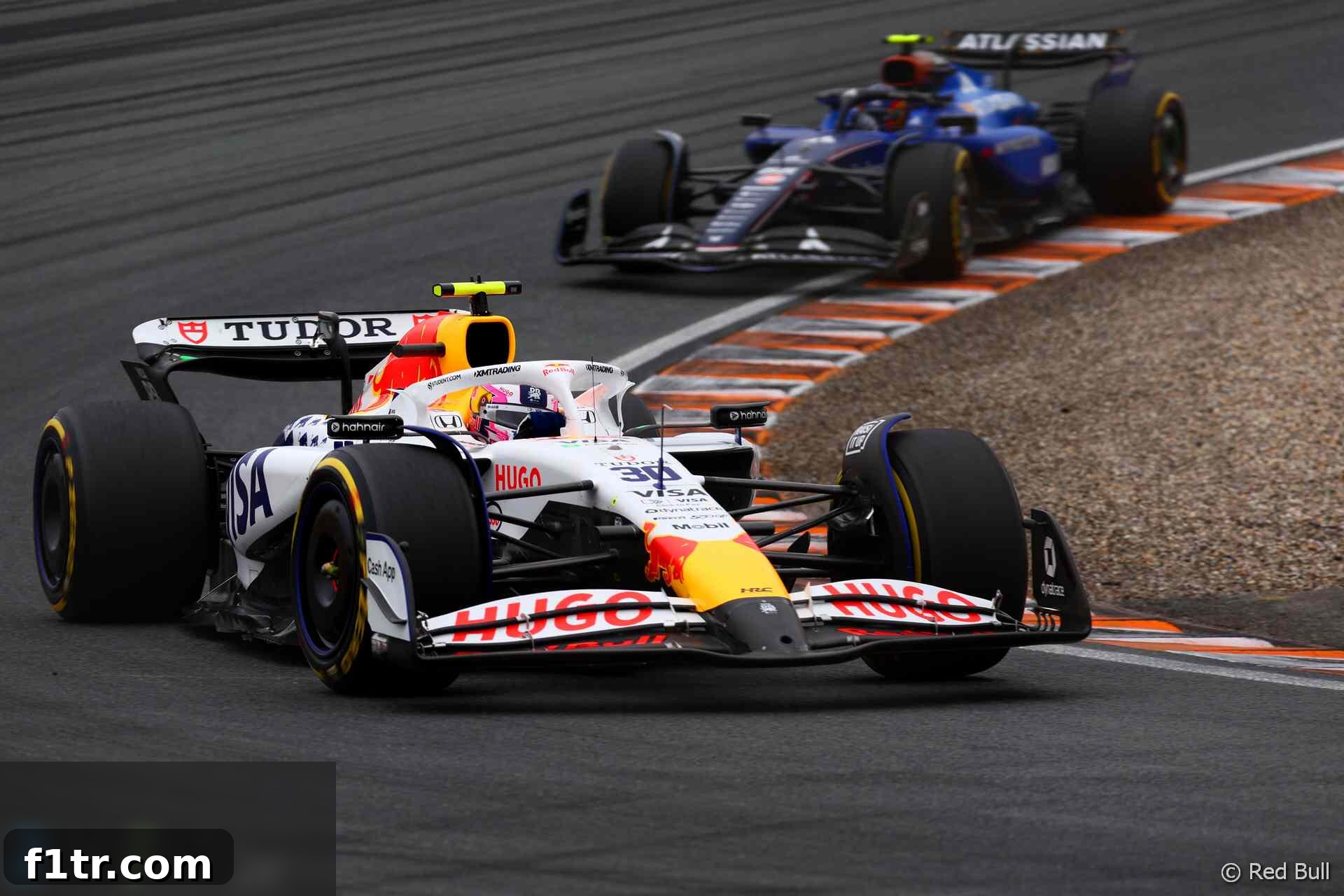
Sainz himself has experienced firsthand the complexities and potential inconsistencies stemming from the current framework. A notable instance occurred at the Dutch Grand Prix earlier this year, where he was initially handed a 10-second time penalty and two penalty points on his Super Licence for a collision involving Liam Lawson. This decision sparked considerable debate and frustration. In a significant development, Williams, Lawson’s team, successfully challenged the penalty points against Sainz. The stewards subsequently rescinded Sainz’s penalty points following Williams’ request for a review of the decision. However, the initial 10-second time penalty, which Sainz had already served during the race, could not be overturned, highlighting a critical aspect of the review process – while penalty points can be reassessed, time penalties already served often remain immutable.
This particular incident underscores the inherent challenges in F1 stewarding: the need for swift decisions during a race, the subsequent opportunity for review, and the differing outcomes that can arise from these processes. For Sainz, this scenario serves as a prime example of how the guidelines, despite their intentions, can lead to outcomes that feel disproportionate or inconsistent, particularly when aspects of a penalty are reversed but core consequences remain.
Carlos Sainz’s 2025 Season: A Snapshot of Stewarding Encounters
Sainz’s season has seen him frequently interacting with the stewards, making him a fitting voice for this discussion. His 2025 record of on-track incidents and subsequent investigations paints a clear picture of the tightrope drivers walk under the current regulatory framework:
| Event | Session | Infringement | Decision |
|---|---|---|---|
| Japanese Grand Prix | Qualifying | Unnecessarily impeded Hamilton in turn one. | Grid drop |
| Bahrain Grand Prix | Grand prix | Forced Antonelli off the track at turn 10. | 10 second time penalty (subsequently cancelled) |
| Canadian Grand Prix | Grand prix | Overtook under Safety Car conditions after the chequered flag. | Warning |
| British Grand Prix | Second practice | Drove in a manner potentially dangerous to other drivers. | Warning |
| Dutch Grand Prix | Grand prix | Caused a collision with Lawson at turn one. | 10 second time penalty (penalty points rescinded) |
| Italian Grand Prix | Grand prix | Did not use the escape road at turns four and five after missing turn four. | Reprimand |
| United States Grand Prix | Grand prix | Collided with Antonelli in turn 15. | Grid drop |
| Las Vegas Grand Prix | Qualifying | Went off the track at turn five and rejoined as Stroll was approaching. | No action |
This table illustrates a range of infringements, from impeding rivals during qualifying to causing collisions in races, and the varied consequences, including grid penalties, time penalties, warnings, and reprimands. The Dutch Grand Prix incident, where penalty points were later rescinded, stands out as a testament to the dynamic nature of these decisions and the potential for review to alter initial rulings. The Bahrain Grand Prix also shows a penalty being issued and then cancelled, further highlighting the fluidity of these interpretations. Each of these instances, particularly those involving active contact or significant impact on other drivers, likely falls under the precise scrutiny of the guidelines Sainz discusses, reinforcing his call for a more adaptable and context-aware approach to stewarding.
The Path Forward: A Collaborative Approach to Fair Racing
The upcoming meeting between drivers and FIA representatives represents a crucial opportunity for Formula 1 to address these pressing concerns. The objective is not to undermine the authority of the stewards or to disregard the essential role of regulations in ensuring safety and fair play. Rather, it is to refine a system that, in its current form, is perceived by many drivers, including a prominent figure like Carlos Sainz, as overly prescriptive and restrictive, inadvertently stifling the very essence of competitive racing.
A collaborative approach, where driver feedback is genuinely integrated into the refinement of the guidelines, could lead to a more balanced framework. This might involve re-evaluating the precise definitions within the guidelines, introducing more flexibility for stewards to assess the “spirit” of an incident alongside its technical adherence to rules, and fostering a shared understanding of what constitutes an acceptable “racing incident” versus a penalizable offense. Such a dialogue is vital for preserving the thrilling spectacle of Formula 1, where drivers are encouraged to push boundaries, while simultaneously maintaining the highest standards of safety and sportsmanship. Ultimately, the goal is to achieve a consistent, transparent, and fair system that both drivers and fans can fully trust, ensuring that the focus remains on the breathtaking on-track battles, rather than the contentious interpretations in the stewards’ room.