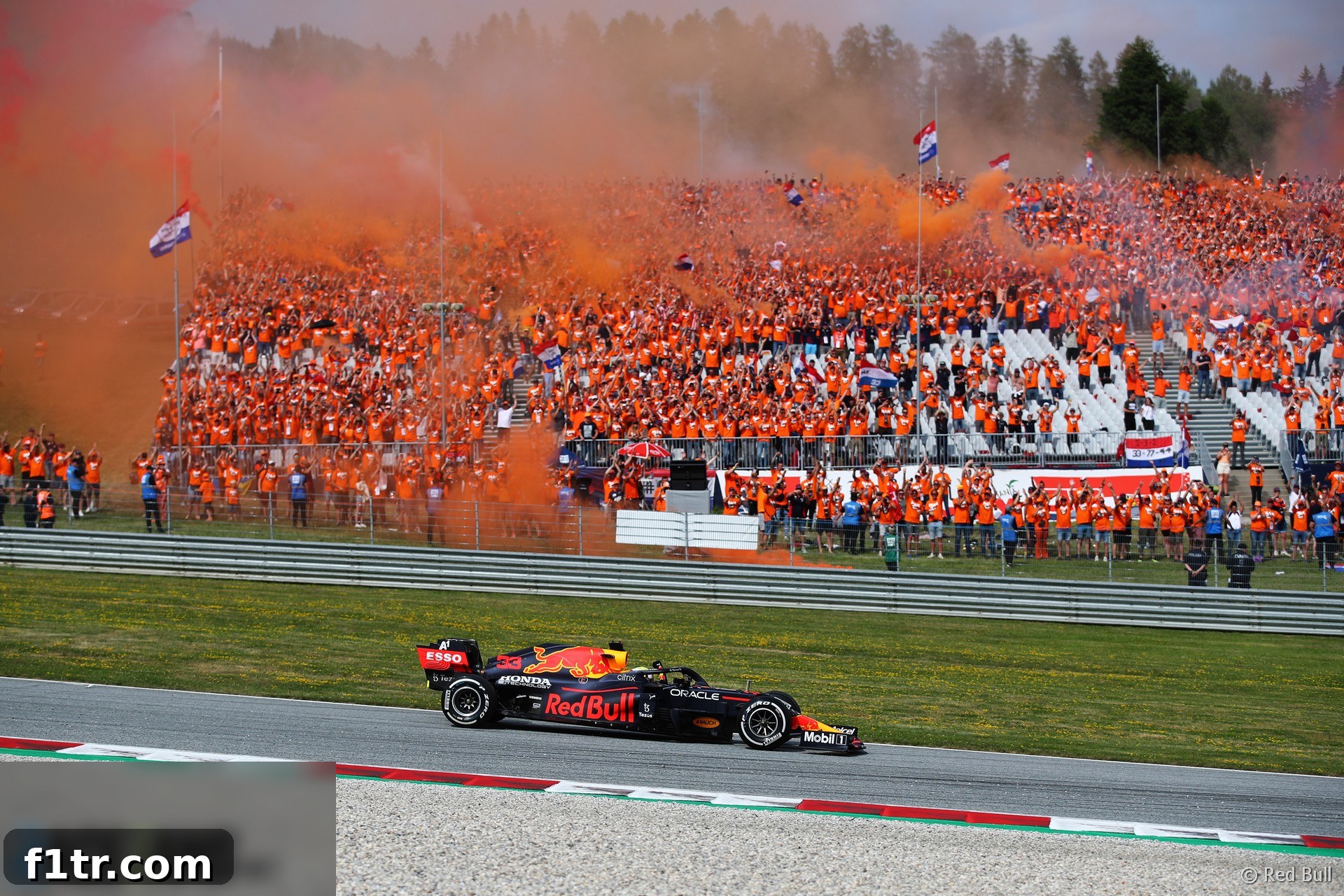
In a spectacle that captivated motorsport enthusiasts worldwide, Max Verstappen delivered a dominant victory at the Austrian Grand Prix, igniting rapturous cheers from an immense gathering of Dutch fans. This memorable event marked a significant milestone for Formula 1, drawing its largest audience since the onset of the global pandemic, underscoring the sport’s powerful resurgence and the unwavering passion of its fanbase.
Saturday, July 3rd: The Orange Invasion Begins
My journey to the Red Bull Ring from my Styrian mountain retreat had been a simple 30-minute drive on the previous days. However, Saturday presented an entirely different scenario, a joyous shock for any motorsport observer: the roads around Spielberg were swarming with more yellow-plated Dutch cars than I had seen Austrian registrations all week. It was unequivocally clear that the circuit was destined to be packed. And indeed, it was, with an estimated 40,000 fans, predominantly adorned in vibrant orange, creating an electrifying atmosphere even before qualifying.
Upon my arrival, the paddock buzzed with news that Lewis Hamilton had officially signed a two-year contract extension with Mercedes. Intriguingly, this new deal aligns with the expiration of team boss Toto Wolff’s current agreement. When I inquired with Wolff about this apparent coincidence, he clarified his future role, stating his intention to remain a significant 33.3% shareholder in the team even after he transitions from his day-to-day operational responsibilities. This development signals stability for the reigning champions and ensures Hamilton’s continued presence at the pinnacle of F1 for the foreseeable future.
My focus for the day also turned to the heavily discussed beefed-up rear tyres, which had been under evaluation during Friday and Saturday’s practice sessions, earmarked for introduction at the upcoming Silverstone race. Team reactions were largely positive; most indicated minimal performance difference, yet universally welcomed the reinforced sidewalls as a crucial safety enhancement. These tyres still required official sign-off from the FIA. This approval, however, was widely regarded as a mere formality, as their introduction was being mandated under the critical banner of ‘safety,’ a classification that bypasses the need for a unanimous team vote. This regulatory pathway highlights the FIA’s ultimate authority in matters of driver safety and track integrity.

I couldn’t help but crack a smile when reminded of how, in the past, any in-season change to tyre construction necessitated unanimous team approval. Yet, following the teams’ own vocal safety concerns raised after incidents at the Baku Grand Prix, they inadvertently backed themselves into a corner regarding such stipulations. This turn of events perfectly illustrates a timeless adage within the complex world of Formula 1: what goes around, eventually comes around. The sport’s inherent political dynamics often lead to ironic twists of fate, especially concerning technical regulations and safety protocols.
For my customary trackside excursion during the final practice session, I strategically positioned myself outside the challenging Turn 6-7-8 complex. This vantage point offered not only an excellent view of the racing line but also put me directly opposite the grandstand dedicated to Max Verstappen. The cacophony of cheering, whistling, and vibrant flag-waving emanating from the ‘Orange Army’ was nothing short of magnificent. It was a truly immersive experience, a palpable demonstration of fervent support, and I genuinely hoped that the upcoming Silverstone race would replicate such an exhilarating and passionate atmosphere, proving the return of fans truly elevates the Grand Prix experience.
During my rounds, I had a brief, yet insightful, encounter with the Hungarian Grand Prix promoter. He shared the encouraging news that the Hungarian government had approved a capacity crowd for the final race before the summer break. Despite strong ticket sales, the late approval meant that their marketing efforts had a somewhat delayed start. Nevertheless, given the enthralling on-track rivalry between Verstappen and Hamilton, the Hungaroring was anticipated to sell out completely very soon. The prospect of three consecutive races with full attendance filled the paddock with optimism, signaling a healthy future for Grand Prix racing post-pandemic.
The day’s most significant off-track event was undoubtedly the highly anticipated engine summit. This crucial meeting brought together F1’s top management with their power unit counterparts from key manufacturers: Mercedes, Ferrari, Renault, and Red Bull. Of particular note was the attendance of Dietrich Mateschitz, owner of two F1 teams and the very circuit hosting this weekend’s race. His company, Red Bull, is set to acquire Honda’s intellectual property following the Japanese manufacturer’s departure from F1. Mateschitz’s presence at his first power unit summit underscored the critical nature of these discussions for the sport’s long-term strategic direction.
Held at his elegant Steirer Schlosshotel, the summit was convened by the FIA to establish the broad framework for the 2025 onwards power unit regulations. This meeting represents a pivotal moment for F1, as decisions made here will shape the sport’s technological landscape, sustainability efforts, and competitive balance for years to come. While it was a strictly ‘closed’ meeting, the motorsport world eagerly awaited further news and details about the outcomes and strategic directions that would emerge from these vital discussions, expected to be revealed in the following week.
After navigating the usual post-qualifying media sessions, I made my way back to the car park and then to my guesthouse. My route took me past numerous campsites and vibrant party areas, where the sounds of merriment and celebration were abundant. Indeed, observing the sheer enthusiasm, I couldn’t help but ponder how many dedicated Dutch fans would likely be nursing massive headaches after this exhilarating weekend, particularly if Max Verstappen secured the victory as widely anticipated. The atmosphere was a testament to the unparalleled energy and devotion of the F1 fanbase.
Sunday, July 4th: Race Day Grandeur and Reflections

Race day is truly special; the closer one gets to the circuit, the more palpable and crisper the atmosphere becomes. There’s an undeniable magic about elite sport that has the power to lift spirits and ignite collective passion. As I approached the circuit gates, fans thronged, brandishing pens, programmes, t-shirts, or anything with driver or team connections, hoping to catch a glimpse of their heroes and perhaps snag an autograph from passing cars. This diverse crowd, united by an unyielding love for the sport, underscored the profound connection between Formula 1 and its global following, transcending barriers of nationality and background.
During my morning wanderings, I had the pleasure of meeting Travis Krause, Red Bull’s global head of motorsport media. He provided fascinating insights into the brand’s extensive strategies within motorsport. While all sponsors deserve immense gratitude for their contributions, Red Bull’s commitment goes above and beyond. It is difficult to imagine any other company that invests more significantly in global motorsport, encompassing not just Formula 1 but also a vast array of other disciplines, talent development programs, and high-octane events, solidifying their indelible mark on the sporting landscape.
After a hurried but remarkably excellent lunch in the media centre – a satisfying vegetable spaghetti bolognese followed by a decadent crème brûlée – I prepared myself for the main event. Following my inspiring trackside visit the previous day, I decided to deviate from my usual modus operandi of following the race from the sterile media centre. Instead, I requested a tabard to watch the opening laps from the visceral vantage point of Turn One. Permission granted, I headed to a prime position above the prominent ‘Austrian GP’ sign, eager to experience the raw intensity of the race start.
It was a simply wonderful experience, one that instantly transported me back to my very first Formula 1 visit – Kyalami in 1971. It was during that formative experience, having previously followed the sport primarily through magazines and books, that my deep love for F1 truly consolidated. As I watched the field jockey for crucial advantage immediately after the start, the profound realization struck me: how much of the incredible atmosphere, the bone-shaking noise, and the sheer raw energy we, in the often-sterile working areas, inadvertently miss. In that moment, I promised myself that in the future, I would endeavor to get out onto the trackside at least once a year, to reconnect with the authentic, unfiltered essence of Grand Prix racing.

The post-race media sessions brought another welcome step towards normalcy within the F1 paddock. Race director Michael Masi made his first ‘personal appearance’ for the media since the dramatic 2019 Abu Dhabi Grand Prix, having since then provided comments exclusively via audio links. While virtual platforms like Zoom have proven invaluable, when it comes to journalistic authenticity and depth, nothing quite compares to grilling someone in person. This direct engagement allows reporters to ask follow-up questions, gauge reactions, and ultimately provide better, more nuanced coverage to our readers. Masi’s in-person presence proved particularly timely after a race packed with contentious incidents and acrimony – indeed, the stewards were still deliberating some infractions even as we spoke, highlighting the complexities of race officiating.
After Michael Masi’s session concluded, I quickly packed my belongings and departed the circuit. My next destination was Munich, from where I was scheduled to fly to Nice on Monday to attend the FIA’s annual conference. This particular conference holds significant importance as it marks President Jean Todt’s final appearance in his role; he is set to step down in December after three successful four-year terms. Over the next four days, I fully expected the candidates vying for global motoring’s top job – the Emirati Mohammed bin Sulayem and the Briton Graham Stoker – to vigorously lay out their respective platforms and visions for the future of motorsport governance.
The trip away from the circuit, however, offered a less welcome return to ‘normality.’ The capacity crowd – I was informed that over 130,000 visitors were counted over the three-day event – was now heading home en masse. Predictably, the resulting traffic jams were simply horrendous, stretching for miles in every direction. Despite the congestion, the overwhelming sentiment was one of joy and relief: it had been truly wonderful to have the fans back in such numbers, bringing their unparalleled energy and passion to the sport. And, as proved abundantly clear this weekend, none are more fervent and dedicated than the Dutch supporters, especially when their hero, Max Verstappen, triumphs on the track.
Due to the complexities of existing Covid regulations and travel restrictions, my colleague Editor Keith will be covering the upcoming Silverstone Grand Prix. However, I look forward to being back on site for the Hungarian round. Until then, take good care, and may the spirit of F1 continue to thrive.
2021 Austrian Grand Prix: Further Insights and Analysis
- Vasseur on Alfa’s “huge step forward” and why he’s vexed by technical directives
- How Ricciardo “got some enjoyment back” after “really low” first race in Austria
- F1’s penalty points are not “harsh” and won’t be reviewed this year – Masi
- Austrian double showed Sainz found his feet faster than 2021’s other big-name moves
- 2021 Austrian Grand Prix Star Performers
Browse all 2021 Austrian Grand Prix articles