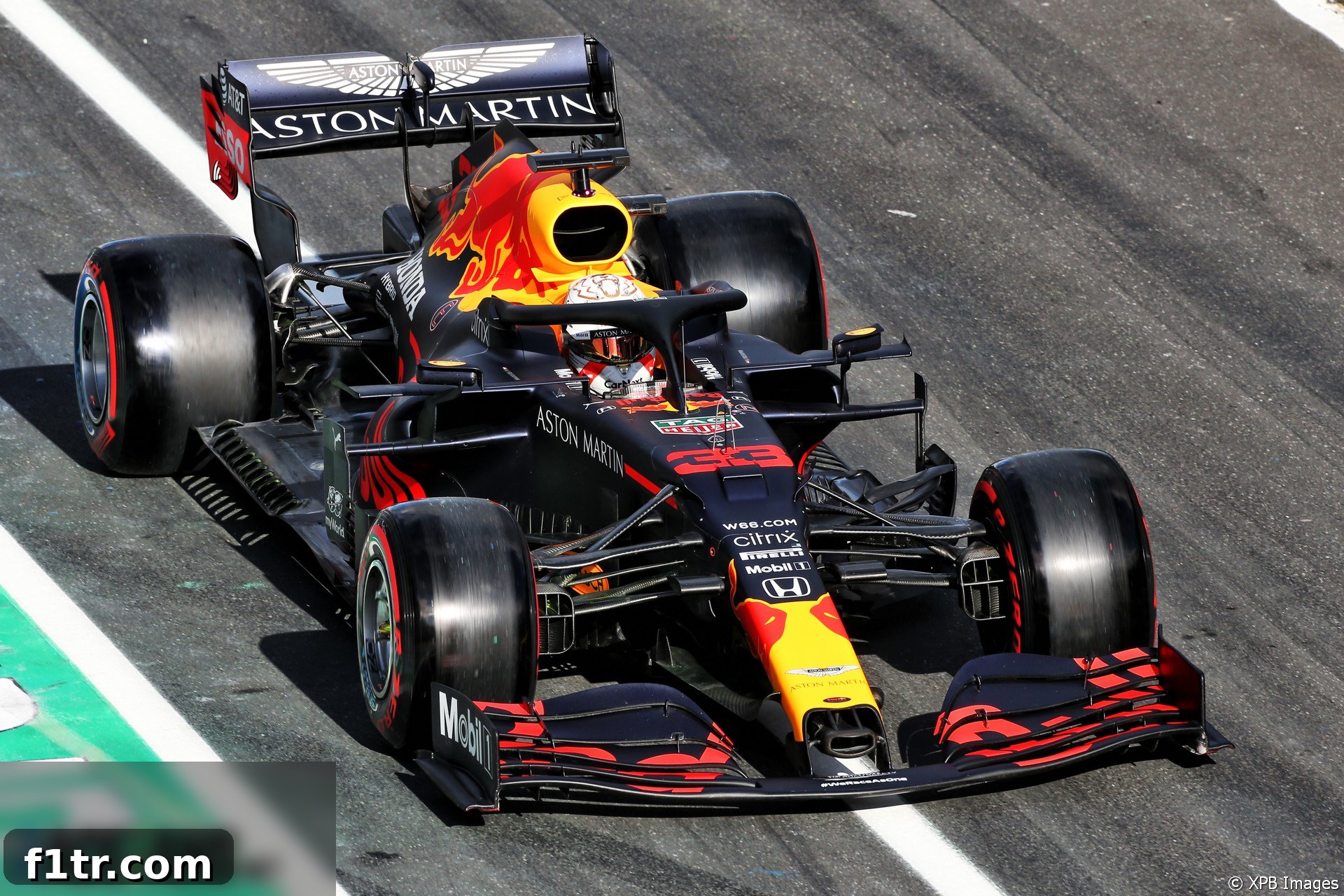
In the high-stakes world of Formula 1, every millisecond counts, and the Eifel Grand Prix at the Nürburgring delivered a qualifying session that underscored this reality with dramatic flair. While the Mercedes-AMG Petronas F1 Team once again secured pole position, marking their eleventh consecutive pole in as many races, the competitive landscape is undeniably shifting. Red Bull Racing, spearheaded by the formidable Max Verstappen, demonstrated a significant leap forward, narrowing the gap to their Silver Arrows rivals to its tightest margin of the 2020 season.
The Eifel Grand Prix weekend, held under uncharacteristically cold and challenging conditions, offered a tantalizing glimpse into a potential resurgence for Red Bull. Had Max Verstappen managed to replicate his blistering Q2 lap time in the decisive Q3 session, he would have started from the front row of the grid, a mere whisker away from pole-sitter Valtteri Bottas. Verstappen’s Q2 benchmark of 1 minute 25.467 seconds stood as Red Bull’s strongest performance of the weekend up to that point, placing them less than two-tenths of a second adrift of Mercedes’ ultimate pace. This wasn’t just an impressive individual effort; it was a clear signal of progress for the entire Red Bull Racing team.
Advert | Become a Supporter & go ad-free
This remarkable narrowing of the gap to Mercedes represents a crucial encouraging sign for Red Bull. Just two races prior, at the Tuscan Grand Prix in Mugello, the discussion revolved around Red Bull closing the deficit to 0.327 seconds, marking their closest challenge of the season at that point. Fast forward to the Eifel Grand Prix qualifying, and that deficit had been further slashed to an impressive 0.198 seconds. Such consistent, incremental improvements indicate a focused and effective development trajectory for the Milton Keynes-based squad, injecting fresh excitement into the championship narrative.
Attributing this significant performance gain, Max Verstappen pointed directly to Red Bull’s latest upgrade package. His teammate, Alexander Albon, echoed this sentiment, emphasizing the comprehensive nature of the enhancements. “I think it’s a whole part, really, it’s all bits and pieces, front to back,” Albon explained, highlighting that the improvements weren’t isolated to a single component but rather a holistic enhancement across the car’s aerodynamic and mechanical design. This strategic approach to development underscores Red Bull’s ambition to challenge Mercedes’ long-held dominance.
The team’s decision to run this new upgrade package at the Nürburgring was particularly noteworthy, given the challenging circumstances leading up to qualifying. Adverse weather conditions severely disrupted Friday’s practice sessions, limiting crucial track time and preventing a thorough evaluation of the new components. Albon elaborated on this challenge, stating, “To be honest we can’t compare it to the previous package just because without the Friday running, normally the plan was to run the old package versus new package. So with limited running, we’ve kind of just started on it.” Despite these obstacles, the immediate feedback from the drivers indicated a positive impact. Albon added, “But it feels good. It feels quick, obviously, straightaway in FP1 – or FP3 – it was feeling pretty strong straightaway. I was happy with it and I think it’s a good step forward. It’s put us a lot closer obviously to the Mercs.” This immediate positive response, even without extensive data comparison, speaks volumes about the efficacy of Red Bull’s development efforts.
However, the narrative of Red Bull’s progress isn’t the sole factor contributing to the shifting competitive landscape. Analysis of the Eifel Grand Prix qualifying data reveals that several other teams have also managed to reduce their gap to Mercedes by a similar margin since the Tuscan Grand Prix. Renault, McLaren, and Ferrari, in particular, showed stronger performances relative to Mercedes than at previous races. This widespread convergence suggests that Mercedes might have been slightly less dominant at the Nürburgring, possibly due to the unique characteristics of the track or the unusually cold temperatures that affected tyre performance and overall car balance.
Alexander Albon candidly conceded that Mercedes appeared to be marginally weaker at the Nürburgring compared to other circuits, particularly in the cold conditions. “I don’t want to say Mercedes struggled but they don’t seem as quick,” he observed. He further contextualized this by noting the performance of the wider grid: “When you look at the other teams as well it’s not like we’re miles ahead of everyone else. I would put it in that sense.” This balanced perspective is crucial; while Red Bull’s improvements are tangible, the overall picture suggests that specific track and weather conditions might have played a role in compressing the field at the Eifel Grand Prix.
For Mercedes, the continuous streak of pole positions is a testament to their unparalleled engineering and operational excellence. They stand on the cusp of making history, potentially becoming the first team ever to take pole position at every single race in a Formula 1 season. However, the consistent and accelerating progress shown by Red Bull Racing, coupled with the relative closing of the gap by other midfield teams, indicates that maintaining this extraordinary record will become an increasingly arduous task. The Eifel Grand Prix qualifying session, therefore, wasn’t just about securing pole; it was a strong indicator that the competitive intensity at the front of the grid is escalating.
The implications for the remainder of the 2020 Formula 1 season are significant. If Red Bull can sustain this rate of development and effectively leverage their upgraded package, the championship battle, while seemingly dominated by Mercedes, could see moments of genuine challenge. Max Verstappen’s fierce determination, combined with a continuously improving car, promises more thrilling qualifying battles and potentially closer races. The Nürburgring, with its historic circuit and challenging conditions, provided the perfect backdrop for this developing narrative, hinting that the seemingly unbreakable dominance of Mercedes might just be facing its sternest test yet.
Quotes: Dieter Rencken
Advert | Become a RaceFans supporter andgo ad-free
Advert | Become a RaceFans supporter andgo ad-free
2020 Eifel Grand Prix Related Articles & Insights
- Renault “not scared of anywhere” in remaining races
- Bottas “needs a miracle” to overturn Hamilton’s 69-point lead
- 2020 Eifel Grand Prix Star Performers
- Leclerc sees ‘quite a few positives’ in Ferrari’s Nurburgring weekend
- Mercedes relied on DAS “more than ever” at cold Nurburgring
Browse all 2020 Eifel Grand Prix articles