Sergio Perez’s Health Battle: Will He Recover for the British Grand Prix?
Red Bull Racing driver Sergio Perez endured a profoundly challenging Austrian Grand Prix weekend, battling debilitating fever-like symptoms that cast a shadow over his performance. As the Formula 1 circus swiftly moves to the iconic Silverstone circuit for this weekend’s British Grand Prix, questions regarding Perez’s fitness and his capacity to compete at peak performance remain a significant concern for both the team and his championship aspirations.
Support us and go ad-free: Become a Supporter
A Fraught Austrian Grand Prix: Pushing Through Sickness
The ordeal for the Mexican driver began unexpectedly on Wednesday night in Austria, when he fell ill. The severity of his condition forced him to skip his mandatory media duties on Thursday, a clear indication that his health was far from optimal. Despite this setback, Perez bravely took to the track as scheduled when the action commenced on Friday, demonstrating his unwavering commitment to his team and sport.
However, his illness continued to plague him throughout the weekend, visibly impacting his form. The initial struggles were starkly evident during Friday’s qualifying session for the main Grand Prix, where Perez unexpectedly qualified a disappointing 15th. This result was a significant blow for a driver consistently expected to challenge at the front, especially considering Red Bull’s dominant package. His inability to extract maximum performance from the car in critical moments was a direct consequence of his compromised physical state.
Saturday offered a glimmer of hope as Perez managed to qualify an impressive second, just behind his formidable teammate Max Verstappen, for the sprint race. This momentary resurgence hinted at his underlying talent and resilience. Yet, the 24-lap sprint race quickly revealed the lingering effects of his illness. Despite starting from the front row, Perez ultimately finished a substantial 21 seconds behind Verstappen, a gap that highlighted his inability to sustain a competitive pace over race distance while battling his symptoms.
Sunday’s Heroic Comeback Amidst Adversity
Sunday’s main race presented a monumental challenge, with Perez starting from 15th on the grid. Yet, in a testament to his fighting spirit and skill, he delivered a remarkable recovery drive, carving his way through the field to claim a hard-fought third-place finish. This podium position, his fifth of the year, was a truly impressive feat given the circumstances.
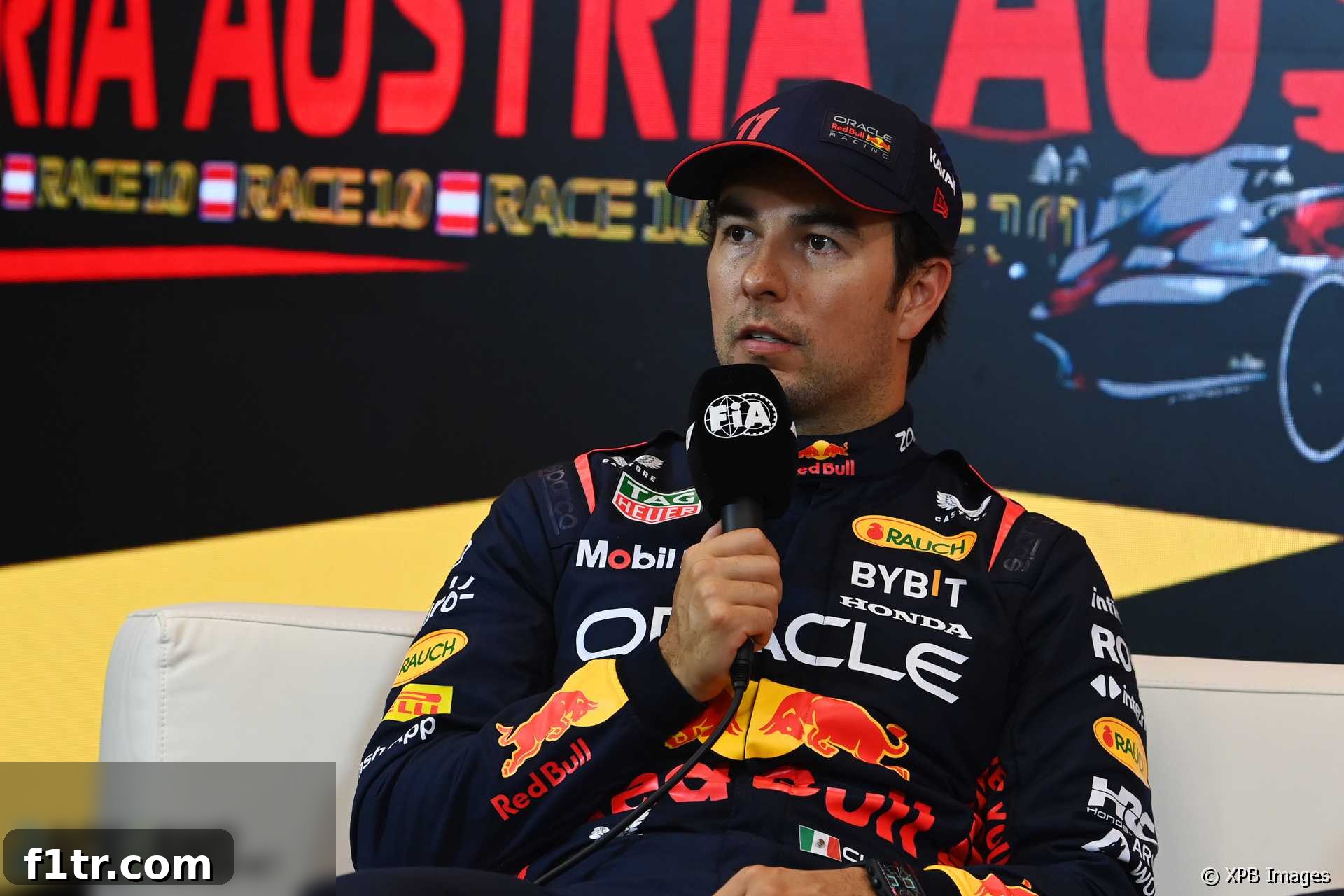
In the post-race press conference, a visibly fatigued Perez openly discussed the profound impact of his illness. He detailed the toll it had taken, expressing genuine concern about its potential to continue affecting him as the F1 calendar demanded a swift transition into the second part of a demanding back-to-back race weekend.
Perez candidly admitted that he was feeling “definitely not great” even after completing the grueling 71-lap race at the Red Bull Ring. He elaborated on the relentless nature of his symptoms, stating, “I haven’t had a good rest. Every night I’ve had a fever and I think when that happens and then you are on medications, automatically you are not 100% at all.” This insight underscored the severe physical drain he had endured, preventing him from achieving the vital restorative sleep necessary for an elite athlete.
The Physical Demands of Formula 1: Why 100% Fitness is Non-Negotiable
Formula 1 is arguably one of the most physically demanding sports in the world, requiring drivers to possess an extraordinary blend of endurance, strength, and mental fortitude. Behind the wheel of an F1 car, drivers are subjected to immense G-forces, often exceeding 5G under braking and cornering, which places enormous strain on their necks, core muscles, and entire bodies. The cockpit temperatures can soar, leading to significant dehydration, while sustained concentration is paramount for over an hour and a half of high-speed racing.
In such an environment, being anything less than 100% fit can have dire consequences. A fever, for instance, not only saps energy and strength but can also impair reaction times, concentration, and decision-making abilities – all critical elements for navigating an F1 car at speeds exceeding 200 mph. Lack of sleep further exacerbates these issues, diminishing alertness and resilience. Furthermore, relying on medications to manage symptoms can introduce its own set of challenges, potentially causing side effects that subtly undermine performance, even if the driver is deemed medically “fit to race.”
As Perez himself articulated, “It’s a very demanding sport, in the car and out of the car.” His struggle highlights the delicate balance F1 drivers must maintain with their health, especially during an intensive racing season with frequent travel and consecutive events. The ability to perform under such conditions while battling illness speaks volumes about a driver’s dedication, but it also underscores the inherent risks and performance limitations.
Looking Ahead: The Silverstone Challenge for Perez
Perez’s concerns about his illness continuing to affect him at the upcoming British Grand Prix are entirely justified. The Silverstone circuit is renowned for its high-speed nature and places particularly severe demands on drivers’ physical fitness and mental endurance. Corners like Maggots, Becketts, and Chapel form a blistering sequence that tests neck strength and core stability to their absolute limits, while Copse is taken at incredible speeds, demanding unwavering precision and courage.
The relentless series of fast corners at Silverstone means drivers spend extended periods under intense lateral G-forces. Maintaining precise steering inputs and throttle control lap after lap requires immense physical stamina and focus. If Perez’s energy levels remain depleted, or if he continues to suffer from fever and lack of restorative sleep, these high-G corners will feel even more punishing, potentially leading to errors or a drop in lap times.
His declaration, “I’ve just been really sick, so I really hope that I can recover in a few days, because Silverstone is another very hard race, very demanding. I really need time. I’m really far from 100% at the moment,” paints a clear picture of the uphill battle he faces. The rapid turnaround between the Austrian and British Grand Prix leaves minimal time for full recovery, placing significant pressure on Perez to recuperate quickly.
The team will undoubtedly be monitoring his condition closely, providing all necessary support. However, ultimately, the performance comes down to the individual in the cockpit. For a driver competing for a championship, every point counts, and starting a race weekend already compromised is a significant disadvantage.
The Broader Context: Driver Health and Championship Ambitions
Perez’s situation brings into focus the often-overlooked aspect of driver health in the cutthroat world of Formula 1. While the advanced technology of the cars often dominates headlines, the human element remains paramount. The physical and mental resilience required to compete at this level is immense, and any deviation from optimal health can have immediate and noticeable impacts on results. Throughout F1 history, there have been instances of drivers bravely competing whilst unwell, showcasing their grit, but rarely achieving their full potential.
For Sergio Perez, who is challenging for the drivers’ championship, consistency is key. While his podium finish in Austria was a heroic salvage operation, the underlying struggle highlights a vulnerability. Maintaining parity with a dominant teammate like Max Verstappen demands peak performance at every single Grand Prix. Any dip in form due to health issues could further widen the points gap, making his championship quest significantly harder.
The upcoming British Grand Prix at Silverstone will therefore be a critical test, not just of his driving skill, but of his physical recovery and mental fortitude. Fans and pundits alike will be watching closely to see if Perez can shake off the lingering effects of his illness and return to the form required to challenge at the front of the grid.
Become a RaceFans Supporter
RaceFans is run thanks in part to the generous support of its readers. By contributing £1 per month or £12 per year (or the same in whichever currency you use) you can help cover the costs of creating, hosting and developing RaceFans today and in the future.
Become a RaceFans Supporter today and browse the site ad-free. Sign up or find out more via the links below:
- Become a RaceFans Supporter
- RaceFans Supporter FAQ
Conclusion: A Crucial Week for Checo
Sergio Perez’s performance in Austria, climbing from 15th to third despite battling illness, was a testament to his talent and determination. However, the cost of that effort, compounded by sustained fever and lack of sleep, has left him in a precarious position heading into one of the most demanding races on the calendar. The next few days will be crucial for Perez as he races against time to regain his full health before the lights go out at Silverstone.
The British Grand Prix is not merely another race; for Perez, it represents a significant hurdle in his championship challenge and a personal battle for full recovery. His ability to bounce back and perform at 100% will not only be vital for his individual results but also for Red Bull Racing’s overall constructors’ championship aspirations. The F1 community waits with bated breath to see if ‘Checo’ can overcome this physical adversity and deliver another strong performance on the legendary British tarmac.
2023 Austrian Grand Prix News and Analysis
- Mercedes left scratching heads by lack of performance at Austrian GP
- Verstappen’s determination to grab every point makes him a record-breaker
- Austrian GP track limits farce was avoidable like ‘IndyGate’ and Spa 2021 – Brown
- Alpine now “definitely beatable” for McLaren after upgrade – Brown
- Paddock Diary: 2023 Austrian Grand Prix
Browse all 2023 Austrian Grand Prix articles