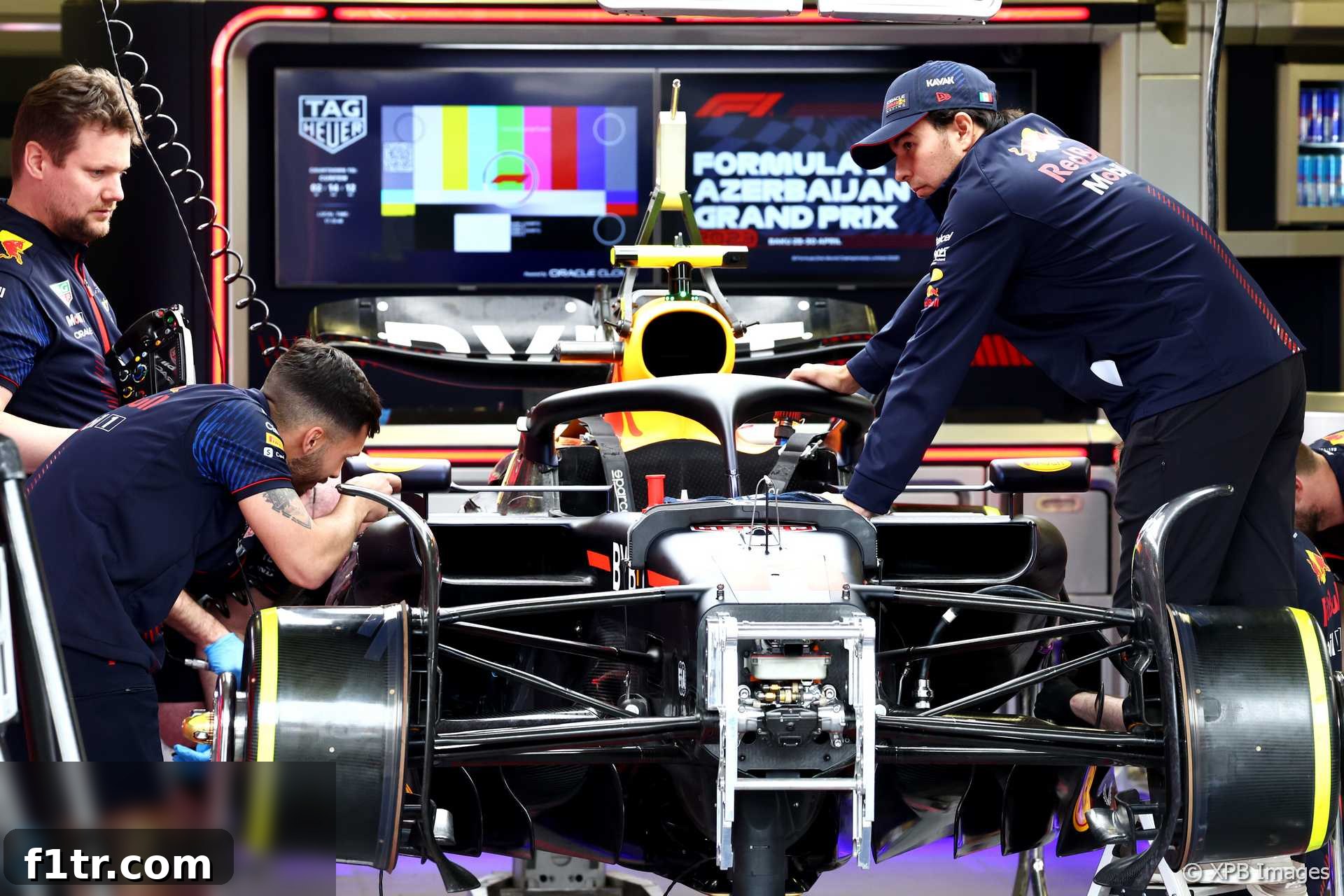
The exhilarating world of Formula 1 has converged on the historic yet futuristic streets of Baku for the Azerbaijan Grand Prix, an event long-marked on team calendars as a critical juncture for car development. Following a four-week hiatus since the previous round, all ten teams have unleashed a comprehensive suite of revisions and upgrades, meticulously engineered to unlock crucial performance gains on one of the most unique circuits in the championship. This year, the stakes are exceptionally high, as Baku hosts the first Sprint event of the season, adding an unprecedented layer of complexity and pressure to the evaluation of these vital new components.
Advert | Become a Supporter & go ad-free
The Baku City Circuit is a paradox of design, famed for its extraordinary blend of ultra-long, flat-out sections and incredibly tight, technical corners. This configuration leads to some of the highest straight-line speeds seen all year, compelling teams to prioritize drag reduction without compromising the downforce necessary for optimal performance through the demanding castle section and numerous heavy braking zones. As a result, many of the upgrades brought to Azerbaijan are aimed at striking this delicate balance: enhancing aerodynamic efficiency for blistering pace down the straights, while simultaneously improving braking stability and cornering grip.
However, the introduction of the new Sprint format significantly compresses the traditional weekend schedule. Teams now have only a single, crucial hour of practice to evaluate their latest upgrades, validate their performance, and fine-tune the car’s setup before qualifying for the Grand Prix. This intensified timeframe means there is little room for error, placing immense pressure on engineers and drivers to maximize every minute of track time and ensure their new packages deliver the expected gains immediately. The implications of a successful or unsuccessful upgrade validation within this limited window could profoundly impact a team’s entire weekend performance.
Among the teams, McLaren arrived in Baku with particularly high hopes, having openly admitted at the launch of their MCL60 that key areas of the car’s design required improvement which wouldn’t be ready for the season opener. They have delivered a significant upgrade package for their floor and rear wing, which driver Lando Norris suggested brings the MCL60 closer to its intended specification. McLaren describes their new floor as significantly altering “local suction distribution as well as floor structure strength and positioning, resulting in an overall gain of load,” a change crucial for improving overall aerodynamic performance.
AlphaTauri, like McLaren, endured a disappointing start to the season and has responded with an extensive update package. Their focus is primarily on drag reduction, alongside critical improvements to cooling and braking performance, particularly into low-speed corners – an area that has been a consistent concern for the team and its drivers. This multi-faceted approach underscores their determination to climb up the competitive order.
Alpine has also brought a substantial revision to its A523, featuring a “completely new floor” that both Esteban Ocon and Pierre Gasly will be running. The team anticipates this will provide a “greater overall load,” indicating a significant step in aerodynamic development designed to boost their mid-field challenge. Even Red Bull, despite dominating the opening rounds and operating under tighter aerodynamic development restrictions due to their 2021 budget cap penalty, is not resting on its laurels. The formidable RB19 features revisions to its sidepods, including a “consequential” change to the air inlets, demonstrating their continuous pursuit of marginal gains.
Among their closest rivals, Ferrari and Aston Martin declared more modest single updates, choosing a more incremental approach for Baku. Mercedes, while still awaiting their anticipated major shift in development direction in a few races’ time, has nonetheless implemented several minor tweaks to their W14, focusing on the rear wing, front brake duct, rear airflow deflectors, and front suspension. Each of these upgrades, no matter how small, reflects the relentless pursuit of performance in the hyper-competitive world of Formula 1.
Advert | Become a RaceFans supporter andgo ad-free
2023 Azerbaijan Grand Prix F1 Teams’ Upgrades: A Detailed Analysis
Here’s a closer look at the specific modifications each team has introduced for the Azerbaijan Grand Prix, revealing the strategic thinking behind their development choices:
Red Bull
Red Bull, despite their commanding lead, continues to refine the RB19, focusing on circuit-specific optimizations and further aerodynamic efficiency.
Sidepod Inlet
A revised sidepod inlet with a wider span and reduced height has been introduced. This design exploits higher-pressure air for improved cooling efficiency, allowing for a smaller exit opening, which is beneficial for overall aerodynamic performance and expands the car’s operational ambient temperature range, crucial for Baku’s variable conditions.
Coke/Engine Cover
The coke/engine cover has undergone a consequential change due to the new sidepod inlet geometry. The sidepod had to widen and blend smoothly to the floor split line and existing louvre exit panel junctions, ensuring continuous surfaces for optimal airflow without altering the louvre exit panels.
Floor Edge
Minor revisions to the floor edge and wing geometries aim to enhance local load and aerodynamic performance. These new surfaces complement the updated sidepod shape, minimizing incurred losses and contributing to an overall beneficial performance gain.
Floor Fences
The outer floor fence now features a revised top edge profile. This modification ensures better alignment with local airflow conditions, making the surfaces more appropriate for the environment and yielding a small but valuable improvement in local load.
Rear Corner
A single winglet on the outboard face of the rear corner’s wrap-around has been split into two elements. This change prevents local airflow separation, reducing losses that previously affected exit back pressure and thus improving the efficiency of the duct.
Ferrari
Ferrari’s sole declared upgrade targets the specific drag demands of the Baku circuit.
Rear Wing
A new, lower downforce top rear wing design has been introduced. Compared to configurations used earlier in the season, this component features depowered profiles, specifically adapted to the unique characteristics and efficiency requirements of the Baku City Circuit, where straight-line speed is paramount.
Advert | Become a RaceFans supporter andgo ad-free
Mercedes
Mercedes brings a series of minor yet impactful tweaks as they await their major development overhaul.
Rear Wing Endplate
Subtle changes to the wing tip and endplate surfaces, including infill options, are designed to shed drag. This resurfacing improves flow quality and wing tip performance in crosswind conditions. The infill option specifically reduces flow expansion behind the wing, optimizing the trade-off between downforce and drag for Baku.
Front Corner
The front brake duct exit area has been increased to improve cooling. This modification enhances mass flow to the disc, providing better cooling – a crucial requirement for Baku, which features several high-braking zones.
Rear Corner
A lower deflector endplate trim has been implemented. This results in cleaner endplate flow, which in turn increases the local load on the deflector elements, consequently boosting diffuser and floor load for improved overall downforce.
Front Suspension
The lower wishbone outboard fairing has been reprofiled. This adjustment improves airflow attachment around the outboard fairing, especially in high-steer situations, leading to better airflow towards the floor and an increase in overall performance.
Alpine
Alpine’s updates are substantial, with a complete overhaul of a key aerodynamic component.
Floor Body
Alpine has introduced a completely new floor, featuring multiple detailed changes from its previous specification. This new floor is designed to generate a different pressure distribution, resulting in a significantly greater overall load, which will be run on both cars in Baku to maximize performance.
Front Suspension
The angle of incidence of the front top wishbone fairing on the A523 has been revised as part of the overall upgrade package. This modification is aimed at reducing drag, contributing to the car’s efficiency on Baku’s high-speed sections.
Rear Suspension
Revised suspension leg fairings and a new rear brake drum flick have been implemented. These changes aim to increase local load through improved flow conditioning at the rear of the car, enhancing overall aerodynamic stability and performance.
Rear Wing
A revised top rear wing main plane forms part of a low downforce configuration specifically tailored for the Baku City Circuit. This setup is crucial for balancing downforce needs with the demands for reduced drag on the long straights.
Front Wing
A trim to the front wing flap is another circuit-specific change, designed as part of the lower downforce configuration essential for optimal performance on the Baku City Circuit’s high-speed layout.
McLaren
Advert | Become a Supporter & go ad-free
McLaren’s extensive package addresses fundamental areas, aiming to bring the MCL60 up to its competitive potential.
Floor Body
A completely new floor geometry has been introduced. This design significantly alters the local suction distribution as well as the floor structure’s strength and positioning, culminating in a substantial overall gain of load, which is a critical performance metric.
Rear Wing
McLaren has brought a new, lower drag rear wing assembly, featuring an offloaded main plane and flap. This results in an efficient reduction of both downforce and drag, optimizing the car for Baku’s high-speed demands.
Rear Wing Flap Trims
Two options of rear wing flap trims are available, which allow for further reduction in flap loading, consequently decreasing the downforce and drag of the rear wing assembly. This offers crucial flexibility for fine-tuning the car’s aerodynamic balance.
Beam Wing (Multiple Configurations)
McLaren has introduced several beam wing configurations, all aimed at circuit-specific drag reduction:
- **New Upper Beam Wing Element:** This geometry features an offloaded upper element, which, through interaction with the upper rear wing assembly, leads to an efficient reduction in downforce and drag.
- **New Upper and Lower Beam Wing Element:** This configuration utilizes offloaded upper and lower elements, interacting with the upper rear wing assembly for further efficient reduction of downforce and drag.
- **Further Offloaded Upper and Lower Beam Wing Element:** A third variant features even further offloaded upper and lower elements, delivering an additional efficient reduction of downforce and drag when maximum drag reduction is required.
Advert | Become a RaceFans supporter andgo ad-free
Alfa Romeo
Alfa Romeo focuses on optimizing their C43 for Baku’s unique demands through wing adjustments.
Rear Wing
A new rear wing configuration with a shorter chord has been introduced. This design directly addresses Baku’s specific requirements by reducing drag and improving the overall aerodynamic efficiency of the car, critical for straight-line speed.
Beam Wing
A new beam wing configuration, transitioning from a stacked to a biplane setup, has been implemented. This change also aims to meet the specific demands of the Baku circuit by reducing drag and enhancing the car’s aerodynamic efficiency.
Front Wing
New front wing flap profiles, including an additional optional trim, have been developed. These adjustments address balance changes resulting from the new rear wing configuration and help the team achieve maximum efficiency for the car on Baku’s very particular track layout.
Aston Martin
Aston Martin’s single update targets drag reduction for Baku.
Rear Wing
The new rear wing features smaller upper elements compared to those used so far this season, with two versions of flap available to suit this wing. These geometric changes reduce rear wing load and, consequently, drag, allowing the car setup to be optimized for the specific characteristics of the Baku circuit, particularly its long straights.
Advert | Become a RaceFans supporter andgo ad-free
Haas
Haas introduces a circuit-specific rear wing for improved straight-line performance.
Rear Wing
A rear wing specifically prepared for the Baku circuit characteristics has been developed, designed to generate less aerodynamic drag compared to the wings used in 2023 so far. This design results in a lower level of downforce, enabling the car to improve its performance at the high speeds reachable in Baku, making it more competitive on the long straights.
AlphaTauri
AlphaTauri’s extensive upgrades target crucial areas of performance and cooling.
Front Wing
The new front wing flap reduces element chords and incidence to decrease the overall downforce generated by the front wing assembly. This modification aims to achieve the correct car balance, leveraging the low-drag nature of Baku to reduce the required front wing downforce for optimal performance.
Coke/Engine Cover
The central bodywork exit has been altered to improve cooling performance. This change reduces the need for additional auxiliary cooling exits, consequently increasing overall car downforce for a given cooling requirement – a smart efficiency gain.
Rear Wing
The new upper rear wing assembly reduces downforce by decreasing the camber and incidence of the wing elements. This design is dictated by Baku’s low-drag nature, aiming for an optimum balance between downforce for cornering and drag reduction for straight-line performance.
Beam Wing (Multiple Configurations)
- **New Biplane Beam Wing Assembly:** This assembly reduces downforce and drag by decreasing the chord and incidence of the second element. It allows for a further drag reduction step if deemed optimal for overall lap time given the low-drag nature of the circuit.
- **New Single Element Beam Wing Component:** This variant generates even less downforce and drag than the biplane assembly due to the absence of a flap element. It provides an additional drag reduction step if it proves optimal for achieving the best overall lap time on this specific circuit.
Rear Corner
The new rear brake drum features an additional inlet inboard of the main drum fence to increase rear brake disc cooling. The drum vane cascade behind this new inboard inlet has also been redesigned to increase overall downforce by improving their relative positions on the drum face and increasing their number. This is crucial for Baku’s very high braking energy, which demands increased rear disc cooling, and the change to drum vanes boosts local downforce, particularly useful in the circuit’s low-speed corners.
Advert | Become a RaceFans supporter andgo ad-free
Williams
Williams brings targeted updates to enhance their competitiveness on Baku’s unique layout.
Beam Wing
A shorter chord rear lower wing is available for this event, maintaining the same basic geometry as the previous version but with a trim to the trailing edge. This modification simply provides a reduction in the car’s drag and downforce, tailored to suit the specific requirements of Baku’s high-speed sections.
Nose
The shroud on the underside of the nose box has been modified to alter its local curvature. This design change improves local airflow quality, consequently increasing the load generated by the front wing and nose assembly, contributing to better front-end grip and balance.
The Unpredictable Nature of Baku and the Sprint Weekend
The convergence of extensive car upgrades with the challenges of the Baku City Circuit, all under the compressed and intense spotlight of a Sprint weekend, sets the stage for a truly unpredictable and thrilling Azerbaijan Grand Prix. Teams have invested considerable resources and development time into these packages, hoping they provide the necessary edge on a circuit that punishes even the slightest miscalculation. The success of these upgrades will hinge not only on their inherent design but also on the teams’ ability to rapidly optimize them within the narrow practice window. As the lights go out, the true impact of this wave of F1 car development will become vividly clear, shaping the competitive narrative for the races to come.
2023 Azerbaijan Grand Prix Related Articles
- Aston Martin radio messages reveal how “older brother” Alonso helps Stroll
- How slashing practice to a single hour in Baku tripped up F1 teams
- Bottas: “Rapid improvement needed” at Alfa Romeo
- Red Bull could become first team to score 1,000 points in a season
- Aston Martin hoping DRS fix works in Miami after Stroll manages fault in race
Browse all 2023 Azerbaijan Grand Prix articles