First-Lap Clash: Stewards Rule No Action Against Kimi Raikkonen and Esteban Ocon
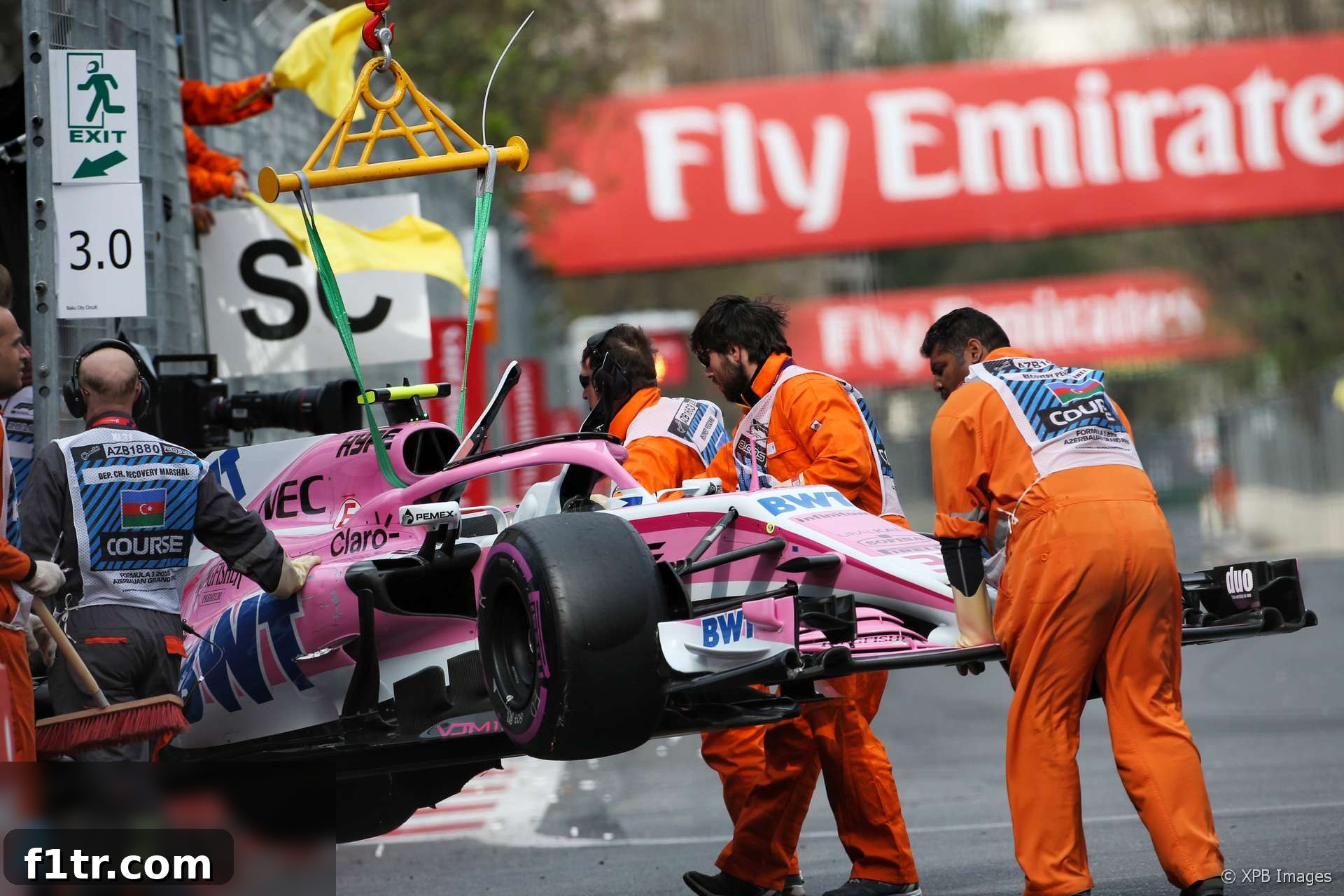
A contentious first-lap incident involving Kimi Raikkonen and Esteban Ocon during a pivotal Grand Prix resulted in Ocon’s premature retirement from the race, yet the stewards ultimately decided against taking any punitive action against either driver. This decision sparked considerable debate and highlighted the complexities of regulating aggressive racing in the opening stages of a Formula 1 event. The collision, which ended Ocon’s bid on the very first lap, left the Force India driver visibly frustrated and convinced of his rival’s culpability, while the stewards deemed it a typical ‘racing incident’ amidst the chaos of the initial lap.
The High-Stakes Opening Lap: A Crucible of Conflict
The opening lap of any Formula 1 Grand Prix is a unique spectacle, a maelstrom of high-speed manoeuvres, jostling for position, and razor-thin margins. Drivers push the limits, seeking to gain crucial places before the field settles, often leading to inevitable contact. This particular incident unfolded at a critical turn, a notorious pinch point known for producing close-quarters racing. As the cars streamed through the initial corners, the tension was palpable, with every driver acutely aware that an early advantage could dictate the outcome of their entire race. It’s a testament to the competitive nature of F1, where aggression is often rewarded, but carries the inherent risk of an early exit, as Esteban Ocon unfortunately discovered.
The Collision Unfolds: Ocon’s Race Cut Short
Esteban Ocon, piloting his Force India, found himself embroiled in the thick of the midfield battle. According to his account, he had successfully navigated the preceding turns and established a clear advantage over Kimi Raikkonen’s Ferrari as they approached turn two. “I beat Kimi into turn two,” Ocon recounted after the race, his voice laced with disappointment. “I was ahead, he was behind. I braked into the corner.” His narrative painted a picture of a driver executing a clean move, only for the unexpected to occur. “Suddenly Kimi reappeared and then I’m in the wall. That’s how I see it. It was unnecessary to take that risk in that moment.” The impact was immediate and devastating for Ocon, whose car sustained irreparable damage, forcing him out of the race prematurely and leaving his team with a significant challenge for the remainder of the weekend.
Esteban Ocon’s Frustration and Plea for Accountability
Ocon’s post-race comments underscored his profound frustration and his firm belief that he was the victim of an avoidable collision. He felt strongly that Raikkonen had taken an unwarranted risk, particularly so early in the race when the stakes were immense but the opportunity for clean overtaking still abundant. “It’s not my fault, I’ve been the one launched,” he asserted, suggesting a clear aggressor in the encounter. To further bolster his argument, Ocon drew a parallel with other racing series, specifically DTM (Deutsche Tourenwagen Masters), where rules regarding rear-end contact are often more stringent. “In DTM the rule is that when you touch someone into the back, you made him spin or launch him into the wall, the guys gets the penalty.” This comparison highlighted his expectation for a penalty to be issued, reflecting a desire for consistency in sanctioning contact that ends another competitor’s race, irrespective of the lap number. For a driver striving for championship points and team recognition, an early retirement due to what he perceived as another’s error can be psychologically taxing, influencing morale and future race strategies.
The Stewards’ Investigation and Raikkonen’s ‘Racing Incident’ Concession
Following any incident of this magnitude, the race stewards embark on a thorough investigation, reviewing telemetry, video footage from multiple angles, and taking statements from the drivers involved. In this instance, Kimi Raikkonen, known for his stoic demeanor, offered a rather pragmatic perspective to the stewards. He “conceded that the collision was typical of a first lap racing ‘incident’.” This acknowledgement is key, as a “racing incident” often implies that no single driver is overwhelmingly to blame, or that the contact arose from the inherent risks and close-quarters nature of competitive motorsport, particularly during the frenetic opening moments of a race. Such a classification suggests a shared responsibility or simply an unfortunate outcome of hard racing, rather than a clear transgression of racing rules. The stewards were tasked with dissecting the nuances of the incident, weighing the drivers’ accounts against the objective evidence to determine if a penalty was warranted or if it fell within the accepted boundaries of F1 racing.
The Verdict: No Further Action and the Rationale Behind It
Despite Ocon’s impassioned plea and the clear impact on his race, the stewards ultimately decided that no further action was necessary against either Kimi Raikkonen or Esteban Ocon. Their detailed explanation delved into the complexities of driver perception and awareness within the confines of a modern Formula 1 cockpit. According to the stewards’ report, Ocon “stated that the last vision he had of car seven (Raikkonen’s car) was on the straight after turn two which the two cars had successfully negotiated and that he had not seen car seven on the inside into turn three.” This admission was critical. The stewards then emphasized a fundamental tenet of F1 driving: “The driver of car 31 (Ocon) accepted the comments of the stewards that a driver should not assume another car is not in his proximity just because he cannot see one, as it is well known that vision from the current cars is not optimum in some positions.”
This reasoning underscores the immense responsibility placed upon F1 drivers. Even with advanced mirrors and sophisticated data, blind spots are an inherent challenge in these high-performance machines. The stewards’ message was clear: a driver must maintain situational awareness at all times, anticipating the presence of rivals even when they are not directly in their field of vision. This necessitates a continuous scan of mirrors, an understanding of racing lines, and an instinctive feel for the proximity of other cars. The decision, therefore, hinged not on malicious intent or a deliberate aggressive manoeuvre, but on the imperative for drivers to account for limited visibility and the dynamic nature of wheel-to-wheel racing. It highlights the fine line between aggressive, opportunistic driving and careless contact, suggesting that in this instance, both drivers contributed to a situation that, while unfortunate, did not warrant a penalty under the specific circumstances of a chaotic first lap.
Navigating the First Lap: A Perennial F1 Challenge
First-lap incidents remain a recurring feature and a significant talking point in Formula 1. The sheer volume of cars, the proximity, cold tyres, and the collective desire to gain an immediate advantage create a volatile environment. Drivers employ a blend of aggressive tactics and defensive maneuvers, often making split-second decisions at speeds exceeding 200 mph. The stewards’ approach to these incidents often reflects a degree of leniency, acknowledging the inherent difficulty and heightened risk of the opening lap compared to more settled periods of the race. This philosophy aims to allow for spirited competition without over-penalizing the inevitable close encounters that arise from such intense racing. However, it also places a greater onus on drivers to exercise good judgment, even amidst the adrenaline and pressure. The Raikkonen-Ocon incident serves as a powerful reminder of the delicate balance required to navigate this critical phase of any Grand Prix, where a champion’s race can end before it truly begins.
Broader Implications and Lessons Learned for Driver Conduct
The stewards’ decision in the Raikkonen-Ocon incident, while specific to that event, contributes to the ongoing discourse surrounding stewarding consistency and driver conduct in Formula 1. The emphasis on a driver’s responsibility to account for limited visibility, rather than relying solely on direct sight, reinforces a critical aspect of racing craft. It serves as a reminder that the demands on F1 drivers extend beyond pure speed; they encompass an advanced spatial awareness, strategic thinking, and the ability to anticipate multiple scenarios simultaneously. Such incidents often spark discussions within teams about driver briefing protocols, emphasizing communication and risk assessment, particularly for younger drivers gaining experience in the cut-throat world of F1. Ultimately, while Ocon’s race ended prematurely, the ruling underlined the stewards’ commitment to fostering competitive racing while also promoting a high standard of driver awareness and responsibility in an environment where the smallest misjudgment can lead to significant consequences.
Stay Connected with RaceFans
Never miss a moment of the action. Follow RaceFans on our social media channels for the latest updates, news, and exclusive content:
- Join RaceFans on Facebook
- Follow RaceFans on Twitter
- Get daily email updates from RaceFans
Explore More from the 2018 F1 Season
Delve deeper into the events and stories that shaped the 2018 Formula 1 season. From technical insights to driver narratives, uncover more compelling content:
- F1 feared “death knell” for Drive to Survive after Ferrari and Mercedes snub
- McLaren staff told us we were “totally crazy” to take Honda engines in 2018 – Tost
- ‘It doesn’t matter if we start last’: How Red Bull’s junior team aided Honda’s leap forward
- Honda’s jet division helped F1 engineers solve power unit problem
- McLaren Racing losses rise after Honda split
Browse all 2018 F1 season articles